By Antonio Saravia, Vision 360:
There is no viable solution to Bolivia’s fuel crisis other than opening the market and allowing private companies to participate without price controls or administrative barriers.
Last week, senators Branko Marinkovich, Ernesto Suárez and Kathia Quiroga submitted to the Senate a bill entitled the Law on the Freedom to Import, Store, Transport and Commercialize Liquid Fuels. Having reviewed the proposal carefully, I believe it appropriately addresses the urgent need to transfer the fuel import business from state control to the private sector. The initiative is intelligent, bold and points the country in the right direction. Its authors deserve recognition not only for presenting it, but also for their willingness to debate it openly with both lawmakers and the public.
The bill’s central objective is to establish a regime of free competition across virtually the entire downstream fuel chain: imports, storage, transportation, distribution and retail sales. Under the proposal, individuals and companies—whether domestic or foreign—would be able to import fuels without being subject to price controls or burdensome administrative restrictions. The expected outcome is a competitive marketplace in which multiple operators vie for consumers by offering the best combination of price and quality. In such an environment, profits depend on attracting customers rather than securing political favors.
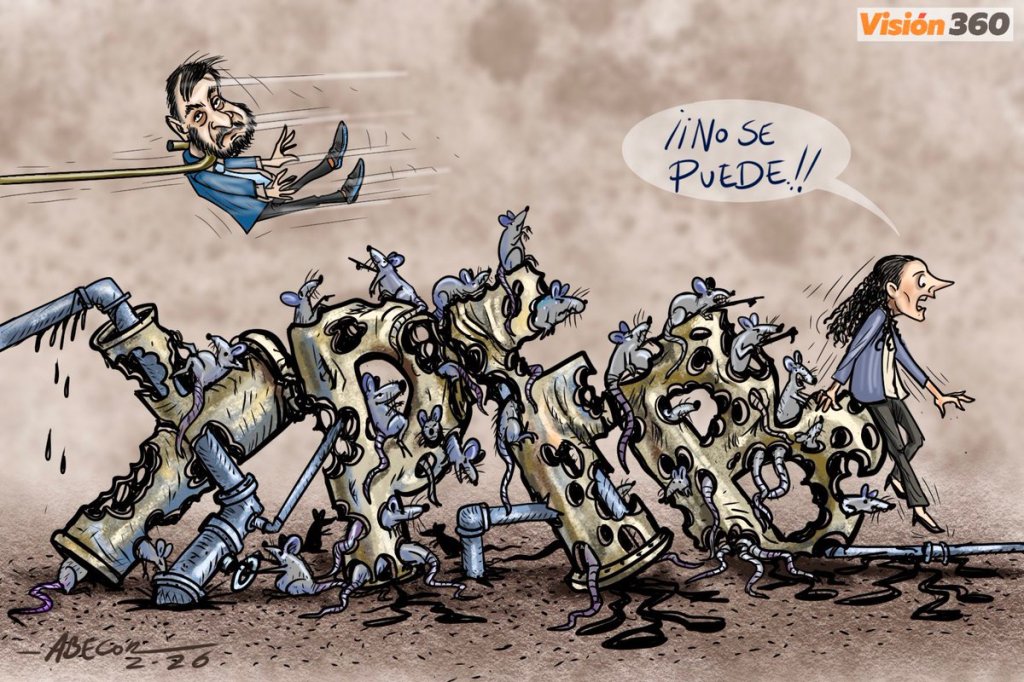
The proposal would represent a structural break with the current system, under which a state monopoly frequently runs short of foreign currency to finance imports, is plagued by corruption scandals, and has produced the endless fuel lines that have become all too familiar across the country. The bill would also dismantle the web of bureaucratic restrictions imposed by the National Hydrocarbons Agency (ANH), an institution that would cease to exist under the new framework.
Importers would no longer need discretionary authorizations, operating licenses, quota allocations, import permits or sector-specific approvals. They would simply register in a national operators’ registry and comply with basic quality and safety standards. Once registered, they could sell directly to consumers at market prices and would not be required to channel their products through YPFB.
The bill also proposes a simplified tax regime. The only tax applicable to fuel imports and sales would be a 3 percent value-added tax—far below Bolivia’s standard 13 percent VAT. Other taxes, including the Special Hydrocarbons and Derivatives Tax (IEHD), customs duties, the Transactions Tax and the Corporate Income Tax, would not apply.
This is a sensible measure. Bolivia urgently needs to revive its productive sectors, and doing so requires making fuel as affordable as possible without relying on subsidies. Lower taxes can help achieve that goal. The objective should be to encourage producers to consume more fuel and expand output—not to maximize government revenue.
Another major strength of the proposal is the elimination of the ANH. The agency and its regulatory framework have significantly hindered the development of a private fuel import market. One example is Administrative Resolution No. 0031, which I discussed at length in a previous column. Under the bill, the ANH would be replaced by a Technical Authority for Fuel Quality and Safety, whose role would be limited to technical functions such as operator registration, quality verification, safety standards and metrology. The shift is clear: away from discretionary economic regulation and toward objective technical oversight.
Yet despite its many virtues, the bill is not without flaws.
The first is its decision to allow two markets to coexist: a free market supplied by private companies at market prices and a state-controlled market supplied by YPFB at regulated prices. Article 14 explicitly states that the free-pricing regime established by the law will coexist with regulated prices for domestically produced fuels.
This is problematic. If YPFB were to resume significant domestic fuel production and sell below market prices, it could quickly drive private competitors out of business. In effect, the state would be engaging in dumping or unfair competition.
Article 15 goes even further, allowing YPFB not only to market domestically produced fuels but also to continue importing fuels, as it does today. Although the bill includes safeguards intended to prevent unfair advantages—such as prohibiting transfers, cross-subsidies, state guarantees and preferential access to public credit—the nature of a state-owned enterprise makes genuine competition difficult to achieve.
Unlike private firms, a state company does not need to generate profits to survive. Its cost of capital is effectively zero. As a result, it can afford to sell at lower prices than private competitors while remaining financially viable. Even under the bill’s proposed safeguards, YPFB could operate under conditions that private firms simply cannot match.
For that reason, the only sustainable solution is to remove YPFB entirely from fuel imports and from the commercialization of domestically produced fuels. As long as the state remains an active competitor, the risk of unequal treatment will persist, undermining the legal certainty required to attract private investment.
The bill’s second weakness is the creation of a government body to certify the quality of imported fuels. Such an arrangement creates opportunities for discretion, political interference and corruption. A better alternative would be the emergence of a private certification market, in which importers could voluntarily seek independent verification of quality standards.
As with any product or service, consumers ultimately purchase a combination of quality and price. In a competitive market, firms would offer different combinations to appeal to different segments of consumers. Some would focus on premium quality at higher prices, while others would compete by offering lower-cost alternatives. A truly free market should allow consumers—not regulators—to decide which combination best meets their needs.
Beyond its strengths and weaknesses, however, the bill faces a much larger obstacle: Bolivia’s Constitution.
Article 361 of the Constitution states that YPFB is the only entity authorized to carry out activities throughout the hydrocarbons production chain and their commercialization. On its face, that provision alone could render the bill unconstitutional.
Yet Article 359 introduces a degree of ambiguity. It states that the State owns all hydrocarbon production in the country and is solely authorized to commercialize that production. One possible interpretation is that the constitutional monopoly applies only to fuels produced domestically, not to fuels imported from abroad. Furthermore, Article 378 explicitly allows private participation in the energy production chain.
These contradictions illustrate a broader problem: Bolivia’s Constitution is ambiguous, internally inconsistent and economically risky. Even if this bill were enacted, the likelihood of a constitutional challenge would remain high. Any company entering the market would do so under the constant threat that the legal framework could be overturned.
Nevertheless, the bill’s underlying vision is correct. There is no lasting solution to fuel shortages, poor-quality gasoline, smuggling and the risk of economic paralysis other than opening the market to private competition and removing price controls and administrative barriers. That is the structural answer to Bolivia’s energy crisis.
Achieving those goals, however, may require more than a new law. It may ultimately demand a profound reform of the Constitution itself.
Por Antonio Saravia, Vision 360:
No hay otro camino para resolver el problema de los combustibles que no sea la liberación del mercado y la participación de empresas privadas sin controles de precios ni barreras administrativas.
La semana pasada los senadores Branko Marinkovich, Ernesto Suarez y Kathia Quiroga remitieron a la Cámara de Senadores el Proyecto de Ley de Libertad de Importación, Almacenaje, Transporte y Comercialización de Combustibles Líquidos. He leído el proyecto con mucha atención y me parece que recoge adecuadamente la urgente necesidad de mover el negocio de importación de combustibles al sector privado. La propuesta es inteligente, valiente y nos mueve en la dirección correcta. Felicito a los proyectistas por plantearla y por estar dispuestos a discutirla, no solo con la Asamblea Legislativa, sino también con la ciudadanía en general.
El objetivo central es establecer un régimen de libre importación de combustibles en prácticamente toda la cadena downstream: importación, almacenamiento, transporte, distribución, y comercialización. Esto significa que personas naturales o jurídicas, nacionales o extranjeras, podrán importar combustibles libremente sin estar sujetas a controles de precios o barreras administrativas. El resultado esperado es el desarrollo de un mercado competitivo con múltiples operadores tratando de posicionar su marca en base a la mejor combinación precio/calidad que puedan ofrecer. En un mercado competitivo las ganancias de las empresas importadoras serán una función del número de clientes que su producto pueda atraer.
La ley rompe estructuralmente, por lo tanto, con el sistema actual en el que tenemos un monopolio estatal al que frecuentemente se le acaban los dólares para importar, sufre de corrupción escandalosa en todos sus niveles, y ha producido colas interminables para conseguir lo poco que llega, cuando llega. La ley elimina además las barreras administrativas y burocráticas que impone la Agencia Nacional de Hidrocarburos que, dicho sea de paso, bajo esta norma, desaparece.
De acuerdo con este proyecto de ley, las empresas importadoras no necesitarían autorización previa discrecional, licencia de operación, contrato de adhesión, asignación de cupo, permiso de importación o visto bueno sectorial. Solo necesitarían inscribirse en el Registro Único de Operadores y cumplir normas básicas de calidad y seguridad. Pueden después vender directamente al público al precio que vean conveniente y no están obligadas a vender, entregar, transferir o comercializar su producto a través de YPFB.
La ley dispone además un régimen impositivo simplificado mediante el cual el único tributo aplicable a la importación y comercialización de combustibles sería un IVA de 3%. Sí, como lo lee, solo 3%, en lugar del IVA estándar de 13%. Quedan excluidos entonces el IEHD, el gravamen arancelario, el IT, el IUE y otros. Esta es una gran medida. El país necesita reactivar su aparato productivo urgentemente y para eso debe tratar de abaratar los combustibles lo más posible sin recurrir a la subvención. Reducir los impuestos a su mínima expresión es una muy buena herramienta para lograr ese objetivo. Queremos que los productores compren más combustibles y produzcan, no que el gobierno recaude más.
Otra medida importantísima es, como menciono arriba, la desaparición de la ANH. Esto es un gran acierto por donde se lo mire. La ANH y sus regulaciones le han hecho un daño enorme al desarrollo de un mercado privado de importación de combustibles. Un gran ejemplo de ello es la Resolución Administrativa No. 0031 que describo en detalle en mi columna anterior titulada “¡Exprópiese!”. La ANH es reemplazada en esta ley por la Autoridad Técnica de Calidad y Seguridad de Combustibles que tendría únicamente funciones técnicas como el registro de operadores, verificación de calidad, seguridad, medición, metrología, etc. La dirección es clara, se pasa de una regulación económica discrecional, encarnada en la ANH, a una simple verificación de calidad.
Como pueden ver, el proyecto de ley tiene muchas cosas buenas y, sin embargo, no es perfecta. En mi opinión tiene un par de falencias que deben mencionarse. La primera es permitir la coexistencia de dos mercados: el mercado libre suministrado por privados a precios de mercado y el mercado estatal suministrado por YPFB a precios regulados. En el Artículo 14 se dispone que “el régimen de libertad de precios establecido en esta Ley coexiste con el régimen de precios regulados aplicable a la producción nacional.” Esto es un error porque si YPFB logra en algún momento volver a producir combustibles dentro del país y los vende a un precio regulado, menor al precio de mercado, eliminaría de cuajo el mercado de las empresas privadas. Esto se llama dumping o competencia desleal.
Es más, el Artículo 15 permite que YPFB no solo compita en el mercado con producción nacional, sino que también pueda hacerlo importando combustibles como lo hace en la actualidad. Aunque la ley trata de poner una serie de salvaguardas para asegurarse de que YPFB compita lealmente con los privados y no pueda “financiarse mediante transferencias, subvenciones cruzadas, garantías estatales o condiciones de acceso al crédito público que no estén disponibles para los demás operadores,” la naturaleza de una empresa estatal hace que sea muy difícil conseguir ese objetivo de competencia leal.
Una empresa estatal no debe generar ganancias para sobrevivir (su costo de oportunidad del capital es cero) y, por lo tanto, puede cobrar menos por su producto que una empresa privada. Aun con todas las disposiciones del proyecto de ley, YPFB puede cobrar un precio que simplemente le permita no tener pérdidas y ya estaría en condiciones más ventajosas que las empresas privadas. Al final del día, por lo tanto, la única solución sostenible es remover completamente a YPFB del negocio de importación de combustibles o de comercialización de combustibles producidos en territorio nacional. Permitir la participación de YPFB en el mercado puede eventualmente generar una situación ventajosa para el Estado y eso pondría en riesgo la seguridad jurídica de las empresas privadas.
La segunda falencia de la ley es la creación de una entidad estatal para verificar la calidad de los combustibles importados por los privados. Esto crea espacio para la discrecionalidad y la corrupción. Lo mejor sería el desarrollo de un mercado privado de certificadoras a las que las empresas importadoras podrían acceder de forma voluntaria para señalizar la calidad de su producto. Es importante mencionar que, así como sucede con cualquier otro bien o servicio, lo que compra el cliente es siempre una determinada combinación calidad/precio. En un mercado privado se generarían muchas opciones y diferentes combinaciones. Algunas importadoras ofrecerán la mejor calidad a un precio alto, pero otras encontrarán su nicho rebajando la calidad y también el precio. Un mercado libre debería dejar al consumidor elegir la combinación que prefiera. Una entidad estatal dedicada a verificar la calidad puede suprimir esta importante función del mercado.
Pero al margen de aciertos y falencias, el mayor obstáculo que enfrenta este proyecto es el constitucional. El Artículo 361.I de la CPE dice que YPFB es la “única facultada para realizar las actividades de la cadena productiva de hidrocarburos y su comercialización.” Punto. Solo este artículo podría dejar a este proyecto de ley sin chance alguno. El Artículo 359.I, sin embargo, abre una puerta interpretativa ya que menciona que el Estado “ejerce la propiedad de toda la producción de hidrocarburos del país y es el único facultado para su comercialización.” A la luz de este último artículo, se podría interpretar que la CPE hace de YPFB un monopolio solo para la comercialización de combustibles producidos en el país, no los importados. El Artículo 378.II permite, además, y de forma explícita, la participación de empresas privadas en la cadena productiva energética.
Como ven, la CPE es tremendamente ambigua, contradictoria y peligrosa. Lamentablemente, por lo tanto, aun si este proyecto de ley se aprobara, el riesgo de una demanda de inconstitucionalidad es muy alto y una espada de Damocles podría quedar colgando sobre el cuello de cualquier empresa que decida entrar al mercado.
El espíritu de este proyecto de ley es el correcto. No hay otro camino para resolver el problema de los combustibles que no sea la liberación del mercado y la participación de empresas privadas sin controles de precios ni barreras administrativas. Esa es la solución estructural a las colas, a la gasolina basura, al contrabando y a la eventual paralización del aparato productivo por la falta de energía. Me temo, sin embargo, que para lograr los objetivos planteados será necesario acompañar esta ley con una profunda reforma a la Constitución.


Leave a Reply