
By Baldwin Montero, Vision 360:
Paz at Its Worst Hour: Adviser Arrested for Attempted Femicide, Minister Censured, Family Circle Hit by Corruption Allegations
Article 158 of Bolivia’s Constitution states that “censure shall imply the dismissal of the Minister.”
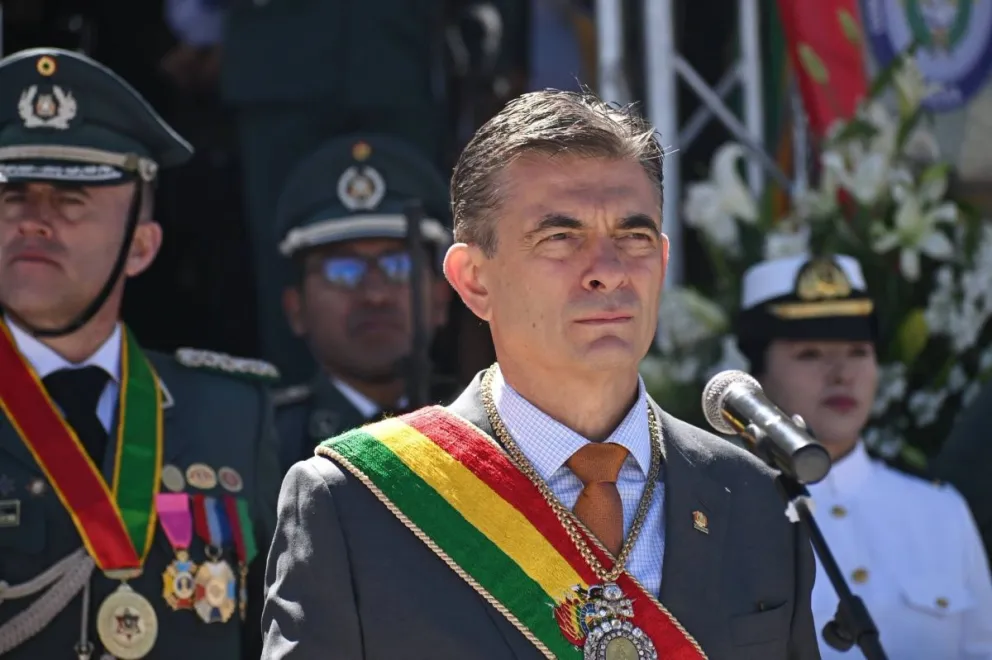
President Rodrigo Paz Pereira is facing one of the most difficult moments of his administration, just over nine months into office. In a single day, his personal adviser, Fernando Cerimedo, was arrested on suspicion of attempted femicide; his Minister of Economy, José Gabriel Espinoza, was censured by the Plurinational Legislative Assembly; and Cerimedo’s former partner, lawyer Nadia Beller, accused the president’s family circle of operating a corruption network.
Cerimedo’s arrest took place early Tuesday morning, after two hired gunmen allegedly attempted to kill Beller outside a hotel in downtown Santa Cruz the previous night. She was shot four times, survived by pretending to be dead, underwent surgery, and later gave an explosive interview from her hospital room to journalist Junior Arias of DTV.
Among other allegations, Beller identified Cerimedo as the person responsible for the attack against her. She claimed she had already survived another attempted femicide a month earlier, which she says was covered up by Government Minister Marco Antonio Oviedo and Police Commander Mirko Sokol. She also accused the president’s wife and her relatives of being central figures in a corruption network in which Cerimedo allegedly played a key operational role.
“They tried to silence me, and I am certain that if I do not speak directly to the people, they will try to take my life. I witnessed the deals carried out by Rodrigo Paz’s government, Rodrigo Paz’s wife, her family, with him (Fernando Cerimedo) acting as an operator alongside other individuals,” she stated.
As of 4:00 p.m. Tuesday, neither the president, his wife, nor any member of their family had publicly responded to the allegations. The presidential spokesperson, José Luis Gálvez, and members of the cabinet also remained silent.
According to Beller, the alleged dealings involve, among other matters, state fuel imports, gold smuggling, and insurance contracts for state-owned companies. “They are the ones negotiating the brokers’ commissions,” she said.
Beller explained that her relationship with Cerimedo—who she says is the father of the child she is expecting—began after she was recruited by the government to work on a package of laws promoted by the president. She said the relationship deteriorated due to Cerimedo’s alleged infidelities, first with his former wife, Natalia B., and later with Planning Cabinet Chief Maggy T.
She said these conflicts ultimately led to Monday’s events in Santa Cruz, when two men allegedly attempted to kill her and stole the cellphone she carried, which she claims contained evidence against Cerimedo.
The Argentine adviser arrived in Bolivia as a direct adviser to the president, although he never officially appeared on the Executive Branch payroll. Authorities have not yet announced whether his relationship with the president has ended following his arrest. Government Minister Marco Antonio Oviedo stated only that there would be no special treatment in the investigation.
Minister Censured
Tuesday afternoon brought another setback for President Paz Pereira. Economy Minister José Gabriel Espinoza was formally censured by the Plurinational Legislative Assembly after failing to appear and testify regarding the acquisition of a luxury vehicle that he allegedly did not initially declare to the Comptroller’s Office.
Out of 129 legislators, 91 voted in favor of censure, 34 supported a simple order of the day, and 4 abstained. The result suggests that the government has lost influence within the legislature, whose support is also crucial for maintaining the state of emergency that allowed Paz Pereira in June to neutralize road blockades demanding his resignation.
Legislative censure is a mechanism of political oversight and accountability through which the Assembly exercises control over the Executive Branch. Its principal immediate consequence is the mandatory dismissal of the minister who has been censured.
Article 158, Paragraph 18, of the Constitution establishes that one of the Assembly’s powers is to “interpellate, at the initiative of any legislator, Ministers of State individually or collectively, and to approve censure by a two-thirds vote of the members of the Assembly. The interpellation may be initiated by either chamber. Censure shall imply the dismissal of the Minister.”
Por Baldwin Montero Plaza, Vision 360:
Paz en su mala hora: aprehenden a su asesor por tentativa de feminicidio, censuran a un ministro y denuncian corrupción en su entorno familiar
El artículo 158 de la Constitución Política del Estado establece que “la censura implicará la destitución de la Ministra o del Ministro”.
El presidente Rodrigo Paz Pereira enfrenta uno de sus peores momentos en poco más de nueve meses de gestión. En el mismo día, su asesor personal, Fernando Cerimedo, fue aprehendido por tentativa de feminicidio; su ministro de Economía , José Gabriel Espinoza, recibió la censura de la Asamblea Legislativa Plurinacional y la abogada y expareja de Cerimedo, Nadia Beller, acusó a su familia de manejar una red de corrupción.
La aprehensión de Cerimedo se produjo en la madrugada, luego de que una noche antes dos sicarios atentaron contra la vida de Beller, su expareja, en puertas de un hotel en el centro de Santa Cruz. La mujer recibió cuatro disparos, fingió estar muerta, fue llevada a un centro hospitalario donde fue sometida a cirugías y luego hizo declaraciones explosivas en una entrevista concedida al periodista Junior Arias de la red DTV en la habitación donde ahora se recupera.
Entre otras cosas, identificó a Cerimedo como el responsable del atentado contra su vida, contó que ya hace un mes fue víctima de otro intento de feminicidio que fue cubierto por el ministro de Gobierno, Marco Antonio Oviedo, y por el comandante de la Policía, Mirko Sokol, y señaló a la esposa del Jefe de Estado y a su familia como los principales responsables de operar una red de corrupción en la que Cerimedo es también pieza clave.
“Intentaron silenciarme y tengo la certeza de que si no hablo de cara al pueblo intentarán acabar con mi vida … Fui testigo de los negociados que hace el gobierno de Rodrigo Paz, la esposa de Rodrigo Paz, la familia de la esposa de Rodrigo Paz, con él como operador (Fernando Cerimedo) y otras personas”, afirmó.
Hasta las 16:00 de este martes ni el Presidente ni su esposa o algún miembros de su familia se pronunciaron sobre estas acusaciones. Tampoco lo hizo el vocero presidencial, José Luis Gálvez, ni alguno de los miembros del gabinete ministerial.
De acuerdo a Beller, los negociados tienen que ver, entre otras cosas, con la gasolina que importa el Estado, el contrabando de oro y los seguros que se contratan para las empresas del Estado. “Son ellos los que negocian la comisión de los bróker”, precisó.
Beller contó que su relación con Cerimedo, de quien ahora se encuentra embarazada, comenzó cuando ella fue convocada por el Gobierno para trabajar en el paquete de leyes ofertadas por el Jefe de Estado al país. Dijo que luego se deterioró por las infidelidades del asesor presidencial, primero con su exesposa, Natalia B., y luego con la jefe de Gabinete de Planificación, Maggy T.
Dijo que este fue el motivo que desencadenó en las peleas que finalmente le llevaron al suceso ocurrido este lunes en Santa Cruz, cuando dos sujetos atentaron contra su vida y se llevaron el teléfono celular que tenía en ese momento y donde Beller asegura que habían muchas pruebas contra Cerimedo.
Este ciudadano argentino llegó como asesor directo del Presidente, aunque nunca figuró en planillas del Poder Ejecutivo. Hasta ahora no se informó si tras su aprehensión concluyó su relación con el Jefe de Estado. Únicamente el ministro de Gobierno, Marco Antonio Oviedo, anunció que en esta investigación no habrá privilegios.
Ministro censurado
Ya en la tarde de este martes llegó otro golpe al presidente Paz Pereira. El ministro José Gabriel Espinoza fue censurado en la Asamblea Legislativa Plurinacional luego de no presentarse a declarar por el caso de la adquisición de un vehículo de lujo que inicialmente no declaró ante la Contraloría.
De un total de 129 legisladores, 91 votaron por la censura, 34 por orden del día puro y simple, y 4 abstenciones, lo que muestra que el Gobierno perdió fuerza en este poder del Estado, del que además depende la continuidad del estado de excepción que en junio permitió a Paz Pereira neutralizar los bloqueos de caminos que exigían su renuncia.
La censura legislativa es un mecanismo de control político y fiscalización que la Asamblea Legislativa Plurinacional ejerce sobre el Órgano Ejecutivo y cuyo efecto inmediato principal es la destitución obligatoria del ministro interpelado.
El inciso 18 del artículo 158 de la Constitución Política del Estado establece que una de las atribuciones de la ALP es “Interpelar, a iniciativa de cualquier asambleísta, a las Ministras o los Ministros de Estado, individual o colectivamente, y acordar la censura por dos tercios de los miembros de la Asamblea. La interpelación podrá ser promovida por cualquiera de las Cámaras. La censura implicará la destitución de la Ministra o del Ministro”.


Leave a Reply