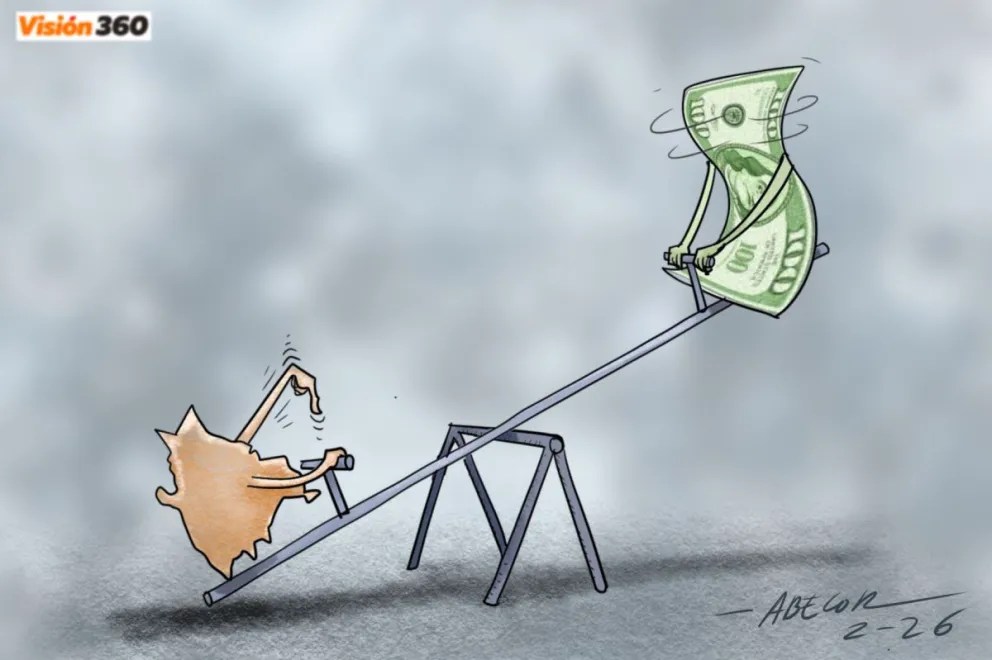
By Marcelo Nuñez:
At the beginning of the 1980s, Bolivia experienced one of the most tragic periods in its economic history. Hyperinflation dominated the economy, with price increases reaching 8,000 percent, a world record. Most macroeconomics textbooks mention this inflationary phenomenon and compare it to the one suffered by Germany after World War II. Monetary policy between 1982 and 1985 maintained a fixed or rigid exchange rate, pegged at 25 Bolivian Pesos per U.S. dollar. The shortage of foreign currency led to the emergence of a parallel market because the Central Bank was unable to provide the dollars demanded by the population.
The devaluation of the local currency accompanied hyperinflation in the same proportion. The purchasing power of economic agents declined within hours. Banks were not allowed to hold accounts in foreign currency, and ordinary citizens could save only in the national currency. The economy was completely out of control. In addition, most social sectors demanded wage increases and bonuses. The nation was engulfed in chaos, with strikes, marches, blockades, and other forms of unrest. International reserves had fallen to barely half a million U.S. dollars.
Fortunately for all Bolivians, then-President Hernán Siles Zuazo decided to shorten his term by one year, a heroic act given that the country was practically bankrupt. He called elections, and Víctor Paz Estenssoro assumed leadership of the nation. In his inaugural speech, the new president uttered a phrase that would remain in Bolivia’s history: “Bolivia is dying.” He then launched the famous Supreme Decree 21060, which concentrated all economic measures into a single decree.
Beginning in September 1985, Bolivia adopted a flexible or floating exchange rate regime. The value of the currency was determined by the supply and demand for U.S. dollars. To manage this process, the Central Bank created a department known as the “Bolsín,” whose main function was to administer the foreign currency available to the national financial system. If demand exceeded supply, the exchange rate would rise; in other words, control would be exercised through mini-devaluations or gradual depreciation of the local currency.
The policies implemented in the country quickly stabilized the main economic accounts, which had been deeply in deficit. Public confidence was reflected in a substantial increase in foreign-currency deposits. Banks began to attract and lend funds in U.S. dollars. International reserves grew, as did foreign direct investment, because the openness of the economy and the resulting stability generated confidence among international investors.
The success of what became known as the New Economic Policy left subsequent governments with little alternative but to maintain and continue a flexible or floating exchange rate regime. This monetary system prevents major imbalances in the balance of payments, ensuring that current account deficits remain manageable. Chronic deficits in these accounts tend to cause dramatic declines in international reserves.
Unfortunately, beginning in October 2011, monetary policy changed and the nation adopted a fixed exchange rate of 6.86 bolivianos per dollar for purchases and 6.96 for sales. The results of this policy are well known to all Bolivians. As macroeconomics experts have long warned, maintaining a fixed or rigid exchange rate for an extended period eventually depletes a country’s international reserves.
The current government, led by Rodrigo Paz Pereira, has once again implemented a system that worked well fifteen years ago. Bolivians lived with mini-devaluations for twenty-six years, so while this may seem new to younger generations, it is not unfamiliar to much of the population. However, most citizens in neighboring countries face not only the depreciation of their currencies but also the effects of inflation.
Over time, certain issues inherent to the new exchange rate regime will need to be addressed. One example is the policy known as “Bolivianization,” since a large concentration of financial resources remains denominated in local currency. The financial system urgently needs to resume operating with substantial volumes of foreign currency. Another adjustment involves establishing new parameters for determining the value of the Housing Development Unit (UFV). Policymakers still have significant work ahead of them.
Former President of the Santa Cruz College of Economists; Professor at U.A.G.R.M.
Por Marcelo Nuñez Arauz:
Bolivia a comienzo de la década de los años ochenta del siglo pasado, vivió unos los momentos más trágicos de su historia económica, por aquellos años reinaba la hiperinflación, los registros establecían un ocho mil por ciento de incrementos de los precios, todo un récord mundial. La mayoría de los libros de macroeconomía mencionan este fenómeno inflacionario y realizan comparaciones con la que sufrió Alemania después de la Segunda Guerra Mundial. La política monetaria entre el periodo 1982-1985, establecía un tipo de cambio fijo o rígido, anclado a valor de 25 Pesos Bolivianos por dólar, la carencia de divisas originó que se forme un mercado paralelo, pues el Banco Central no proveía los dólares que la población requería.
La devaluación de la moneda local acompañaba a la hiperinflación en la misma proporción, el poder adquisitivo de los agentes económicos disminuía encuestión de horas, a los bancos no se les permitían registrar cuentas en moneda extranjera; el ciudadano de a pie, solo podía ahorrar en moneda nacional. Total descontrol de la economía; adicionalmente a ello, la mayoría delos sectores sociales, exigían: Incremento salarial y bonos. La nación se encontraba en caos, con paros, marchas, bloqueos, etc. Las reservas internacionales apenas llagaban a quinientos mil dólares americanos.
Por fortuna para todos los bolivianos, el presidente en ese entonces Hernan Siles Suazo, decide un año antes acortar su mandato, un acto heroico pues el país estaba prácticamente en bancarrota, llama a elecciones y asume el liderato de la nación Victor Paz Estenssoro. El flamante presidente en su discurso de posesión mencionó una frase que quedará en los anales de la historia “Bolivia se nos muere”, y lanza el famoso 21060 todas las medidas económicas concentrados en un solo Decreto Supremo.
A partir de septiembre de 1985, en Bolivia ingresa en acción el tipo de cambio flexible o flotante; su valor se determina en relación de la oferta y demanda de dólares americanos, para ello se crea dentro del Banco Central una sección denominada “Bolsín”, cuya función principal es administrar los montos de moneda extranjera disponibles para el sistema financiero nacional, si la demanda supera a la oferta la cotización del tipo de cambio se incrementará, en otras palabras el control será a través de mini devaluaciones o depreciación de la moneda local.
Las políticas aplicadas en el país estabilizaron rápidamente las principales cuentas que se encontraban en rojo, la confianza de la ciudadanía se plasmó en incremento sustancial de las cuentas en moneda extranjera, los bancos empiezan a captar y colocar recursos en dólares americanos, las reservas internacionales se incrementan al igual que la inversión extranjera directa, pues hay apertura y el capital foráneo llega a Bolivia gracias a la confianza y estabilidad que reina en el país.
El éxito de lo que se denominó nueva política económica, los gobiernos que sucedieron a Victor Paz Estenssoro, no tuvieron otra alternativa que mantener y seguir los pasos de un tipo de cambio flexible o flotante. pues este régimen monetario no permite que haya desfases en la cuenta de balanza de pagos, es decir que los déficits en cuentas corrientes sean manejables, pues desbalances crónicos en dichas cuentas producen caídas estrepitosas en las reservas internacionales.
Lamentablemente, a partir de octubre del 2011, la política monetaria se modifica, la nación ingresa a emplear un tipo de cambio fijo con 6,86 para la compra y 6.96 para la venta, los resultados de la aplicación de esta medida monetaria todos los bolivianos la conocemos, pues se cumplió lo que mencionan los expertos en los libros de macroeconomía, mantener un tipo de cambio fijo o rígido a la larga deja sin reservas a los países.
El actual gobierno comandado por Rodrigo Paz Pareira ha vuelto a aplicar lo que hace quince años funcionaba muy bien, los bolivianos hemos convivido veintiséis años como mini devaluaciones, tal vez para los más jóvenes es una novedad. Sin embargo, la mayoría de la población de países vecinos, sufren los embates no solo de las depreciaciones de sus monedas sino también de la inflación.
Habrá que ir modificando en el transcurso del tiempo algunos problemas inherentes al nuevo régimen cambiario, como por ejemplo lo que se denominó la Bolivianización, pues hay mucha concentración de recursos en moneda local, el sistema financiero requiere con urgencia volver a operar grandes volúmenes en moneda extranjera, otro ajuste que tendrán que realizar; está ligado a definir nuevos parámetros para la determinación del valor de la Unidad de Fomento a la Vivienda (UFV), a los hacedores de la política económica les queda mucho trabajo.
Past presidente Colegio de Economista de Sta.Cruz; Docente U.A.G.R.M.
 Bolivian Thoughts | Pensamientos Bolivianos (Bilingual/Bilingüe)
Leave a comment