By Marcelo Núñez:
During the severe economic crisis that Bolivia experienced in the early 1980s, the government maintained an official exchange rate of 25 Bolivian pesos per U.S. dollar. However, in the parallel or informal market, the price of foreign currency rose day after day due to a clear shortage of hard currency; despite this, the street exchange rate reached 500 pesos per dollar. The administration of Hernán Siles Zuazo insisted on maintaining a fixed exchange rate, a benefit that was accessible only to businesspeople and politicians close to those in power. These flaws in the exchange rate system completely distorted prices, leading the country to record the worst hyperinflation in the world. Faced with this situation, Siles Zuazo demonstrated courage by resigning one year before the end of his presidential term.
In 1985, Víctor Paz Estenssoro assumed the presidency and implemented the historic Supreme Decree 21060. This measure transformed the nation’s economic policy by introducing a flexible exchange rate system. To achieve this, the Central Bank of Bolivia (BCB) launched the “Bolsín” mechanism, which operated through public auctions of foreign currency to private banking institutions. If purchase requests exceeded the amount available, the price of the dollar increased by one cent, a strategy technically known as mini-devaluations or a crawling peg. Since the BCB intervened indirectly to regulate the value of the currency and prevent it from depending entirely on the free market, the system became known as a “dirty float.”
The managed floating exchange rate model operated continuously until November 2011. At that time, Evo Morales’ administration froze devaluations, taking advantage of the fact that the country enjoyed a trade surplus and international reserves stood at around $14 billion. Although fixing and lowering the price of the dollar helped stabilize the cost of imported goods, it also triggered a massive increase in imports. As a direct consequence of this policy, international reserve funds gradually declined until they were practically exhausted.
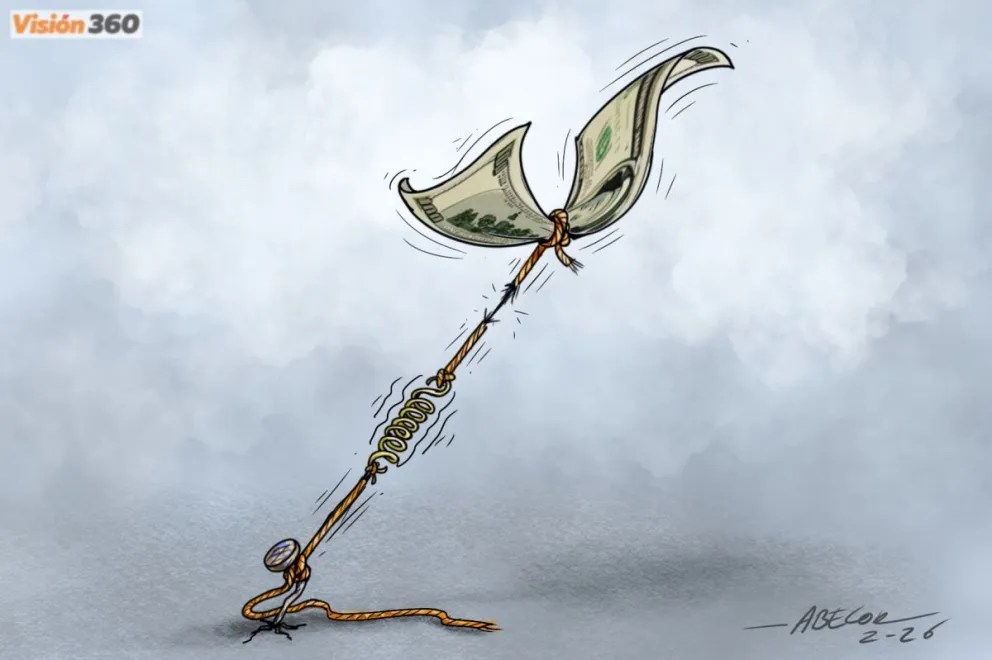
Finally, the government of Rodrigo Paz Pereyra, through Supreme Decree No. 5503, brought the era of the fixed exchange rate to an end. Under this measure, the price of the U.S. currency began to be determined by actual purchase transactions within the financial system, with the average of those transactions being used by the BCB to periodically publish the official exchange rate. Today, exchange-rate reports show fluctuations and considerable volatility, demonstrating that the value of the dollar moves freely according to the forces of supply and demand. With this, Bolivia has taken the step toward a flexible exchange-rate system with a clean float.
Marcelo Núñez Araúz (Former President of the Santa Cruz Economists Association and Professor at U.A.G.R.M.)
Por Marcelo Núñez Araúz:
Durante la profunda crisis económica que atravesó Bolivia a principios de la década de 1980, el Estado sostenía un tipo de cambio oficial de 25 pesos bolivianos por cada dólar. No obstante, en el mercado paralelo o informal, el precio de la moneda extranjera subía día tras día debido a una evidente escasez de divisas; a pesar de que en las calles la cotización alcanzaba los 500 pesos. La administración de Hernán Siles Zuazo insistió en mantener un tipo de cambio fijo, un beneficio al que solo accedían empresarios y políticos allegados al poder, estas fallas en el sistema cambiario distorsionaron por completo los precios, llevando al país a registrar la peor hiperinflación del mundo. Ante este escenario, Siles Zuazo demostró valentía al dimitir un año antes de concluir su periodo presidencial.
Para 1985, Víctor Paz Estenssoro asumió la presidencia e implementó el histórico Decreto Supremo 21060. Esta norma transformó la política de la nación al introducir un tipo de cambio flexible. Con este propósito, el Banco Central de Bolivia (BCB) puso en marcha el mecanismo del “Bolsín”, el cual funcionaba mediante la subasta pública de divisas a las entidades bancarias privadas. Si las solicitudes de compra superaban el monto disponible, el precio del dólar subía un centavo, una estrategia conocida técnicamente como minidepreciaciones o crawling peg. Dado que el BCB intervenía de manera indirecta para regular el valor de la moneda y evitar que dependiera exclusivamente del libre mercado, este sistema recibió el nombre de “flotación sucia”.
El modelo de flotación administrada operó de forma continua hasta noviembre de 2011. En ese momento, la gestión de Evo Morales congeló las devaluaciones aprovechando que el país gozaba de un superávit comercial y las reservas internacionales rondaban los 14.000 millones de dólares. Si bien fijar y abaratar el precio del dólar sirvió para estabilizar los costos de las mercancías importadas, también provocó un incremento masivo de las compras del exterior; Como consecuencia directa de esta política, los fondos de las reservas internacionales comenzaron a descender paulatinamente hasta quedar prácticamente agotadas.
Finalmente, el gobierno de Rodrigo Paz Pereyra mediante el Decreto Supremo Nº 5503concluye con la era del tipo de cambio fijo. A partir de esta medida, el precio de la divisa estadounidense pasó a establecerse según las operaciones reales de compra del sistema financiero, utilizándose el promedio de estas transacciones para que el BCB publique periódicamente los datos oficiales del valor del dólar. Actualmente, los reportes cambiarios reflejan variaciones y bastante volatilidad, demostrando que el valor del dólar se mueve libremente según las fuerzas de la oferta y la demanda. Con esto, Bolivia ha dado el paso hacia un sistema de tipo de cambio flexible con flotación limpia.
Marcelo Núñez Araúz (Past presidente del Colegio de Economistas de Santa Cruz y Docente de la U.A.G.R.M.)


Leave a Reply