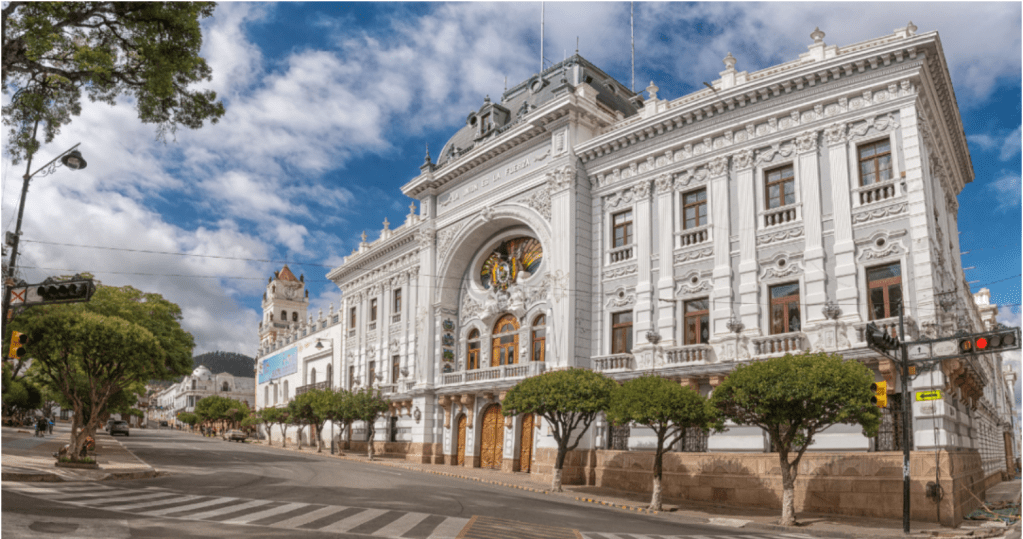
By Freddy Lacio, El Deber:

It occupies a unique place because it connects regions, safeguards the nation’s memory, and seasons Bolivian identity with the chili pepper that defines its cuisine.
Why is Chuquisaca so essential to Bolivia? Because it connects productive regions and strategic ecosystems while contributing food, hydrocarbons, and historical heritage. It is not only the birthplace of independence; today it remains the transition territory between the highlands, valleys, Chaco and the eastern lowlands.
For historian, journalist and researcher Felipe Medina Espada, this connecting role was born with the country itself. He recalls that, after fifteen years of the War of Independence, Sucre became the political center where, on July 10, 1825, the Assembly of Deputies was installed, giving rise to the Republic through the Declaration of Independence. “We are the nurturing mother of Bolivian identity,” he says. He adds that decades later, Jaime Mendoza’s vision consolidated this role with the highway linking western Bolivia with Santa Cruz through northern Chuquisaca and the Chaco, making Sucre the meeting point between Potosí, Tarija, Cochabamba and the eastern lowlands.
Ocupa un lugar singular porque une regiones, resguarda la memoria nacional y sazona la identidad boliviana con el ají que distingue su cocinae.

A territory of flavors
That bridge also has flavor. Chuquisaca produces between 81% and 90% of Bolivia’s chili peppers, an agricultural heritage recognized internationally. Former prefect Savina Cuéllar, who has been involved in the product’s trade for years, highlights the sweet ancho, semi-hot and hot varieties as the most popular nationwide. “In Chuquisaca, almost all our dishes contain chili,” she says, mentioning mondongo, fritanga, ranga, picante and saice, reflecting a cuisine in which seasoning is part of the region’s identity.
Producer Ramiro Blacutt says the prestige of Chuquisaca’s chili peppers begins with the soil. He has been involved in family farming for more than three decades and says Padilla, Huacareta and Villa Serrano produce the best harvests. Sweet chili, chicotillo and huacareteño varieties thrive there, cultivated between November and July in fertile fields. “It is an organic chili, recognized for its quality and flavor,” he sums up.
For President of the Chamber of Deputies Roberto Castro Salazar, August is an invitation to see Chuquisaca as the place where freedom was born and where national unity continues to be strengthened. He highlights the legacy of the university, which has educated professionals and leaders, as well as the richness of its valleys, mountain ranges and productive areas. He believes that preserving this historical and natural heritage means transforming the past into opportunities for development, dialogue and cohesion for the entire country. Thus, Chuquisaca confirms that Bolivia’s history is not only remembered: it is also cultivated, connected and savored.
Mondongo sums up Chuquisaqueño identity
Mondongo is one of the greatest symbols of Chuquisaca’s cuisine and an essential dish at family celebrations, patron-saint festivities and social gatherings.
The recipe combines pork, ground chili, garlic, cumin and other spices, slowly cooked until a thick sauce is obtained.
Its distinctive flavor comes from the use of the region’s red criollo chili, considered one of the best in the country.
Chuquisaca’s culinary richness is also expressed in dishes such as chicken picante, ranga, chickpea ají, ají de patitas, Chuquisaqueño chorizo and the traditional lamb qhati.
These dishes reflect the identity and diversity of this department’s regional cuisine.
Facts and figures
Capital: Sucre
Population: 606,027 inhabitants (2024 Census)
Area: 51,524 km²
Provinces and municipalities:
Chuquisaca is organized into 10 provinces and 29 municipalities, coordinated by the Departmental Autonomous Government and municipal governments. Sucre, the capital of both the department and Bolivia, concentrates administrative functions and is home to the Judicial Branch. The territory also includes subgovernorships, districts, communities and Indigenous Native Peasant territories. Its geography encompasses valleys, mountain ranges and areas of the Chaco. The economy is based on corn, wheat, potatoes, chili peppers and peanuts; livestock, hydrocarbons, cement and heritage tourism. The Cinti valleys are renowned for their wines and singani, along with growing agro-industrial and manufacturing production.
Por Freddy Lacio Fernández, El Deber:
Ocupa un lugar singular porque une regiones, resguarda la memoria nacional y sazona la identidad boliviana con el ají que distingue su cocina
¿Cuál es la principal razón por la que Chuquisaca resulta indispensable para Bolivia? Porque conecta regiones productivas y ecosistemas estratégicos mientras aporta alimentos, hidrocarburos y patrimonio histórico. No solo es la cuna de la independencia; hoy continúa siendo el territorio de transición entre el altiplano, los valles, el Chaco y el oriente.
Para el historiador, periodista e investigador Felipe Medina Espada, esa vocación articuladora nació junto con el país. Recuerda que, tras quince años de Guerra de la Independencia, Sucre se convirtió en el centro político donde el 10 de julio de 1825 se instaló la Asamblea de Diputados que dio origen a la República mediante el Acta de la Independencia. “Somos la madre nutricia de la bolivianidad”, sostiene. Añade que, décadas después, la visión de Jaime Mendoza consolidó ese papel con la carretera que enlazó el occidente con Santa Cruz a través del norte chuquisaqueño y el Chaco, haciendo de Sucre el punto de encuentro entre Potosí, Tarija, Cochabamba y el oriente.
Territorio de sabores
Ese puente también tiene sabor. Chuquisaca produce entre el 81% y el 90% del ají boliviano, un patrimonio agrícola reconocido internacionalmente. La exprefecta Savina Cuéllar, dedicada desde hace años al comercio del producto, destaca que las variedades dulce ancho, semipicante y picante dominan las preferencias nacionales. “En Chuquisaca casi todos nuestros platos llevan ají”, afirma al mencionar el mondongo, la fritanga, la ranga, el picante y el saice, reflejo de una gastronomía donde el condimento forma parte de la identidad.
El productor Ramiro Blacutt sostiene que el prestigio del ají chuquisaqueño nace en la tierra. Desde hace más de tres décadas acompaña la producción familiar y asegura que Padilla, Huacareta y Villa Serrano concentran las mejores cosechas. Allí prosperan el ají dulce, el chicotillo y el huacareteño, cultivados entre noviembre y julio en chacos fértiles. “Es un ají orgánico, reconocido por su calidad y sabor”, resume.
Para el presidente de la Cámara de Diputados, Roberto Castro Salazar, agosto invita a mirar a Chuquisaca como el lugar donde nació la libertad y donde sigue fortaleciéndose la unidad nacional. Resalta el legado de la universidad, formadora de profesionales y líderes, así como la riqueza de sus valles, serranías y zonas productivas. Considera que preservar ese patrimonio histórico y natural significa transformar el pasado en oportunidades de desarrollo, diálogo y cohesión para todo el país. Así, Chuquisaca confirma que la historia de Bolivia no solo se recuerda: también se cultiva, se conecta y se saborea.
El mondongo resume la identidad chuquisaqueña
El mondongo es uno de los mayores símbolos de la gastronomía chuquisaqueña y un plato infaltable en celebraciones familiares, fiestas patronales y reuniones sociales.
La receta combina carne de cerdo, ají molido, ajo, comino y otras especias, cocinados lentamente hasta obtener una salsa espesa.
Su sabor se distingue por el uso del ají rojo criollo de la región, considerado uno de los mejores del país.
La riqueza culinaria de Chuquisaca también se expresa en platos como el picante de pollo, la ranga, el ají de garbanzo, el ají de patitas, el chorizo chuquisaqueño y el tradicional qhati de cordero.
Estos platos reflejan la identidad y diversidad de la cocina regional de este departamento.
Datos y cifras
Capital: Sucre
Población: 606.027 habitantes (Censo 2024)
Superficie: 51.524 km²
Provincias y municipios:
Chuquisaca se organiza en 10 provincias y 29 municipios, articulados por el Gobierno Autónomo Departamental y los gobiernos municipales. Sucre, capital del departamento y de Bolivia, centraliza la administración y es sede del Órgano Judicial. El territorio se completa con subgobernaciones, distritos, comunidades y territorios indígena originario campesinos. Su geografía abarca valles, serranías y zonas del Chaco. La economía se apoya en maíz, trigo, papa, ají y maní; ganadería, hidrocarburos, cemento y turismo patrimonial. Los valles de Cinti destacan por sus vinos y singanis, y una creciente producción agroindustrial y manufacturera.
https://eldeber.com.bo/pais/chuquisaca-region-donde-historia-tiene-sabor_1785976200


Leave a Reply