By Ximena Rodriguez, Red Uno:
Álvaro Ríos: Bolivia Needs a New Hydrocarbons Law to Revive Production and Curb Imports
The specialist says the government must bring the economy into line with reality and remove subsidies in order to make a new law viable.
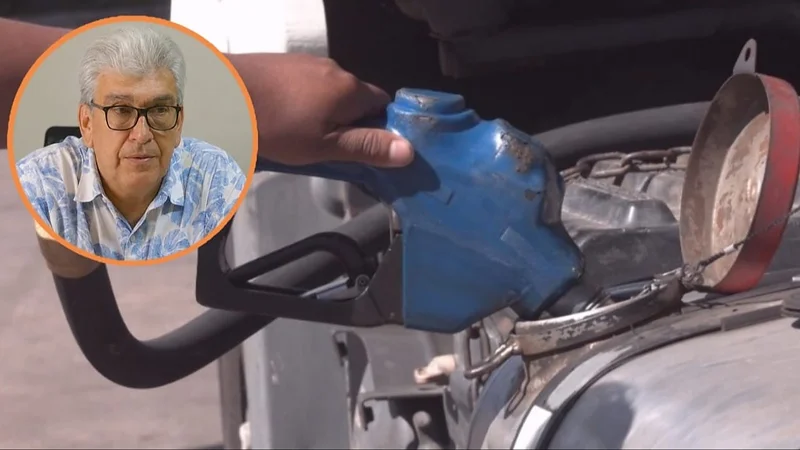
Photo: Red Uno:
Amid an energy-supply crisis marked by long lines at service stations across several departments of the country, the energy sector is calling for structural change. “That is why it is important to enact a hydrocarbons law that will increase production in the country so that we do not have to import so much,” said former minister Álvaro Ríos. He also argued that the government “did not come prepared to govern a country with the energy problem it had ahead of it,” referring to the technical complexity involved in managing the sector.
“If the subsidy for natural gas is not removed, a hydrocarbons law cannot be implemented,” the former official said, calling on the government to take measures aimed at “bringing the energy sector into line with reality so that the economy can be brought into line with reality.”
For Ríos, moving forward on the premise that “we have to think about dismantling subsidies” gradually and “equalizing the price per liter of Bolivian gasoline, diesel, LPG and natural gas” is essential to curb smuggling and attract the investment needed.
Challenges in Allocating Foreign Currency for Imports
National fuel demand requires a major financial effort, given that “the country needs to import around $7 million or $8 million a day in diesel and gasoline,” equivalent to “$240 million a month,” according to the analyst. In this regard, he said that “the Finance Minister is not providing the dollars on time for YPFB to pay its suppliers.”
The specialist suggested that the state-owned company needs to restructure its organization, describing “YPFB as a tremendously disorganized, bureaucratic company.” He recommended conducting “a quick consultancy and downsizing it to its real size.” He also considered it appropriate to assess reforms to strategic-sector companies, stating that “they will have to dismantle YPFB and ENDE” in order to “move away from the statist model” and overcome rigid administrative practices.
Public-Private Complementarity to Improve Efficiency
Private-sector participation could bring greater agility to the logistics chain, given that “a private company imports [at] $14 per barrel, more cheaply and efficiently than YPFB.” He likewise recommended “giving the private sector a greater role” so it can compete and cooperate in the market, easing the State’s operational burden and improving timely fuel supplies at service stations.
Fundamental solutions require coordinated measures implemented progressively in order to establish “a set of rapid measures so that we can solve the energy problem within three years,” Ríos said. Since “a country without energy has no economy,” he stressed the priority of promoting “new production so that we do not have to import so much: mature fields, condensate associated with natural gas in certain fields that have already been developed in Bolivia,” before the country faces greater dependence on foreign supplies by 2029.
Por Ximena Rodriguez, Red Uno:
Álvaro Ríos: Urge una nueva Ley de Hidrocarburos para reactivar la producción y frenar la importación
El especialista asegura que el gobierno debe sincerar la economía y retirar subsidios para poder viabilizar la nueva ley.
Foto: Red Uno.
En medio de una crisis de abastecimiento marcada por extensas filas en las estaciones de servicio de varios departamentos del país, el sector energético demanda un cambio estructural. “Por eso es importante hacer la ley de hidrocarburos, que le dé nueva producción al país para que no importemos tanto”, señaló el exministro Álvaro Ríos, quien sostuvo además que “no entraron preparados para gobernar un país con el problema energético que tenían por delante”, al referirse a la complejidad técnica que exige la gestión del área.
“Si no se quita el subsidio al gas natural no podrá realizarse una ley de hidrocarburos”, planteó la exautoridad al requerir que la administración pública aplique medidas orientadas a “sincerar el sector energético para que la economía se sincere”.
Para Ríos, avanzar bajo la premisa de que “hay que pensar en desmontar los subsidios” de manera gradual e “igualar el precio del litro boliviano de gasolina, diésel, GLP, gas natural” es un camino fundamental para frenar el contrabando y atraer las inversiones necesarias.
Desafíos en la asignación de divisas para la importación
La demanda nacional de carburantes implica un esfuerzo financiero importante, considerando que “el país necesita importar alrededor de 7 u 8 millones de dólares por día, entre diésel y gasolina”, lo que equivale a “240 millones de dólares por mes”, según lo que remarca el analista. En ese sentido, el analista señaló que “el ministro de Finanzas no le está dando oportunamente los dólares para que YPFB pague a los proveedores”.
El especialista sugirió que la estatal requiere adecuar su estructura organizativa, indicando que “YPFB es una empresa tremendamente desorganizada, burocrática”, por lo que recomendó realizar “una consultoría rápida, achicarla a su tamaño real”. Asimismo, consideró oportuno evaluar reformas en las firmas del sector estratégico, manifestando que “van a tener que deshacer YPFB y ENDE” con el objetivo de “salir del modelo estatista” y superar dinámicas administrativas rígidas.
Complementariedad con la iniciativa privada para ganar eficiencia
La participación de actores privados puede aportar mayor agilidad en la cadena logística, tomando en cuenta que “un privado importa 14 dólares por barril, más barato en eficiencia que YPFB”. De igual forma, recomendó “darle más protagonismo al sector privado” para permitir que este compita y coopere en el mercado, aliviando la carga operativa del Estado y mejorando el abastecimiento oportuno en las estaciones de servicio.
Las soluciones de fondo requieren medidas coordinadas de aplicación progresiva para contar con “un conjunto de medidas rápidas para que tengamos solución al tema energético de aquí a tres años”, según indica Ríos. Considerando que “un país sin energía no tiene economía”, resulta prioritario promover una “nueva producción para no importar tanto: campos maduros, condensado asociado al gas natural en ciertos campos que están desarrollados en Bolivia” antes de enfrentar escenarios de mayor dependencia externa hacia 2029.


Leave a Reply