Editorial, El Dia:
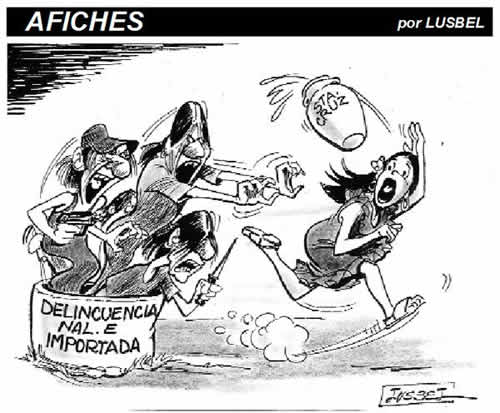
The armed robbery carried out this Sunday at a busy, upscale shopping mall in Santa Cruz was neither an ordinary criminal act nor an improvised operation. At a time when the mall was crowded, in a place families and citizens choose on the assumption that it offers security and recreation, a highly organized and audacious group stormed a jewelry store and, using gunfire and brute force, made off with a substantial haul amid the terror of customers and employees. The incident sparked panic throughout the mall, as people sought refuge in various stores, unable to believe what was happening.
Beyond the financial impact and the trauma inflicted on the direct victims, the true significance of what happened lies in its symbolic and institutional weight: it amounts to an implicit, defiant, and direct message from organized crime to the Government, the Police, and the judicial system. By carrying out this raid in one of the most valuable and heavily guarded areas of Santa Cruz, criminal networks are telling the State: “Look what we are capable of. We are stronger, better organized, and you cannot stop us.”
This audacious attack comes amid a barrage of official government rhetoric, filled with promises, announcements of “secure borders,” bilateral plans with Brazil, and statements about strengthening national security. Yet the facts contradict the official narrative. While speeches proliferate, the reality on the streets and in municipalities such as San Matías and San Ignacio de Velasco reflects a steady escalation of shootouts, executions, and score-settling killings. Criminal organizations—with foreign factions and cartels, mostly Brazilian, playing an increasingly prominent role—continue to compete for and gain ground both territorially and within state institutions.
The capture of key figures, such as former prosecutor Róger Mariaca and his main accomplices, as well as Uruguayan drug trafficker Sebastián Marset, whose arrest the Government continues to boast about, shows that what has come to light so far is merely the tip of the iceberg. The underlying problem lies not only in the chronic shortage of equipment and intelligence capabilities available to law enforcement, but also in the penetration of the Police, the Public Prosecutor’s Office, and the Judiciary by organized crime itself. Without genuine institutional housecleaning and transparent institutions firmly committed to the rule of law, any security plan will be reduced to mere rhetoric.
Sunday’s robbery demonstrates that organized crime no longer operates on the margins of society or hides in the shadows. Today, it dominates the scene, sets the pace, and openly challenges the State’s sovereignty in some of its most emblematic locations. If the authorities fail to respond with effective, far-reaching, and decisive structural measures that go beyond the headlines, Bolivia risks entrenching a situation in which the law is dictated not by the State, but by the unchecked violence of the cartels.
Editorial, El Día:
El atraco a mano armada perpetrado este domingo en un concurrido y exclusivo centro comercial de Santa Cruz no fue un simple acto de delincuencia común ni una acción improvisada. En una hora de gran concurrencia, en un espacio que las familias y los ciudadanos eligen bajo la premisa de la seguridad y el esparcimiento, un grupo altamente organizado y audaz irrumpió violentamente en una joyería y, a tiros y empujones, se llevó un jugoso botín en medio del terror de clientes y empleados. El incidente causó pánico en todo el establecimiento, donde la gente buscaba refugio en las distintas tiendas, incrédula ante lo que estaba ocurriendo.
Más allá del impacto económico o del trauma generado en las víctimas directas, la verdadera dimensión de lo sucedido radica en su peso simbólico e institucional: se trata de un mensaje implícito, desafiante y directo del crimen organizado al Gobierno, a la Policía y al sistema judicial. Con esta incursión en una de las zonas más cotizadas y resguardadas de la capital cruceña, las estructuras criminales le están diciendo al Estado: «Miren de lo que somos capaces: somos más fuertes, estamos más organizados y no pueden con nosotros».
Este audaz golpe ocurre en medio de un nutrido discurso oficialista, lleno de promesas, anuncios de «fronteras seguras», planes bilaterales con Brasil y declaraciones sobre el fortalecimiento de la seguridad nacional. Sin embargo, los hechos desmienten la narrativa oficial. Mientras proliferan los discursos, la realidad en las calles y en municipios como San Matías y San Ignacio de Velasco refleja una escalada constante de balaceras, ejecuciones y ajustes de cuentas. Las organizaciones criminales —con un protagonismo creciente de facciones y cárteles extranjeros, en su mayoría brasileños— continúan disputando y ganando terreno en el ámbito territorial e institucional.
La captura de figuras clave, como el exfiscal Róger Mariaca y sus principales cómplices, así como la del narcotraficante uruguayo Sebastián Marset, cuyo apresamiento sigue siendo motivo de jactancia para el Gobierno, evidencia que lo que se ha visibilizado hasta ahora es apenas la punta del iceberg. El problema de fondo no reside únicamente en el déficit crónico de equipamiento y de inteligencia con el que opera la fuerza pública, sino también en la penetración del crimen organizado en la propia Policía, la Fiscalía y el Órgano Judicial. Sin una depuración real y sin instituciones transparentes y firmemente comprometidas con la legalidad, cualquier plan de seguridad termina reducido a mera retórica.
El atraco del domingo demuestra que el crimen organizado ya no actúa desde la marginalidad ni se oculta en las sombras: hoy domina el escenario, marca los tiempos y desafía abiertamente la soberanía del Estado en algunos de sus espacios más emblemáticos. Si las autoridades no responden con acciones estructurales, idóneas y contundentes que vayan más allá de los titulares, Bolivia corre el riesgo de consolidar un escenario en el que la ley no la dicte el Estado, sino la violencia impune de los cárteles.
https://eldia.com.bo/2026-10-13/editorial/mensaje-del-crimen-organizado.html


Leave a Reply