By Francesco Zaratti:
La Paz, July 26, 2026 – In today’s public debate, the concepts of “energy sovereignty” and “energy security” are often confused. While sovereignty is commonly understood as absolute and unrealistic self-sufficiency, energy security represents the real and strategic capacity of a State to guarantee the continuous supply of energy that its economy requires.
The Myth of Absolute Sovereignty vs. the Reality of Security
Historically, Bolivia has been identified as a natural gas-producing country. However, since the beginning of this century, the country’s inability to produce diesel in sufficient volumes has shattered the aspiration of full energy sovereignty.
Nevertheless, it is important to clarify that, in the global economy, no country—not even major oil producers—is completely self-sufficient. Imports are a legitimate strategic tool for preserving domestic reserves or optimizing regional logistics costs. The true measure of a nation’s success is energy security: having the logistics and foreign currency resources necessary to ensure that fuel supply never becomes a bottleneck. Countries such as Chile, with limited hydrocarbon resources, demonstrate that efficient management of imports and logistics can shield an economy from shortages.
The Diagnosis
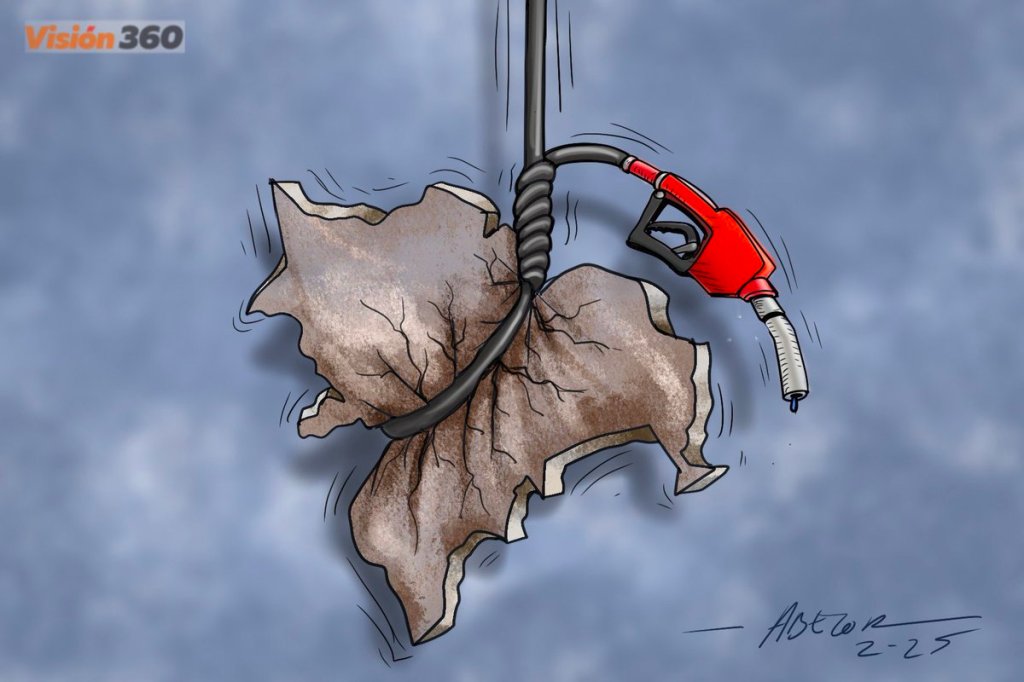
Bolivia is currently facing a severe crisis, evidenced by disruptions in fuel supply and long lines at service stations. This situation, in which the country imports nearly 90% of the diesel it consumes, is the result of the failed model of the past 20 years, characterized by six critical factors:
- Production decline: Inadequate energy policies over the past two decades have caused a systematic reduction in hydrocarbon reserves and production.
- Foreign currency crisis: A shortage of U.S. dollars prevents the timely purchase of fuels on international markets.
- Exchange-rate instability: The lack of financial certainty disrupts the essential cycle of fuel importation and commercialization.
- Inefficient logistics: Extreme dependence on tanker-truck transportation, a slow and costly model that no longer meets current needs.
- Subsidy distortions: The system of artificially low prices not only encourages fuel smuggling to neighboring countries but also discourages investment in renewable energy.
- Institutional weakness: The lack of oversight and quality certification in fuel imports has compromised both vehicle fleet efficiency and the integrity of fuel supply.
Toward a New Horizon
Overcoming this crisis does not allow for immediate or populist solutions; it requires a long-term process built on two fundamental pillars:
• In hydrocarbons: It is imperative to reactivate exploration and production through the attraction of private risk capital. This requires a profound regulatory reform that restores legal certainty and investor confidence, as well as a comprehensive alignment of prices with actual costs.
• In the electricity sector: Bolivia must move away from its dependence on natural gas—whose reserves are in clear decline—and toward a diversified model. It is essential to implement a National Energy Transition Plan that establishes clear investment targets, identifies key stakeholders, and defines timelines for harnessing the country’s vast renewable energy potential: hydropower, solar, wind, biomass, and geothermal energy.
Bolivia’s energy future depends on our ability to abandon outdated dogmas, modernize institutions, and embrace a comprehensive, efficient, and sustainable energy security strategy.
Regards and good health, Francesco
Por Francesco Zaratti:
La Paz, 26 de julio de 2026 – En el debate público actual, a menudo se confunden los conceptos de “soberanía energética” y “seguridad energética”. Mientras que la soberanía suele entenderse como un autoabastecimiento absoluto e irreal, la seguridad energética representa la capacidad real y estratégica de un Estado para garantizar el suministro constante de energía que su economía demanda.
El mito de la soberanía absoluta vs. la realidad de la seguridad
Históricamente, Bolivia ha sido identificada como un país gasífero. Sin embargo, desde inicios de este siglo, la incapacidad de producir diésel en volúmenes suficientes ha quebrado la aspiración de soberanía.
No obstante, es imperativo aclarar que, en la economía global, ningún país —incluso grandes productores de petróleo— es absolutamente autosuficiente. La importación es una herramienta estratégica legítima para preservar reservas propias u optimizar costos logísticos regionales. La verdadera métrica del éxito de una nación es la seguridad energética: contar con la logística y las divisas necesarias para que el suministro de combustibles nunca sea un cuello de botella. Países como Chile, con recursos hidrocarburíferos limitados, demuestran que una gestión eficiente de importaciones y logística puede blindar a una economía contra la escasez.
El diagnóstico
Bolivia enfrenta hoy una crisis severa, evidenciada por la discontinuidad en el suministro de combustibles y las largas filas en estaciones de servicio. Este escenario, donde el país importa cerca del 90% del diésel que consume, es el resultado del modelo fracasado de los últimos 20 años, marcado por seis factores críticos:
1. Declive productivo: Políticas energéticas inadecuadas durante las últimas dos décadas han provocado una caída sistemática en las reservas y en la producción de hidrocarburos.
2. Crisis de divisas: La escasez de dólares impide la compra oportuna de combustibles en el mercado internacional.
3. Inestabilidad cambiaria: La falta de certidumbre financiera desarticula el ciclo esencial de importación y comercialización.
4. Logística ineficiente: Dependencia extrema del transporte en cisternas, un modelo lento y costoso frente a las necesidades actuales.
5. Distorsión por subvenciones: El esquema de precios artificialmente bajos no solo incentiva el contrabando hacia países vecinos, sino que desincentiva la inversión en energías renovables.
6. Debilidad institucional: La falta de fiscalización y certificaciones de calidad en la importación de carburantes ha comprometido la eficiencia del parque automotor y la integridad del suministro.
Hacia un nuevo horizonte
La superación de esta crisis no admite soluciones inmediatas ni populistas; requiere un proceso de largo aliento basado en dos pilares fundamentales:
• En hidrocarburos: Es perentorio reactivar la exploración y explotación mediante la captación de capital de riesgo privado. Esto exige una reforma normativa profunda, que devuelva la seguridad jurídica y la confianza al inversor, y un sinceramiento general de los costos.
• En la matriz eléctrica: Bolivia necesita transitar de la dependencia del gas —cuyas reservas se encuentran en franco declive— hacia un modelo diversificado. Es vital implementar un Plan Nacional de Transición Energética que establezca metas claras de inversión, actores y plazos para aprovechar el vasto potencial del país en fuentes renovables: energía hidroeléctrica, solar, eólica, biomasa y geotérmica.
El futuro energético de Bolivia depende de nuestra capacidad para abandonar dogmas, modernizar las instituciones y abrazar una estrategia de seguridad energética integral, eficiente y sostenible.
Saludos y salud, Francesco


Leave a Reply