By Stefany Guzmán, Red Uno:
Enrique García Calls for Institutional Reform to Revive Bolivia’s Economy
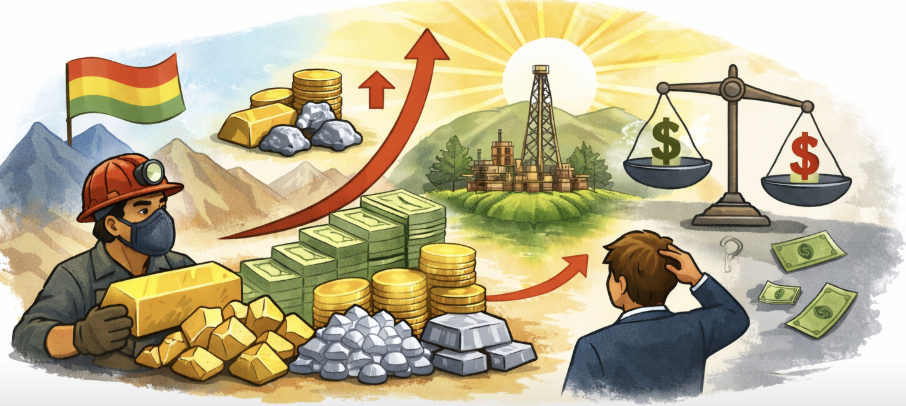
Economist Enrique García said Bolivia’s economic recovery will depend on the government’s ability to restore strong institutions, rebuild investor confidence, and implement timely policies that attract investment and restore foreign-currency inflows.
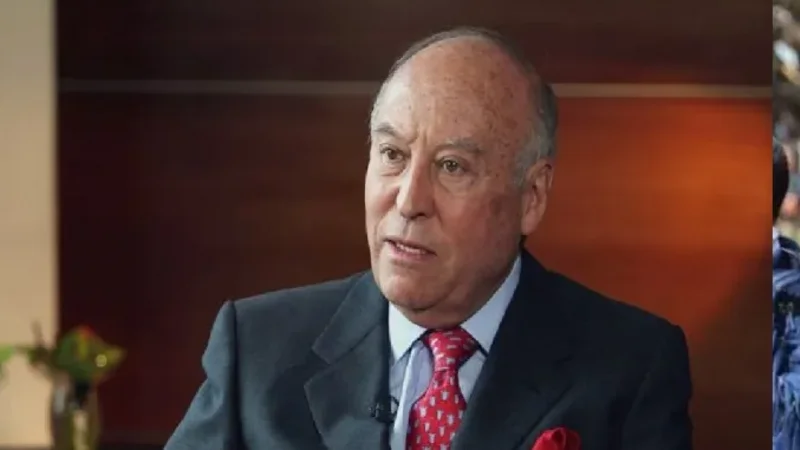
García, the former executive president of CAF–Development Bank of Latin America and the Caribbean, made the remarks during an interview on the current state of Bolivia’s economy. He argued that the country is undergoing a major transition after effectively moving away from its long-standing fixed exchange-rate system, a policy he said had become unsustainable.
“What we have experienced is a regime change,” García said. “After nearly 40 years, Bolivia has effectively returned to a floating exchange rate.”
He cautioned against viewing fluctuations in the U.S. dollar or fuel prices in isolation, describing them instead as symptoms of deeper economic weaknesses that have accumulated over time.

“The focus now is on whether the dollar rises or falls, whether gasoline prices go up or down,” he said. “All of that is the result of a critical economic situation. The reality is that we missed an important opportunity.”
García noted that Bolivia accumulated nearly $16 billion in international reserves during the commodity boom of the previous decade. In his view, those resources were not used effectively to strengthen the country’s competitiveness or prepare for future challenges.
Against that backdrop, he described the decision to allow greater exchange-rate flexibility as a necessary step, while warning that lasting stability will depend on Bolivia’s ability to generate foreign currency through production, exports, and external financing.
“Exchange rates respond to supply and demand,” he said. “If dollars are available, the market stabilizes. If they are not, the exchange rate inevitably rises.”
He also criticized the prolonged maintenance of a fixed exchange rate and broad subsidy programs, arguing that both policies eroded Bolivia’s economic competitiveness over time.
IMF Agreement Seen as Key to Restoring Confidence
Addressing Bolivia’s discussions with the International Monetary Fund, García said securing an agreement with the IMF should be a top priority because it would help restore market confidence and improve access to international financing.
“What is indispensable is an agreement with the International Monetary Fund,” he said. “The IMF does not only provide resources; it provides assurance that transparent rules are in place and serves as a catalyst for attracting additional financing.”
At the same time, García stressed that announcements of foreign loans and investment commitments must be backed by concrete, technically sound projects.
“One thing is making announcements, and another is turning financing into reality,” he said. “That requires programs, projects supported by feasibility studies, transparent processes, and effective execution.”
Institutional Weakness at the Core of the Crisis
García argued that Bolivia’s challenges extend beyond economics and are fundamentally rooted in institutional shortcomings. He said the country needs to restore long-term planning, establish clear priorities, and create stable rules that encourage both domestic and foreign investment.
“The most important issue is not an economic one,” he said. “It is institutional strength—the rule of law, respect for legal frameworks, separation of powers, and merit-based governance.”
He also emphasized the need for political consensus to address the country’s economic difficulties, arguing that democratic systems function best when competing interests are able to negotiate and reach agreements.
“Democracy is the ability to build agreements, make concessions, and achieve consensus,” García said.
According to García, political stability will be essential for rebuilding Bolivia’s credibility among investors and international organizations.
Despite the current challenges, he said Bolivia still has time to change course, provided that policymakers act decisively and that the government, legislature, and political stakeholders work toward a shared vision for the country’s future.
Por Stefany Beatriz Guzmán Nuñez, Red Uno:
Enrique García plantea recuperar la institucionalidad para reactivar la economía en Bolivia
El economista afirmó que Bolivia necesita fortalecer su institucionalidad, atraer inversión y concretar un acuerdo con el FMI para recuperar la estabilidad económica y retomar el crecimiento.
El expresidente ejecutivo de CAF – Banco de Desarrollo de América Latina y el Caribe, Enrique Garcia, afirmó que la recuperación económica de Bolivia dependerá de la capacidad del Gobierno para restablecer la institucionalidad, generar confianza y adoptar decisiones económicas oportunas que permitan atraer inversiones y garantizar el ingreso de divisas.
Durante una entrevista con el programa Que No Me Pierda sobre la coyuntura económica del país, García sostuvo que atraviesa una etapa de transición tras abandonar el esquema de tipo de cambio fijo, una medida que, a su juicio, era insostenible en el tiempo.
“Lo que hemos tenido es un cambio de régimen. Después de 40 años prácticamente Bolivia ha vuelto a un tipo de cambio flotante”, explicó.
El economista señaló que el incremento del dólar no debe analizarse de manera aislada, sino como consecuencia de un deterioro económico acumulado durante varios años.
“La obsesión ahora es el dólar que sube, que baja, la gasolina que sube, que baja. Todo eso es producto de una situación económica crítica, porque realmente perdimos el tren”, afirmó.
García recordó que Bolivia llegó a registrar cerca de 16.000 millones de dólares en reservas internacionales durante el auge económico de la década pasada, recursos que, según indicó, no fueron aprovechados para fortalecer la competitividad del país.
En ese contexto, consideró acertada la decisión de flexibilizar el régimen cambiario, aunque advirtió que la estabilidad dependerá de que el país vuelva a generar dólares mediante producción, exportaciones y financiamiento externo.
“El tipo de cambio responde a la oferta y la demanda. Si hay dólares se estabiliza; si no hay dólares, obviamente sube”, sostuvo.
Asimismo, cuestionó el mantenimiento prolongado del tipo de cambio fijo y de los subsidios, al considerar que redujeron la competitividad de la economía boliviana.
Acuerdo con el FMI y financiamiento externo
Respecto a las negociaciones con el Fondo Monetario Internacional (FMI), García afirmó que alcanzar un acuerdo es una prioridad para recuperar la confianza de los mercados y abrir las puertas al financiamiento internacional.
“Lo indispensable es tener un acuerdo con el Fondo Monetario Internacional. El Fondo no solo te da recursos; te da la seguridad de que hay reglas del juego transparentes y es un catalizador para atraer más financiamiento”, señaló.
No obstante, aclaró que los anuncios de créditos internacionales deben traducirse en proyectos concretos y técnicamente viables.
“Una cosa son las declaraciones y otra es concretar los financiamientos. Se necesitan programas, proyectos con estudios de factibilidad, procesos transparentes y buena ejecución”, enfatizó.
Insistió en que el principal problema de Bolivia no es únicamente económico, sino institucional. Añadió que el país necesita recuperar una planificación de mediano y largo plazo, definir prioridades y generar reglas estables que incentiven la inversión privada nacional y extranjera.
“La palabra más clave no es un tema de economistas; es la institucionalidad, el respeto a las leyes, la separación de poderes y la meritocracia”, remarcó.
García también hizo referencia a la necesidad de construir consensos políticos que permitan enfrentar la crisis económica. “La democracia es tener la habilidad de hacer acuerdos, ceder en muchas cosas y lograr consensos”, afirmó.
Según explicó, la estabilidad política es un elemento determinante para recuperar la credibilidad del país frente a inversionistas y organismos internacionales.
Finalmente, sostuvo que Bolivia aún está a tiempo de corregir el rumbo, siempre que las decisiones sean oportunas y exista una visión compartida entre el Gobierno, la Asamblea Legislativa y los distintos actores políticos.


Leave a Reply