By Gregory Beltrán, Los Tiempos:
Jubilee Says Poverty Has the Face of Women, Youth, and Rural Farmers

The Jubilee Foundation warns of the impact of poverty on vulnerable groups. | Carlos López.
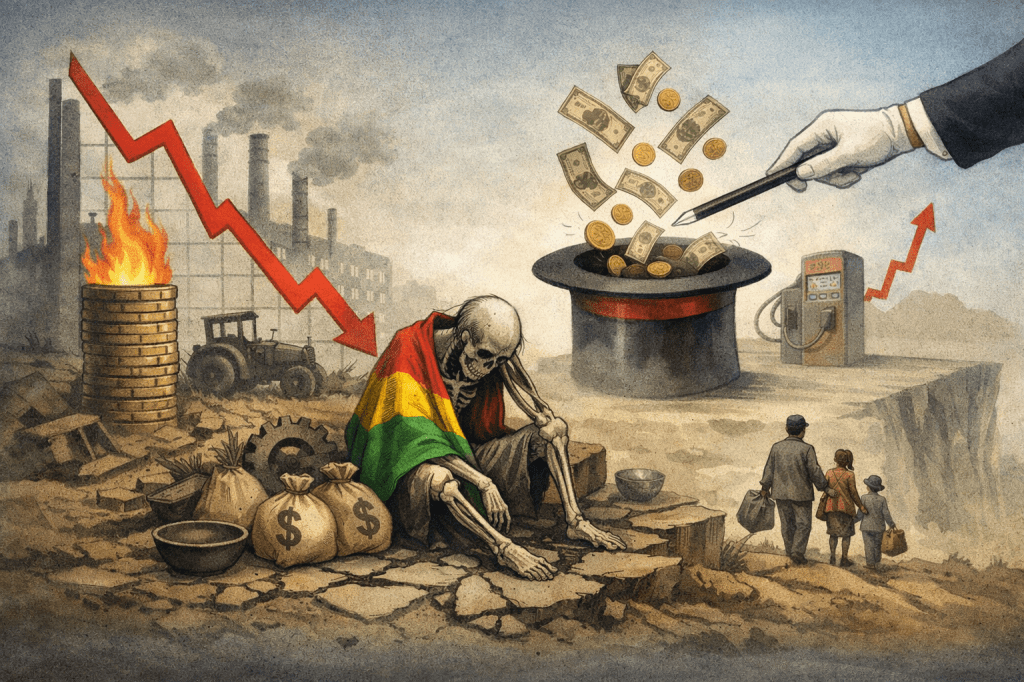
The famous 1985 warning by four-time President Víctor Paz Estenssoro that “Bolivia is dying” has been echoed over the years by repeated calls to reduce poverty. Yet despite the implementation of different economic models, poverty levels have not significantly declined. A new study by the Jubilee Foundation shows that poverty continues to rise, particularly affecting rural farmers, Indigenous people, young people, and women.
In addition to the high levels of corruption that persist in the country, Bolivia has faced the lingering effects of the COVID-19 pandemic, which intensified in 2020, as well as an economic crisis that continues today.
Using data from Bolivia’s National Statistics Institute (INE) for 2024, the Jubilee Foundation reports that more than 53% of the rural population lived in moderate poverty, compared with 31% of the urban population. The gap is even wider in extreme poverty: while only 6% of urban residents cannot afford a basic food basket, that figure rises to 29.6% in rural areas.
In practical terms, nearly one in four people living in the countryside lacks sufficient income to meet basic nutritional needs. According to the report, this demonstrates that structural poverty remains deeply rooted in rural Bolivia, where access to basic services, education, healthcare, and decent employment remains limited.
Regional disparities are also evident. Outside the country’s economic core of La Paz, Cochabamba, and Santa Cruz, poverty affects 41.1% of the population, compared with 36.3% in these more developed regions.
The situation is also more severe among Indigenous populations. The study found that 46.1% of Indigenous people live in poverty, compared with 33.5% of non-Indigenous citizens. The report notes that this gap reflects longstanding historical exclusion and structural inequalities that continue to persist in Bolivia.
Gender differences are also apparent. Poverty affects 38.2% of women, compared with 37.1% of men. According to the foundation, women face greater barriers to formal employment, carry a larger burden of unpaid work, and encounter structural obstacles within the productive and educational systems.
Age is another key factor. Poverty rates are highest among children and adolescents. The report indicates that poverty affects 49.8% of children under five years old and 50.6% of those aged six to adolescence. Jubilee warns that childhood poverty limits physical, educational, and emotional development and creates an intergenerational poverty trap.
Education remains one of the strongest protective factors. Among people with no formal schooling, 58.8% live in poverty. Poverty rates decline steadily as educational attainment increases, with only 18.7% of those who have completed more than 12 years of schooling living in poverty.
“The data reflect more than a simple income problem,” the foundation states. “They reveal structural inequalities in access to basic services, markets, education, infrastructure, and economic opportunities.”
Jubilee emphasizes that poverty is not only about low income but also about unequal access to healthcare, education, and social security.
Regions Most Affected
- Chuquisaca: 51.2% of the population lives in poverty.
- Potosí: 47.4%.
- La Paz: 45.2%.
- Cochabamba: 41.2%.
According to the foundation’s research, Chuquisaca and Potosí have nearly half of their populations living in poverty, while La Paz and Cochabamba continue to record poverty rates above 40%.
Por Gregory Beltrán, Los Tiempos:
Jubileo afirma: pobreza tiene rostro de mujer, joven y campesino
La Fundación Jubileo alerta del impacto de la pobreza en sectores vulnerables. | Carlos López.
Al discurso de “Bolivia se nos muere”, que pronunció el cuatro veces presidente Víctor Paz Estenssoro en 1985, se suman cada año otras voces para reducir los niveles de pobreza sin lograr este objetivo. La puesta en marcha de los distintos modelos económicos que se aplicaron no logró aminorar sus niveles y lo que muestra un estudio de la Fundación Jubileo es que la tendencia se mantiene con una línea ascendente para golpear a campesinos, indígenas jóvenes y mujeres.
A los elevados niveles de corrupción que todavía persisten en el país se suma la pandemia, que se intensificó en 2020, y por si esto no fuera poco, se añadió la crisis económica que todavía se arrastra en Bolivia.
Con datos del Instituto de Estadística (INE) de 2024, Jubileo precisa que más del 53% de la población rural se encontraba en situación de pobreza moderada, frente al 31% de la población urbana. Pero esta brecha se agrava más cuando se analiza la pobreza extrema: mientras solo 6% de la población urbana no logra cubrir una canasta mínima de alimentos, en el área rural esta proporción asciende al 29,6%. Esto quiere decir que una de cada cuatro personas en el campo no tiene ingresos suficientes para alimentarse adecuadamente, “lo que evidencia que la pobreza estructural está fuertemente arraigada en el campo, donde el acceso a servicios básicos, educación, salud y empleo digno sigue siendo limitado”, señala el reporte de Jubileo.
Pero las diferencias entre el eje central del país, La Paz, Cochabamba y Santa Cruz, con el resto del territorio nacional son igualmente reveladoras, por fuera de estas regiones la pobreza alcanza al 41,1 por ciento de la población, frente al 36,3 % en las zonas más favorecidas.
Y qué pasa con la población indígena. Este estudio establece que el 46,1 % vive en pobreza, frente al 33,5 % de la población no indígena. “Esta brecha tiene raíces históricas y refleja un patrón de exclusión estructural, que persiste en Bolivia”, se lee en el informe.
Respecto al género se observa que las mujeres enfrentan mayores niveles de pobreza, que llegan a un 38,2% respecto a los hombres con el 37,1%. “Esta diferencia se explica por su menor acceso a empleo formal, mayor carga de trabajo no remunerado y barreras estructurales en el sistema productivo y educativo”.
Otro de los factores es la edad, se establece que la pobreza es más alta entre los niños y adolescentes. Veamos, según el reporte la indigencia afecta al 49,8% de menores de 5 años y a 50,6% de los que tienen entre 6, la niñez y adolescencia son las más expuestas a la pobreza, lo cual condiciona su desarrollo físico, educativo y emocional, y se convierte en una trampa intergeneracional”, establece Jubileo. Respecto al nivel educativo se concluye que a menor escolaridad hay una mayor probabilidad de pobreza. El 58,8% de quienes no tienen estudios formales son pobres y la tasa de pobreza disminuye progresivamente con el nivel educativo: solo 18,7% de quienes tienen más de 12 años de escolaridad están en pobreza. “La educación no solo reduce la pobreza, sino que es un factor protector clave frente a la vulnerabilidad”. La Fundación establece que estas cifras reflejan más que un simple problema de ingresos. Revelan desigualdades estructurales en el acceso a servicios básicos, mercados, educación, infraestructura y oportunidades económicas.
“La pobreza no se expresa solo en ingresos bajos, sino también en acceso desigual a servicios básicos como salud, educación y seguridad social”, remarca la Fundación Jubileo.
Regiones
Chuquisaca (51,2%) y Potosí (47,4%) concentran a casi la mitad de su población en situación de pobreza.
La Paz (45,2 %) y Cochabamba (41,2 %) con incidencias altas, se mantienen cerca del 40 %, de acuerdo con la investigación que realizó la fundación.


Leave a Reply