By Iván Ramos, Erbol:
El Niño Is Already Affecting Bolivia and the Risk of an Extreme Climate Scenario Is Growing
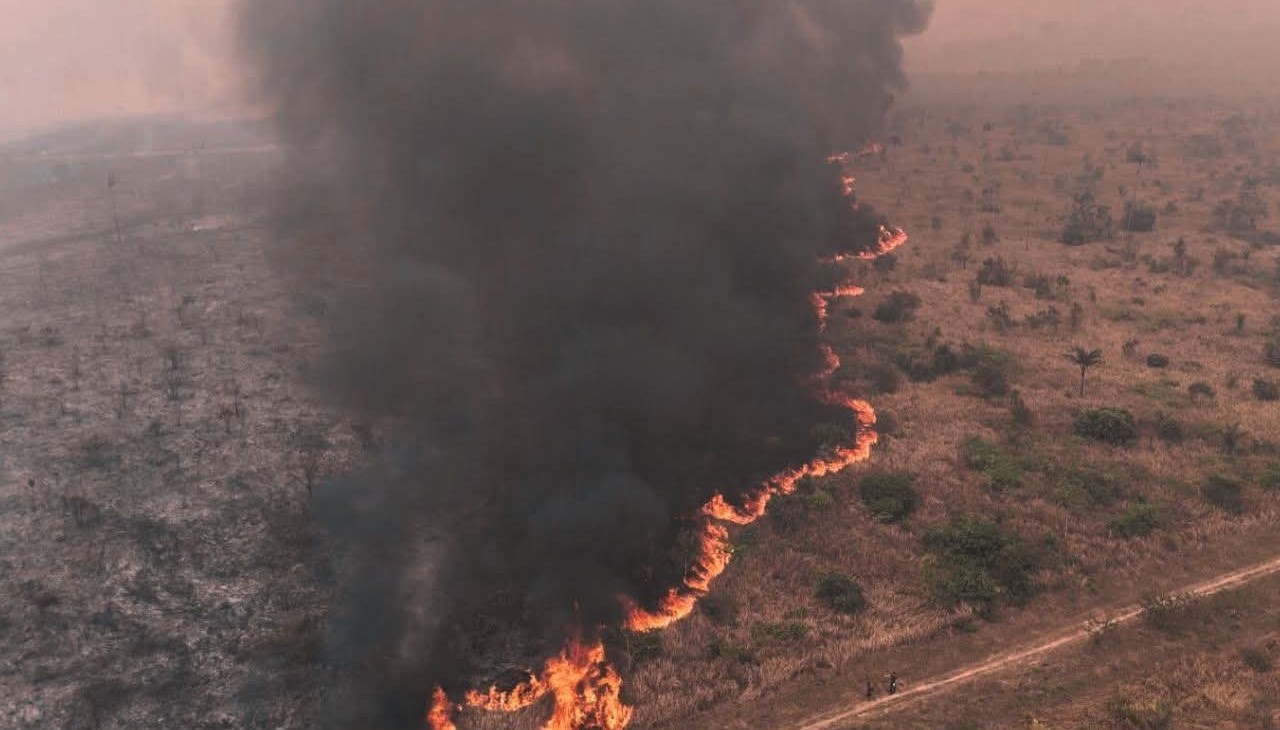
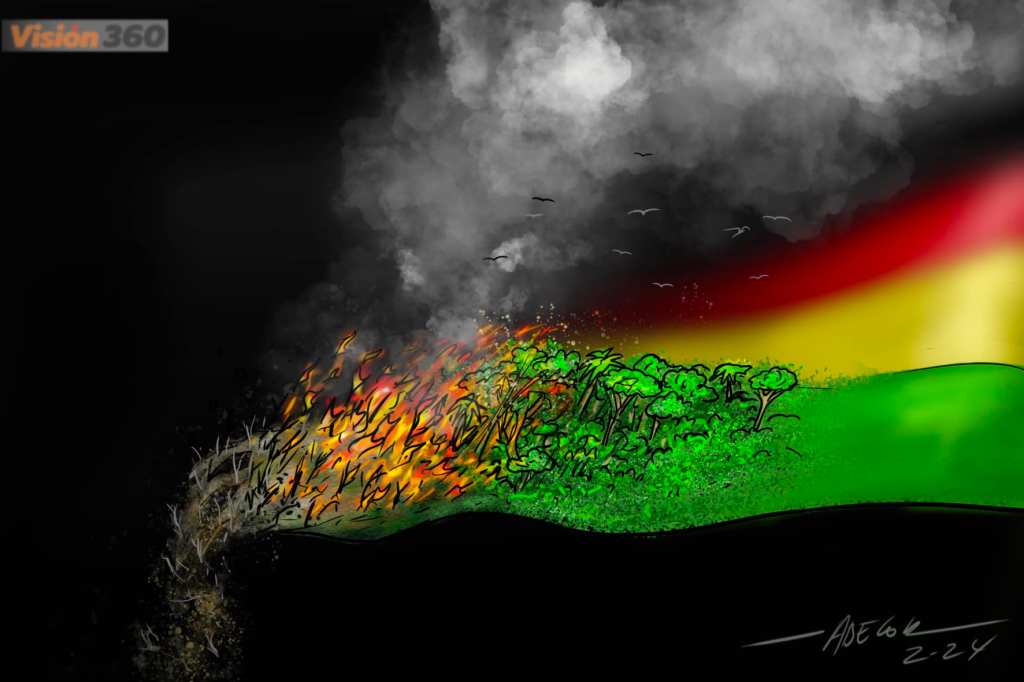
Bolivia is already beginning to feel the effects of the El Niño phenomenon amid a context marked by forest fires in Santa Cruz, Cochabamba, and Tarija, as well as warnings of strong winds in the eastern part of the country that are helping spread the fires. In this scenario, specialists warn that there is an 80% to 90% probability that the phenomenon will evolve into a “Super El Niño” in the coming months, bringing more intense climate impacts.
David Torres, a professor at the Faculty of Agronomy at the San Francisco Xavier University of Chuquisaca, explained that a Super El Niño refers to an exceptional warming of the surface waters of the tropical Pacific Ocean, capable of altering rainfall patterns, temperatures, and wind circulation on a global scale.
Historical precedents from 1982–1983, 1997–1998, and 2015–2016 show that these events were associated with prolonged droughts, floods, forest fires, and agricultural losses across different continents. During those episodes, Pacific Ocean temperatures rose four to five degrees Celsius above normal levels.
The World Meteorological Organization notes that these phenomena alter atmospheric behavior and increase the frequency of extreme weather events, while the Food and Agriculture Organization of the United Nations warns that they represent one of the main threats to food security because of their effects on crop and livestock production.
In Bolivia, the impacts will not be uniform. In the western regions—mainly La Paz, Oruro, and Potosí—reduced and irregular rainfall, higher-than-normal temperatures, and lower replenishment of reservoirs, aquifers, and water sources are expected. The risk of grassland fires and desertification processes will also increase.
For the valleys of Cochabamba, Chuquisaca, and Tarija, the main concern is the irregular distribution of rainfall. Specialists anticipate delayed rains or precipitation concentrated in short periods, which could postpone planting, reduce the production of corn, wheat, potatoes, vegetables, and fruit crops, and affect water reserves for consumption and irrigation.
In the eastern lowlands and the Amazon region, Santa Cruz, Beni, and Pando may face different scenarios. Historically, a Super El Niño has caused above-normal rainfall, flooding, and river overflows. However, during the current transition toward the phenomenon, dry conditions, high temperatures, and strong winds persist, increasing the likelihood and spread of forest fires, particularly in Santa Cruz, Cochabamba, and Tarija.
Torres estimated that a high-intensity event could reduce Bolivia’s agricultural GDP by 13% to 14%, resulting in losses of nearly $1 billion in agriculture and livestock production, while also affecting food supplies and the incomes of thousands of producers.
Given this outlook, the specialist urged municipalities, departmental governments, and the national government to accelerate preventive measures, including strengthening water storage capacity, clearing canals and drainage systems, monitoring watersheds, improving early warning systems, and allocating resources to respond to emergencies.
The experience of the 2015–2016 El Niño showed that its effects can last for several years, impacting water availability, food production, forest fires, flooding, and the national economy.
Por Iván Ramos, Erbol:
El fenómeno de El Niño ya golpea a Bolivia y crece riesgo de un escenario climático extremo
Bolivia ya comenzó a sentir los efectos del fenómeno de El Niño en un contexto marcado por incendios forestales en Santa Cruz, Cochabamba y Tarija, además de alertas por fuertes vientos en el oriente del país que favorecen la propagación del fuego. En ese escenario, especialistas advierten que existe entre un 80% y un 90% de probabilidad de que el fenómeno evolucione hacia un “Súper Niño” durante los próximos meses, con impactos climáticos de mayor intensidad.
David Torres, docente de la Facultad de Agronomía de la Universidad San Francisco Xavier de Chuquisaca, explicó que un Súper Niño corresponde a un calentamiento excepcional de las aguas superficiales del océano Pacífico tropical, capaz de alterar los patrones de lluvia, temperatura y circulación de vientos a escala global.
Los antecedentes de 1982-1983, 1997-1998 y 2015-2016 muestran que estos eventos estuvieron asociados a sequías prolongadas, inundaciones, incendios forestales y pérdidas agrícolas en distintos continentes. En esos episodios, las temperaturas del Pacífico llegaron a superar entre cuatro y cinco grados centígrados los valores normales.
La Organización Meteorológica Mundial señala que estos fenómenos modifican el comportamiento de la atmósfera y aumentan la frecuencia de eventos extremos, mientras que la Organización de las Naciones Unidas para la Alimentación y la Agricultura advierte que representan una de las principales amenazas para la seguridad alimentaria por sus efectos sobre la producción agrícola y pecuaria.
En Bolivia, los impactos no serán uniformes. En el occidente, principalmente La Paz, Oruro y Potosí, se prevé una reducción e irregularidad de las lluvias, temperaturas superiores a lo habitual y menor recarga de represas, acuíferos y fuentes de agua. También aumenta el riesgo de incendios de pastizales y procesos de desertificación.
Para los valles de Cochabamba, Chuquisaca y Tarija, la principal preocupación es la distribución irregular de las precipitaciones. Los especialistas prevén lluvias tardías o concentradas en cortos periodos, lo que podría retrasar las siembras, reducir la producción de maíz, trigo, papa, hortalizas y frutales, además de afectar las reservas de agua para consumo y riego.
En el oriente y la Amazonía, Santa Cruz, Beni y Pando podrían enfrentar escenarios distintos. Históricamente, un Súper Niño ha provocado lluvias por encima de lo normal, inundaciones y desbordes de ríos; sin embargo, en la actual transición hacia el fenómeno persisten condiciones secas, altas temperaturas y fuertes vientos que favorecen la ocurrencia y expansión de incendios forestales, especialmente en Santa Cruz, Cochabamba y Tarija.
Torres estimó que un evento de gran intensidad podría reducir entre un 13% y un 14% el Producto Interno Bruto agropecuario, con pérdidas cercanas a los 1.000 millones de dólares en agricultura y ganadería, además de afectar el abastecimiento de alimentos y los ingresos de miles de productores.
Ante este panorama, el especialista planteó que municipios, gobernaciones y el Gobierno nacional aceleren medidas preventivas para fortalecer el almacenamiento de agua, limpiar canales y drenajes, monitorear cuencas, mejorar los sistemas de alerta temprana y disponer de recursos para responder a emergencias.
La experiencia del fenómeno de 2015-2016 mostró que sus efectos pueden extenderse durante varios años, con impactos sobre la disponibilidad de agua, la producción de alimentos, los incendios forestales, las inundaciones y la economía nacional.


Leave a Reply