By Óscar A. Heredia, El Diario:
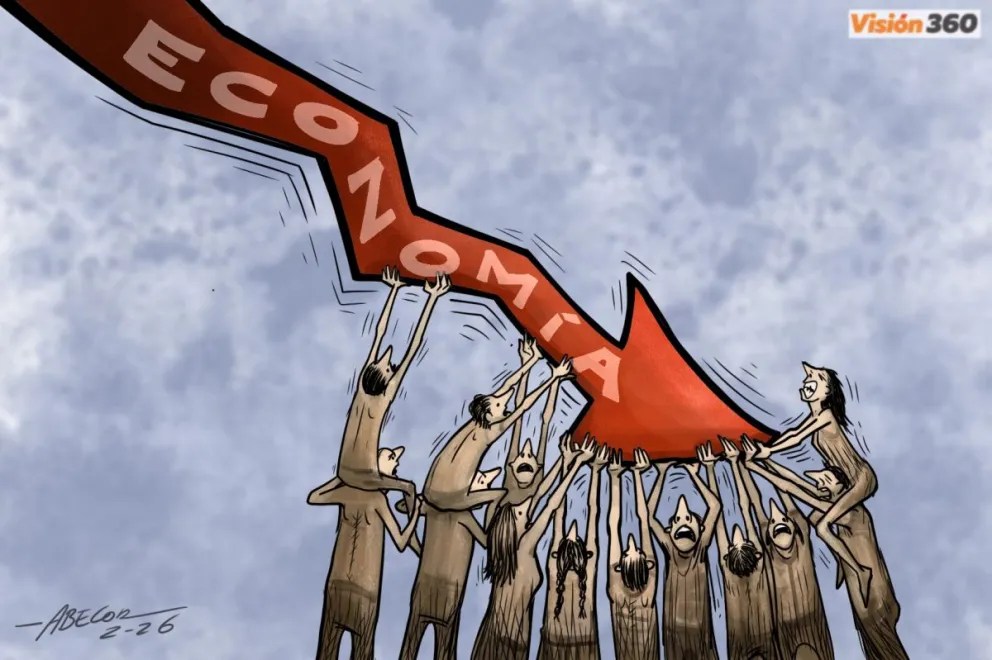
Bolivia faces the challenge of closing one economic cycle and beginning another. The real debate is no longer simply how to overcome the current emergency, but how to build a development model capable of creating opportunities and prosperity for future generations.
There are moments in a country’s history when the greatest threat is not an economic crisis itself, but the belief that once the emergency has passed, everything will return to the way it was before. Bolivia has reached that moment. While public debate has focused on the dollar, economic adjustment, and fiscal stability, a much deeper question has begun to emerge: What kind of Bolivia are we building for the day after?
Nations do not fail because they experience difficulties. They fail when they turn crisis into a permanent way of life and stop thinking about the future. As the old saying goes, “There are none so blind as those who will not see.” The same is true of countries: urgency often obscures the decisions that will truly determine their destiny.
Bolivia is bringing a historical cycle to a close. For many years, natural gas sustained economic growth, strengthened public finances, and expanded social investment. It would be unfair to deny that contribution. But it would also be a mistake to ignore the weaknesses of that model. The economy became overly dependent on an extractive logic, and the boom was not matched by the same level of investment in exploration, productive diversification, or a long-term development strategy. This was compounded by insufficient transparency regarding the true state of reserves and production.
The main lesson goes beyond natural gas itself: countries do not develop because of what they extract from nature, but because of what they are able to build with that wealth. That is the difference between a temporary boom and a genuine national project.
While Bolivia was absorbed by short-term concerns, the world continued to move forward. Artificial intelligence, the knowledge economy, and the energy transition are reshaping global competitiveness. As Heraclitus wrote, no one steps into the same river twice. Likewise, countries cannot confront a new era with the answers of the past.
The recent road blockades offered another lesson. When transportation is disrupted for weeks, productive chains break down: farmers lose harvests, industries suspend operations, businesses see sales decline, and families ultimately bear the cost through fewer jobs and higher prices. Restoring continuity always takes far longer than destroying it.
Taken together, these developments reveal a common reality: development depends on trust, strong institutions, and a shared vision that allows people to produce, invest, and look beyond immediate circumstances.
The recent debate over the 2026 General State Budget (PGE) provides another example. Every budget reflects a vision of the country because it shows where a society chooses to invest, what it chooses to preserve, and what it is willing to change. From that perspective, the 2026 budget prioritizes managing present constraints rather than implementing the reforms required for the future. Reducing the fiscal deficit is necessary, but it is not enough if permanent spending retains the same structure, loss-making state-owned enterprises continue without comprehensive evaluation, and productive investment remains sidelined. Managing the current situation may stabilize the economy; addressing its underlying causes requires reforms that go beyond a budget document.
Too often, we expect development to result from a single good government decision. Experience shows, however, that countries advance when they build trustworthy institutions, stable rules, and agreements that endure beyond political change. Development does not emerge from a decree; it is built through continuity, confidence, and long-term vision.
An old proverb says that the best time to plant a tree was twenty years ago; the second-best time is today. Bolivia cannot recover lost time, but it can decide what it will do with the time ahead. That decision requires investment in education, research, innovation, productivity, legal certainty, and economic diversification. None of these tasks produces immediate results, but all of them will shape the well-being of future generations.
The author is a political and economic analyst and former Rector of UMSA.
Por Óscar A. Heredia Vargas, El Diario:
Bolivia enfrenta el desafío de cerrar un ciclo económico para comenzar otro. La verdadera discusión ya no es únicamente cómo superar la emergencia, sino cómo construir un modelo de desarrollo capaz de generar oportunidades y bienestar para las próximas generaciones.
Hay momentos en la historia de un país en los que la mayor amenaza no es una crisis económica, sino creer que, una vez superada la emergencia, todo volverá a ser como antes. Bolivia ha llegado a ese momento. Mientras el debate se concentraba en el dólar, el ajuste económico y la estabilidad fiscal, una pregunta mucho más profunda comenzaba a abrirse paso: ¿qué Bolivia estamos construyendo para el día después?
Los pueblos no fracasan porque atraviesan dificultades. Fracasan cuando convierten la crisis en una forma permanente de vivir y dejan de pensar en el futuro. Como dice el viejo refrán, “no hay peor ciego que el que no quiere ver”. También les ocurre a las naciones: la urgencia termina ocultando las decisiones que realmente definirán su destino.
Bolivia está cerrando un ciclo histórico. Durante muchos años el gas natural sostuvo el crecimiento económico, fortaleció las finanzas públicas y amplió la inversión social. Sería injusto desconocerlo. Pero también sería un error ignorar las debilidades de ese modelo. La economía terminó dependiendo excesivamente de una lógica extractivista; la bonanza no se transformó, con la misma intensidad, en exploración, diversificación productiva ni en una estrategia de desarrollo de largo plazo. A ello se sumó una insuficiente transparencia sobre el verdadero estado de las reservas y la producción. La principal lección trasciende al gas: los países no se desarrollan por lo que extraen de la naturaleza, sino por lo que son capaces de construir con esa riqueza. Allí radica la diferencia entre una bonanza y un proyecto de país.
Mientras Bolivia discutía la coyuntura, el mundo siguió avanzando. La inteligencia artificial, la economía del conocimiento y la transición energética están redefiniendo la competitividad. Como escribió Heráclito, nadie se baña dos veces en el mismo río. Tampoco los países pueden enfrentar un tiempo nuevo con las respuestas del pasado.
Los recientes bloqueos dejaron otra enseñanza. Cuando durante semanas se interrumpe el transporte, se rompe la cadena productiva: el campo pierde cosechas, la industria paraliza actividades, el comercio reduce sus ventas y las familias terminan pagando el costo mediante menor empleo y mayores precios. Recuperar esa continuidad siempre toma más tiempo que destruirla.
Todos estos hechos revelan una misma realidad: el desarrollo depende de la confianza, de instituciones sólidas y de una visión compartida que permita producir, invertir y mirar más allá de la coyuntura.
El reciente debate sobre el Presupuesto General del Estado (PGE) 2026 también deja una enseñanza. Todo presupuesto refleja una visión de país porque muestra dónde una sociedad decide invertir, qué decide preservar y qué está dispuesta a cambiar. Desde esa perspectiva, el PGE 2026 privilegia la administración de las restricciones del presente antes que las reformas que demanda el futuro. Reducir el déficit fiscal es necesario, pero resulta insuficiente si el gasto permanente mantiene la misma estructura, las empresas públicas deficitarias continúan sin una evaluación integral y la inversión productiva sigue relegada. Administrar la coyuntura puede estabilizar la economía; transformar sus causas exige reformas que trasciendan un presupuesto.
Con frecuencia esperamos que el desarrollo llegue como consecuencia de una buena decisión de gobierno. Sin embargo, la experiencia demuestra que los países avanzan cuando construyen instituciones confiables, reglas estables y acuerdos que sobreviven a los cambios políticos. El desarrollo no nace de un decreto; se construye con continuidad, confianza y visión de largo plazo.
Un antiguo proverbio dice que el mejor momento para plantar un árbol fue hace veinte años; el segundo mejor momento es hoy. Bolivia no puede recuperar el tiempo perdido, pero sí decidir qué hará con el tiempo que tiene por delante. Esa decisión exige invertir en educación, investigación, innovación, productividad, seguridad jurídica y diversificación económica. Ninguna de esas tareas ofrece resultados inmediatos, pero todas definirán el bienestar de las próximas.
El autor es analista político y económico. Ex Rector de la UMSA.
https://www.eldiario.net/portal/2026/07/12/el-nuevo-ciclo-de-bolivia/


Leave a Reply