
By El Diario:
Rising Dollar, Climate Risks and Legal Uncertainty Expected to Fuel Inflation
- Faced with the impacts of El Niño, experts have outlined a range of measures for La Paz. At the national level, however, many of the same policy prescriptions continue to apply.
Modest increases in Bolivia’s official exchange rate, the arrival of the El Niño weather phenomenon, and ongoing legal uncertainty are expected to push inflation higher. The extent of the increase will depend largely on government policies, with vulnerable households likely to bear the greatest burden. According to the World Bank, Bolivia has never moved beyond lower-middle-income status.
Economist Gonzalo Chávez has warned that inflation will be one of the government’s main challenges, and that its trajectory will depend on the measures adopted to contain rising prices, which disproportionately affect low-income families.
Before taking office, Economy and Public Finance Minister Gabriel Espinoza argued that one of the most effective ways to combat inflation and speculation is to increase production, thereby expanding the supply of goods available in the domestic market.
Government officials have stated that, alongside economic recovery measures, they plan to introduce social protection programs for vulnerable families similar to the PEPE program implemented after fuel price adjustments.
Exchange Rate
Bolivia’s new flexible exchange-rate regime, introduced on June 29, opened at 9.73 bolivianos per U.S. dollar. By Friday, the rate had reached 10.85 bolivianos per dollar and will remain at that level until trading resumes on Monday.
With the exchange rate approaching 11 bolivianos per dollar, the government maintains that market forces of supply and demand will eventually stabilize the currency. In the meantime, consumers are increasingly concerned about the declining purchasing power of the boliviano.
Consumer Prices
For now, most staple goods remain relatively affordable. Chicken prices, which surged above 100 bolivianos per bird during recent road blockades, have eased significantly.
Vegetable prices have also stabilized. Tomatoes, for example, have fallen to around 2.5 bolivianos per pound, down from 10–12 bolivianos during the height of the disruptions.
However, this temporary relief may be short-lived. Agricultural production was disrupted by the blockades, and producers warn that Bolivia could soon face food-supply shortages.
The Santa Cruz Poultry Producers Association (ADA) recently warned that diesel shortages and rising input costs are placing severe pressure on the poultry industry, potentially leading to higher chicken prices in the near future.
“The biggest problem is that the cost of our main production inputs remains extremely high,” ADA President Enzo Landívar said. “Sorghum prices have not fallen as they normally would have in previous years.”
According to reports, small and medium-sized producers are facing increasing difficulties covering operating costs, forcing some to scale back production or exit the market altogether.
Irregular diesel supplies continue to hamper food transportation and distribution, while farmers have also reported fuel shortages despite a recent agreement with the government aimed at ensuring diesel availability for planting and harvesting activities.
Inflation Trends
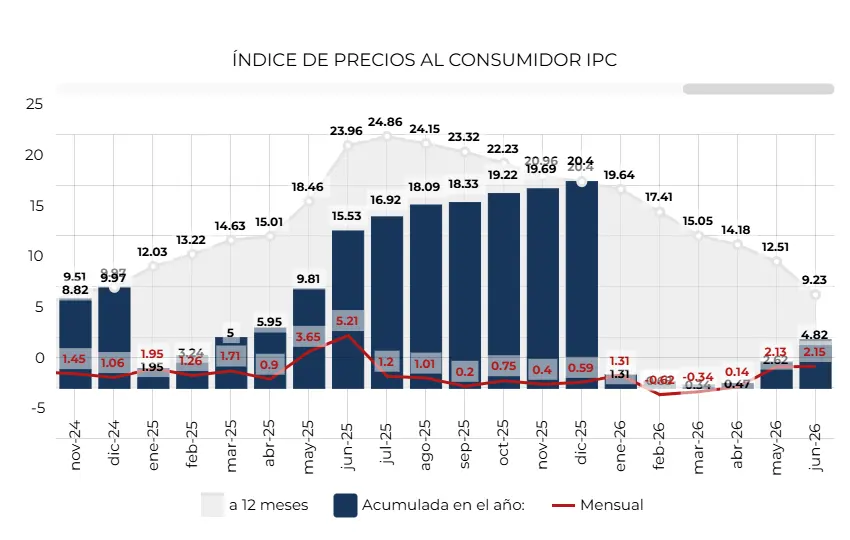
Bolivia recorded inflation of 1.31% in January, followed by deflation of 0.62% in February and 0.34% in March. Inflation returned in April at 0.14%, accelerated to 2.13% in May, and reached 2.15% in June. Cumulative inflation for the first half of the year stands at 4.85%.
Current estimates place annual inflation at around 15% for 2026, a figure broadly in line with international forecasts. However, recent economic measures, including the adoption of a flexible exchange rate, could alter that outlook.
Last year, Bolivia’s Consumer Price Index (CPI) rose by 20.1%, its highest level in years, driven by fuel shortages, limited access to U.S. dollars, and legal uncertainty that constrained production and exports.
Climate Risks
The El Niño weather pattern is expected to affect food production across Bolivia. The National Meteorology and Hydrology Service (Senamhi) forecasts drought conditions in some regions and excessive rainfall in others.
Meanwhile, World Bank economists John Baffes, Dawit Mekonnen, and Kaltrina Temaj recently published an analysis titled “Compounding Risks: Threats to Global Food Markets in 2026.”
They warn that El Niño conditions, rising energy and fertilizer costs, growing demand for biofuels, and potential trade restrictions could push food prices significantly higher than current projections.
Global agricultural commodity markets entered 2026 on relatively stable footing thanks to abundant supplies of grains and edible oils. However, escalating conflict in the Middle East has introduced new volatility into food and agricultural input markets.
The World Bank’s April 2026 Commodity Markets Outlook projects a 2.5% increase in global food commodity prices this year, though risks remain tilted to the upside.
According to the U.S. National Oceanic and Atmospheric Administration (NOAA), El Niño conditions have already emerged and are expected to strengthen through the Northern Hemisphere autumn. Forecasters estimate a nearly two-thirds probability that El Niño will reach a very strong intensity between November and December.
Historically, strong El Niño events have triggered prolonged droughts in Southeast Asia and drier conditions in parts of Australia, northern Brazil, southern Africa, and South Asia—regions critical to global production of grains, sugar, and oilseeds.
The World Bank authors caution that if El Niño intensifies while agricultural markets are already under pressure from geopolitical conflicts, food prices could rise far beyond current forecasts.
Rising Input Costs
The closure of the Strait of Hormuz has disrupted global energy supplies, including fertilizer markets—particularly urea and phosphate—as well as liquefied natural gas (LNG), pushing prices to their highest levels since 2022.
Bolivia, meanwhile, has frozen domestic fuel prices until January 2027, helping to contain some inflationary pressures linked to gasoline and diesel.
The World Bank economists note that governments often respond to food-price spikes by restricting exports to protect domestic consumers.
While such measures may provide short-term relief domestically, they can reduce global supplies, increase market volatility, and drive international prices even higher. Similar export restrictions during the food crises of 2008 and 2022 amplified global price surges and worsened food insecurity in import-dependent economies.
Despite these risks, baseline projections still suggest only moderate food-price increases in 2026. Nevertheless, a prolonged conflict in the Middle East, stronger demand for biofuels, a more severe El Niño event, or new export restrictions could individually—or collectively—push food prices well above current expectations.
Legal Uncertainty
Legal uncertainty is also viewed as a growing threat to food production.
In Santa Cruz, reports of land invasions on private property have raised concerns about agricultural investment and future planting activity. Critics argue that authorities have failed to adequately protect property rights.
Meanwhile, in the Chapare region of Cochabamba, leaders aligned with former President Evo Morales reportedly threatened residents who did not support the road blockades held in May and June. According to social media reports and critics, residents were told to sell their land or face expulsion.
Proposed Measures for La Paz
Lucio Tito, a researcher and professor at the Higher University of San Andrés (UMSA), has outlined a series of measures that La Paz could adopt to confront climate and market challenges.
His recommendations include:
- Expanding water harvesting systems through large reservoirs and community micro-dams.
- Accelerating the transition from traditional irrigation to drip and sprinkler systems.
- Restoring degraded soils through crop rotation, agricultural terraces, and organic fertilizers.
- Building storage facilities, silos, and refrigerated warehouses to reduce post-harvest losses.
- Expanding agricultural insurance programs to protect small farmers from weather-related losses.
- Maintaining transport corridors during the rainy season to prevent shortages and price speculation.
- Establishing native seed banks to preserve resilient local crop varieties.
- Promoting camelid livestock production and freshwater aquaculture as affordable protein sources.
- Strengthening strategic food reserves to cushion the impact of political crises, blockades, and natural disasters.
- Requiring school meal programs to purchase ingredients from local producers.
- Expanding nutrition education and encouraging consumption of traditional foods such as tarwi, cañahua, and Amazonian fruits instead of imported ultra-processed products.
According to Tito, these measures would improve food security, strengthen local production, and increase resilience against future economic and climate-related shocks.
Por El Diario:
Subida del precio del dólar, clima y falta de seguridad jurídica causarán inflación
- Ante el fenómeno de El Niño, expertos plantean varias tareas en el caso de La Paz, pero a nivel nacional casi se repite la misma receta.
Los incrementos leves del precio del dólar oficial, el fenómeno de El Niño y la falta de seguridad jurídica causarán más inflación, dependerá de las políticas del Gobierno para que la misma sea baja o alta, que afectará más a familias vulnerables. De acuerdo con el Banco Mundial, Bolivia nunca salió de los ingresos medios bajos.
El analista económico Gonzalo Chávez ya advirtió que la inflación será el desafío del Gobierno y dependerá de las acciones que pueda implementar para frenar el alza de los precios, que afectan directamente a las familias vulnerables.
Ya en su momento, antes de ser autoridad, el ministro de Economía y Finanzas Públicas, Gabriel Espinoza, dijo que una de las maneras de combatir la inflación y la especulación es aumentar la producción, de esta manera subir la oferta de productos en el mercado nacional.
Autoridades de gobierno indicaron que, al implementar políticas para reactivar la economía, también promulgarán normas sociales para proteger a las familias vulnerables, similares al PEPE, aplicado luego de la nivelación de los precios de los combustibles.
Tipo de cambio
El nuevo régimen cambiario flexible, aplicado desde el 29 de junio, comenzó con una cotización de 9,73 bolivianos por dólar, pero ayer la misma cerró hasta el lunes a 10,85 bolivianos por divisa estadounidense.
Ya está cercano a los 11 bolivianos. El Gobierno indicó que el mercado se encargará de estabilizar la moneda extranjera mediante la oferta y demanda; mientras tanto, la población siente que sus bolivianos pierden cada vez su capacidad de compra.
Precios
Por el momento, la mayoría de los productos de la canasta familiar registran precios accesibles, en especial el pollo, que en los bloqueos alcanzaron un valor de más de 100 bolivianos por unidad.
Las verduras también están estables. Por ejemplo, el tomate bajó a 2,5 bolivianos la libra, de 10 a 12 bolivianos que se ofertaba en los días de conflicto.
Sin embargo, la oferta reprimida está por terminar, ya que la producción tuvo desfases por los bloqueos, y los productores anunciaron que el mercado boliviano enfrentará problemas en el abastecimiento de alimentos.
Hace unos días, la Asociación de Avicultores de Santa Cruz (ADA) lanzó una advertencia debido a que la escasez de diésel y el encarecimiento de los insumos básicos de producción, están asfixiando al sector avícola, lo que generaría una variación e incremento en el precio de la carne de pollo a muy corto plazo.
“Lo que más está afectando, es que nos están manteniendo el costo alto de los principales insumos, que usamos para fabricar nuestros alimentos. El precio que tiene el sorgo actualmente no ha tenido ese bajón que debería haber tenido como años anteriores…”, indicaba el presidente de ADA, Enzo Landívar.
El panorama se torna adverso para los productores medianos y pequeños, quienes al no poder cubrir los costos operativos se ven obligados a disminuir su capacidad o, en el peor de los casos, dejar de producir, de acuerdo con la nota de Red Uno.
A eso se debe sumar el abastecimiento irregular de diésel, que restringe la circulación de alimentos a las granjas.
A eso hay indicar que el sector agrícola también anunció problemas por la falta de diésel, aunque los productores suscribieron un acuerdo con el Gobierno para garantizar el abastecimiento del combustible y evitar retrasos en la siembra y cosecha.
Inflación
En enero se registró una inflación de 1,31%, en febrero fue negativa de -0,62%, en marzo también de -0,34%, en abril fue positiva de 0,14%, en mayo fue de 2,13% y en junio alcanzó 2,15%. El acumulado en el primer semestre llega a 4,85%.
Recordemos que se estima que la inflación para este año llegue a 15% y las proyecciones internacionales también van por esta cifra; sin embargo, los cambios y la introducción de medidas económicas, como el tipo de cambio flexible, pueden modificar los porcentajes.
Recordemos que el año pasado el Índice de Precios al Consumidor (IPC) registró una cifra de 20,1%, la más alta de los últimos años, debido al encarecimientos de los productos por la falta de combustible, escasez de dólares e inseguridad jurídica, ya que la oferta no aumentó por restricciones a la exportación.
Clima
El fenómeno de El Niño podría afectar en la producción de alimentos. El Servicio Nacional de Meteorología e Hidrología (Senamhi) proyecta sequías en algunas zonas y lluvias en otras.
Entretanto, John Baffes, Dawit Mekonnen, Kaltrina Temaj, economistas del Banco Mundial, publicaron en su página web de la entidad internacional, un artículo sobre las amenazas que se vienen para la producción de alimentos, titulado: Acumulación de riesgos: Amenazas para los mercados mundiales de alimentos en 2026.
Indican que las condiciones del fenómeno de El Niño, el aumento de los costos de la energía y los fertilizantes, la creciente demanda de biocombustibles y las posibles restricciones comerciales podrían impulsar los precios de los alimentos muy por encima de las proyecciones actuales.
Los mercados mundiales de productos básicos alimentarios comenzaron 2026 con una relativa estabilidad, respaldados por abundantes suministros de cereales y aceites comestibles. No obstante, la intensificación del conflicto en Oriente Medio ha alterado esa estabilidad y ha introducido una nueva volatilidad en el comercio de alimentos y los mercados de insumos.
En la edición de abril de 2026 del informe Commodity Markets Outlook (Perspectivas de los mercados de productos básicos) del Grupo Banco Mundial se proyecta un aumento del 2,5% en el índice mundial de precios de los productos básicos alimentarios para este año, pero los riesgos están claramente sesgados al alza, señalan.
Las condiciones meteorológicas asociadas a El Niño ya han aparecido y se espera que aumenten hasta alcanzar niveles moderados o intensos durante el otoño del hemisferio norte, según la Administración Nacional Oceánica y Atmosférica de EEUU (NOOA).
Los encargados de los pronósticos estiman que existe una probabilidad de casi dos tercios de que El Niño alcance una intensidad muy fuerte entre noviembre y diciembre. Para los mercados agrícolas, la pregunta crítica es qué tan intenso se vuelve el fenómeno de El Niño. Por lo general, El Niño provoca sequías prolongadas en Asia sudoriental y condiciones más secas en zonas de Australia, el norte de Brasil, África meridional y Asia meridional, regiones clave en la producción de cereales, caña de azúcar y semillas oleaginosas, alertan.
Dado que los mercados agrícolas ya afrontan presiones sobre los costos relacionadas con los conflictos, un episodio de El Niño más intenso o más persistente podría provocar alteraciones de manera simultánea en múltiples zonas de cultivo y empujar los precios de los alimentos muy por encima de las proyecciones actuales, señalan los autores.
Costos de los insumos más altos de lo previsto
El cierre del estrecho de Ormuz ha alterado los suministros de energía mundiales, incluidos los fertilizantes —especialmente la urea y el fosfato, dos de los productos más utilizados— y el gas natural licuado (GNL), lo que ha impulsado los precios a sus niveles más altos desde 2022.
Mientras tanto, Bolivia congeló el precio de los combustibles en el mercado interno hasta enero de 2027, cuya acción frenó, por el momento, un alza del valor de los productos ligados a la gasolina y el diésel.
En el artículo de los expertos del Banco Mundial, sostienen que cuando los precios de los alimentos se disparan, los Gobiernos suelen responder con restricciones a la exportación con el fin de proteger a los consumidores internos.
“Si bien estas medidas pueden brindar un alivio a corto plazo a nivel nacional, también limitan los suministros mundiales, aumentan la volatilidad de los mercados y elevan aún más los precios internacionales. Durante las crisis de los precios de los alimentos de 2008 y 2022, las sucesivas prohibiciones a la exportación de cereales y aceites comestibles amplificaron las fuertes alzas de los precios mundiales y agravaron la inseguridad alimentaria en las economías dependientes de las importaciones”, indican.
A pesar de ese panorama adverso, las proyecciones de referencia apuntan a aumentos solo moderados de los precios de los alimentos en 2026, un resultado relativamente contenido dada la magnitud de la crisis en Oriente Medio.
En general, los riesgos se inclinan claramente al alza: un conflicto prolongado, una mayor demanda de biocombustibles, un fenómeno de El Niño más intenso o nuevas restricciones a la exportación —por separado o combinados— podrían empujar los precios de los productos básicos alimentarios muy por encima de las proyecciones actuales, y la carga más pesada recaería sobre las poblaciones del mundo más afectadas por inseguridad alimentaria, concluyen los expertos.
Seguridad jurídica
Por otra parte, también está la seguridad jurídica. Los avasallamientos a la propiedad privada en Santa Cruz ponen en riesgo la siembra de alimentos y los extraños empezaron a hacer uso de la tierra ajena, sin que haya autoridad para impedir tal acción.
Asimismo, en la zona del Chapare, Cochabamba, los dirigentes afines al “evismo” amenazaron a los habitantes del lugar por no apoyar los bloqueos registrados en mayo y junio. Emplazaron a los mismos a vender sus tierras, de lo contrario serían expulsados, de acuerdo a críticas en las redes sociales.
Planteamientos para el departamento de La Paz
El investigador y docente de la Universidad Mayor de San Andrés (UMSA), Lucio Tito, plantea tareas que se debe implementar en el departamento de La Paz para encarar la crisis climática y de mercados.
En primero lugar sugiere la aplicación de un blindaje climático de la producción, que consiste en siembra y cosecha de agua, con la construcción de megarepresas en las faldas de la cordillera y microembalses comunitarios en el Altiplano para garantizar el riego frente a las sequías prolongadas.
También propone la tecnificación obligatoria, es decir que se debe financiar la transición del riego tradicional al riego por goteo y aspersión en los Valles Estrechos y el Altiplano para triplicar la eficiencia en el uso del agua.
Asimismo, sostuvo que se debe recuperar los suelos, frenando la degradación de la tierra mediante prácticas ancestrales combinadas con ciencia moderna (rotación de cultivos, terrazas agrícolas en Yungas y abonos orgánicos locales).
Otra de las tareas que deben encarar es el acceso a herramientas e infraestructura, que ayudará a la logística y reducción de pérdidas.
Los centros de acopio y cadena de frio deben implementarse, a través de la construcción de silos y almacenes refrigerados en zonas claves (como Caranavi, Achacachi y Patacamaya).
“Esto evitará que hasta el 35% de las frutas y hortalizas se pudran antes de llegar a los mercados de La Paz y El Alto”, apunta.
Tito señala que se debe fortalecer los seguros agrícolas universales, es decir los fondos de compensación para pequeños productores ante heladas, granizadas o inundaciones, con el objetivo de evitar la quiebra y el abandono de sus parcelas.
Se deben implementar vías de evacuación rápida, manteniendo transitables las rutas que conectan el norte amazónico y los Yungas con el área metropolitana durante la época de lluvias para evitar el desabastecimiento y la especulación de precios, asegura.
Otro de los temas que pone en la mesa es la estabilidad de la producción y precios, así como la diversificación y reserva estratégica, que consiste en la implementación de bancos de semillas nativas, con el objetivo de proteger y multiplicar las variedades locales de papa, quinua, cañahua y maíz dulce.
“Esas semillas son genéticamente más resistentes a las plagas y al estrés hídrico que las importadas”, resalta.
Asimismo, está el potenciamiento de las proteínas locales, fomentando la crianza tecnificada de camélidos (llama) en el Altiplano Central y la acuicultura de trucha y pacú en el Altiplano Norte y la Amazonía para garantizar proteína accesible y de alta calidad.
Además, apunta a las reservas estatales, cuya labor de las autoridades va por fortalecer el almacenamiento logístico de granos básicos y alimentos no perecederos para mitigar el impacto de bloqueos, crisis políticas o desastres naturales globales.
El último tema para avanzar en la seguridad alimentaria en el departamento de La Paz, tiene que ver con la utilización de la producción, la nutrición y el consumo local.
Esa propuesta consiste en la alimentación complementaria escolar, es decir el desayuno escolar que se reparte en los establecimientos educativos, y el experto señala que se debe obligar por norma a los municipios a comprar el 100% de los insumos para los niños y adolescentes a los productores locales de su propia región (leche de Achacachi, frutas de Yungas, galletas de quinua del Altiplano).
También nombró la educación nutricional, que se refiere a erradicar la desnutrición crónica y la obesidad, promoviendo el consumo de alimentos nativos subutilizados (como el tarwi, la cañahua y frutos amazónicos como el majo) frente a la comida ultraprocesada importada.


Leave a Reply