
By Ernesto Estremadoiro, El Deber:
Wheat Production Falls to Its Lowest Level in 30 Years; Anapo Calls for a National Plan to Revive the Crop
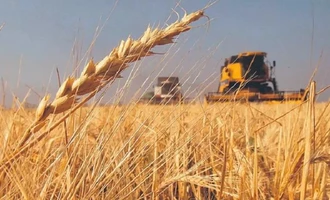
Grain production has declined sharply in recent years./Photo: Internet
The area planted with wheat shrank to 57,000 hectares in the 2026 winter season. The sector attributes the decline to accumulated losses from drought, rising production costs, and economic uncertainty
Wheat production in Santa Cruz is going through one of its most critical periods. The area planted for the 2026 winter season dropped to 57,000 hectares—the lowest level in the past three decades—a situation that worries producers because it will increase reliance on imports to supply the domestic market.
The information was provided by Jaime Hernández, General Manager of the National Association of Oilseed and Wheat Producers (Anapo), during the 33rd National Wheat Day, a technology-focused event organized by the institution to promote innovation and productivity in wheat farming.
“This has been a critical year for wheat planting. We have the smallest cultivated area in the last 30 years as a result of nearly two years of production and financial losses, economic uncertainty, high production costs, and adverse weather conditions, especially drought,” Hernández said.
Technology to Boost Production
National Wheat Day was held for the first time at Anapo’s Experimental Center in the municipality of Cuatro Cañadas and brought together around 30 public institutions and private companies involved in agricultural technology development.
During the event, 15 wheat varieties were showcased, including the launch of the new Génesis variety, developed to offer greater yield potential.
Producers also learned about new sorghum, corn, and sunflower hybrids, as well as technology packages aimed at controlling pests, diseases, and weeds, along with bio-inputs, fertilization methods, soil management techniques, and sustainable farming practices.
“This is a strictly technology-focused event designed to bring all available innovations closer to producers so they can improve the management of wheat and other rotational crops,” the executive explained.
Production Will Cover Only 12% of National Demand
Bolivia consumes approximately 850,000 tons of wheat each year. Traditionally, domestic production supplied between 20% and 30% of that demand, with Santa Cruz accounting for 70% of the country’s wheat output.
However, because of the sharp reduction in planted area this year, Anapo estimates that national production will cover only 12% of domestic demand, forcing the country to increase imports of wheat and flour, mainly from Argentina and Paraguay.
“Lower production means less food sovereignty and greater outflows of foreign currency. Last year, Bolivia spent more than $80 million on legal imports of wheat and flour alone; if smuggling is included, that figure nearly doubles,” Hernández warned.
He also noted that irregular diesel supplies continue to affect farming operations, particularly during the crucial winter harvest and summer planting seasons.
According to Hernández, about 950,000 hectares of strategic crops—including sorghum, corn, sunflower, wheat, and chia—are currently planted in the eastern part of the department, while planting is underway for 400,000 hectares of soybeans in the Integrated North region, a process that must be completed before the end of July.
“We are coming off nearly a month of delays in diesel supply, and many producers still do not have enough fuel to carry out their activities,” he said.
Hernández added that Anapo has met with government officials and hopes the commitments made will help normalize fuel supplies in the coming weeks.
Encouraging Yields Despite Reduced Acreage
Although the planted area has declined significantly, weather conditions during this season have been favorable for crop development.
Anapo projects average yields of between 1.6 and 1.7 tons per hectare, which would result in a harvest of approximately 80,000 to 90,000 tons.
“Yields will be good thanks to the favorable moisture and temperature conditions that supported crop development. We hope this encourages producers to plant wheat again next year,” Hernández said.
In response to the current situation, Anapo has proposed the creation of a National Wheat Incentive Plan that would include research, agricultural extension services, financing, insurance programs, the incorporation of biotechnology, and mechanisms to provide greater certainty for producers.
Among the proposals is the establishment of a minimum purchase price before planting, a measure that Hernández believes would encourage production of a crop considered strategic for the country’s food security.
The executive reported that discussions are already underway with the Ministry of Planning and the Ministry of Productive Development to advance the strategy, whose goal is to rebuild domestic production and reduce dependence on imports.
Por Ernesto Estremadoiro Flores, El Deber:
La producción de trigo cae a su nivel más bajo en 30 años; Anapo pide un plan nacional para reactivar el cultivo
La producción del grano cayó en los últimos años/Foto: Internet
El área sembrada se redujo a 57.000 hectáreas en la campaña de invierno 2026. El sector atribuye la caída a las pérdidas acumuladas por la sequía, el aumento de costos y la incertidumbre económica
La producción de trigo en Santa Cruz atraviesa uno de sus momentos más críticos. La superficie sembrada para la campaña de invierno 2026 cayó a 57.000 hectáreas, la más baja en las últimas tres décadas, un escenario que preocupa al sector productivo porque incrementará la dependencia de las importaciones para abastecer el mercado interno.
Así lo informó el gerente general de la Asociación de Productores de Oleaginosas y Trigo (Anapo), Jaime Hernández, durante la 33ª versión del Día Nacional del Trigo, un encuentro tecnológico organizado por la institución para promover la innovación y la productividad del cultivo.
“Este ha sido un año crítico para la siembra de trigo. Tenemos el área más reducida de los últimos 30 años como consecuencia de casi dos años de pérdidas productivas y económicas, la incertidumbre económica, los altos costos de producción y los efectos climáticos adversos, principalmente la sequía“, afirmó Hernández.
Tecnología para impulsar la producción
El Día Nacional del Trigo se desarrolló por primera vez en el Centro Experimental de Anapo, ubicado en el municipio de Cuatro Cañadas, y reunió a unas 30 instituciones públicas y empresas privadas vinculadas al desarrollo tecnológico del sector agrícola.
Durante la jornada se exhibieron 15 variedades de trigo, entre ellas el lanzamiento de la nueva variedad Génesis, desarrollada con un mayor potencial de rendimiento.
Además, los productores conocieron nuevos híbridos de sorgo, maíz y girasol, así como paquetes tecnológicos orientados al control de plagas, enfermedades y malezas, bioinsumos, fertilización, manejo de suelos y prácticas de agricultura sostenible.
“Es un evento estrictamente tecnológico que busca acercar toda la innovación disponible a los productores para mejorar el manejo del cultivo de trigo y de otros granos de rotación”, explicó el ejecutivo.
Solo cubrirá el 12% de la demanda nacional
Bolivia consume aproximadamente 850.000 toneladas de trigo por año. Tradicionalmente, la producción nacional cubría entre el 20% y el 30% de esa demanda, siendo Santa Cruz responsable del 70% del trigo producido en el país.
Sin embargo, debido a la fuerte reducción del área sembrada este año, Anapo estima que la producción nacional apenas abastecerá el 12% de la demanda interna, lo que obligará a incrementar las importaciones de trigo y harina, principalmente desde Argentina y Paraguay.
“La menor producción significa menos soberanía alimentaria y una mayor salida de divisas. El año pasado el país destinó más de 80 millones de dólares solo a la importación legal de trigo y harina; si se suma el contrabando, la cifra prácticamente se duplica”, advirtió Hernández.
El dirigente señaló que el irregular abastecimiento de diésel continúa afectando las labores agrícolas, especialmente en una etapa clave para la cosecha de invierno y la siembra de verano.
Explicó que actualmente existen 950.000 hectáreas sembradas con cultivos estratégicos como sorgo, maíz, girasol, trigo y chía en la zona este del departamento, mientras que en el Norte Integrado avanza la siembra de 400.000 hectáreas de soya, que debe concluir antes de finalizar julio.
“Venimos de casi un mes de desfase en el abastecimiento de diésel y todavía muchos productores no cuentan con el combustible suficiente para desarrollar sus actividades”, sostuvo.
Hernández indicó que Anapo mantuvo reuniones con el Gobierno y espera que los compromisos asumidos permitan regularizar el suministro durante las próximas semanas.
Rendimientos alentadores pese a la menor superficie
Aunque el área sembrada disminuyó significativamente, las condiciones climáticas registradas durante esta campaña favorecieron el desarrollo del cultivo.
Anapo proyecta un rendimiento promedio de entre 1,6 y 1,7 toneladas por hectárea, lo que permitiría obtener una producción cercana a 80.000 o 90.000 toneladas.
“Los rendimientos serán buenos gracias a las condiciones de humedad y temperatura que acompañaron el desarrollo del cultivo. Esperamos que eso anime a los productores a volver a sembrar trigo el próximo año”, indicó.
Frente a este escenario, Anapo planteó la implementación de un Plan Nacional de Incentivo al Trigo, que incluya investigación, extensión agrícola, financiamiento, seguros, incorporación de biotecnología y mecanismos que otorguen mayor certidumbre a los productores.
Entre las propuestas figura el establecimiento de un precio mínimo de compra antes de la siembra, una medida que, según Hernández, permitiría incentivar la producción de un cultivo considerado estratégico para la seguridad alimentaria del país.
El ejecutivo informó que ya existen conversaciones con el Ministerio de Planificación y el Ministerio de Desarrollo Productivo para avanzar en la construcción de esta estrategia, cuyo objetivo es recuperar la producción nacional y reducir la dependencia de las importaciones.


Leave a Reply