By El Deber:
What can and cannot be done?
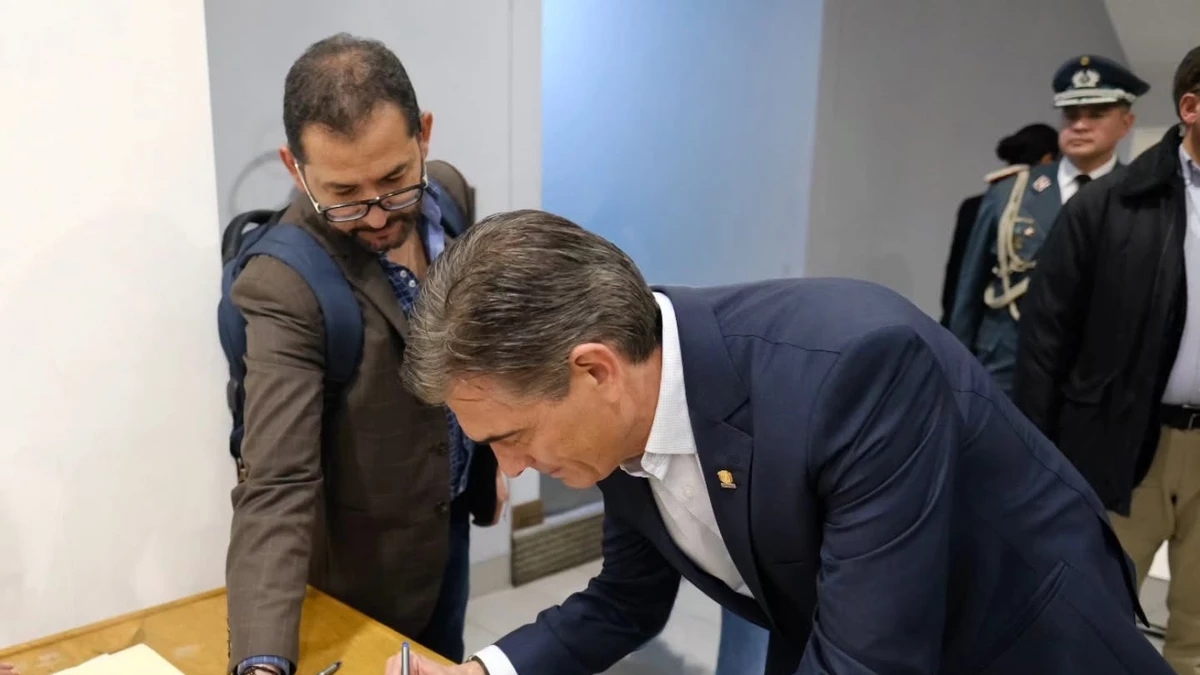
This Saturday, June 20, President Rodrigo Paz declared a State of Exception throughout the country. The measure comes after 51 days of social unrest and 46 days of road blockades.
At 1:30 a.m. this Saturday, the Government declared a State of Exception across the entire national territory in order to restore free movement, guarantee the supply of essential goods, and put an end to the blockades affecting different regions of the country.
The Executive Branch clarified that the measure does not imply the suspension of daily activities or the suspension of fundamental rights. However, it expressly prohibits road blockades.
“The measure prohibits the blocking of streets, avenues, roads, and highways that affect the movement of people and the supply of essential goods,” states one of the explanations released by the Government.
Prohibitions
- All types of blockades on highways and transportation routes throughout the country are prohibited.
- Carrying weapons, explosives, caltrops (“miguelitos”), flammable substances, and fuel in unauthorized containers during demonstrations or gatherings is prohibited.
- In areas where acts of violence occur, temporary restrictions may be imposed on the sale of alcoholic beverages.
- In cases where there are risks to the transportation of people or valuables, temporary adjustments may be implemented in certain services.
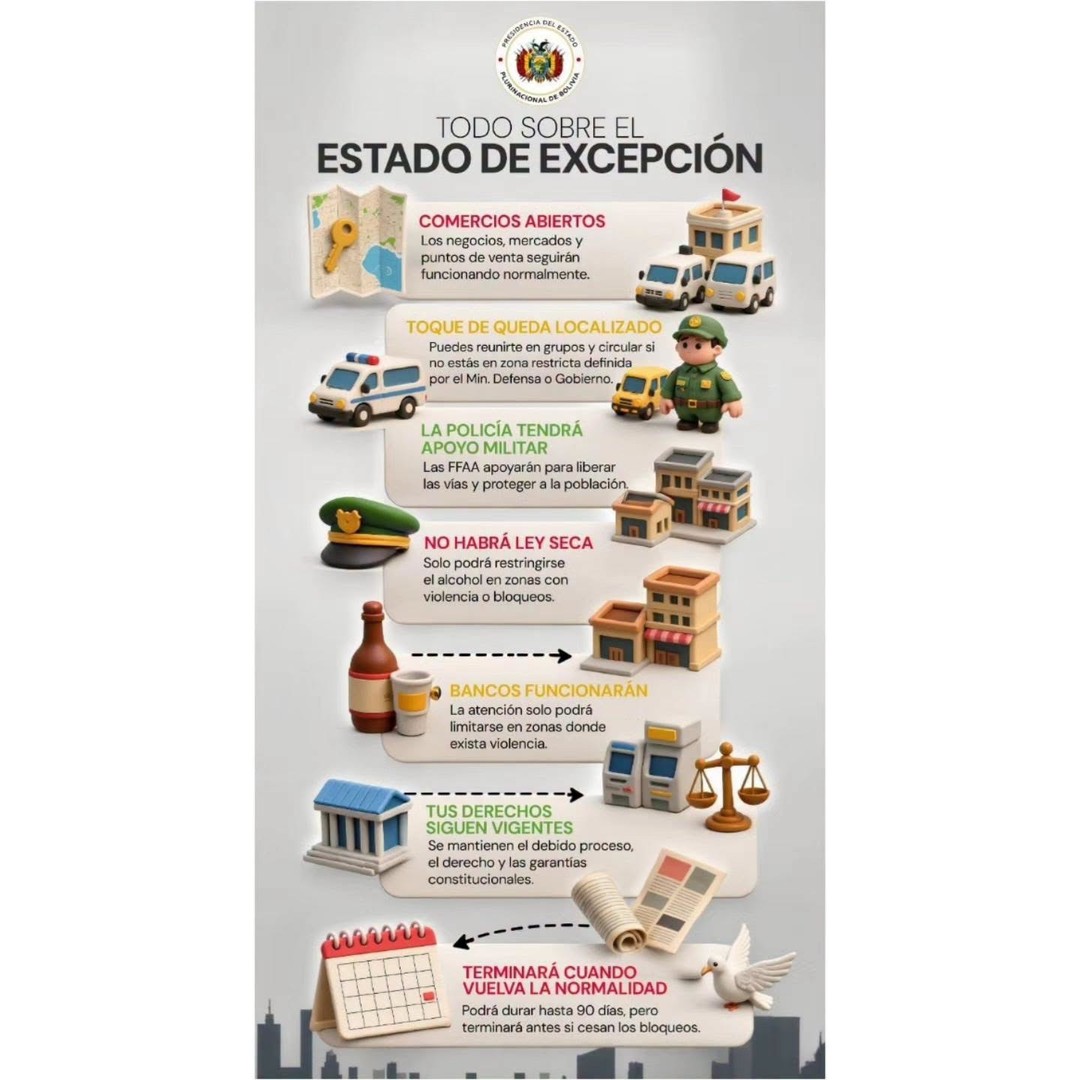
Frequently Asked Questions
Can people move around freely?
Yes. People may travel and carry out their activities normally, except in specific areas where temporary restrictions are in place.
Can people work and attend school?
Yes. Labor, educational, and economic activities will continue as normal.
Will there be a dry law (ban on alcohol sales)?
No. The sale and consumption of alcoholic beverages will only be temporarily restricted in places where there are clashes, blockades, or serious acts of violence.
Will there be a curfew?
Only in restricted areas designated by the Ministry of Defense or the Government. Outside those areas, freedom of movement and assembly remain permitted.
Can people access food, fuel, and medicines?
Yes. Ensuring access to these products is one of the main objectives of the measure.
Is freedom of expression restricted?
No. The right to information, freedom of expression, and constitutional guarantees remain in force.
Will banks close?
No. Financial services will continue operating normally, except for temporary adjustments in high-risk areas.
Will the Armed Forces replace the Police?
No. The Armed Forces will provide temporary and coordinated support to the Police in clearing blocked roads and protecting essential services.
Will road blockades on national highways be allowed?
No. The State of Exception prohibits blockades on streets, avenues, roads, and highways throughout the country.
Must businesses and commercial establishments close?
No. Formal and informal businesses, markets, and points of sale may continue operating normally.
When does the State of Exception end?
The measure may remain in effect for a maximum period of 90 days. However, it may be lifted earlier if the blockades, acts of violence, or threats that prompted its implementation cease.in embargo, podrá levantarse antes si cesan los bloqueos, los hechos de violencia o las amenazas que motivaron su aplicación.
Por El Deber:
¿Qué se puede hacer y qué no?
Este sábado 20 de junio, el presidente Rodrigo Paz declaró Estado de Excepción en todo el país. La medida surge tras 51 días de conflictos sociales y 46 días de bloqueos de carreteras.
A las 01:30 de este sábado, el Gobierno decretó estado de excepción en todo el territorio nacional con el fin de restablecer la libre circulación, garantizar el abastecimiento de productos esenciales y poner fin a los bloqueos que afectan a distintas regiones del país.
Desde el Ejecutivo aclararon que la medida no implica la paralización de las actividades cotidianas ni la suspensión de los derechos fundamentales. Sin embargo, establece la prohibición expresa de los bloqueos.
“La medida prohíbe bloquear calles, avenidas, caminos y carreteras que afecten la circulación de personas y el abastecimiento de bienes esenciales”, señala una de las explicaciones difundidas por el Gobierno.
Prohibiciones
- Quedan prohibidos los bloqueos de cualquier tipo en las carreteras y vías de circulación del país.
- Se prohíbe portar armas, explosivos, miguelitos, sustancias inflamables y combustible en envases no autorizados durante movilizaciones o concentraciones.
- En zonas donde existan hechos de violencia podrán aplicarse restricciones temporales a la venta de bebidas alcohólicas.
- En caso de riesgos para el traslado de personas o valores, podrán implementarse ajustes temporales en determinados servicios.
Preguntas que pueden surgir
¿Se puede circular libremente?
Sí. Las personas podrán trasladarse y desarrollar sus actividades con normalidad, salvo en zonas específicas donde existan restricciones temporales.
¿Se puede trabajar y estudiar?
Sí. Las actividades laborales, educativas y económicas continúan con normalidad.
¿Se aplica la Ley Seca?
No. La venta y el consumo de bebidas alcohólicas solo estarán restringidos temporalmente en lugares donde existan enfrentamientos, bloqueos o hechos graves de violencia.
¿Habrá toque de queda?
Solo en las zonas de restricción definidas por el Ministerio de Defensa o por el Gobierno. Fuera de esas áreas, la libre circulación y las reuniones permanecen permitidas.
¿Se puede acceder a alimentos, combustible y medicamentos?
Sí. Garantizar el acceso a estos productos es uno de los principales objetivos de la medida.
¿Se restringe la libertad de expresión?
No. El derecho a la información, la libertad de expresión y las garantías constitucionales continúan vigentes.
¿Se cerrarán los bancos?
No. Los servicios financieros seguirán funcionando con normalidad, salvo ajustes temporales en zonas de riesgo.
¿Las Fuerzas Armadas reemplazarán a la Policía?
No. Las Fuerzas Armadas brindarán apoyo temporal y coordinado a la Policía para liberar vías bloqueadas y resguardar servicios esenciales.
¿Se permitirán bloqueos en las carreteras nacionales?
No. El Estado de Excepción prohíbe los bloqueos en calles, avenidas, caminos y carreteras del país.
¿Los negocios y comercios deben cerrar?
No. Los negocios formales e informales, mercados y puntos de venta podrán continuar operando con normalidad.
¿Cuándo termina el Estado de Excepción?
La medida podrá tener una duración máxima de 90 días. Sin embargo, podrá levantarse antes si cesan los bloqueos, los hechos de violencia o las amenazas que motivaron su aplicación.
https://eldeber.com.bo/pais/siginifca-estado-excepcion-bolivia-puede-hacer-no_1781936583


Leave a Reply