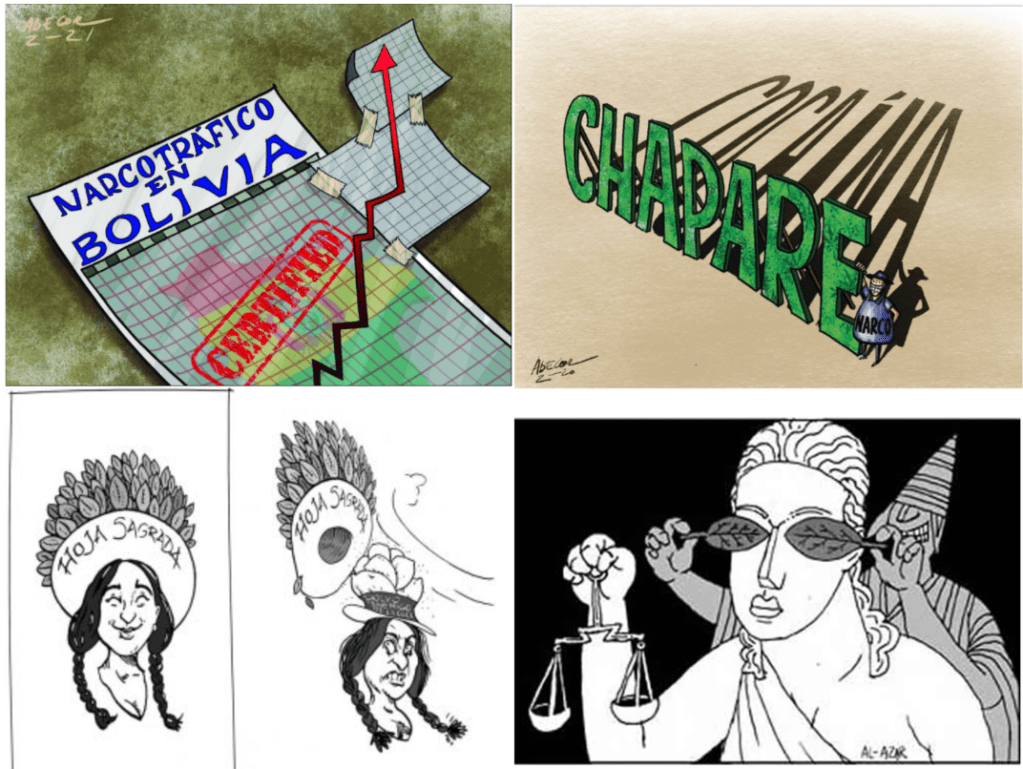
By Milenio, Eju,tv:
Study Warns That Bolivia Became a Hub for Drug Trafficking and Illicit Economies During MAS Governments
A study by the Fundación Milenio argues that between 2006 and 2025 the country strengthened networks linked to drug trafficking, illegal mining, money laundering, and transnational crime amid state weakness and institutional corruption.
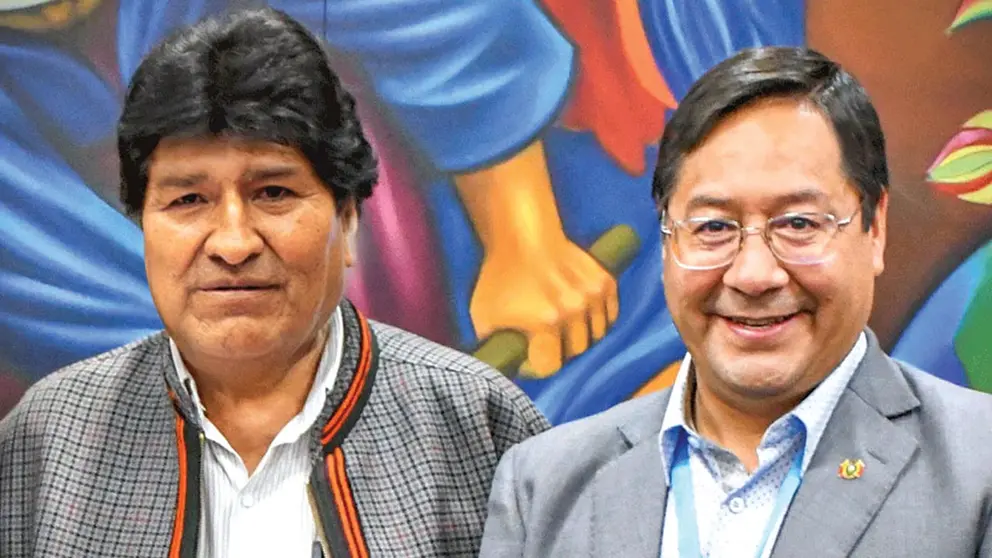
Former presidents Evo Morales Ayma (2006–2019) and Luis Arce Catacora (2020–2025). Photo: Opinión
Bolivia consolidated during the last two decades a model of illicit economies tied to drug trafficking, illegal mining, and transnational criminal networks, according to the report “Bolivia: The Political Economy of Illicit Markets and Transnational Criminality,” prepared by researchers Henry Oporto and Ricardo Calla for Fundación Milenio.
The document, released by the institution a few days ago, argues that the country went from being mainly a producer of coca leaf and coca paste to becoming a “full producer and exporter of cocaine,” with international connections involving criminal organizations from Brazil, Mexico, Europe, and Colombia.
“The drug trade in Bolivia is now a vertically integrated industry (from coca fields to cocaine laboratories and export pipelines) run by local actors in collaboration with transnational criminal groups,” the report states.
The investigation argues that during the last two decades (2006–2025) the country endured “an autocratic, nationalist, and corporatist regime,” aligned with the leftist governments of the so-called “socialism of the 21st century”; while also forging very close relations with China, Russia, and Iran, powers interested in expanding their geoeconomic presence and geopolitical influence in Latin America and the Caribbean.
“A singular feature of the regime established in Bolivia in 2006 by indigenous leader Evo Morales and his party, the Movement Toward Socialism (MAS), was that it largely based its economic policy on the benefits derived from the drug trafficking industry, large-scale smuggling, and other flourishing illicit businesses, all with a marked transnational bias,” the document emphasizes.

A coca leaf plantation. Reference photo: El Deber
Family Clans and International Cartels
The study states that the drug trade in Bolivia ceased to depend on traditional hierarchical cartels and instead became structured through “fluid alliances” and networks of family clans managing cocaine production, logistics, and exportation. This evolution of the coca-cocaine economy reveals a substantial change in Bolivia’s role in the geopolitics of drugs.
According to the report, organizations such as Brazil’s Primeiro Comando da Capital (PCC) and Comando Vermelho; the Mexican Sinaloa and Jalisco New Generation cartels; as well as the Clan del Golfo and European mafias, operate alongside Bolivian structures within global drug trafficking routes. “Bolivian clans not only supplied coca paste, but also crystallized cocaine hydrochloride within the country,” the investigation warns.
“The case of Bolivia illustrates the profile of the political economy of illicit markets. As is known, illicit economies tend to expand where state policies and structures create favorable opportunities, (…) allowing legal and traditional coca leaf markets to coexist with the diversion of coca toward cocaine production,” it notes.
The text adds that Bolivia became a “nodal point” of continental trafficking due to its geographic location, with routes toward Brazil, Paraguay, Argentina, Chile, and Pacific ports used for illegal exports to Europe and Asia.
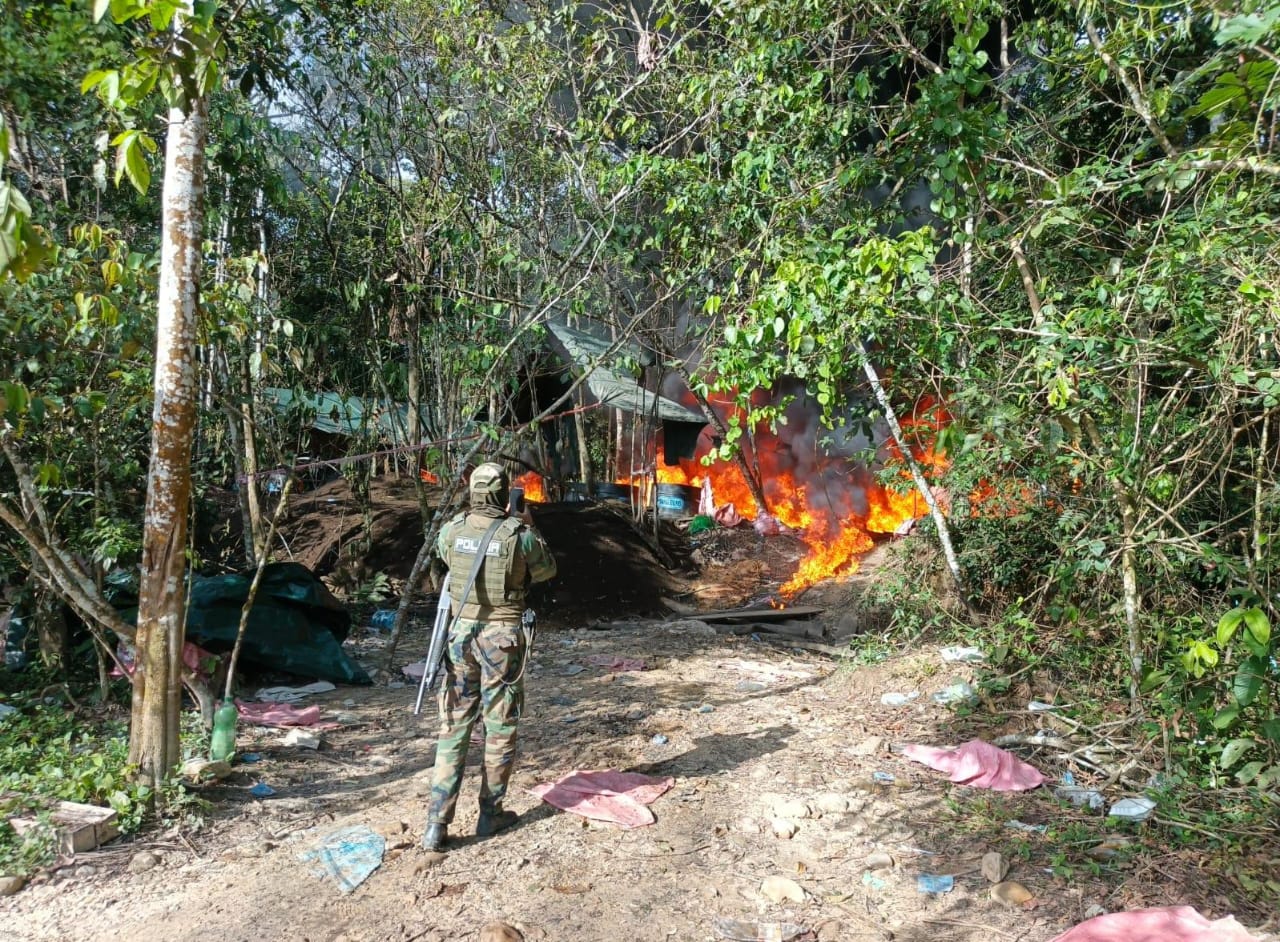
Destruction of a drug factory in the Chapare. Photo: FELCN
Chapare, Coca, and Union Control
One of the report’s central chapters analyzes the “social control” policy implemented beginning in 2006 during Evo Morales’ government, which allowed part of coca production to be legalized through the “catos” system. It acknowledges that the model initially reduced levels of violent confrontation and temporarily decreased illegal crops, but argues that coca production later ended up feeding the expansion of the cocaine industry.
The MAS government chose to increase the legal coca quota from 12,000 to 22,000 hectares “while occasionally raiding cocaine laboratories,” the document states, before asserting that Chapare coca growers’ unions assumed functions of parallel authority in the absence of the state. “It is union leaders who assign land, mediate disputes, and enforce communal rules,” the text says.
“In the absence of an effective state presence, an informal governance system has emerged that emphasizes collective rights and conflict resolution through local organizations. This, of course, has profound implications for cocaine trafficking: rather than being dominated by violent cartels, the drug economy would be intertwined with social and community structures,” it warns.
According to the investigation, Morales boasted about achievements in reducing raw coca leaf plantations while Bolivia migrated toward the transformation and export phase of cocaine production. Thus, after the expulsion of the U.S. Drug Enforcement Administration (DEA) in 2008, cocaine laboratories proliferated, several of them under the control of foreigners attracted by the abundance of coca in the Chapare and the absence of police oversight.

Illegal mining affects snow-capped mountains such as Illimani in La Paz. Photo: El Diario
Illegal Mining and Money Laundering
Fundación Milenio also identifies illegal gold mining as one of the main emerging risks to national security and anti-money laundering efforts. The report estimates that 80% of informal mining is concentrated in gold and moves approximately $4 billion annually. “Many illegal mining ventures came to be financed by drug trafficking and money laundering,” the study warns.
The investigation argues that citizens and organizations of Chinese, Brazilian, Colombian, and Peruvian origin converge around this activity, mainly in Amazonian regions of La Paz, Beni, and Pando.
Corruption and Institutional Infiltration
The study devotes another section to the infiltration of drug trafficking into state institutions and security forces. “At least 30 police officers were investigated for drug trafficking crimes between 2022 and 2023,” the document states.
It also mentions reports about how clandestine cocaine flights were ignored and cases of judges and prosecutors who avoided investigating or sanctioning criminal structures. “The link between drug traffickers and state officials is undeniable,” the text warns in one of its sections.

Sebastián Marset was expelled from the country on March 13 of this year. Photo: Red Uno
Marset and the “Turning Point”
The document also addresses the capture of Uruguayan drug trafficker Sebastián Marset on March 13 in Santa Cruz, an event it considers a “turning point” in Bolivia’s anti-drug fight.
The investigation argues that Marset’s arrest took place within the framework of a new stage of international cooperation promoted by the government of Rodrigo Paz and the United States.
“The Shield of the Americas is making our region safer and stronger,” the report quotes from a U.S. State Department statement.
Likewise, it mentions that President Rodrigo Paz described the capture as “a historic event” and “the beginning of a series of actions” against organized crime.
Police Reform and International Cooperation
Finally, the study argues that Bolivia faces the challenge of rebuilding its security strategy through a profound reform of the Police, the Justice system, and international cooperation mechanisms.
“It is not possible to improve public security or strengthen the fight against crime without a strong, modern, professional, and honest Police force,” the document states.
The report concludes that the country must simultaneously confront drug trafficking, illegal mining, money laundering, and institutional corruption in order to recover state control and strengthen democratic governance.
Read the full document at the following link:
Analysis No. 41. Bolivia. The Political Economy of Illicit Markets and Transnational Criminality
by Arturo Aliaga
Por Milenio, Eju,tv:
Estudio advierte que Bolivia se consolidó como nodo del narcotráfico y economías ilícitas durante los gobiernos del MAS
Una investigación de la Fundación Milenio sostiene que entre 2006 y 2025 el país fortaleció redes vinculadas al narcotráfico, minería ilegal, lavado de dinero y crimen transnacional, en medio de debilidad estatal y corrupción institucional.
Los expresidentes Evo Morales Ayma (2006-2019) y Luis Arce Catacora (2020-2025). Foto de : Opinión
Bolivia consolidó durante las últimas dos décadas un modelo de economías ilícitas articuladas al narcotráfico, la minería ilegal y redes criminales transnacionales, según el informe “Bolivia: La economía política de los mercados ilícitos y la criminalidad transnacional”, elaborado por los investigadores Henry Oporto y Ricardo Calla para la Fundación Milenio.
El documento dado a conocer por esa institución hace unos días atrás sostiene que el país pasó de ser principalmente productor de hoja de coca y pasta base a convertirse en un ‘productor y exportador completo de cocaína’, con conexiones internacionales que involucran a organizaciones criminales de Brasil, México, Europa y Colombia.
“El narcotráfico en Bolivia es ahora una industria integrada verticalmente (desde los campos de coca hasta los laboratorios de cocaína y los oleoductos de exportación) dirigida por actores locales en colaboración con grupos criminales transnacionales”, señala el reporte.
La investigación afirma que el país soportó en las últimas dos décadas (2006-2025) ‘un régimen autocrático, nacionalista y corporativo’, alineado con los gobiernos de izquierda del llamado ‘socialismo del siglo XXI’; además de forjar relaciones muy estrechas con China, Rusia e Irán; potencias interesadas en expandir su presencia geoeconómica y su influencia geopolítica en América Latina y el Caribe.
“Un rasgo singular del régimen implantado en Bolivia, en 2006, por el líder indigenista Evo Morales y su partido, el Movimiento al Socialismo (MAS), fue haber sustentado en gran medida su política económica en los beneficios derivados de la industria del narcotráfico, el contrabando en gran escala y otros negocios ilícitos florecientes, todos ellos con un marcado sesgo transnacional”, remarca el documento.
Una plantación de hoja de coca. Foto referencial: El Deber
Clanes familiares y carteles internacionales
El estudio afirma que el comercio de drogas en Bolivia dejó de depender de carteles jerárquicos tradicionales y pasó a estructurarse mediante ‘alianzas fluidas’ y redes de clanes familiares que gestionan producción, logística y exportación de cocaína. Esa evolución de la economía de la coca-cocaína pone de manifiesto un cambio sustantivo del papel de Bolivia en la geopolítica de las drogas.
Según el informe, organizaciones como las brasileñas Primer Comando de la Capital (PCC) y Comando Vermelho; los carteles mexicanos de Sinaloa y Jalisco Nueva Generación, además del Clan del Golfo y mafias europeas, operan junto a estructuras bolivianas dentro de las rutas globales del narcotráfico. “Los clanes bolivianos no solo suministraban pasta de coca, sino que también cristalizaban clorhidrato de cocaína en el país”, advierte la investigación.
“El caso de Bolivia ilustra el perfil de la economía política de los mercados ilícitos. Como se conoce, las economías ilícitas suelen expandirse allí donde las políticas y estructuras estatales crean oportunidades propicias, (…) permitiendo que los mercados legales y tradicionales de hoja coca coexistieran con el desvío de la coca a la producción de cocaína”, puntualiza.
El texto añade que Bolivia se transformó en un ‘punto nodal’ del tráfico continental debido a su ubicación geográfica, con rutas hacia Brasil, Paraguay, Argentina, Chile y puertos del Pacífico utilizados para exportaciones ilegales a Europa y Asia.
Destrucción de una fábrica de droga en el Chapare. Foto: FELCN
Chapare, coca y control sindical
Uno de los capítulos centrales del informe analiza la política de ‘control social’ aplicada desde 2006 durante el gobierno de Evo Morales, que permitió legalizar parte de la producción de coca mediante el sistema de ‘catos’; reconoce que inicialmente el modelo redujo los niveles de confrontación violenta y disminuyó temporalmente los cultivos ilegales, pero sostiene que posteriormente la producción de coca terminó alimentando la expansión de la industria de cocaína.
El gobierno del MAS optó por incrementar la cuota legal de coca de 12.000 a 22.000 hectáreas ‘mientras ocasionalmente se allanaban laboratorios de cocaína’, sostiene el documento, para luego afirmar que los sindicatos cocaleros del Chapare asumieron funciones de autoridad paralela frente a la ausencia estatal. “Son los dirigentes sindicales quienes asignan tierras, median disputas y hacen cumplir normas comunales”, señala el texto.
“En ausencia de una presencia estatal efectiva, ha surgido un sistema de gobernanza informal que enfatiza los derechos colectivos y la resolución de conflictos a través de las organizaciones locales. Ello, desde luego, tiene profundas implicaciones para el tráfico de cocaína: en lugar de estar dominado por cárteles violentos, la economía de la droga estaría entrelazada con las estructuras sociales y comunitarias”, advierte.
Según la indagación, Morales se ufanaba de los logros en la reducción de las plantaciones de hoja de coca cruda mientras Bolivia migraba a la fase de transformación y exportación de cocaína. Es así que, tras la expulsión de la Oficina de Control Antidrogas (DEA) estadounidense en 2008, hubo una proliferación de laboratorios de cocaína, varios de ellos bajo control de extranjeros atraídos por la abundancia de coca del Chapare y la ausencia de control policial.
La minería ilegal afecta a nevados como el Illimani en La Paz. Foto: El Diario
Minería ilegal y lavado de dinero
La Fundación Milenio identifica además a la minería ilegal del oro como uno de los principales riesgos emergentes para la seguridad nacional y el lavado de activos. El informe estima que el 80% de la minería informal está concentrada en el oro y mueve aproximadamente 4.000 millones de dólares anuales. “Muchos emprendimientos de minería ilegal pasaron a ser financiados por el narcotráfico y el lavado de dinero”, advierte el estudio.
La investigación sostiene que en torno a esa actividad convergen ciudadanos y organizaciones de origen chino, brasileño, colombiano y peruano, principalmente en regiones amazónicas de La Paz, Beni y Pando.
Corrupción e infiltración institucional
El estudio dedica otro apartado a la infiltración del narcotráfico en instituciones estatales y fuerzas de seguridad. “Al menos 30 policías fueron investigados por delitos de narcotráfico entre 2022 y 2023”, señala el documento.
También menciona reportes sobre cómo se ignoraban vuelos clandestinos de cocaína y casos de jueces y fiscales que evitaron investigar o sancionar a estructuras criminales. “El nexo entre los narcotraficantes y funcionarios del Estado es innegable”, alerta el texto en uno de sus apartados.
Sebastián Marset fue expulsado del país el pasado 13 de marzo de este año. Foto: Red Uno
Marset y el ‘punto de inflexión’
El documento también aborda la captura del narcotraficante uruguayo Sebastián Marset el pasado 13 de marzo en Santa Cruz, hecho que considera un ‘momento de inflexión’ en la lucha antidrogas en Bolivia.
La investigación sostiene que la detención de Marset se produjo en el marco de una nueva etapa de cooperación internacional impulsada por el gobierno de Rodrigo Paz y Estados Unidos.
“El Escudo de las Américas está haciendo que nuestra región sea más segura y fuerte”, cita el informe respecto a un comunicado del Departamento de Estado estadounidense.
Asimismo, menciona que el presidente Rodrigo Paz calificó la captura como “un hecho histórico” y “el inicio de una serie de acciones” contra el crimen organizado.
Reforma policial y cooperación internacional
Finalmente, el estudio plantea que Bolivia enfrenta el reto de reconstruir su estrategia de seguridad mediante una reforma profunda de la Policía, la Justicia y los mecanismos de cooperación internacional.
“No es posible mejorar la seguridad pública ni fortalecer la lucha contra la criminalidad sin una Policía fuerte, moderna, profesional y honesta”, señala el documento.
El informe concluye que el país debe enfrentar simultáneamente narcotráfico, minería ilegal, lavado de dinero y corrupción institucional para recuperar el control estatal y fortalecer la gobernabilidad democrática.
Lea el documento completo en el siguiente enlace:
Análisis No. 41. Bolivia. La economía política de los mercados ilícitos y la criminalidad transnacional
por Arturo Aliaga


Leave a Reply