By Unitel:
After Arrest of Former Central Bank President, Economist Warns Bond Case Is Not the Only Matter That Must Be Investigated
The former president of the issuing institution, Edwin Rojas, was arrested this Tuesday and is being investigated for alleged multimillion-dollar economic damage stemming from purported irregular transactions involving sovereign bonds.
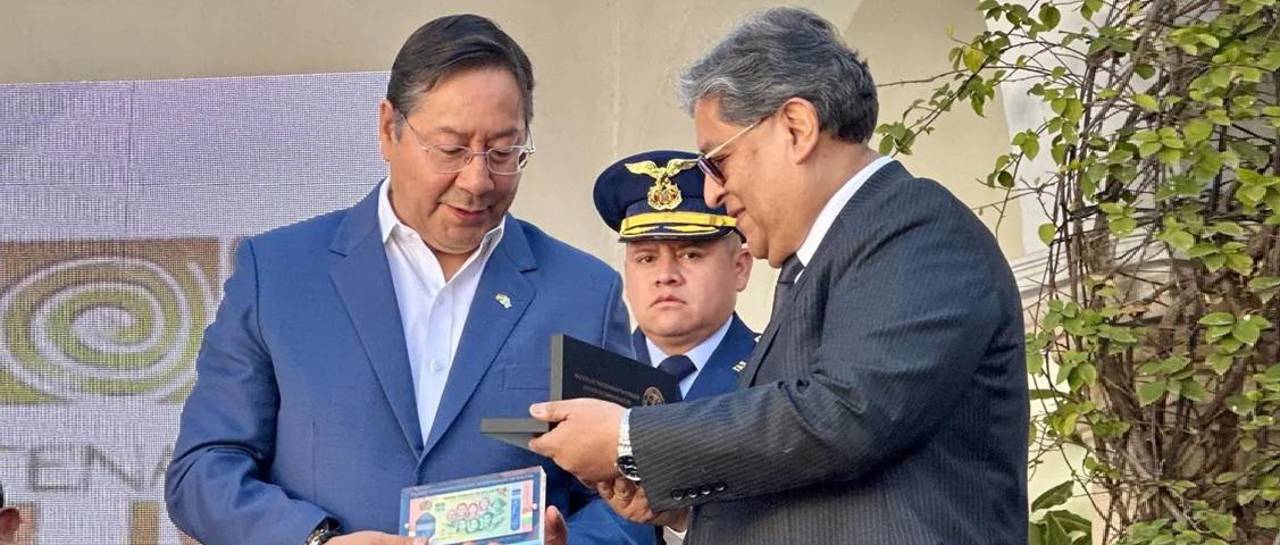
Edwin Rojas (right) served as president of the issuing institution during the administration of Luis Arce (left).
Following the arrest of former president of the Banco Central de Bolivia (BCB), Edwin Rojas, who is under investigation for alleged multimillion-dollar economic damage resulting from operations with sovereign bonds, economist and former director of the issuing institution, Roger Banegas, warned that this case should only be the starting point, since there are other events that also require investigation.
“This is not the only matter that must be investigated. There are other events that the current administration and the authorities of the Banco Central de Bolivia must investigate looking backward,” Banegas said in an interview with UNITEL.
Banegas cited cases such as alleged irregular acts related to gold transactions, where there was an advance sale, as well as other investigations linked to banknote printing tenders.
Added to this is the IMF case, which stems from a rapid financing instrument the State received to address the covid-19 emergency, but which was returned early by the administration of Luis Arce, something that allegedly also generated economic damage.
According to information provided by the Prosecutor’s Office this Tuesday, the case against Rojas is investigating economic damage of at least $124 million derived from alleged irregular bond transactions.
In that context, Banegas recalled that he had already questioned these operations when they became public, describing them as a dubious operation and as conduct that was going to generate an economic loss for the State.
He explained that the transactions were related to Bolivia 2028 and 2030 bonds in international markets, which were denominated in dollars, but Rojas’s administration approved regulations to exchange these bonds into local currency while maintaining value.
According to his version, these operations generated negative economic effects not only for the State, but also for private investors.
Por Unitel:
Tras aprehensión del expresidente del BCB, economista advierte que el caso bonos no es lo único a investigar
El expresidente del ente emisor, Edwin Rojas, fue aprehendido este martes y es investigado por un presunto daño económico millonario derivado de presuntas transacciones irregulares con bonos soberanos
Edwin Rojas (der.) fue presidente del ente emisor durante la gestión de Luis Arce (izq.)
Tras la aprehensión del expresidente del Banco Central de Bolivia (BCB), Edwin Rojas, investigado por un presunto daño económico millonario derivado de operaciones con bonos soberanos, el economista y exdirector del ente emisor, Roger Banegas, advirtió que este caso debe ser solo el punto de partida, ya que existen otros hechos que también requieren investigación.
“Este no es el único hecho que hay que investigar. Hay otros hechos que la actual administración y las autoridades del Banco Central de Bolivia deben investigar para atrás”, sostuvo Banegas en entrevista con UNITEL.
Banegas citó casos como los presuntos hechos irregulares relacionados con las transacciones de oro, donde se dio una venta anticipada, así como otras investigaciones relacionadas con licitaciones de impresión de billetes.
A esto se suma el caso FMI, que deriva de un instrumento de financiamiento rápido que recibió el Estado para atender la emergencia del covid-19, pero que fue devuelto por la administración de Luis Arce de manera anticipada, lo que presuntamente también generó un daño económico.
Según la información proporcionada por la Fiscalía este martes, el proceso contra Rojas indaga un daño económico de al menos $us 124 millones derivado de presuntas transacciones irregulares con bonos.
En ese contexto, Banegas recordó que ya había cuestionado estas operaciones cuando se hicieron públicas, lo que calificó como una operación dudosa y con una conducta que iba a generar una pérdida económica para el Estado.
Explicó que las transacciones estaban relacionadas con bonos Bolivia de 2028 y 2030 en mercados internacionales, los cuales estaban en dólares, pero la administración de Rojas aprobó un reglamento para cambiar estos bonos en moneda nacional con un mantenimiento de valor”.
De acuerdo con su versión, estas operaciones generaron efectos económicos negativos no solo para el Estado, sino también para los inversores privados.


Leave a comment