By Fernando Untoja, Eju.tv:
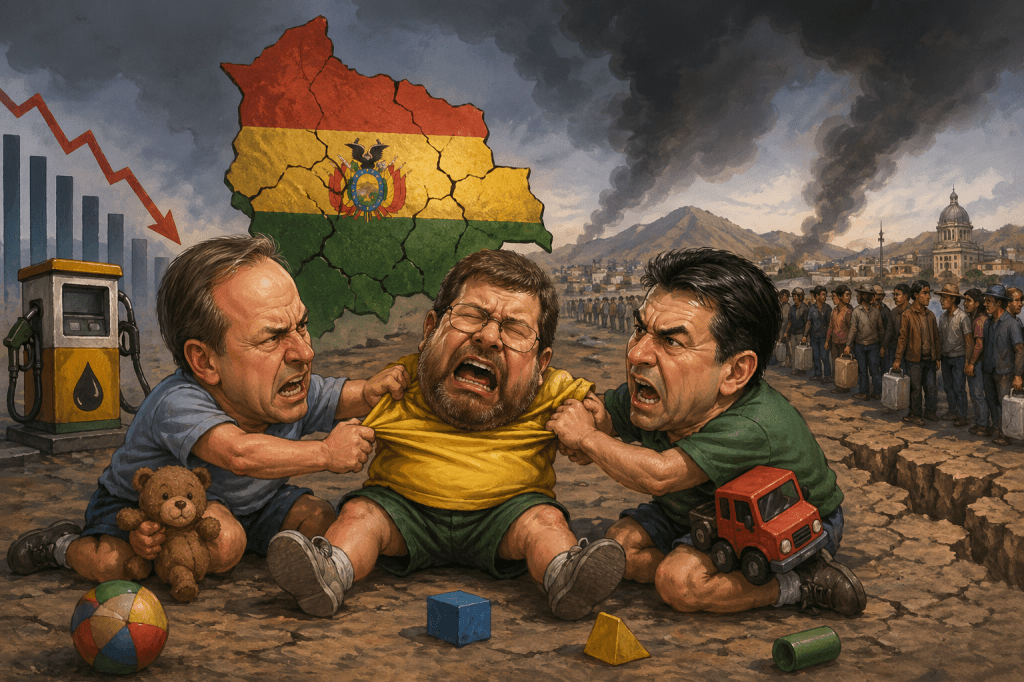
Bolivia is going through a delicate hour. The shortage of diesel is affecting transportation and production, the lack of foreign currency is generating uncertainty in markets and households, prices are squeezing the citizen’s pocketbook, sectoral marches are growing, and new demands are appearing for a 20% wage increase. Concern is felt in every region. People sense that the economy cannot find its direction and that politics is failing in its duty to guide, bring order, and offer hope.
In the midst of this national storm, three figures concentrate an important part of the democratic expectation: Tuto Quiroga, Samuel Doria Medina, and Rodrigo Paz. Not because they are perfect, nor because they possess miraculous solutions, but because for many citizens they represent the possibility of an alternative in the face of the exhaustion of the current model and against any authoritarian temptation.
However, the perception growing among the citizenry is a different one: each seems to be walking separately, measuring his own strength, calculating future candidacies, and looking at the other more as a rival than as a circumstantial ally. Thus, the energy that should be directed toward building a national option ends up being consumed by internal competition.
It is here that a harsh but necessary phrase arises: abandon the habit of chaos.
Because chaos is not always born from major political explosions. Many times it begins in small pettinesses: inability to coordinate, oversized egos, mutual vetoes, short-term calculations, and opportunistic silences. When a society is living through an economic crisis, the fragmentation of those who claim to defend democracy becomes an irresponsible luxury.
It should be said clearly: no one has a magic wand to solve in a matter of weeks the shortage of fuels, rebuild reserves, recover investor confidence, stabilize prices, and simultaneously respond to all social demands. There are no administrative miracles or instant saviors. Whoever promises that is deceiving.
But one thing is not having magic, and something very different is not having maturity.
Bolivia today does not need political messiahs. It needs leaders capable of sitting down, agreeing on common minimums, building public trust, and offering a shared horizon. It needs signs of serenity, not childish competition. It needs responsible leadership, not electoral vanity.
Tuto, Samuel, and Paz must understand that the citizenry is watching. Every gesture of division strengthens those who live off polarization. Every minor quarrel feeds social disenchantment. Every personal calculation weakens the possibility of change. When the democratic opposition fragments, authoritarianism breathes easy.
History teaches that many nations do not fail only because of the strength of bad governments, but because of the inability of their alternatives to rise to the occasion. The country already knows that tragedy all too well: leaders who arrive late, alliances that are never born, opportunities that are lost.
This is not a call for blind uniformity or for renouncing one’s own identities. It is a call for a hierarchy of priorities. Bolivia first, candidacies afterward. National stability first, polls afterward. First the citizen who stands in line for fuel or fears for his job, afterward personal interests.
Abandoning the habit of chaos means understanding that democratic politics does not consist of destroying the one who is close at hand in order to inherit ruins. It consists of building agreements in order to govern a real country.
There is still time. The citizenry does not demand perfection; it demands greatness. It does not ask for miracles; it asks for responsibility. It does not expect heroes; it expects adults.
If Tuto, Samuel, and Paz understand the gravity of this hour, they may open a path to hope. If they persist in dispersion, they will only confirm an old Bolivian custom: losing historic opportunities because of an excess of ego and a shortage of vision.
Por Fernando Untoja, Eju.tv:
Bolivia atraviesa una hora delicada. La escasez de diésel afecta al transporte y a la producción, la falta de divisas genera incertidumbre en mercados y hogares, los precios presionan el bolsillo ciudadano, crecen las marchas sectoriales y aparecen nuevas demandas de incremento salarial del 20%. En cada región se percibe preocupación. La gente siente que la economía no encuentra rumbo y que la política no cumple su deber de orientar, ordenar y ofrecer esperanza.
En medio de esta tormenta nacional, tres figuras concentran una parte importante de la expectativa democrática: Tuto Quiroga, Samuel Doria Medina y Rodrigo Paz. No porque sean perfectos, ni porque tengan soluciones milagrosas, sino porque representan para muchos ciudadanos la posibilidad de una alternativa frente al agotamiento del modelo actual y frente a cualquier tentación autoritaria.
Sin embargo, la percepción que crece en la ciudadanía es otra: cada uno parece caminar por separado, midiendo fuerzas propias, calculando candidaturas futuras y observando al otro más como rival que como aliado circunstancial. Así, la energía que debería dirigirse a construir una opción nacional termina consumida por la competencia interna.
Es aquí donde surge una frase dura, pero necesaria: abandonen el hábito del caos.
Porque el caos no siempre nace de grandes explosiones políticas. Muchas veces comienza en pequeñas mezquindades: incapacidad de coordinar, egos sobredimensionados, vetos cruzados, cálculos de corto plazo y silencios oportunistas. Cuando una sociedad vive crisis económica, la fragmentación de quienes dicen defender la democracia se convierte en un lujo irresponsable.
Conviene decirlo con claridad: nadie tiene una varita mágica para resolver en semanas la escasez de combustibles, recomponer reservas, recuperar confianza inversionista, estabilizar precios y responder simultáneamente a todas las demandas sociales. No existen milagros administrativos ni salvadores instantáneos. Quien prometa eso, engaña.
Pero una cosa es no tener magia, y otra muy distinta es no tener madurez.
Bolivia no necesita hoy mesías políticos. Necesita dirigentes capaces de sentarse, acordar mínimos comunes, construir confianza pública y ofrecer un horizonte compartido. Necesita señales de serenidad, no competencia infantil. Necesita liderazgo responsable, no vanidad electoral.
Tuto, Samuel y Paz deben comprender que la ciudadanía observa. Cada gesto de división fortalece a quienes viven de la polarización. Cada pelea menor alimenta el desencanto social. Cada cálculo personal debilita la posibilidad de cambio. Cuando la oposición democrática se fragmenta, el autoritarismo respira tranquilo.
La historia enseña que muchas naciones no fracasan solo por la fuerza de malos gobiernos, sino por la incapacidad de sus alternativas para estar a la altura del momento. El país ya conoce demasiado bien esa tragedia: líderes que llegan tarde, alianzas que no nacen, oportunidades que se pierden.
Este no es un llamado a uniformidad ciega ni a renunciar a identidades propias. Es un llamado a la jerarquía de prioridades. Primero Bolivia, después las candidaturas. Primero la estabilidad nacional, después las encuestas. Primero el ciudadano que hace fila por combustible o teme por su empleo, después los intereses personales.
Abandonar el hábito del caos significa entender que la política democrática no consiste en destruir al cercano para heredar ruinas. Consiste en construir acuerdos para gobernar un país real.
Todavía están a tiempo. La ciudadanía no exige perfección; exige grandeza. No pide milagros; pide responsabilidad. No espera héroes; espera adultos.
Si Tuto, Samuel y Paz comprenden la gravedad de la hora, podrán abrir una esperanza. Si persisten en la dispersión, solo confirmarán una vieja costumbre boliviana: perder oportunidades históricas por exceso de ego y escasez de visión.
https://eju.tv/2026/04/tuto-samuel-y-paz-abandonen-el-habito-del-caos/


Leave a Reply