
By El Diario:
The Government Must Reduce Spending; Not Making the Adjustment Would Deepen the Crisis
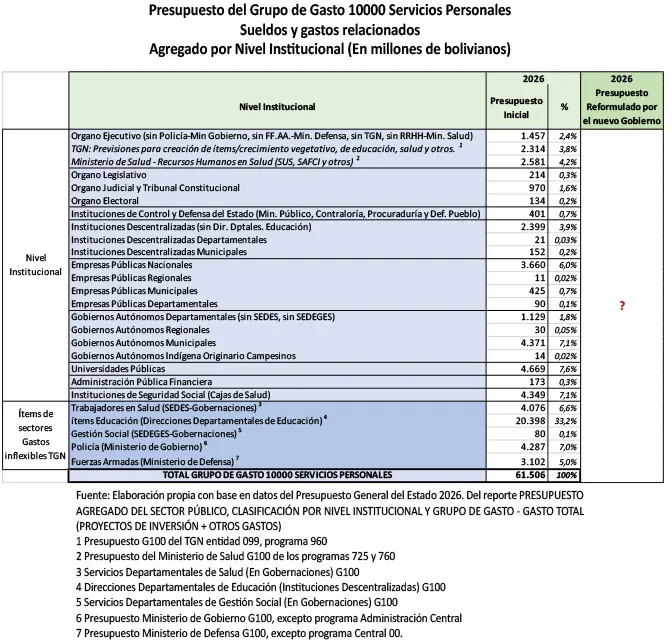
The economic crisis generated and inherited from previous governments has as one of its main causes the excessive growth of public spending, with a heavy bureaucratic burden and loss-making state companies, in a context of falling revenues. The new government administration has the responsibility to reduce spending; failing to assume this adjustment would mean allowing the crisis to deepen and the debt to become unsustainable, among other consequences, according to an analysis by the Jubileo Foundation.
The current government committed to reducing spending and the fiscal deficit, shrinking the unnecessary public apparatus, introducing limits on current spending, and evaluating, auditing, and closing state-owned companies. However, to date these tasks remain undone, since the state companies remain intact.
GROWTH OF SPENDING
The large increase in public spending at all levels, during and even after the period of economic bonanza, has generated since 2014 an increasingly deep fiscal deficit (more spending than income), and a consequent growth of both external and domestic debt, the document states.
At the same time, the accelerated growth of the Central Government’s domestic debt in recent years (mainly with the Central Bank) and the monetary emission used to finance the high level of public spending is one of the factors that has generated the rise in inflation.
Among the main elements that characterize the situation is the high level of current spending, whose central component is administrative expenses, salaries, and others; that is, spending aimed at sustaining a large bureaucratic structure. In contrast, since the 2017 administration, public investment has been declining. Likewise, there is a large number of state-owned companies, generally loss-making, which represent a significant portion of the Budget and total spending. All of this occurs in a context in which revenues have declined, Jubileo notes.
RESPONSIBILITY AND COMMITMENTS
The need to reduce public spending was present in the programs of the different political groups in the 2025 electoral contest, including that of the party that is now in government.
Reducing the high level of expenditures, among other issues, is one of the responsibilities the current government must confront, which implies, among other elements, reducing the state bureaucracy and the size of the heavy public apparatus. Not doing so means allowing the crisis to continue its course and leaving behind a more indebted country, it warns.
In this regard, the new government has proposed a reformulation of the 2026 General State Budget to reflect the country’s new economic reality, applying the principles of austerity, efficiency, and transparency.
The economic crisis generated and inherited from previous governments has as one of its main causes the excessive growth of public spending, with a heavy bureaucratic burden and loss-making state companies, in a context of declining revenues. For this reason, the new government administration will have the responsibility to reduce spending; failing to assume this adjustment would mean allowing the crisis to deepen and debt to become unsustainable, among other consequences, the publication notes.
By El Diario:
Gobierno debe reducir gasto, no hacer ajuste implica profundizar la crisis
La crisis económica generada y heredada de los gobiernos anteriores tiene como una de las causas principales el crecimiento desmedido del gasto público, con una alta carga burocrática y empresas públicas deficitarias, en un contexto de caída de ingresos. La nueva gestión gubernamental tiene la responsabilidad de reducir el gasto; no asumir este ajuste implicaría dejar que la crisis se profundice y el endeudamiento se haga insostenible, entre otras afectaciones, de acuerdo al análisis de la Fundación Jubileo.
El actual Gobierno se comprometió a reducir el gasto y déficit fiscal, reducir el aparato público innecesario, introducir límites al gasto corriente; y, evaluar, auditar y cerrar empresas públicas, pero a la fecha las tareas faltan por hacerlas, ya que las empresas públicas siguen intactas.
CRECIMIENTO DEL GASTO
El gran incremento del gasto público a todo nivel, durante e incluso después del periodo de bonanza, ha generado, desde el año 2014, un déficit fiscal (más gastos que ingresos) cada vez más profundo, y un consecuente crecimiento del endeudamiento externo e interno, señala el documento.
A su vez, el crecimiento acelerado de la deuda interna del Gobierno Central de los últimos años (principalmente con el Banco Central) y la emisión monetaria, para financiar el elevado gasto público, es uno de los factores que ha generado el aumento de la inflación.
Entre los principales elementos que caracterizan la situación se encuentra el alto nivel del gasto corriente, cuyo componente central es el gasto administrativo, sueldos y otros; es decir, gasto destinado a sostener una gran estructura burocrática. En contraste, desde la gestión 2017, la inversión pública viene cayendo. Asimismo, se tiene una gran cantidad de empresas públicas, en general deficitarias, y que representan una porción significativa del Presupuesto y del gasto total. Todo esto en un contexto en que los ingresos han disminuido, señala Jubileo.
RESPONSABILIDAD Y COMPROMISOS
La necesidad de reducir el gasto público, estuvo presente en los programas de las diferentes agrupaciones políticas en la contienda electoral de 2025, incluyendo del partido que ahora es Gobierno.
Reducir el elevado nivel de gastos, entre otros temas, es una de las responsabilidades que le toca afrontar al actual Gobierno, lo que implica, entre otros elementos, reducir la burocracia estatal y el tamaño del pesado aparato público. No hacerlo, significa dejar que la crisis siga su curso, y dejar un país más endeudado, advierte.
Al respecto, el nuevo Gobierno ha planteado una reformulación del Presupuesto General del Estado 2026 a la nueva realidad económica del país, aplicando los principios de austeridad, eficiencia y transparencia.
La crisis económica generada y heredada de los gobiernos anteriores tiene como una de las causas principales el crecimiento desmedido del gasto público, con una alta carga burocrática y empresas públicas deficitarias, en un contexto de caída de ingresos, por ello que la nueva gestión de Gobierno tendrá la responsabilidad de reducir el gasto; no asumir este ajuste implicaría dejar que la crisis se profundice y el endeudamiento se haga insostenible, entre otras afectaciones, apunta la publicación.

 Bolivian Thoughts | Pensamientos Bolivianos (Bilingual/Bilingüe)