
By Miguel Ángel Roca, Red Uno:
Dunn: the tax amnesty is not enough, Bolivia needs a structural tax reform
Jaime Dunn believes that Bolivia needs a tax reform that not only focuses on forgiving debts, but on eliminating the mechanisms and the system that generate them.
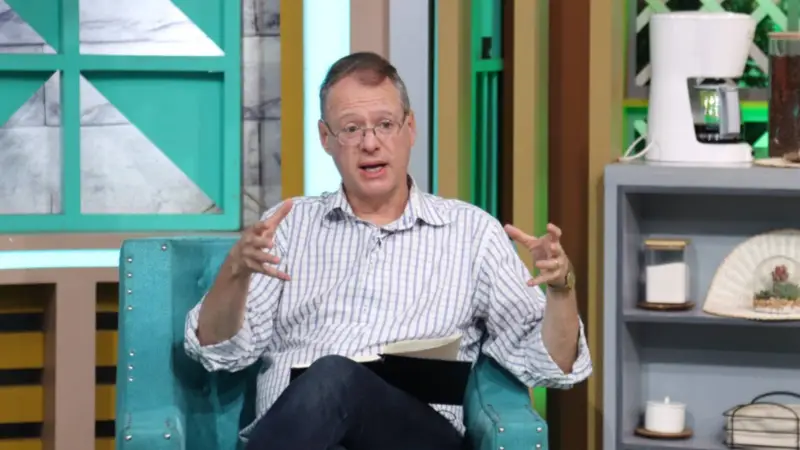
Economist Jaime Dunn stated that the five tax relief measures ordered by the Government are welcome; however, he warned that the country requires a deep tax reform that eliminates the system and mechanisms that generate recurring tax debts.
Dunn maintained that, beyond the forgiveness of fines and interest, Bolivia needs to undertake a structural change to the tax regime, considering that the complexity of the current system discourages productive activity and pushes thousands of taxpayers into informality.
According to his explanation, the reform should be implemented in two stages: a first one aimed at regularizing the State and the affected taxpayers, and a second focused on simplifying the tax system. On this point, he proposed taking as a reference other countries that apply a single-form scheme and a single rate close to 10%.
“In other countries, people devote 95% of their time to their economic activity and only 5% to paying taxes. In Bolivia, the opposite happens: 80% of the time is spent complying with tax obligations and barely 20% on working and producing, and that way we will not move forward as a country,” he warned.
The economist added that it is necessary to implement measures that facilitate tax payments and reduce conflicts between citizens and the tax administration. He warned that there is a broad universe of taxpayers with frozen accounts and current sanctions who need to be reincorporated into formal economic activity.
He also recalled that this is not the first time a tax amnesty has been applied, since this type of measure is repeated every five or ten years because the underlying problem remains the same: an increasingly complex and difficult-to-comply-with tax system.
“We have to go further. It is not just about forgiving debts, but about eliminating the mechanism and the system by which those debts are produced. That is the structural reform that is still missing,” he stressed.
Finally, Dunn recommended that taxpayers adhere to the current measures and warned that the “civil death” generated by tax noncompliance is harmful not only to individuals, but also to the country’s economic activity.
Por Miguel Ángel Roca Villamontes, Red Uno:
Dunn: el perdonazo tributario no basta, Bolivia necesita una reforma estructural de impuestos
Jaime Dunn considera que Bolivia necesita una reforma tributaria que no solo se aboque a condonar deudas, sino de eliminar mecanismos y el sistema que las generan.
El economista Jaime Dunn afirmó que las cinco medidas de alivio tributario dispuestas por el Gobierno son bienvenidas; sin embargo advirtió que el país requiere una reforma tributaria profunda que elimine el sistema y los mecanismos que generan deudas fiscales recurrentes.
Dunn sostuvo que, más allá de la condonación de multas e intereses, Bolivia necesita encarar un cambio estructural del régimen impositivo, al considerar que la complejidad del sistema actual desalienta la actividad productiva y empuja a miles de contribuyentes a la informalidad.
Según explicó, la reforma debería aplicarse en dos etapas: una primera orientada a la regularización del Estado y de los contribuyentes afectados, y una segunda centrada en simplificar el sistema tributario. En este punto, propuso tomar como referencia a otros países que aplican un esquema de un solo formulario y una tasa única cercana al 10%.
“En otros países la gente dedica el 95% de su tiempo a su actividad económica y solo el 5% a pagar impuestos. En Bolivia ocurre lo contrario: el 80% del tiempo se va en cumplir obligaciones tributarias y apenas el 20% en trabajar y producir, y así no vamos a avanzar como país”, advirtió.
El economista añadió que es necesario implementar medidas que faciliten el pago de impuestos y reduzcan los conflictos entre los ciudadanos y la administración tributaria. Alertó que existe un amplio universo de contribuyentes con cuentas congeladas y sanciones vigentes que necesitan ser reincorporados a la actividad económica formal.
Asimismo, recordó que no es la primera vez que se aplica un perdonazo tributario, ya que este tipo de medidas se repite cada cinco o diez años debido a que el problema de fondo sigue siendo el mismo: un sistema tributario cada vez más complejo y difícil de cumplir.
“Hay que ir más allá. No se trata solo de condonar deudas, sino de eliminar el mecanismo y el sistema por el cual esas deudas se producen. Esa es la reforma estructural que todavía está faltando”, remarcó.
Finalmente, Dunn recomendó a los contribuyentes acogerse a las medidas vigentes y advirtió que la “muerte civil” que se genera por el incumplimiento tributario es perjudicial no solo para las personas, sino también para la actividad económica del país.
https://www.reduno.com.bo/economia/dunn-el-perdonazo-tributario-no-basta-bolivia-necesita-una-reforma-estructural-de-impuestos-202622392333

 Bolivian Thoughts | Pensamientos Bolivianos (Bilingual/Bilingüe)