
By Vision 360:
Candies, corn chicha, and puchero: this is the “geography” of Carnival flavor in Bolivia
Puchero is the most emblematic dish of Carnival in the country. It is consumed in the Bolivian valleys, but also in Potosí and La Paz.
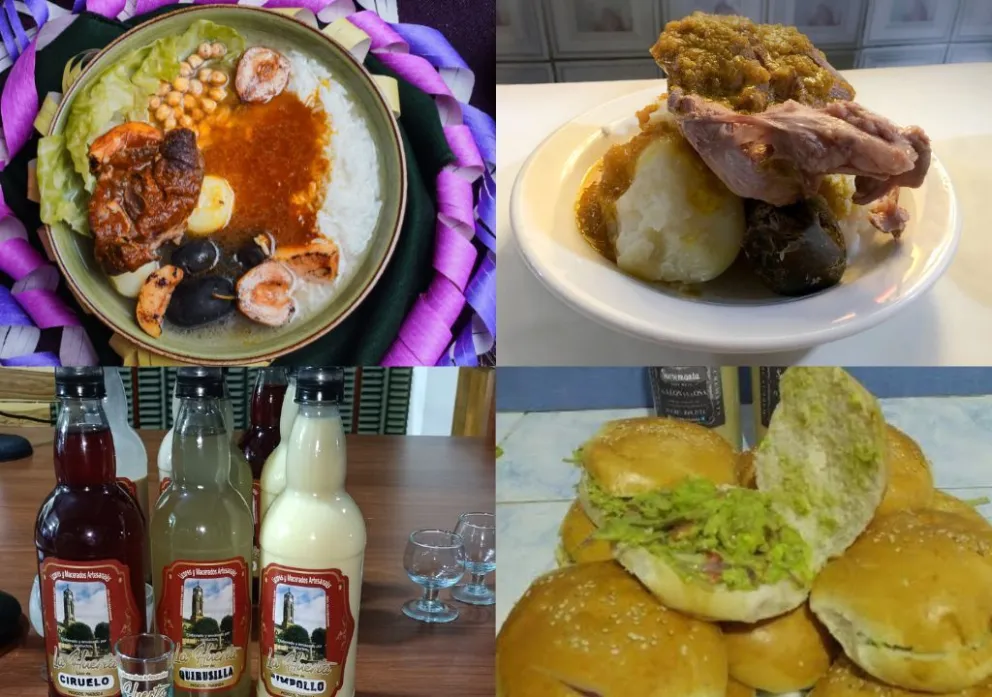
Puchero, t’himpu, artisanal liquors, and avocado sandwich. Photos: Vice Ministry of Gastronomy and municipalities
Bolivian Carnival is not only expressed in dance and music, but also in its flavors, in its preparations that are characteristic of the season and that demonstrate identity, local products, and gratitude to Mother Earth for the fertility of the land.
Below is a map of the flavors that mark Carnival in Bolivia, prepared by the Vice Ministry of Gastronomy.
Puchero
Puchero is the most emblematic dish of Carnival in the country. It is consumed in the Bolivian valleys, but also in Potosí and La Paz.
According to sociocultural researcher Melvy Mojica, puchero arrived in Bolivia during the colonial era, introduced by the Spanish as part of their culinary tradition. Over time, this dish was recreated by local communities and incorporated products native to the Andean and valley territories, such as potatoes, chuño, ají peppers, and others not native such as chickpeas, cabbage, and peaches.
The consumption of puchero coincides with the harvest season and is linked to the abundance and fertility of Mother Earth or Pachamama; it is an expression of gratitude for crops in the process of ripening. In that context, this dish symbolizes abundance, fertility, and sharing, since it is usually consumed at community gatherings, with family, with friends, and at gastronomic fairs, according to Mojica.
Puchero has variations in the use of its ingredients depending on the place where it is prepared, but usually the Cochabamba version is made, which includes beef and lamb, potatoes, chickpeas, rice, yellow ají pepper pods, cabbage, peaches, pears; the incorporation of fruits is a distinctive feature of Carnival puchero, Mojica comments.
This dish is consumed on any day of Carnival in the country, but it is especially shared on Ch’alla Tuesday. It is a preparation rich in meats and ingredients, both salty and sweet, as a symbol of excess and collective enjoyment prior to Lent, a period characterized by austerity and temporary abstinence from meat, the researcher indicated.
Its preparation is slow. It is made in a pot in which the meats are placed to cook; cabbage leaves are also added, everything is boiled, and then the potatoes are added. After the first boil, tuntas or chuño are added. Separately, fruits such as apples, peramotas, and peaches, which are typical of the season, are boiled. In another pot, rice and chickpeas are cooked. A sauce is also prepared with yellow ají pepper and tomato, and it is fried in pork fat until fully cooked.
It is served in the following order: first the broth, then the potatoes, chuños, and tuntas are placed, on top pieces of the different meats, covered with cabbage leaves, and rice is placed on top, and finally the yellow ají sauce. Around the plate, the variety of cooked fruits is placed, according to the book “Popular Festivals of Bolivia” by Antonio Paredes Candia.
Potosí
In Potosí, the traditional puchero is eaten, but one of the characteristics of these dates is also its traditional confites (candies). A sweet that has been made for many years and whose recipe is passed down from generation to generation. Sugar is the main ingredient, which is turned into syrup, and the center of these sweets contains almonds, walnuts, anise, shredded coconut, among others. Confites can be eaten, but they are also used to ch’alla houses and businesses as part of Ch’alla Tuesday traditions. Confites were declared National Heritage of the Plurinational State of Bolivia in 2014, along with other traditional sweets from Potosí.
Oruro (and the Altiplano in general)
In several places in the Altiplano, T’himpu is eaten during Carnival, which is boiled lamb meat, or it can also be beef. It is accompanied by white rice, boiled potatoes, and chuño, and it also has its broth.
Cochabamba
During this time, corn chicha is also consumed, a typical drink of Cochabamba, but also consumed in Tarija and other regions of the country.
Tarija
In Tarija, some of its most traditional dishes are usually eaten, such as Saice or Ranga.
Saice is made with potatoes, peas, onion, tomato, meat, and versions from other departments add other ingredients such as chuño.
Ranga is made from the lining of the cow’s stomach. It includes potatoes and yellow ají pepper, and the sauce has onion and tomato. It is served in a deep plate.
Chuquisaca
There is a variety of beverages and dishes that are consumed, such as tumbo cocktail, leche de tigre, and also ají de fideo, avocado sandwich, and roast pork.
Santa Cruz, Beni, and Pando
These regions are usually characterized by preparing churrascos that are shared among family, friends, and comparsas.
Vallegrande
In the municipality of Vallegrande, in the department of Santa Cruz, artisanal liquors are produced, also called macerates or mistelas, which are transformed products derived from endemic wild fruits of the region, made artisanally according to a specific process, with various varieties and flavors such as quirusilla, yana yana, guayabilla, and others. These artisanal liquors are produced and consumed mainly during Vallegrande Carnival. The production process begins months before the date established in the religious calendar, when Vallegrande’s air becomes filled with the aromas of wild fruits being processed for the delight of visitors and the local population.
These liquors have been studied by UNESCO as part of four gastronomic experiences in Bolivia to include them in the Food Atlas, of which in this second phase the ají and peanut of Chuquisaca and Weenhayek fishing are being researched.
In the Anata Andino in Oruro, declared Living, Cultural, and Intangible Heritage of the Plurinational State, which this year takes place on February 12, different indigenous peoples and provinces of Oruro and other parts of the country gather, where they display their dances, music, and traditional clothing. Many dance carrying products such as potatoes, quinoa, and beans, among others. This is because this celebration is linked to the first fruits of agricultural production and gratitude to Pachamama or Mother Earth.
Por Vision 360:
Confites, chicha de maíz y puchero: así es la “geografía” del sabor carnavalero en Bolivia
El puchero es el plato más emblemático del Carnaval en el país. Se consume en los valles bolivianos, pero también en Potosí y La Paz.
Puchero, t’himpu, licores artesanales y sándwich de palta. Fotos: Viceministerio de Gastronomía y municipios
El Carnaval boliviano no solo se manifiesta en la danza y la música, sino también en sus sabores, en sus preparaciones que son características de la época y que demuestran la identidad, los productos y el agradecimiento a la Madre Tierra por la fertilidad de la tierra.
A continuación, un mapa de los sabores que marcan el Carnaval en Bolivia, elaborado por el Viceministerio de Gastronomía.
Puchero
El puchero es el plato más emblemático del Carnaval en el país. Se consume en los valles bolivianos, pero también en Potosí y La Paz.
De acuerdo con la investigadora sociocultural, Melvy Mojica, el puchero llegó a Bolivia durante la época colonial, fue introducido por los españoles como parte de su tradición culinaria. Con el paso del tiempo, este plato fue recreado por las comunidades locales y se incorporó productos propios del territorio andino y valluno, como por ejemplo la papa, el chuño, el ají y otros no originarios como el garbanzo, el repollo y el durazno.
El consumo del puchero coincide con la época de cosecha y está ligado a la abundancia y fertilidad de la Madre Tierra o Pachamama, es el agradecimiento por las cosechas en proceso de maduración. En ese contexto, este plato simboliza la abundancia, la fertilidad y el compartir, ya que suele ser consumido en reuniones comunitarias, familias, con amigos y en ferias gastronómicas, de acuerdo con Mojica.
El puchero tiene variaciones en el uso de sus ingredientes dependiendo del lugar donde se prepara, pero usualmente el que se prepara es el cochabambino que lleva carne de res y cordero, papa, garbanzos, arroz, ají amarillo de vaina, repollo, durazno, peras, la incorporación de las frutas es un rasgo distintivo del puchero de carnaval, comenta Mojica.
Este plato se consume cualquier día del carnaval en el país, pero especialmente se comparte el martes de ch’alla. Es una preparación rica en carnes e ingredientes salados y dulces como símbolo de exceso y disfrute colectivo, previo a la Cuaresma, estapa que es caracterizada por la austeridad y la abstinencia temporal de carne, indicó la investigadora.
Su preparación es lenta, se realiza en una olla en la que se pone a cocer las carnes, también se agrega hojas de repollo, todo se hace hervir y luego se echan las papas, después del primer hervor se agrega las tuntas o el chuño. Por separado se hace cocer las frutas como manzanas, peramotas, duraznos que son típicos de la temporada. En otra olla se pone el arroz y los garbanzos. También se prepara una salsa con ají amarillo, tomate y se fríe en manteca de cerdo hasta que esté cocida.
Se sirve en el siguiente orden: primero el caldo, después se coloca papas, chuños y tuntas, encima pedazos de las diferentes carnes, se cubre con hojas de repollo y se le pone encima el arroz y por último la salsa de ají amarillo, alrededor del plato se coloca la variedad de frutas cocidas, de acuerdo con el libro “Fiestas populares de Bolivia” de Antonio Paredes Candia.
Potosí
En Potosí se come el tradicional Puchero, pero también una de las características de estas fechas son sus tradicionales confites. Un dulce que se elabora desde hace muchos años y que su receta pasa de generación en generación. El azúcar es el ingrediente principal que se convierte en almíbar y el centro de estos dulces tienen almendras, nuez, anís, coco rallado, entre otros. Los confites pueden ser degustado, pero también se utilizan para ch’allar las casas, los negocios como parte de las tradiciones el martes de ch’alla. Los confites han sido declarados en 2014 como Patrimonio Nacional del Estado Plurinacional de Bolivia junto a otros dulces tradicionales de Potosí.
Oruro (En el Altiplano en general)
En varios lugares del altiplano se come T’himpu en carnaval que es carne hervida de cordero o también puede ser de res, se acompaña con arroz blanco, papa cocida y chuño, además tiene su caldo.
Cochabamba
En estas fechas también se consume chicha de maíz, una bebida típica de Cochabamba, pero que también se toma en Tarija y otras regiones del país.
Tarija
En Tarija usualmente se come algunos de sus platos más tradicionales como el Saice o la Ranga.
El Saice está hecho de papa, arveja, cebolla, tomate, carne, y las versiones de otros departamentos le agregan otros ingredientes como el chuño.
Ranga, la ranga es la parte del libro de la panza de res, lleva papa, ají amarillo, y la sarsa tiene cebolla y tomate. Se sirve en plato hondo.
Chuquisaca
Hay una variedad de bebidas y platos que se consumen como el coctel de tumbo, la leche de tigre, también se come ají de fideo, sándwich de palta, asado de chancho.
Santa Cruz, Beni y Pando
Usualmente se caracteriza por preparar churrascos que se comparten en familia, entre amigos y entre comparsas.
Vallegrande
En el municipio de Vallegrande, en el departamento de Santa Cruz, se elaboran los Licores Artesanales, también denominados macerados o mistelas, que son productos transformados y derivados de frutas silvestres endémicas de la región, elaborados artesanalmente de acuerdo a un proceso específico, con diversas variedades y sabores como quirusilla, yana yana, guayabilla y otros. Estos Licores Artesanales se producen y consumen principalmente en el Carnaval de Vallegrande. El proceso de elaboración se inicia meses antes de la fecha establecida en el santoral, que es cuando los aires vallegrandinos se impregnan de aromas a las frutas silvestres que están siendo procesadas para deleite de visitantes y la propia población.
Estos licores han sido investigados por la UNESCO como parte de cuatro experiencias gastronómicas de Bolivia para incluirlas en el Food Altas, de las cuales en esta segunda fase se investiga el ají y maní de Chuquisaca y la pesca Weenhayek.
En el Anata Andino en Oruro, declarado como Patrimonio Viviente, Cultural e Intangible del Estado Plurinacional, que este año se realiza el 12 de febrero se conglomeran diferentes pueblos indígenas, provincias de Oruro y de otras partes del país en el que muestran sus bailes, su música y su vestimenta tradicional. Muchos bailan cargando algunos productos como la papa, la quinua, haba, entre otros, esto se debe a que esta celebración está ligada a los primeros frutos de la producción agrícola y al agradecimiento a la Pachamama o Madre Tierra.

 Bolivian Thoughts | Pensamientos Bolivianos (Bilingual/Bilingüe)