
By Mongabay:
Serranía de Sunsas: A Little-Explored Sanctuary in Bolivia Protecting 176 Bird Species
- It is a new protected area in the department of Santa Cruz.
- Within this municipal reserve, there are also freshwater springs that supply Chiquitano municipalities.
- Indigenous leadership in the area states that the Serranía de Sunsas faces threats such as illegal mining and deforestation.
- Last January, Indigenous communities met to denounce the opening of a road within the protected area.
La Serranía de Sunsas, en el departamento de Santa Cruz, Bolivia, emerge como un refugio estratégico para la biodiversidad. Este espacio, que a finales de 2025 se convirtió en un área protegida, es el santuario de 176 especies de aves, pero también es fundamental el curso hídrico de la región por sus nacientes de agua dulce y por tener una ubicación perfecta: es un conector natural entre el Pantanal boliviano y el bosque seco chiquitano. Esta nueva reserva enfrenta varias amenazas: la apertura de caminos, invasiones humanas, incendios, minería ilegal y deforestación.
Su nombre oficial es Área Protegida Serranía de Sunsas. Tiene 86 509 hectáreas bajo carácter de conservación y en esta reserva las 176 especies de aves registradas se dividen en 22 órdenes, 43 familias y 148 géneros, según el Museo de Historia Natural Noel Kempff Mercado. Entre las especies más destacadas y representativas se encuentran la cotorrita mejilla verde (Pyrrhura molinae), la oropéndola crestada (Psarocolius decumanus), la tortolita azul o palomita azulada (Claravis pretiosa) y la pava mutún (Crax fasciolata).

The green-cheeked parakeet is a parrot that inhabits South America. Its average size is 26 centimeters and its plumage is bright green, with green cheeks and a reddish tail. It lives in groups and feeds mainly on fruits, seeds, and flowers.
The crested oropendola, known in some countries as conoto yapú or black conoto, is a species of passerine bird in the Icteridae family. It lives in the lowland regions of South America: from the Andes of Colombia, the Amazon, and the Yungas of Bolivia, reaching as far as northern Argentina. Its average size is 46 centimeters, and it is black with a yellow section on its tail.
The blue ground dove is native to South and Central America. It inhabits areas from northern Argentina to southeastern Mexico. It lives in forests and savannas. It measures between 18 and 23 centimeters and spends most of its time on the ground. The male has a bluish coloration, while females have a grayish tone.
Santiago Salvatierra, leader of the Central Indígena Reivindicativa de la Provincia Ángel Sandoval (Cirpas), part of the governance of the natural reserve and representative of the Santo Corazón community, told Mongabay Latam that conserving this territory has a regional impact, as it helps maintain the hydrological cycle benefiting other regions and ensures permanence and balance along the migratory routes of birds that travel across the world.
The creation of this protected area will also make it possible to promote research, initially by conducting bird monitoring to guide the development of conservation measures benefiting species identified as priorities.
A Water Source, a Biological Corridor, and Home to Protected Species
Mauricio Morales, a researcher at Cerai, explained that the Serranía de Sunsas not only supplies water to communities in the municipality of San Matías, but also to several localities in the municipalities of Roboré and El Carmen Rivero Tórrez. “This protected area forms a biological corridor linking three protected areas: the San Matías ANMI [Natural Area of Integrated Management], the Tucabaca Valley Reserve, and the Paquió protected area,” he said.
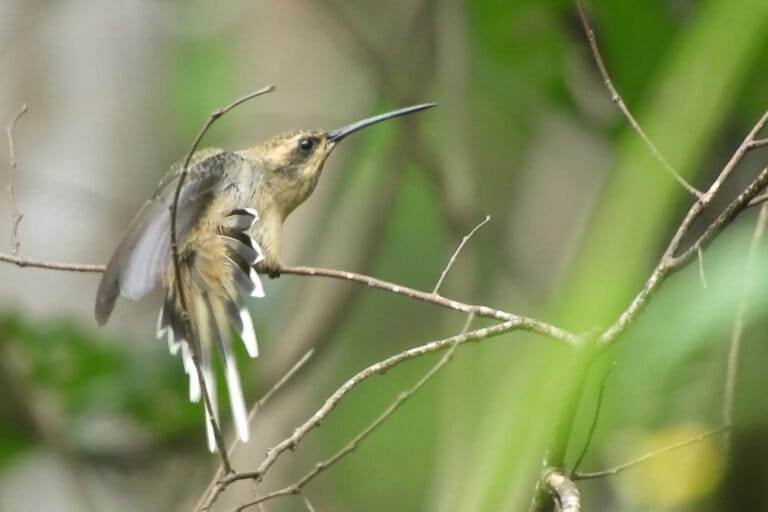
Currently, the area has a management plan that establishes administrative foundations, as well as a strategic financial plan aimed at ensuring long-term economic sustainability. “As CERAI, we are currently coordinating with the Municipal Government of San Matías to begin the first year of management. Then the basic technical team will be consolidated, which involves hiring an area manager and park rangers, who must be from the same area,” Morales added.
Further steps must focus on operational implementation, institutional coordination, and community participation, according to the organizations promoting the initiative in a document sent to this outlet.
“The objective is to ensure that the strategies designed are transformed into concrete actions for conservation and collective well-being, linking the protected area with sustainable development plans through the design and implementation of productive projects and the provision of basic services,” part of the document states.
The text adds that these strategies “must be carried out through mechanisms compatible with biodiversity and water sources, also promoting birdwatching tourism and environmental education as pillars of sustainability and social ownership.”
Threats Facing the Reserve: Fires, Cattle Ranching, Mining, and Deforestation
The Serranía de Sunsas faces threats such as forest fires, intensive cattle ranching, illegal mining, deforestation, and territorial invasions by outsiders. “The declaration is not only a legal figure, but also a shield for life and a large-scale commitment in the face of the climate crisis,” said Freddy Román, president of the Municipal Council of San Matías.
The local legislator stated that even before being declared a municipal reserve, the Serranía de Sunsas faced these threats, with the most critical being deforestation for extractive purposes such as illegal mining, illegal logging, and human settlements. “We suffered greatly here in 2024 due to forest fires, caused by cattle expansion but also by land invasions by people from outside our territory,” Román said.

The councilman detailed that between June and November 2025, clearing of approximately 50 kilometers was documented within the protected area. According to the local outlet La Región, this involves the opening of a road with a total length of 60 kilometers, nearly 50 kilometers of which are within the Serranía de Sunsas.
This situation led Cerai, municipal officials, and Indigenous community leaders to meet in January of this administration to investigate the matter. “It is possible that old roads are being reopened. They may be logging roads or access routes for intercultural farming communities,” explained Morales of Cerai, referring to descendants of Aymara and Quechua settlers who migrated from the Altiplano to lowland areas such as Santa Cruz.
The reason for suspecting logging roads is that the protected area lies within a forest-use zone where there are two industrial companies, according to the organizations that supported the creation of the municipal reserve.
In this case, according to Morales, the Department of Natural Heritage Conservation (Dicopan), which depends on the Government of Santa Cruz, must establish responsibilities. Mongabay Latam contacted the departmental authority, which stated that it will take action together with the Forest and Land Authority (ABT) and the National Institute of Agrarian Reform (INRA) to determine whether those roads are legal or illegal.
Salvatierra called on the competent authorities to carry out an inspection now that the Serranía de Sunsas is a protected area. “There is a specific road that cannot be inside the reserve. We met in January to determine actions. The first was to request an inspection by the Departmental Government [of Santa Cruz], and we are waiting for them to conduct fieldwork,” said the Indigenous leader.

The process of consolidation as a protected area was the result of nearly two years of outreach and consensus-building among Indigenous communities and municipal, departmental, and national authorities. The declaration was carried out within the framework of the Conserva Aves initiative, led by American Bird Conservancy, National Audubon Society, BirdLife International, Birds Canada, and RedLAC. The project also received support from Bezos Earth Fund.
In Bolivia, implementation is carried out by the Fundación para el Desarrollo del Sistema Nacional de Áreas Protegidas(Fundesnap) and Asociación Civil Armonía. Sunsas had the technical operations of the Centro de Estudios Rurales y de Agricultura Internacional (Cerai) and the support of The Pew Charitable Trusts.
The Sunsas Steering Committee was made up of the Indigenous communities of San Fernando, Pozones, Santo Corazón, Bahía Negra, and Beya Boca, which together with the Central Indígena Reivindicativa de la Provincia Ángel Sandoval (Cirpas) are now part of the governance of the natural reserve. “As community members, we now know that protected areas benefit our communities and the region in every way. This is a project we fought for over a long time and that is now a reality,” affirmed Salvatierra, leader of Cirpas.
Por Iván Paredes Tamayo, Mongabay:
Serranía de Sunsas: un santuario poco explorado en Bolivia que protege 176 especies de aves
- Se trata de una nueva área protegida en el departamento de Santa Cruz.
- En esta reserva, de carácter municipal, también existen nacientes de agua dulce que abastecen a municipios chiquitanos.
- La dirigencia indígena de la zona afirma que la Serranía de Sunsas enfrenta amenazas, como la minería ilegal y la deforestación.
- En enero pasado las comunidades indígenas se reunieron para denunciar la apertura de un camino dentro del área protegida.
La Serranía de Sunsas, en el departamento de Santa Cruz, Bolivia, emerge como un refugio estratégico para la biodiversidad. Este espacio, que a finales de 2025 se convirtió en un área protegida, es el santuario de 176 especies de aves, pero también es fundamental el curso hídrico de la región por sus nacientes de agua dulce y por tener una ubicación perfecta: es un conector natural entre el Pantanal boliviano y el bosque seco chiquitano. Esta nueva reserva enfrenta varias amenazas: la apertura de caminos, invasiones humanas, incendios, minería ilegal y deforestación.
Su nombre oficial es Área Protegida Serranía de Sunsas. Tiene 86 509 hectáreas bajo carácter de conservación y en esta reserva las 176 especies de aves registradas se dividen en 22 órdenes, 43 familias y 148 géneros, según el Museo de Historia Natural Noel Kempff Mercado. Entre las especies más destacadas y representativas se encuentran la cotorrita mejilla verde (Pyrrhura molinae), la oropéndola crestada (Psarocolius decumanus), la tortolita azul o palomita azulada (Claravis pretiosa) y la pava mutún (Crax fasciolata).
La cotorrita de mejilla verde es un loro que habita en Sudamérica. Su tamaño promedio es de 26 centímetros y su plumaje es verde brillante, tiene mejillas verdes y cola rojiza. Vive en grupos y se alimenta principalmente de frutas, semillas y flores.
La oropéndola crestada, en algunos países conocida como conoto yapú o conoto negro, es una especie de avepaseriforme de la familia Icteridae. Vive en las regiones bajas de Sudamérica: desde los Andes de Colombia, la Amazonía y los Yungas de Bolivia, y llega hasta el norte de Argentina. Su tamaño promedio es de 46 centímetros y son de color negro con una parte amarilla en su cola.
La tortolita azul es nativa de Sudamérica y Centroamérica. Habita desde el norte de Argentina hasta el sureste de México. Habita bosques y sabanas. Su medida oscila entre 18 a 23 centímetros y la mayor parte del tiempo están en tierra. El macho tiene un color azulado y las hembras, un tono grisáceo.
Santiago Salvatierra, dirigente de la Central Indígena Reivindicativa de la Provincia Ángel Sandoval (Cirpas), parte de la gobernanza de la reserva natural, y representante de la comunidad Santo Corazón, dijo a Mongabay Latam que conservar este territorio tiene un impacto de alcance regional, ya que contribuye a mantener el ciclo hidrológico que beneficia a otras regiones y asegura la permanencia y el equilibrio en las rutas de las aves migratorias que recorren el mundo.
La creación de esta área protegida también permitirá impulsar la investigación, inicialmente realizando un monitoreo de aves para guiar en la elaboración de medidas de conservación que favorezcan a especies identificadas como prioritarias.
Una fuente de agua, un corredor biológico y hogar de especies protegidas
Mauricio Morales, investigador del Cerai, explicó que la Serranía de Sunsas no solamente abastece de agua a comunidades del municipio de San Matías, sino también a varias localidades de los municipios de Roboré y de El Carmen Rivero Tórrez. “Esta área protegida forma un corredor biológico que une a tres áreas protegidas: el ANMI [Área Natural de Manejo Integrado] San Matías, la Reserva del Valle de Tucabaca y el área protegida de Paquió”, dijo.
Actualmente, el área cuenta con un plan de manejo, que establece las bases administrativas, y un plan estratégico financiero, que busca garantizar la sostenibilidad económica a largo plazo. “Como CERAI, actualmente estamos en coordinación con el Gobierno Municipal de San Matías para iniciar el primer año de gestión. Luego se va a consolidar el equipo técnico básico, que implica contratar a un responsable del área y guardaparques, que tienen que ser de la misma zona”, añadió Morales.
Más adelante, los pasos inmediatos deben centrarse en la implementación operativa, la articulación institucional y la participación comunitaria, según detallaron las organizaciones impulsoras en un documento enviado a este medio.
“El objetivo es garantizar que las estrategias diseñadas se conviertan en acciones concretas de conservación y bienestar colectivo, vinculando el área protegida con planes de desarrollo sostenible mediante el diseño e implementación de proyectos productivos y la provisión de servicios básicos”, dice parte del documento.
El texto complementa que las estrategias “deben realizarse a través de mecanismos compatibles con la biodiversidad y las fuentes de agua, promoviendo además el turismo de avifauna y la educación ambiental como pilares de sostenibilidad y apropiación social”. Las amenazas que enfrenta la reserva: incendios, ganadería, minería y deforestación
La Serranía de Sunsas enfrenta amenazas como incendios forestales, ganadería intensiva, minería ilegal, deforestación e invasiones territoriales por parte de personas ajenas al territorio. “La declaratoria no es solo una figura legal, sino también un escudo para la vida y un compromiso a gran escala frente a la crisis climática”, aseguró Freddy Román, presidente del Concejo Municipal de San Matías.
El legislador local afirmó que la Serranía de Sunsas antes de ser declarada como reserva municipal ya enfrentaba estas amenazas, siendo la más crítica la deforestación para fines extractivos, como la minería ilegal, la tala ilegal de madera y asentamientos humanos. “Acá se sufrió mucho en 2024 por los incendios forestales, esto debido a la ampliación ganadera, pero también a los avasallamientos de personas ajenas a nuestro territorio”, dijo Román.
El concejal detalló que, entre junio y noviembre de 2025, se evidenció un desmonte de aproximadamente 50 kilómetros que alcanzó al área protegida. Según el medio local La Región, se trata de la apertura de un camino que tiene una extensión total de 60 kilómetros, de los cuales, casi 50 kilómetros están dentro de la Serranía de Sunsas.
Esta situación llevó a que, en enero de esta gestión, Cerai, funcionarios municipales y caciques de comunidades indígenas se reunieran para indagar al respecto. “Es posible que se estén habilitando caminos antiguos. Que sean caminos madereros o ingresos de comunidades campesinas de interculturales”, explicó Morales, de Cerai, en referencia a los descendientes de colonizadores aymaras y quechuas que migraron desde el Altiplano a tierras bajas, como Santa Cruz.
La razón para que se presuma de caminos madereros es que el área protegida está en una zona de aprovechamiento forestal donde hay dos compañías industriales, según las organizaciones que apoyaron la creación de la reserva municipal.
En este caso, según explicó Morales, la dirección de Conservación de Patrimonio Natural (Dicopan), que depende de la Gobernación de Santa Cruz, deberán establecer responsabilidades. Mongabay Latam se contactó con la instancia departamental y aseguró que tomarán acciones junto a la Autoridad de Bosques y Tierras (ABT) y el Instituto Nacional de Reforma Agraria (INRA) para determinar si esos caminos son legales o ilegales.
Salvatierra pidió a las autoridades competentes realizar la inspección debido a que ahora la Serranía de Sunsas es un área protegida. “Hay un camino específico que no puede estar dentro la reserva. Nosotros nos reunimos en enero para determinar acciones. La primera fue solicitar la inspección por parte del Gobierno Departamental [de Santa Cruz] y estamos a la espera para que hagan un trabajo de campo”, afirmó el dirigente indígena.
El proceso de consolidación como área protegida fue fruto de casi dos años de socialización y consenso entre comunidades indígenas y autoridades municipales, departamentales y nacionales. La declaratoria fue ejecutada en el marco de la iniciativa Conserva Aves, liderada por American Bird Conservancy, National Audubon Society, BirdLife International, Birds Canadá y RedLAC. Además, el proyecto tuvo el respaldo de Bezos Earth Fund.
En Bolivia, su implementación está a cargo de la Fundación para el Desarrollo del Sistema Nacional de Áreas Protegidas (Fundesnap) y la Asociación Civil Armonía. Sunsas contó con la operatividad técnica del Centro de Estudios Rurales y de Agricultura Internacional (Cerai) y el apoyo de The Pew Charitable Trusts.
El Comité Impulsor de Sunsas estuvo integrado por las comunidades indígenas San Fernando, Pozones, Santo Corazón, Bahía Negra y Beya Boca, que junto a la Central Indígena Reivindicativa de la Provincia Ángel Sandoval (Cirpas) ahora son parte de la gobernanza de la reserva natural. “Como comunarios, ahora sabemos que las áreas protegidas favorecen en todo sentido a nuestras comunidades y a la región. Este es un proyecto por el cual luchamos hace mucho tiempo y que ahora es una realidad”, afirmó Salvatierra, dirigente de Cirpas.
https://es.mongabay.com/2026/02/serrania-de-sunsas-bolivia-protege-aves/

 Bolivian Thoughts | Pensamientos Bolivianos (Bilingual/Bilingüe)