
By Jimena Mercado, Erbol:
Illegal mining in Madre de Dios: Agro-Environmental Tribunal remains silent four months after preventive action
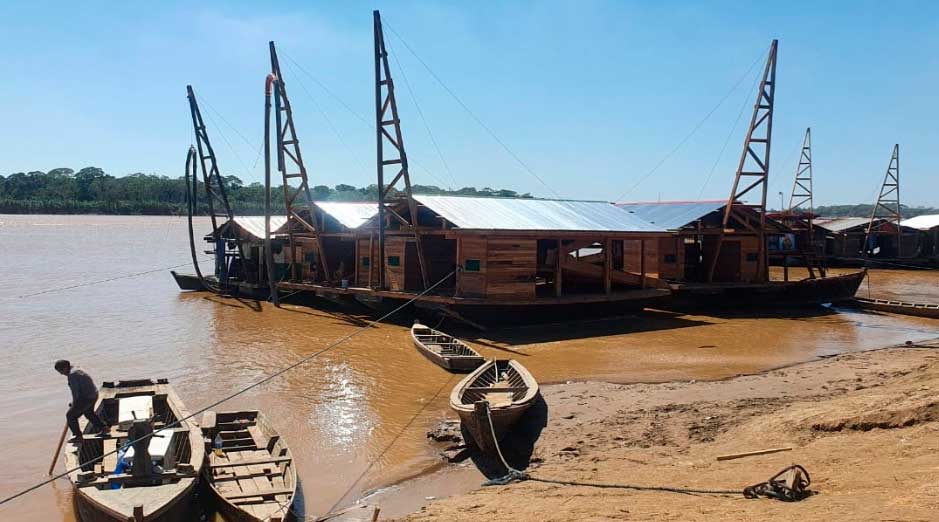
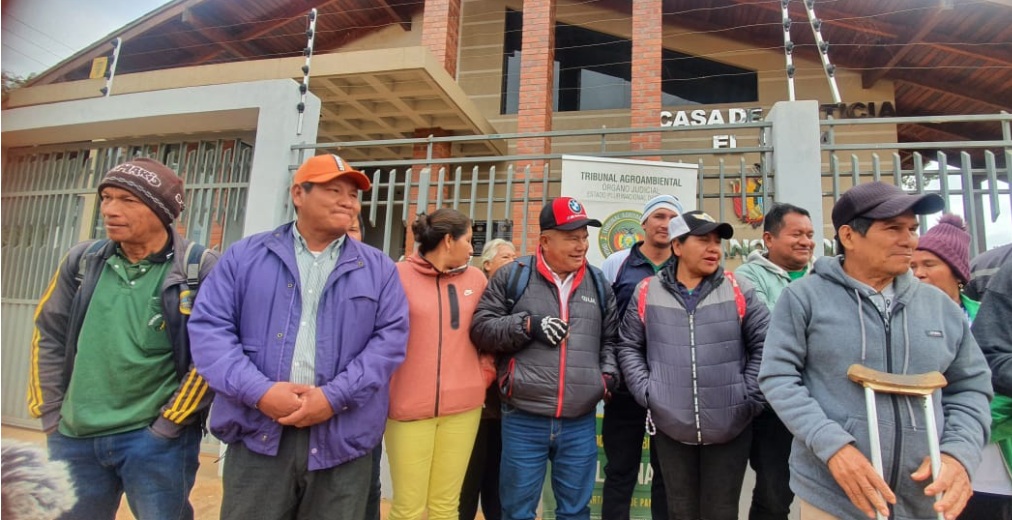
The Center for Legal Studies and Social Research (CEJIS), through its director Miguel Vargas, expresses concern over the Agro-Environmental Tribunal’s failure to rule on the direct preventive environmental action filed four months ago by the Multiethnic Indigenous Territory (TIM II) against illegal gold mining in the Madre de Dios River. He also denounces that the Administrative Mining Jurisdictional Authority (AJAM) continues promoting new exploitation areas.
“We are worried because the preventive environmental action was transferred from the El Sena Court to the Agro-Environmental Tribunal in Sucre. The judge argued that, since mining is an issue with impacts beyond local jurisdiction, it should be handled at the national level (…). At first, we saw this as significant progress. However, four months later we are concerned that the Tribunal still hasn’t issued a statement,” he tells ANA.
Vargas explains that the Tribunal has shown willingness to develop jurisprudential lines and precedents in favor of nature in previous cases. However, he acknowledges CEJIS’s concern—having supported the lawsuit—because four months after filing, the Tribunal has not yet ruled on admitting the case.
“This places TIM II communities in a situation of defenselessness and vulnerability,” warns the CEJIS executive.
Vargas notes he is aware that the president of the Agro-Environmental Tribunal and some magistrates will visit TIM II between December 7 and 8, during judicial recess. “We don’t know whether this visit will have an effect on the process itself, since it will take place during recess, but it will be an opportunity for authorities to understand the problem,” he explains.
He recalls that the preventive action, filed during the final stage of Luis Arce’s (MAS) administration, presented technically and legally solid evidence of socio-environmental impacts on the Madre de Dios River due to the discharge of heavy metals, oils, suspended solids, deforestation, and more.
“Reports regarding illegal mining activity on the Madre de Dios are increasingly serious, because these mining operations are becoming more consolidated (…). In the face of this, there is inaction from State institutions, and this strengthens the miners’ position—who, given the absence of the State, deepen and normalize situations that are completely illegal,” he explains.
He adds that if illegal gold mining currently exists in the Madre de Dios River, it means it is operating under the shelter of State institutions which, through inaction or omission in fulfilling their duties, are allowing this illegality to solidify.
He refers to recent statements by the president of the Asobal R.L. Gold Mining Cooperative, Corcino Cerezo, who admitted that members sometimes leave their authorized mining areas to extract “drift gold.” He says this reflects how illegality in gold operations in Madre de Dios has become normalized.
“We are always moving from one area to another; sometimes we are outside the (authorized) area. No one denies that people leave their mining area; you leave because of natural conditions or production (…). If Bolivians don’t take advantage of this—drift gold that comes from Peru—it will go to Brazil,” the mining leader told ANA.
AJAM promotes new mining areas
In addition to the delay in admitting the preventive environmental action, Miguel Vargas denounces that the Administrative Mining Jurisdictional Authority (AJAM) has requested a meeting with TIM II leadership, as a consultation subject, to verify whether the mining areas being considered for authorization overlap with indigenous territory.
“TIM II responded rejecting this consultation process, stating that it is unnecessary to enter the territory to verify in the field whether areas overlap, when AJAM has all the information and can technically determine the overlap. Therefore, there is no need to go in,” he says.
He argues that the integrity of indigenous territory should be protected and that further mining operations should not be encouraged, especially when a legal resolution to the filed action is pending.
Preventive environmental action
The direct preventive environmental action against illegal gold mining covers 184 kilometers of the Madre de Dios River.
The lawsuit is a legitimate collective legal action backed by various communities, assemblies, and organizations, presented on the basis of proven facts, technical studies, territorial monitoring, and national and international laws. Its goal is to stop the damage that mining is causing to the Madre de Dios River and to our lives as Indigenous peoples.
In the legal action, the Madre de Dios River is considered a subject of rights—an essential source of life for the Multiethnic Indigenous Territory II. It crosses much of the territory and is vital for several communities.
For the Tacana, Cavineño, and Ese Ejja peoples, the river is not just a resource: it is a living being that forms part of their identity and ancestral territory. Therefore, its destruction also represents a direct threat to their way of life.
It has been established that along the 184-kilometer river stretch, there are ten areas with Special Temporary Authorizations (ATEs) where activities should be legally conducted. However, Indigenous socio-environmental monitoring shows that operations are not being carried out within the authorized areas.
At the same time, since last year AJAM has restricted any type of information on ATEs, prospecting projects, and more, limiting access for Indigenous organizations and shifting to Indigenous communities themselves the obligation to provide exact coordinates for their requests—in other words, requiring them to carry out precise georeferencing.
PorJimena Mercado, Erbol:
Minería ilegal en el Madre de Dios: Tribunal Agroambiental no se pronuncia a 4 meses de la acción preventiva
El Centro de Estudios Jurídicos e Investigación Social (CEJIS) a través de su director, Miguel Vargas expresa su preocupación por la falta de pronunciamiento de parte del Tribunal Agroambiental sobre la acción ambiental preventiva directa presentada por el Territorio Indígena Multiétnico (TIM II) hace cuatro meses, en contra de la minería ilegal del oro en río Madre de Dios, y denuncia que la Autoridad Jurisdiccional Administrativa Minera (AJAM) sigue promoviendo nuevas áreas de explotación.
“Nos preocupa sí, porque la acción ambiental preventiva que ha sido derivada del Juzgado de El Sena al Tribunal Agroambiental (Sucre), porque la jueza argumentó que (la minería) al ser un problema que tiene un impacto mayor de la jurisdicción debería ser tratado por el ámbito nacional (…). Inicialmente vimos como un avance significativo, Sin embargo, cuatro meses después vemos con preocupación el hecho que el Tribunal no se ha pronunciado”, afirma a ANA.
Vargas explica que el Tribunal ha dado señales de voluntad para el desarrollo de líneas jurisprudenciales, de precedentes a favor de la naturaleza en anteriores casos. Sin embargo, reconoció preocupación desde el CEJIS —que acompañó la demanda— porque cuatro meses después de la acción el Tribunal Agroambiental aún no se ha pronunciado sobre la admisión.
“Entonces, esto pone en situación de indefensión y vulnerabilidad a las comunidades del TIM II”, advierte el ejecutivo del CEJIS.
Vargas señala que tiene conocimiento de que el presidente del Tribunal Agroambiental y algunos magistrados visitarán al TIM II entre el 7 y 8 de diciembre, durante la vacación judicial. “Entonces, no sabemos si esta acción va a repercutir en el proceso como tal, dado que la visita se realizará en el receso, pero será una oportunidad para que las autoridades conozcan la problemática”, explica.
Recuerda que la acción preventiva presentada durante la última etapa del gobierno de Luis Arce (MAS) dotó de pruebas con bastante sustento técnico y legal, sobre los impactos en varias dimensiones socioambientales en relación al río Madre de Dios, por la expulsión de metales pesados, de grasas, sólidos suspendidos, deforestación, entre otros.
“Las denuncias que se hicieron sobre el río Madre de Dios en relación a la actividad ilegal minera son cada vez más fuertes, porque las operaciones mineras están cada vez más consolidadas (…). Frente a eso hay una inacción de las instancias del Estado y eso repercute en la posición de los actores mineros, que dada la ausencia del Estado profundizan y normalizan situaciones que son totalmente ilegales”, explica.
En ese contexto afirma que, sí actualmente hay ilegalidad en la minería del oro en el río Madre de Dios, significa que cuenta con el amparo de las instancias del Estado, que ante la inacción o la omisión en el cumplimiento de funciones, se está permitiendo que esta ilegalidad se consolide.
Se refiere a las recientes declaraciones realizadas por el presidente de la Cooperativa Minera Aurífera Asobal R.L, Corcino Cerezo, quien admitió que sus afiliados, a veces salen de sus áreas mineras autorizadas, para la extracción del “oro de arrastre”. Al respecto dice que se naturalizó la ilegalidad de las operaciones auríferas en el Madre de Dios.
“Siempre nos estamos moviendo de un área a otra área, a veces estamos fuera del área (autorizada), nadie dice que no se sale de su área minera, se sale por cuestiones de la naturaleza o producción (…). Si los bolivianos no aprovechamos esto, —oro de arrastre que viene de Perú— se va a Brasil”, señaló el dirigente minero en entrevista exclusiva con ANA.
AJAM promueve nuevas áreas mineras
Al retraso en la admisión de la acción ambiental preventiva Miguel Vargas, denuncia que la Autoridad Jurisdiccional Administrativa Minera (AJAM) ha solicitado una reunión con la dirigencia del TIM II, como sujeto de consulta, para ver si las áreas mineras que se están pretendiendo autorizar se sobreponen al territorio indígena.
“Había una respuesta del TIM II señalando el rechazo a este proceso de consulta, indicando que está por demás esta idea de querer llegar al territorio para ver si las áreas se sobreponen o no en campo, cuando la AJAM tiene toda la información y puede desde el ámbito técnico ver la sobreposición, por tanto, no se necesita entrar”, señala.
En ese marco dice que se debería resguardar la integridad del territorio indígena y no alentar más operaciones mineras, más aun cuando se tiene en puerta la resolución legal a la acción presentada.
Acción preventiva ambiental
La acción ambiental preventiva directa en contra de la minería ilegal del oro comprende 184 kilómetros sobre el río Madre de Dios.
La demanda se constituye en una acción legal legítima, colectiva y respaldada por varias comunidades, asambleas y organizaciones, que se ha presentado con base en hechos comprobados, estudios técnicos, monitoreos territoriales y leyes nacionales e internacionales. Su objetivo es detener el daño que la minería está causando al río Madre de Dios y a nuestras vidas como pueblos indígenas.
En la acción legal, el río Madre de Dios es considerada como sujeto de derechos; una fuente de vida fundamental para el Territorio Indígena Multiétnico II, que atraviesa una gran parte del territorio y es esencial para varias comunidades.
Para los pueblos Tacana, Cavineño y Ese Ejja, el río no es solo un recurso: es un ser vivo que forma parte de su identidad y de su territorio ancestral. Por eso, su destrucción representa también una amenaza directa a nuestra forma de vida.
Se ha podido establecer que a lo largo de los 184 kilómetros del río hay diez áreas con autorizaciones transitorias especiales (ATEs) donde deberían realizarse las actividades de forma legal, sin embargo, en el monitoreo socioambiental indígena se ha podido establecer que las mismas no están en las áreas autorizadas.
En paralelo, la AJAM desde el año pasado) ha restringido cualquier tipo de información sobre ATEs, proyectos de prospección, entre otros a las organizaciones indígenas, y les ha derivado a los propios pueblos indígenas la obligación de detallar las coordenadas sus solicitudes, es decir, hacer georeferenciación precisa.

 Bolivian Thoughts | Pensamientos Bolivianos (Bilingual/Bilingüe)