
By Brujula Digital:
Report: Illegal gold mining in Bolivia is growing and causing severe impacts
Bolivia’s Amazon is undergoing rapid degradation linked to alluvial mining, especially in the departments of La Paz, Beni, and Pando. Dredges and barges operate in rivers such as the Kaka, Beni, Madre de Dios, and Orthon.
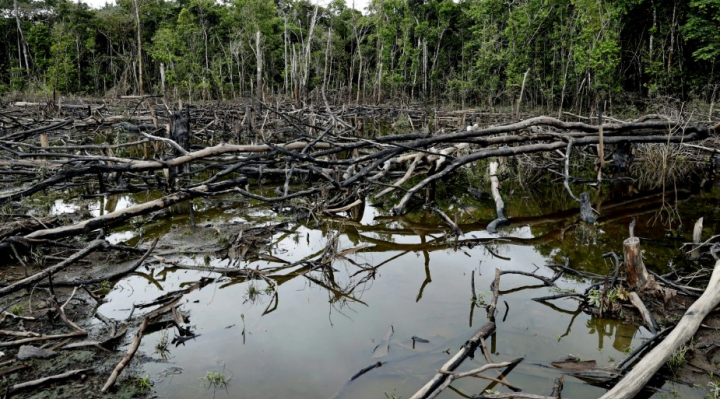
Illegal gold mining is expanding at a fast pace in Bolivia, leaving severe damage in Indigenous territories and Amazonian ecosystems, according to the report “Climate change, illegal mining and human rights in the Amazon”, prepared by the Coalition against Illegal Mining in the Amazon (CMIA).
The document identifies Bolivia as one of the Amazonian countries where mining activity—including illegal and semilegal operations tied to cooperatives—is advancing with the greatest impact on rivers, forests, and Indigenous communities.
The report notes that Bolivia’s Amazon faces accelerated degradation associated with alluvial mining, particularly in La Paz, Beni, and Pando. Dredges and barges operate in rivers like the Kaka, Beni, Madre de Dios, and Orthon, where sediment removal destroys fragile ecosystems, alters riverbeds, and affects subsistence fishing.
Mercury contamination—used in gold processing—has become a direct threat to the health of Indigenous communities such as the Ese Ejja, Tacana, Leco, and Mosetén peoples, who consume contaminated fish and suffer losses in traditional livelihoods.
The document also warns that the expansion of mining occurs in a context of institutional weakness and state permissiveness. Although many operations are formally presented as cooperatives, the coalition notes that many function as fronts for criminal networks dedicated to illegal gold extraction, with minimal environmental or tax oversight.
In protected areas such as the Pilón Lajas Biosphere Reserve and Indigenous Territory and Madidi National Park, mining presence has increased despite legal restrictions, generating deforestation, the opening of clandestine roads, and the breakdown of social cohesion in Indigenous communities.
Ahead of COP30 in Belém in 2025, the organizations argue there is a “historic opportunity” for governments to adopt coordinated commitments that integrate climate justice, control of illegal mining, biodiversity protection, and Indigenous rights.
CMIA members that drafted the report include CEDIB, Amazon Conservation Team, DPLF, Fundación Gaia Amazonas, Hutukara Associação Yanomami, People in Need, SPDA, and SOSOrinoco.
According to the report, Bolivia has incorporated goals for mining control and forest protection in its international climate commitments, but progress has been minimal. The lack of monitoring, the absence of effective oversight, and economic incentives favoring gold extraction have prevented halting the expansion of this activity.
The coalition argues that without structural changes in regulation and the protection of Indigenous territories, Bolivia’s Amazon will continue to lose biodiversity, water quality, and resilience to climate change.
The document concludes that Bolivia requires immediate and coordinated action: strengthening state oversight, regulating the gold supply chain, ensuring Indigenous participation in decision-making, and establishing regional cooperation mechanisms. Otherwise, the advance of illegal mining and its impacts on the Amazon could reach irreversible levels.
BD/RPU
Por Brújula Digital:
Informe: La minería ilegal de oro en Bolivia crece y causa impactos severos
La Amazonía boliviana enfrenta una degradación acelerada asociada a la minería aluvial, especialmente en los departamentos de La Paz, Beni y Pando. Las dragas y balsas operan en ríos como el Kaka, Beni, Madre de Dios y Orthon.
La minería ilegal de oro se expande a un ritmo acelerado en Bolivia y deja daños severos en territorios indígenas y ecosistemas amazónicos, según advierte el informe “Cambio climático, minería ilegal y derechos humanos en la Amazonía”, elaborado por la Coalición contra la Minería Ilegal en la Amazonía (CMIA).
El documento identifica a Bolivia como uno de los países amazónicos donde la actividad minera –incluidas operaciones ilegales y semilegales vinculadas a cooperativas– avanza con mayor impacto sobre ríos, bosques y comunidades originarias.
El informe señala que la Amazonía boliviana enfrenta una degradación acelerada asociada a la minería aluvial, especialmente en los departamentos de La Paz, Beni y Pando. Las dragas y balsas operan en ríos como el Kaka, Beni, Madre de Dios y Orthon, donde la remoción de sedimentos destruye ecosistemas frágiles, altera cauces y afecta la pesca de subsistencia.
La contaminación con mercurio –empleado en el procesamiento del oro– se ha convertido en una amenaza directa para la salud de comunidades indígenas como los ese ejja, tacanas, lecos y mosetenes, que consumen peces contaminados y enfrentan pérdida de medios de vida tradicionales.
El documento también advierte que la expansión minera se produce en un contexto de debilidad institucional y permisividad estatal. Aunque gran parte de las operaciones se presentan formalmente como cooperativas, la coalición señala que muchas funcionan como fachada de redes criminales dedicadas al oro ilegal, con escaso control ambiental y tributario.
En áreas protegidas, como la Reserva de Biósfera y Tierra Comunitaria de Origen Pilón Lajas y el Parque Nacional Madidi, la presencia minera se ha incrementado pese a las restricciones legales, generando deforestación, apertura de caminos clandestinos y ruptura del tejido social en comunidades indígenas.
Con miras a la COP30 en Belém en 2025, las organizaciones consideran que existe una “oportunidad histórica” para que los gobiernos asuman compromisos coordinados que articulen justicia climática, control de la minería ilegal, protección de la biodiversidad y derechos de los pueblos indígenas.
Conforman CMIA, y redactaron el informe, CEDIB, Amazon Conservation Team, DPLF, Fundación Gaia Amazonas, Hutukara Associação Yanomami, People in Need, la SPDA y SOSOrinoco.
Según el informe, Bolivia ha incorporado metas de control de la minería y protección de bosques en sus compromisos climáticos internacionales, pero los avances son mínimos. La falta de monitoreo, la ausencia de controles efectivos y los incentivos económicos que favorecen la extracción aurífera han impedido frenar la expansión de esta actividad.
La coalición sostiene que, sin un cambio estructural en la regulación y en la protección de los territorios indígenas, la Amazonía boliviana continuará perdiendo biodiversidad, calidad de agua y resiliencia ante el cambio climático.
El documento concluye que la situación en Bolivia requiere una acción inmediata y coordinada: fortalecer la vigilancia estatal, regular la cadena del oro, asegurar la participación de los pueblos indígenas en la toma de decisiones y establecer mecanismos regionales de cooperación. De lo contrario, el avance de la minería ilegal y sus impactos en la Amazonía podrían alcanzar niveles irreversibles.
BD/RPU

 Bolivian Thoughts | Pensamientos Bolivianos (Bilingual/Bilingüe)