
By Jorge Manuel Soruco, Vision 360:
The publication features augmented reality
The project was born out of the need to offer tourists—both domestic and foreign—a proper guide to places to visit, food, and accommodations.
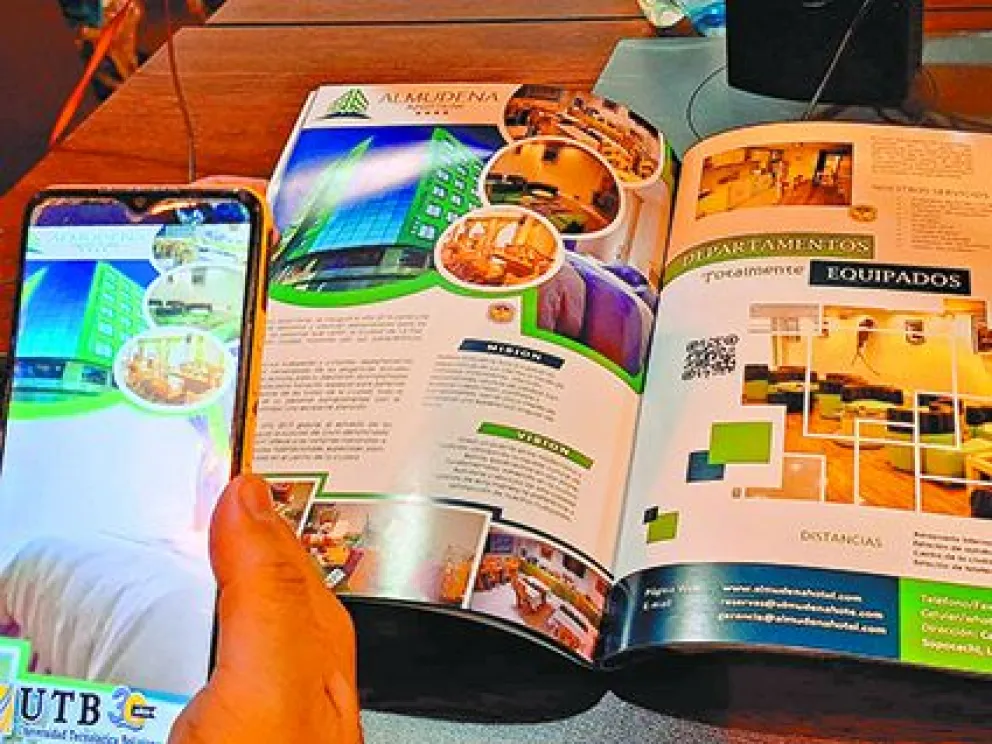
Using a cell phone, readers can access more information about tourism and destinations.
PHOTO: Marina Mamani / Visión 360
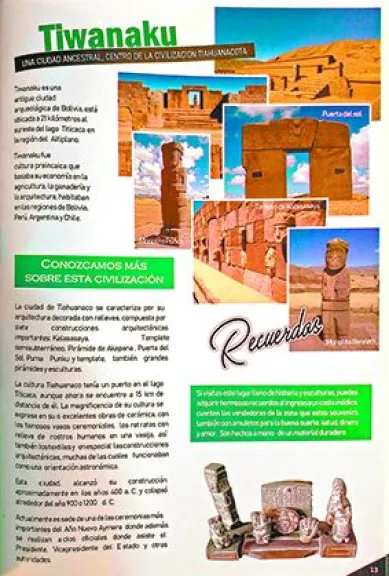
It consists of 62 full-color pages. On each one, travelers can find all kinds of information: from the best lodging options in the city of La Paz to the hidden corners that make the seat of government special. In this way, ViajArte aims to be a comprehensive guide for tourists.
“Imagine being a hotel receptionist approached by guests full of questions about what to do in La Paz. I’ve been in that situation, and most of the time, you only have a few brochures from some businesses or places. If you’re lucky, you get support from travel agencies, but they only promote their own packages, which may be limited to a single region. That’s why we turned to UTB to work on a product that could gather the most complete information possible,” said Carlos Bryan Mamani Villalba, editor and writer of the magazine, in an interview with Visión 360.
That’s how ViajArte was born. The publication is produced by the Universidad Tecnológica Boliviana (UTB), in collaboration with Mamani and institutions dedicated to tourism in La Paz and across the country.
This is a project that is just starting to take off. The first issue was released at the end of last year, and the goal is for it to become an annual magazine.
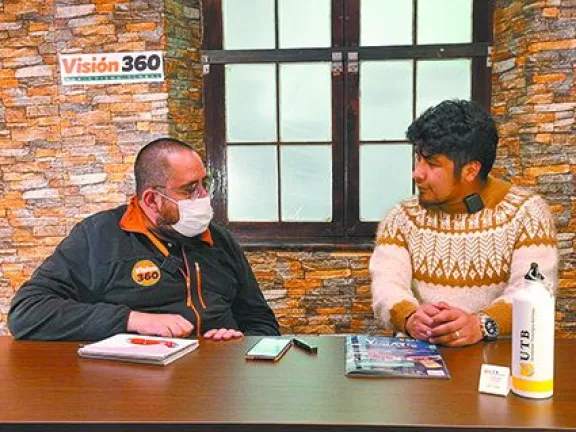
PHOTO: Marina Mamani / Visión 360
“It’s mainly a guide for tourism, hospitality, and gastronomy. It’s a way to advise travelers—whether from abroad or from other regions of the country—about which places to visit, where to find delicious dishes, which are the best accommodations, and other details to ensure they have the best experience of their lives,” he added.
To achieve this, the editorial team of ViajArte didn’t limit itself to publishing text and photos; since it’s a UTB project, it made use of new technologies to improve distribution and reader immersion.
Combining experience and new technologies
The magazine isn’t limited to print. Like many contemporary publications, it has its own online version, open to the public, developed in coordination with the university’s research unit (utbinvestigacion.com/viajarte).
“Nowadays, we’re very used to relying solely on our phones. I also recognize how convenient it is to access information from anywhere.”
“We turned to UTB with the goal of developing a product that would gather the most complete possible information about tourism in the country.”
— Carlos Bryan Mamani Villalba
But the most attractive feature is the merging of the physical and the digital. That’s why ViajArte implemented an augmented reality system.
First, users must download—for free—the app named after the magazine, available on both Android and Apple app stores.
Once installed, the program allows the user to scan the pages of the magazine marked with the UTB cube. After this step, the mobile device’s screen displays videos related to the initiative or featured locations, as well as special links.

“This system doesn’t require an internet connection once you have the app installed. With it, you can expand the information offered in a more interactive and modern way,” Mamani added.
The people behind the publication explained that this integration of technology with printed material will continue in future issues, as the goal is to reach an ever-growing audience.
Content
The magazine is divided into three sections. The first and central one is Tourism.
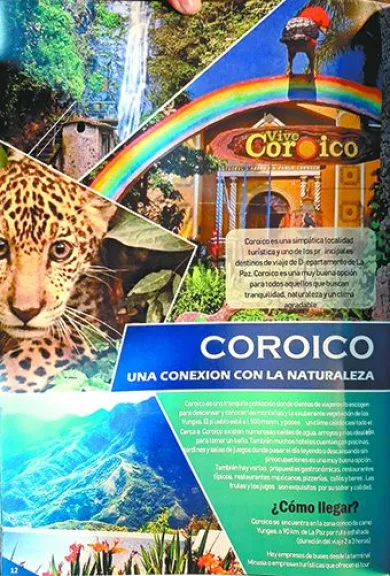
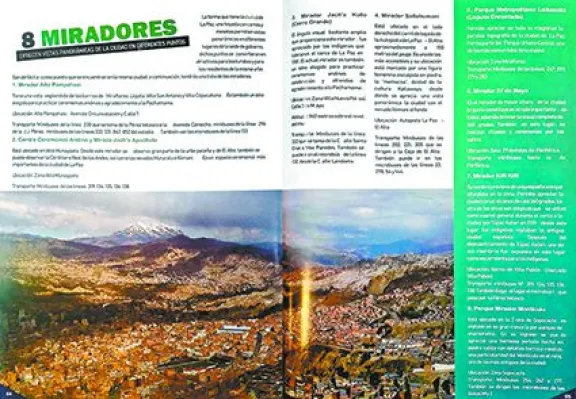
“In this section, readers can find places to visit, such as Valle de la Luna, Huayna Potosí, or the city of Coroico. It also covers city attractions like viewpoints, the different Mi Teleférico lines, plazas, and well-known streets,” explained the editor.
This section also includes contact information for travel agencies, aimed at those who don’t feel comfortable planning their own tours.
The second section focuses on Hospitality and Gastronomy. “We feature five trusted hotels. We partnered with them to present their contact details and offers. In the gastronomy section, we feature restaurants, bars, and cafés with various themes. We also plan to include recipes,” he added.
Finally, there are cultural articles. These are pieces where the authors discuss the traditions of the country and the city of La Paz. Thus, readers can learn about legends, customs, and the idiosyncrasies of the seat of government.
The information is presented not only for foreign visitors but also for locals. “Some of us, even while living in the city, are unaware of our own traditions. Many don’t even know where to find, say, the best llauchas for breakfast. We answer all that,” Mamani assured.
The magazine’s issues are planned by an editorial committee headed by Rafael Díaz, Director of the Tourism and Hospitality program; Roberto Acosta, professor and researcher at UTB’s Research Unit; along with Mamani, his partner, and students from technological programs who collaborate in the digital area.
They are already working on the second issue of the magazine, expected to be published between November and December this year. Unlike the first edition, it will focus on establishments with special themes, centered on traditional and medicinal practices.
“For example, we’ll talk about how people from La Paz are used to eating almost on the street: llauchas, salteñas, tucumanas, and tripitas are some of the recipes we’ll share. We’ll also explore key spots like Buenos Aires Avenue, Tumusla, and the markets,” he revealed.
The magazine can be purchased in hotels, restaurants, and UTB facilities, including its main building located on Colombia Street near Mariscal Santa Cruz Avenue. The printed, full-color, high-quality edition costs 45 bolivianos.
The Sections
TOURISM – Includes advice on places to visit and the city’s main attractions.
FOOD – The second part of the magazine focuses on restaurants and hotels and will include recipes.
CULTURE – Features articles that explain and showcase the traditions and cultural activities of the city of La Paz and the rest of the country.
Por Jorge Manuel Soruco Ruiz, Vision 360:
La publicación cuenta con realidad aumentada
El proyecto nace de la necesidad de ofrecer una guía adecuada a los turistas, nacionales y extranjeros, sobre lugares para conocer, comida y alojamientos.
Mediante el celular, el lector puede acceder a mayor información sobre turismo y destinos. FOTO: Marina Mamani / Visión 360
Son 62 páginas a todo color. En cada una de ellas el viajero puede encontrar información de todo tipo: desde los mejores alojamientos en la ciudad de La Paz hasta los rincones que hacen especial a la sede de Gobierno. De esta forma, ViajArte pretende ser una guía completa para el turista.
“Imagínese que es un recepcionista de un hotel, al que se aproximan los huéspedes llenos de preguntas sobre qué pueden hacer en La Paz. Tuve experiencia con esa situación y, la mayor parte de las veces, apenas se tienen folletos de algunos negocios y lugares. Con suerte, cuentas con el apoyo de agencias de turismo, pero estas ofrecen solo sus paquetes, que pueden limitarse a una sola región. Es por eso que acudimos a la UTB para trabajar en un producto que reuniera la información más completa posible”, contó a Visión 360 Carlos Bryan Mamani Villalba, editor y escritor de la revista.
De esta manera nació ViajArte. La publicación es producida por la Universidad Tecnológica Boliviana (UTB), en colaboración con Mamani e instituciones dedicadas al turismo en La Paz y el país.
Este es un emprendimiento que recién comienza a volar. El primer número fue lanzado a finales del año pasado y se pretende que sea una revista de frecuencia anual.
“Es, principalmente, una guía de turismo, hotelería y gastronomía. Es tanto un medio de aconsejar a los viajeros, sean del exterior como de otras regiones del país, qué lugares visitar, dónde encontrar deliciosos platillos, cuáles son los mejores alojamientos y otros detalles para lograr que tengan la mejor experiencia de su vida”, agregó.
Para ello, el consejo editorial de ViajArte no se limita a publicar texto y fotografías, sino que, como corresponde a un proyecto de la UTB, se echó mano de las nuevas tecnologías, para lograr una mejor difusión e inmersión del lector.
Uniendo experiencia y las nuevas tecnologías
La revista no se queda limitada al medio impreso. Como muchas publicaciones contemporáneas, cuenta con su propia versión en Internet, abierta a todo público, elaborada en coordinación con la unidad de investigación de la casa de estudios (utbinvestigacion.com/viajarte).
“Actualmente, estamos bien acostumbrados a utilizar solamente el celular. Además, reconozco que es conveniente poder acceder a la información en cualquier lugar”.
“Acudimos a la UTB con el objetivo de desarrollar un producto que reuniera la información más completa posible sobre el turismo en el país”.
Carlos Bryan Mamani Villalba
Pero, el secreto más atractivo es la unión de lo físico con lo digital. Por eso, para ViajArte se implementó un sistema de realidad aumentada.
Primero, el interesado debe descargar, de forma gratuita, la aplicación que lleva el nombre de la revista. Puede encontrarse tanto en las tiendas de aplicaciones para sistemas Android y Apple.
Una vez instalado, el programa permitirá al usuario escanear las páginas de la publicación, que estén marcadas con el cubo de la UTB. Una vez cumplido este paso, en la pantalla del dispositivo móvil se podrá ver desde videos de la iniciativa o lugar expuesto en la revista, hasta enlaces especiales.
“Este sistema no requiere uso de internet, una vez que tengas instalada la aplicación. Con eso podrás ampliar la información que se ofrece de una manera más interactiva y moderna”, agregó Mamani.
Los responsables de la publicación explicaron que la integración de la tecnología con el material impreso seguirá aplicándose en los siguientes números. Es que se busca llegar a una audiencia cada vez mayor.
Contenido
La revista se divide en tres secciones. La primera y central es Turismo. “Una persona puede encontrar dentro de esta revista qué lugares visitar; por ejemplo, el Valle de la Luna, el Huayna Potosí o la ciudad de Coroico. También se habla de atracciones de la ciudad, como los miradores, las diferentes líneas de Mi Teleférico, plazas y calles conocidas”, explicó el editor del proyecto.
En esa sección también se incluyen contactos de agencias de turismo, para quienes no se sienten seguros de programar sus propios recorridos.
La segunda sección se refiere a la Hotelería y Gastronomía. “Tenemos cinco hoteles de confianza. Hicimos un convenio con ellos, para presentar sus datos de contacto y las ofertas que tienen. En la parte gastronómica, están restaurantes, bares y cafeterías con diferentes temáticas. En ese punto también planificamos incluir recetarios”.
Finalmente están los artículos de corte cultural. Son piezas en la que los autores hablan de las tradiciones del país y de la ciudad de La Paz. Así, el lector conocerá algunas leyendas, costumbres y la idiosincrasia de la sede de Gobierno.
La información es presentada de tal forma que no se limita solo a guiar a los visitantes extranjeros. “Algunos de nosotros, viviendo en la ciudad misma, desconocemos nuestras propias tradiciones. Incluso ignoran dónde pueden encontrar, digamos, las mejores llauchas para el desayuno. Todo eso respondemos”, garantizó Mamani.
Los números de la revista son planificados por un comité editorial, dirigido por Rafael Díaz, director de la carrera de Turismo y Hotelería; Roberto Acosta, docente e investigador de la Unidad de Investigación de la UTB. A ellos se suman Mamani y su pareja, además los estudiantes de las carreras tecnológicas, que colaboran en el área digital.
Ya se encuentran trabajando en el segundo número de la revista, que esperan se pueda publicar entre noviembre y diciembre de este año. Una diferencia con el primer ejemplar es que se enfoca en locales con temáticas especiales, es que girará en torno a las tradiciones medicinales y de otro tipo.
“Hablaremos, por ejemplo, de cómo los paceños estamos acostumbrados a comer casi en la calle: llauchas, salteñas, tucumanas, tripitas son algunas recetas que compartiremos. También exploraremos puntos importantes como la avenida Buenos Aires, la Tumusla y los mercados”, adelantó.
La revista puede adquirirse en hoteles, restaurantes y en las instalaciones de la UTB, como su edificio central que se encuentra en la calle Colombia casi Mariscal Santa Cruz. El costo de la edición impresa, a todo color y papel de calidad es de 45 bolivianos.
Las secciones
TURISMO. Contiene consejos de lugares para visitar, las atracciones especiales de la ciudad.
COMIDA . Restaurantes y hoteles son el tema central de la segunda parte de la revista. Incluirá recetarios.
CULTURA. Está formada por artículos que explican y presentan las tradiciones y actividades culturales de la ciudad de La Paz y del resto del país.

 Bolivian Thoughts | Pensamientos Bolivianos (Bilingual/Bilingüe)