
By El Diario:
A municipality out of 343 meets six viability criteria
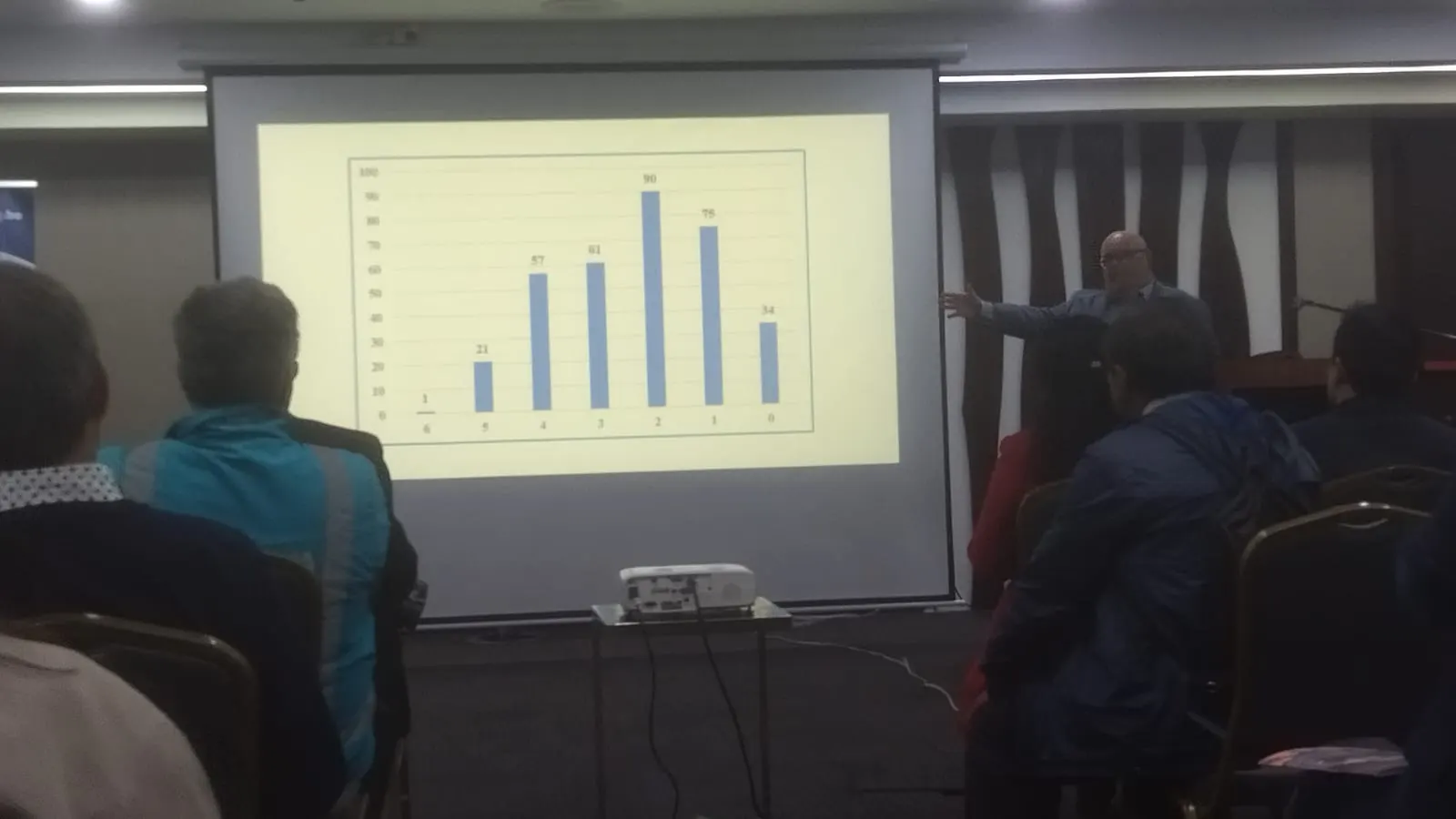
According to a study by Fundación Jubileo, to define the viability of a municipality it must meet at least six criteria. After investigating 343 municipalities, it was verified that only one complies with all these parameters, while in contrast, 34 comply with none. In view of this situation, an expert affirms that “a large part of Bolivian municipalities have many problems to solve.”
The study, entitled “Municipal Viability in Bolivia, Decentralization System and Territorialization in the Public Debate”, was carried out by Jubileo consultant Grover Barja.
The expert explained that “viability is the capacity of a municipality to fulfill the function for which it was created, to do so with sufficient flexibility and resources to carry out those functions related to the well-being of its population, the municipality as a territory.”
Therefore, in order to understand the causes why several municipalities are losing resources and population, among other aspects, a study on Municipal Viability in Bolivia was projected. For the analysis, six criteria were taken into account related to the fiscal, administrative, demographic, economic, social, and human capital spheres.
“The reason was the existence of many municipalities that are losing resources and fiscal transfers, in addition to population, because they are becoming urbanized. So what is going to happen to those municipalities in the future?” argued Barja.
To that end, 343 municipalities in the country were investigated and, among the results, it was noted that “only one complies with the six criteria and applies them. That is Santa Cruz de la Sierra. This shows that, first, it is possible to meet the six criteria, and second, that a large part of the municipalities have a long way to go and many problems to resolve.”
But, in contrast, it was also confirmed that 34 municipalities do not meet any of the criteria, which is concerning for the researcher.
Meanwhile, 21 municipalities, among them La Paz, comply with five of the viability criteria; 87 with four; 61 with three; 90 with two; and 75 with one.
CRITERIA
Fiscal viability: according to the study, only 5% of the 343 municipalities in the country manage to generate their own revenues equal to or greater than 20% of their income. The vast majority depend on transfers from the central government.
Administrative viability: meanwhile, more than 80% have the capacity to execute at least 60% of their annual budget, and although this indicates reasonable formal efficiency, it does not mean tangible improvements in the population’s well-being.
Demographic viability: the Framework Law on Autonomies considers that a municipality should have a minimum population of 10,000 inhabitants. However, nearly 42% of the country’s municipalities do not reach this figure, which limits their long-term sustainability and their capacity to offer efficient services to the population.
Economic viability: 64% of municipal entities are not located at or above the median level of productive activity and its distribution (municipal GDP and GDP per capita). This indicator reveals weak productive bases that reduce the ability to generate employment and local income.
Social viability: nearly 68% of municipalities fail to achieve sufficient basic coverage to qualify as socially “viable,” as they show indicators of multidimensional poverty, unmet basic needs, and insufficient access to basic services.
Human capital viability: this considers the percentage of the population that completed secondary education, low child malnutrition, and women’s labor inclusion. 85% of municipalities do not meet these goals, a situation that highlights persistent educational shortcomings and gender gaps.
RECOMMENDATIONS
At a time when Bolivia is facing crises in various areas, it is essential to look toward the long term and put structural issues on the agenda, such as debating the decentralization system, territorial organization, or political-administrative division, with a view to steering the State toward more sustainable development for all.
Based on the study’s results, Barja recommended that, as a first step, municipalities should establish one or two missions so that all actors direct their efforts and resources toward fulfilling those missions.
“These missions are decided by the inhabitants, the actors of the municipality, so in that way the problem of autonomy in the use of transfers is resolved. Transfers should be directed toward the municipality’s interests, and those interests will be reflected in the missions they have defined,” he stated.
In addition, transfers should be used to create investment funds with rules for their use, in order to make long-term investments capable of generating true economic activity, which in turn can generate municipalities’ own revenues.
OTHERS
René Martínez, a public budget analyst at Fundación Jubileo, pointed out that, among other results, the study reveals that, according to the population criterion, only 77 out of 343 municipalities would be viable.
“So only 20 or 22 percent of municipalities could be viable over time, and we see that this trend could become even more complex in the future, because in our country we have been urbanizing. There have been population shifts in recent censuses, showing an increasingly urban profile. We have a large number of municipalities with very few inhabitants, very few resources, and very little capacity to offer development opportunities to their population,” he observed.
Among other results, only 5% of the country’s municipalities generate their own revenues equal to or greater than 20% of their income, while the majority depend on transfers from the central government.
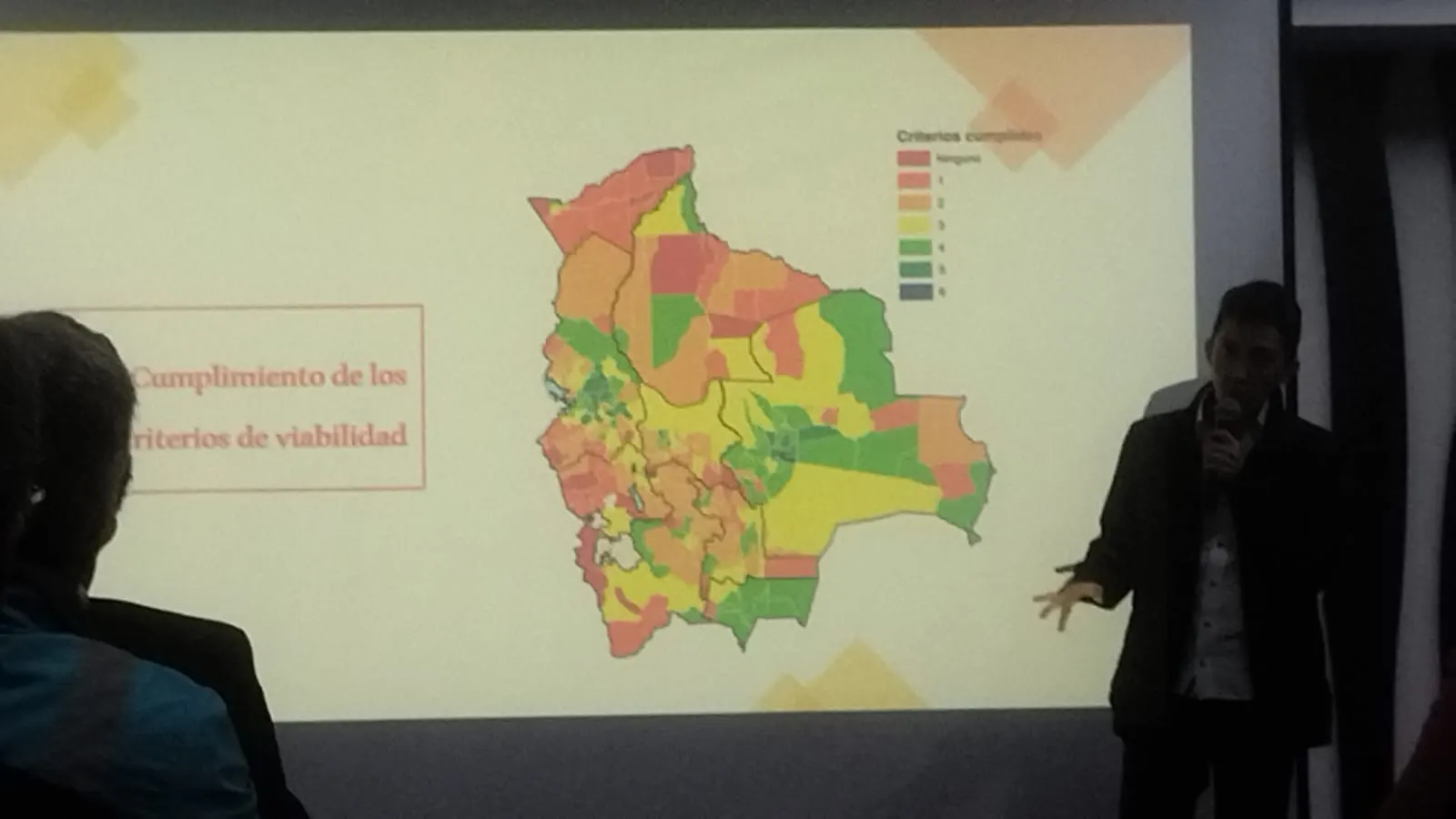
PHOTO: EL DIARIO
Por El Diario:
Un municipio de 343 cumple seis criterios de viabilidad
De acuerdo con un estudio de la Fundación Jubileo, para definir la viabilidad de un municipio se requiere cumplir, al menos, seis criterios, por lo que al indagar en 343 municipios se corroboró que solo uno cumple con todos esos parámetros y, en contraposición, 34 no cumple con ninguno. Ante esa situación, un experto asegura que “gran parte de los municipios bolivianos tienen muchos problemas que resolver”.
El estudio denominado “Viabilidad municipal en Bolivia, sistema de descentralización y territorialización en el debate público” fue realizado por el consultor de Jubileo, Grover Barja.
El experto explicó que “viabilidad es la capacidad de un municipio de cumplir la función por la que fue creado, hacerlo con la holgura y los recursos necesarios para cumplir con esas funciones relacionados con el bienestar de su población, el municipio como territorio”.
Entonces, con la finalidad de conocer las causas por las que varios municipios están perdiendo recursos y población, entre otros aspectos, se proyectó un estudio de Viabilidad Municipal en Bolivia, donde para realizar el análisis se tomaron seis criterios relacionados a los ámbitos: fiscal, administrativo, demográfico, económico, social y capital humano.
“La razón fue la existencia de muchos municipios que están perdiendo recursos y transferencias fiscales, además de población, porque los están urbanizando, entonces qué va a pasar con esos municipios en un futuro”, argumentó Barja.
Para eso se indagó en 343 municipios del país y, entre los resultados, se advirtió que “solo uno cumple con los seis criterios, y los aplica. Es Santa Cruz de la Sierra. Eso muestra que: primero, es posible cumplir los seis criterios y segundo, que gran parte de los municipios tienen mucho camino por recorrer, muchos problemas que resolver”.
Pero, en contraposición, también se corroboró que 34 municipios no cumplen con ninguno de los criterios, por lo que resulta preocupante para el investigador.
En tanto, 21 municipios, entre ellos La Paz, cumplen con cinco de los criterios de viabilidad; 87 con cuatro; 61 con tres; 90 con dos y 75 con uno.
CRITERIOS
Viabilidad fiscal: según el estudio solo 5% de los 343 municipios del país logra generar recaudaciones propias iguales o mayores a 20% de sus ingresos. La gran mayoría depende de las transferencias del Gobierno central.
Viabilidad administrativa: en tanto, más de 80% tiene capacidad para ejecutar al menos 60% de su presupuesto anual, y si bien indica una razonable eficacia formal, no significa mejoras tangibles de bienestar para la población.
Viabilidad demográfica: la Ley Marco de Autonomías considera que un municipio debería tener una población mínima de 10.000 habitantes. Sin embargo, cerca de 42% de los municipios del país no llega a esta cifra, lo que limita su sostenibilidad de largo plazo y su aptitud para ofrecer servicios eficientes a la población.
Viabilidad económica: el 64% de las entidades municipales no se ubica en la mediana o por encima de la masa de actividad productiva y su distribución (PIB municipal y PIB per cápita); este indicador revela bases productivas débiles que reducen la capacidad de generar empleo e ingresos locales.
Viabilidad social: cerca de 68% de los municipios no logra una cobertura básica suficiente para calificar como “viable” socialmente, al tener indicadores de pobreza multidimensional, con necesidades básicas insatisfechas e insuficiente acceso a servicios básicos.
Viabilidad de capital humano: considera el porcentaje de población que culminó la secundaria, la baja desnutrición infantil y la inclusión laboral femenina. El 85% de municipios no cumple con estas metas, situación que evidencia la persistencia de falencias educativas y brechas de género.
RECOMENDACIONES
En un momento en el cual Bolivia afronta una crisis en diversos ámbitos, es fundamental mirar el horizonte de largo plazo y agendar temas estructurales, como debatir sobre el sistema de descentralización, la territorialización o la división político-administrativa, en miras de encaminar el Estado hacia un desarrollo más sostenible para todos.
Barja, basado en resultados del estudio, recomendó que, en primera instancia, los municipios deberían establecer una o dos misiones para que todos los actores encaminen sus esfuerzos y sus recursos en el cumplimiento de esas misiones.
“Esas misiones las deciden los habitantes, los actores del municipio, así que de esa manera se resuelve el problema de la autonomía en el uso de las transferencias, que deberían estar dirigidos a los intereses del municipio y los intereses del municipio van a estar plasmados en las misiones que ellos han definido”, manifestó.
Además, se debe utilizar las trasferencias para crear fondos de inversión que tengan sus reglas de uso para hacer inversiones de largo plazo que puedan generar verdadera actividad económica que a su vez puedan generar ingresos propios para el municipio.
OTROS
El analista en presupuestos públicos de la Fundación Jubileo, René Martínez, apuntó que, entre otros resultados, el estudio permite conocer que, de acuerdo con el criterio poblacional, solo 77 de 343 municipios serian viables.
“Entonces solamente 20 o 22 por ciento de los municipios podrían ser viables a lo largo del tiempo y vemos que esta tendencia podría ser aún más compleja en el futuro, porque hemos visto que en nuestro país se ha ido urbanizando, ha habido movimientos poblacionales en los últimos censos donde es cada vez más urbano. Tenemos una gran cantidad de municipios con muy poca población, muy pocos recursos y con muy pocas posibilidades de ofrecerles oportunidades de desarrollo a su población”, observó.
Entre otros resultados, solo el 5% de los municipios del país genera recaudaciones propias iguales o mayores a 20% de sus ingresos y la mayoría depende de las transferencias del Gobierno central.
FOTO: EL DIARIO
https://www.eldiario.net/portal/2025/09/18/un-municipio-de-343-cumple-seis-criterios-de-viabilidad/

 Bolivian Thoughts | Pensamientos Bolivianos (Bilingual/Bilingüe)