
Por The Latin American Post Staff:
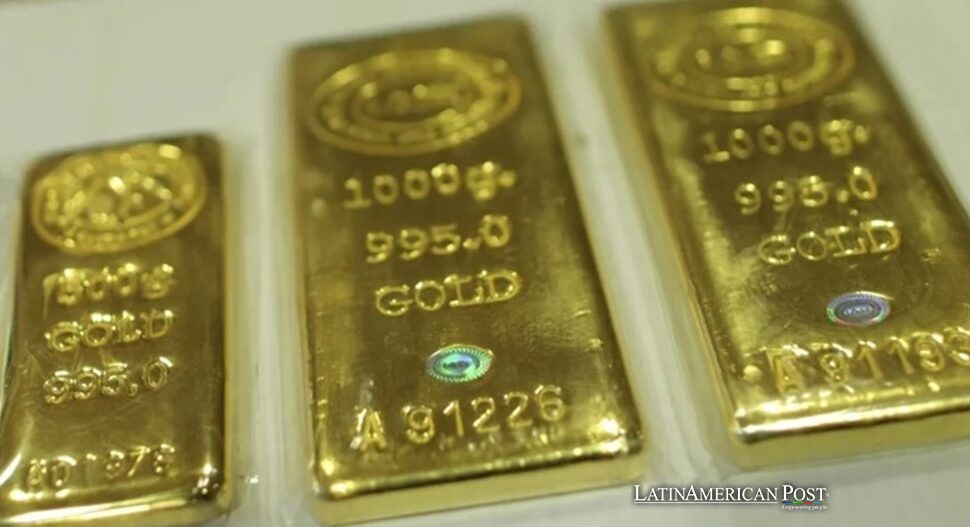
Bolivia convirtió el oro en un respiro, levantando casi mil millones de dólares mediante contratos a futuro y coberturas para evitar un default. La jugada alivia la crisis de hoy, pero deja al próximo gobierno la carga de entregas, riesgos legales y sombras ambientales.
El oro como salvavidas
En un año de escasez de divisas y reservas en caída, Bolivia recurrió a su activo más antiguo: el oro. El Banco Central firmó en silencio contratos a futuro, intercambiando promesas de lingotes mañana por dólares hoy. Entre mayo y agosto, operaciones por más de cinco toneladas generaron casi 600 millones de dólares. Ventas anteriores elevaron el total a unos 916 millones por 8,4 toneladas, según analistas.
El impacto fue inmediato: las reservas subieron a unos 2.900 millones, suficiente para calmar a los mercados y asegurar pagos de bonos. Para un gobierno con arcas vacías, la ecuación funcionó: vender tiempo, no solo metal. Pero los contratos vencen en 2025. Quien gane el balotaje heredará un calendario marcado en lingotes: entregas que deberán cumplirse pese a precios, producción o política.
Por ahora, la estrategia retrasó el ajuste. El verdadero costo se verá cuando los lingotes salgan de las bóvedas y los dólares ya se hayan gastado.
El manual del “oro por dólares”
El mecanismo es simple: el Banco Central compra oro local en bolivianos, lo refina y firma contratos a futuro con contrapartes globales. Recibe efectivo hoy a cambio de entregar barras un año después. El Estado mantiene el título legal durante la vigencia del contrato, presentando las operaciones como coberturas y no como ventas definitivas. Un “plan de acumulación de reservas” debería garantizar el oro necesario para la liquidación.
La lógica es clara: exportadores, importaciones de combustible y acreedores externos demandan dólares. Con ingresos flojos por soya, gas y minería, el oro es de los pocos activos líquidos. Los forwards son menos estigmatizantes que una venta directa: preservan la apariencia de reservas y dan liquidez.
Pero desplazar el tiempo es riesgoso: las entregas exigen producción estable, refinación y logística. Si algo falla, el próximo gobierno enfrentará obligaciones sin sustituto. En la práctica, Bolivia trajo el colchón de mañana al balance de hoy, apostando a que el crecimiento o nuevo financiamiento tapen el hueco después.
Ley, política y el umbral de 22 toneladas
Una norma obliga al Banco Central a mantener al menos 22 toneladas de oro. Ese piso debía evitar que las bóvedas queden vacías. Críticos sostienen que los forwards burlan la regla al comprometer oro sin violar formalmente el umbral. Defensores replican que sin esos contratos el país ya habría caído en default.
La disputa saltó a la campaña. La oposición acusa al MAS de hipotecar el patrimonio nacional. Un candidato incluso amenazó con acciones legales si se vulnera el piso, comparando la maniobra con empeñar joyas familiares. Para los votantes, el tema refleja una elección más amplia: continuidad del manejo económico del MAS o un giro conservador con austeridad.
El próximo gobierno enfrentará vencimientos en meses. Deberá acelerar el “plan de acumulación” con producción local o buscar financiamiento externo. Ambas rutas traen costos: más minería agrava el daño ambiental, más deuda irrita a nacionalistas y empeora ratios fiscales.
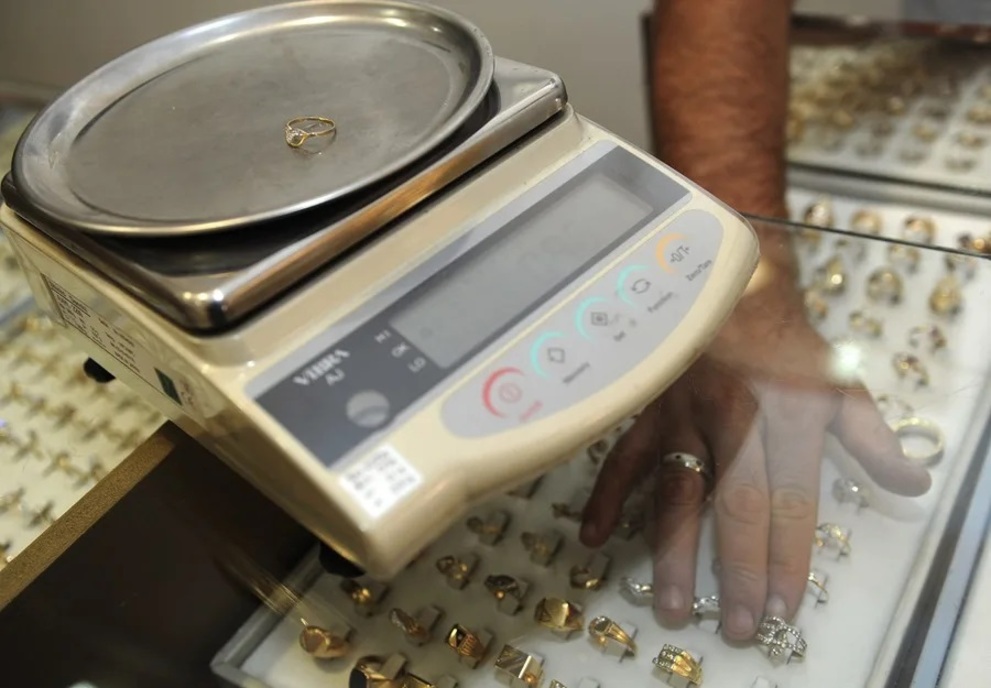
EFE@Georgi Licovski
Costos ambientales y la factura futura
Detrás de las cifras hay un paisaje herido. Gran parte del oro proviene de minería artesanal en la Amazonía, con mercurio, deforestación e invasiones a territorios indígenas. Con el Banco Central como comprador garantizado, la producción se incentiva, estabilizando precios pero presionando ecosistemas frágiles. Ambientalistas alertan que monetizar oro a esta escala sin trazabilidad financia un daño duradero a cambio de efectivo fugaz.
La transparencia también flaquea: el Banco Central publica volúmenes y montos, pero no revela contrapartes, términos de cobertura ni detalles del plan de acumulación. En tiempos tranquilos, los mercados toleran opacidad; con vencimientos cerca, el silencio genera sospechas, tanto en rivales políticos como en inversionistas.
Por ahora, la estrategia compró tiempo. Los bonos están al día, las reservas lucen más sólidas y el gobierno exhibe cifras que tranquilizan. Pero el próximo año los contratos vencen. Todo dependerá de si el oro está listo, si el piso de 22 toneladas se respeta y si la supervisión ambiental alcanza la demanda.
Bolivia se presta tiempo de sus propias bóvedas. Si el respiro sirve para reconstruir crecimiento, credibilidad y diversificación, los forwards parecerán astutos. Si no, el oro saldrá, los dólares ya estarán gastados y la factura —financiera, política y ecológica— llegará.
By The Latin American Post Staff:
Bolivia has turned bullion into breathing space, raising nearly a billion dollars through gold forwards and hedges to stave off default. The gamble eases today’s crisis but burdens the next government with deliveries, legal risks, and environmental shadows.
Gold Becomes a Lifeline
In a year when hard currency has been scarce and reserves dwindled, Bolivia leaned on its oldest asset: gold. The central bank quietly signed forward contracts, exchanging promises of bullion tomorrow for dollars today. Between May and August, deals on more than five tons of gold yielded nearly $600 million. Earlier sales pushed the tally to roughly $916 million across 8.4 tons, according to analysts.
The impact was immediate. Reserves rose to about $2.9 billion, enough to reassure markets that bond payments would be met and default averted. For a government staring at drained coffers, the math worked: sell time, not just metal. But the contracts all mature in 2025. Whoever wins the upcoming runoff election will inherit a calendar marked not in bills but in bars—deliveries that must be met regardless of price swings, production hiccups, or politics.
For now, the strategy has delayed a reckoning. The actual cost will be measured when the bullion leaves vaults and the dollars already spent are only a memory.
Inside the Forward-for-Dollars Playbook
The mechanism is deceptively simple. The central bank buys gold domestically in bolivianos, refines it, then enters forward contracts with global counterparties. The bank collects cash up front while pledging to deliver the bars a year later. Officials emphasize that the state retains legal title during the contracts’ life, portraying the deals as hedges rather than outright sales. A “reserve accumulation plan” is supposed to guarantee enough gold is on hand when settlement day arrives.
The logic is straightforward. Exporters demand dollars, fuel imports are priced in dollars, and bondholders expect interest in dollars. With soy, gas, and mining revenues soft, gold is one of the few liquid assets convertible at scale. Forwarding is less stigmatising than outright liquidation—it preserves the appearance of reserves while providing liquidity.
But the time shift is dangerous. Deliveries require steady production, predictable refining, and smooth logistics. If any falter, the next administration will confront obligations with no ready substitute. In financial terms, Bolivia has pulled tomorrow’s cushion into today’s balance sheet, betting that growth or new financing will fill the hole later.
Law, Politics, and the 22-Ton Threshold
The legal guardrail is a statute requiring the central bank to hold at least 22 tons of gold. That floor was meant to keep a crisis from emptying the vaults. Critics argue that forward contracts sidestep the rule by committing gold without formally breaching the threshold. Supporters counter that without these deals, the country would already have faced missed payments and a potential default.
The dispute has spilled onto the campaign trail. Opposition candidates frame the strategy as mortgaging the nation’s patrimony. One has threatened legal action if the statutory floor is breached, comparing the deals to pawning family jewels. For voters, the issue crystallizes a broader choice: continuity of MAS-era economic management or a conservative pivot that promises austerity.
Whoever wins in November will face bullion deadlines within months. To meet them, the new administration must either accelerate the “accumulation plan” with enough domestic supply or find fresh financing abroad. Each path risks backlash: more mining deepens environmental concerns, while foreign borrowing angers nationalists and tightens debt ratios.
EFE@Georgi Licovski
Environmental Costs and Tomorrow’s Reckoning
Behind the numbers lies a landscape scarred by extraction. Much of Bolivia’s gold comes from artisanal mining in Amazonian watersheds. Informal camps use mercury, strip forests, and trespass on indigenous territories. A guaranteed buyer in the form of the central bank incentivizes output, stabilizing prices but also magnifying pressure on fragile ecosystems. Environmental groups warn that monetizing gold at this scale without strict traceability is underwriting long-term damage for short-term cash.
Transparency is another weak link. The central bank publishes tonnages and dollar inflows but not counterparties, hedge terms, or the mechanics of its accumulation plan. Markets tolerate opacity in good times. But when deliveries loom, silence breeds suspicion—from political rivals at home to investors abroad.
For now, the strategy has bought time. Bonds are current, reserves look healthier, and the government can point to numbers that calm markets. But next year the contracts mature. Success will depend on whether the bars are ready, the 22-ton floor remains intact, and environmental oversight catches up with demand.
Bolivia is borrowing time from its own vault. If the breathing space is used to rebuild growth, credibility, and diversification, the gold forwards will look shrewd. If not, the bullion will leave, the dollars will already be spent, and the bill—financial, political, and ecological—will come due.

 Bolivian Thoughts | Pensamientos Bolivianos (Bilingual/Bilingüe)