
By El Día:
The endorsement of Samuel Doria Medina’s candidacy by Alejandro Almaraz, former Deputy Minister of Lands under Evo Morales, unleashed a political storm. The gesture, seen as a wink to masismo, provoked outrage from Luis Fernando Camacho, civic leaders, and Almaraz’s old adversaries, reopening old wounds just days before the elections.
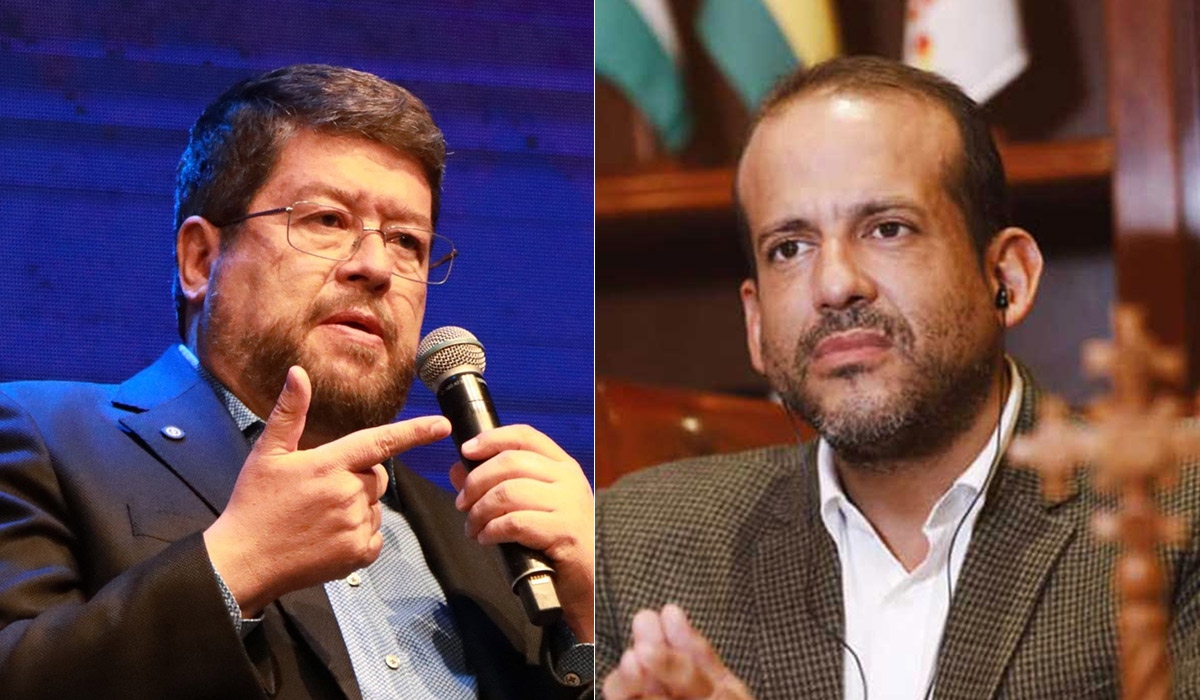
Samuel Doria Medina & Luis Fernando Camacho.
On Wednesday morning, Doria Medina received an unexpected boost. Almaraz —a central figure in the controversial agrarian reforms of the MAS’s first decade— announced he would vote for him on Sunday. In another context, this might have been a victory for the “unity against the ruling party” narrative. But in Bolivia’s political landscape, that hug turned toxic within hours.
The video, posted early on Doria Medina’s social media, showed Almaraz explaining his reasons: urgency to remove MAS from power, concentrating the vote on the best-positioned candidate, and safeguarding certain formal gains of the “process of change,” such as the Constitution. He even made nods toward Unidad list figures like Cecilia Requena, Toribia Lero, and Juan del Granado.
What could have been an electoral asset quickly became a liability. As soon as the video began circulating, Camacho —governor of Santa Cruz and Doria Medina’s main political ally— erupted online, calling Almaraz a “MAS criminal” and vowing never to accept his support. In Santa Cruz, the Almaraz name still evokes land seizures and threats to the region’s production model.
Camacho’s blow was not the only one. Civic Committee leaders Agustín Zambrana and Stello Cochamanidis doubled down, branding the endorsement a “disgrace” and “disaster” for the region, recalling his role in land titling and alleged complicity in the expansion of “interculturales.” The wound from Alto Parapetí —where cattle ranchers detained Almaraz in 2008— remains raw in the collective memory.
Caught in the storm, Doria Medina tried to soften the fallout, saying he welcomed support from “diverse people and sectors,” but that none could alter his program. “My way of thinking will not change,” he repeated. Hours later, he deleted the original post —a political gesture often heavier in meaning than the deleted content itself.
Rivals seized the opportunity. Branko Marinkovic, Senate candidate for the Libre alliance and longtime civic adversary of Almaraz, accused Doria Medina of bringing in Evo Morales’s “right-hand man.” In a sarcastic tone, Tuto Quiroga celebrated not having to deal with such allies, implying Unidad had crossed a dangerous line.
For nearly two decades, Almaraz has divided Bolivia. To MAS and indigenous sectors, he was an architect of agrarian justice; to business and the productive east, an enforcer of dispossession policies. His brief reappearance in the 2025 campaign has rekindled that historical clash.
Almaraz did not formally join Unidad; his support was personal and without programmatic agreements. Still, in Bolivia’s electoral arena, where perceptions matter as much as facts, that nuance was lost in the noise. For Santa Cruz voters, simply standing beside him was tantamount to a tacit alliance.
The episode also exposed Unidad’s fragility. Camacho and Doria Medina share the goal of ousting MAS, but not the same view on limits or acceptable allies. In a polarized country, every gesture is read as an ideological statement —and in Santa Cruz, Almaraz remains a symbol of confrontation.
Unidad’s vice-presidential candidate José Luis Lupo was blunt: “We don’t want that kind of support.” The attempt to close ranks failed to stop the crossfire. Deleting the video only fed the narrative that Doria Medina was trying to cover up a strategic blunder at the campaign’s climax.
With just three days to go, the controversy is now firmly part of the public debate. Beyond immediate polling effects, the episode sends a clear message: in Bolivian politics, gaining support without weighing its symbolic weight can turn a tactical move into a devastating boomerang.
In the electoral game, Doria Medina sought to project himself as the candidate able to attract voters beyond his base. Instead, the “uncomfortable hug” with Almaraz left him under crossfire, forced to convince his most influential ally that he is not ceding ground to the very project they claim to be fighting.
Por El Día:
El respaldo del exviceministro de Evo Morales, Alejandro Almaraz, a la candidatura de Samuel Doria Medina desató un huracán político. El gesto, interpretado como un guiño al masismo, provocó la furia de Luis Fernando Camacho, líderes cívicos y antiguos adversarios del exfuncionario, reabriendo viejas heridas a días de las elecciones.
Samuel Doria Medina y Luis Fernando Camacho.
Samuel Doria Medina amaneció este miércoles con un espaldarazo inesperado. Alejandro Almaraz, exviceministro de Tierras de Evo Morales y figura central de las polémicas reformas agrarias de la primera década del masismo, anunció que votará por él el próximo domingo. La noticia, en cualquier otro contexto, habría sido un triunfo para la narrativa de unidad contra el oficialismo. Pero en el mapa político boliviano, ese abrazo se volvió tóxico en cuestión de horas.
El video, publicado a primera hora en las redes de Doria Medina, mostraba a Almaraz argumentando su decisión: urgencia de desalojar al MAS del poder, concentración del voto en el mejor posicionado y la garantía de no retroceder en ciertos logros formales del “proceso de cambio”, como la Constitución. Un mensaje directo, con guiños a figuras de la lista de Unidad como Cecilia Requena, Toribia Lero y Juan del Granado.
Pero lo que pudo ser un activo electoral se transformó en una pesada carga. Apenas el video comenzó a circular, Luis Fernando Camacho, gobernador cruceño y principal socio político de Doria Medina en la alianza Unidad, estalló en redes: calificó a Almaraz de “delincuente masista” y juró que jamás aceptaría su apoyo. En Santa Cruz, el apellido Almaraz todavía es sinónimo de avasallamientos y amenaza al modelo productivo regional.
El golpe de Camacho no fue el único. Agustín Zambrana y Stello Cochamanidis, dirigentes del Comité Pro Santa Cruz, redoblaron la ofensiva. Lo llamaron “desgracia” y “nefasto” para la región, recordándole su rol en el saneamiento de tierras y su supuesta complicidad con la expansión de los llamados “interculturales”. La herida de Alto Parapetí, donde ganaderos retuvieron a Almaraz en 2008, sigue supurando en la memoria colectiva.
En medio de la tempestad, Doria Medina intentó matizar. Aseguró que recibe apoyos de “personas y sectores diversos”, pero que ninguno condiciona su programa de gobierno. “Mi forma de pensar no va a cambiar”, repitió. Horas después, borró la publicación original del respaldo de Almaraz, un gesto que en política suele pesar más que el propio contenido borrado.
La polémica abrió un flanco que sus adversarios aprovecharon de inmediato. Branko Marinkovic, candidato a senador por la alianza Libre y antiguo rival cívico de Almaraz, acusó a Doria Medina de sumar a la “mano derecha” de Evo Morales. En tono irónico, Tuto Quiroga celebró no tener que cargar con ese tipo de aliados, sugiriendo que Unidad había cruzado una línea peligrosa.
La figura de Almaraz divide al país desde hace casi dos décadas. Para el MAS y sectores indígenas, fue un artífice de la justicia agraria; para el empresariado y el oriente productivo, un ejecutor de políticas de despojo. Su breve reaparición en la campaña de 2025 no hizo sino reavivar el enfrentamiento histórico entre ambos bloques.
Almaraz no se incorporó formalmente a la alianza. Su apoyo fue personal, sin acuerdos programáticos. Sin embargo, en la arena electoral boliviana, donde las percepciones pesan tanto como los hechos, esa distinción se perdió en el ruido. Para el electorado cruceño, el solo hecho de aparecer junto a él equivale a una alianza tácita.
El episodio también evidenció la fragilidad de la alianza Unidad. Camacho y Doria Medina comparten un objetivo —desplazar al MAS del poder—, pero no una visión idéntica sobre los límites y los aliados aceptables. En un país polarizado, cada gesto se lee como una declaración ideológica, y en Santa Cruz, la imagen de Almaraz sigue siendo un símbolo de confrontación.
La reacción de José Luis Lupo, candidato a la vicepresidencia por Unidad, fue categórica: “Ese tipo de apoyos no lo queremos”. El intento de cerrar filas no logró frenar el fuego cruzado. El borrado del video solo alimentó la narrativa de que Doria Medina intentó disimular un error estratégico en plena recta final de la campaña.
A tres días de las elecciones, la controversia ya se instaló en el debate público. Más allá del efecto inmediato en encuestas, el episodio deja un mensaje claro: en la política boliviana, sumar apoyos sin medir el peso simbólico puede convertir una jugada táctica en un boomerang devastador.
En el tablero electoral, Doria Medina buscaba mostrarse como el candidato capaz de atraer votos más allá de su núcleo duro. En cambio, el “abrazo incómodo” con Almaraz lo dejó en medio de un fuego cruzado, obligado a convencer a su socio más influyente de que no está cediendo terreno al mismo proyecto que juntos dicen combatir.

 Bolivian Thoughts | Pensamientos Bolivianos (Bilingual/Bilingüe)