
By Mirna Echave, Visión 360:
Walks with Varied Activities
Tourism, in partnership with farmers, is offering new experiences to travelers and better income to those who supply food for the city of La Paz.
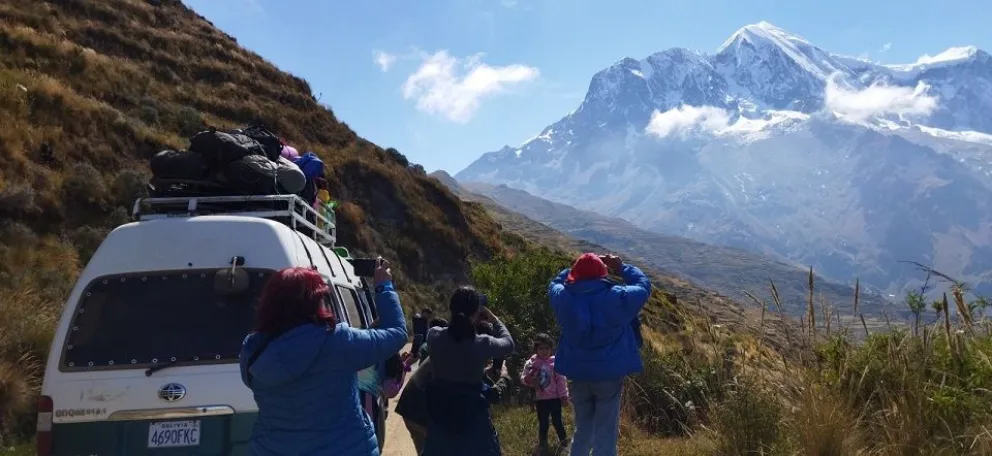
“The stops along the journey toward Illimani allow for views of the giant from different places.” —Photo: Katherine Fernández
“Instead of placing orders in the city, we started taking people to the countryside. Instead of renting a classroom, we rented a bus and went out to harvest, visit greenhouses, and observe the entire production dynamic…”
Today, dozens of small-scale farmers are part of “agrotourism” destinations that help generate income while teaching visitors about healthy eating and environmental care in various regions of La Paz.
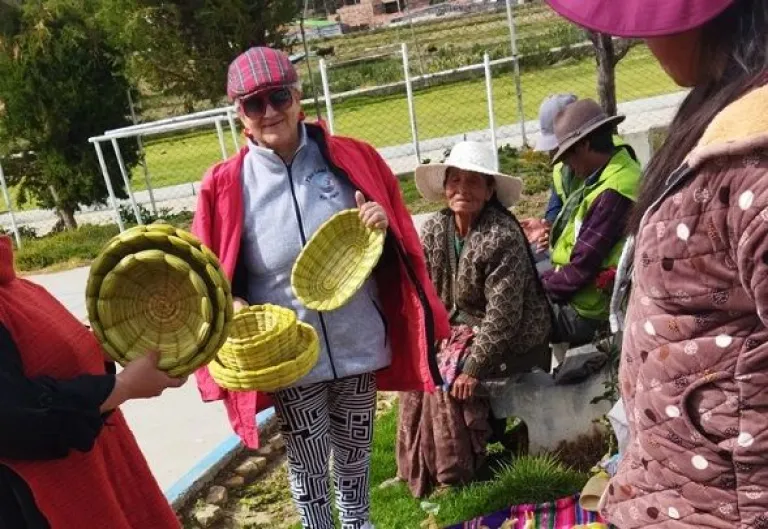
That’s how Katherine Fernández, founder and promoter of the Red Polinizar (Pollinate Network), explains it. The network now includes over 100 small food producers and their families, supported by local authorities or communities. They offer trips they call “agrotourism” because they combine leisure with educational activities related to local production, such as harvesting, preparing food, making chocolate, extracting honey, or weaving totora reeds, for example.
The destinations can be quite close—day trips from the city of La Paz—or they may require several nights away, depending on the season, the time needed for the activities, and how many “visitors” are willing to make the journey.
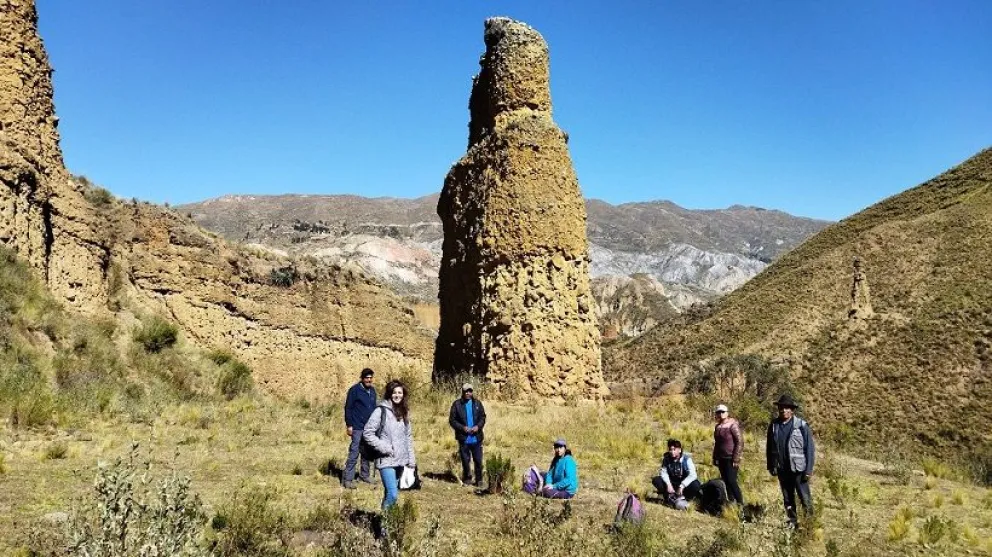
At these places, guests can eat food provided by the hosts, pay for lodging or a camping space, and many are eager to buy products directly from the producers.
A 10-Year Journey
Fernández says the project started a decade ago, though with a different approach. It began as a proposal to the Postgraduate Program in Development Sciences (CIDES) at the Universidad Mayor de San Andrés (UMSA), aiming to create spaces or local fairs for women producers in peri-urban areas.
“In addition to managing the spaces—which was difficult with the city government—we transformed the marketing method because using the streets was complicated. Some neighbors opposed it, though others supported us because they wanted a fair. It was a long journey—roughly 10 years,” Fernández recalled.
The initiative aimed to raise awareness about nutrition, connect producers with consumers, and address the climate crisis.
The turning point came in 2014 thanks to a producer. Doña María Villanueva, from the Chinchaya community in the Hampaturi district of La Paz, formed a women’s group that participated in a greenhouse project. “It was a key, historic moment for us.” That’s when the agro-trips began. Over time, those who joined saw that agrotourism produced good results. Visitors even bonded with the women and bought their products. That’s when a network of travelers began to take shape.
“As we promoted agrotourism trips, other families and even local leaders approached us, wanting to do the same in their areas, which ranged from Lake Titicaca to the Amazon. So a network of families began organizing tourism,” Fernández explained.
Planning the Experience
Before each new destination is launched, organizers visit the area to plan how visitors will be received—covering length of stay, food, lodging, and complementary activities.
The host family or community decides what kind of activities they can offer—such as planting, harvesting, or other farming tasks. They also serve meals that reflect local agriculture and ingredients.
“Every detail has been carefully designed to uphold the spirit of authentic agrotourism. In 2021, after the pandemic, we resumed the trips with some biosecurity measures. By then, it was a departmental network, so we named it Red Polinizar(Pollinate Network). The idea is that each destination is a flower, and agrotourists are like pollinators—bees going from community to community. We want this idea of climate-conscious consumption to spread,” she said.
“We’re always trying to innovate in how we promote the trips so more people will sign up and help with tasks in the countryside,” added Katherine Fernández, Red Polinizar.
Though establishing each destination can be challenging, they now have 28 across the La Paz department, with over 100 farming families participating. They serve as guides, cooks, speakers, and suppliers of equipment such as tents and mattresses—and, of course, they sell their products.
The Destinations
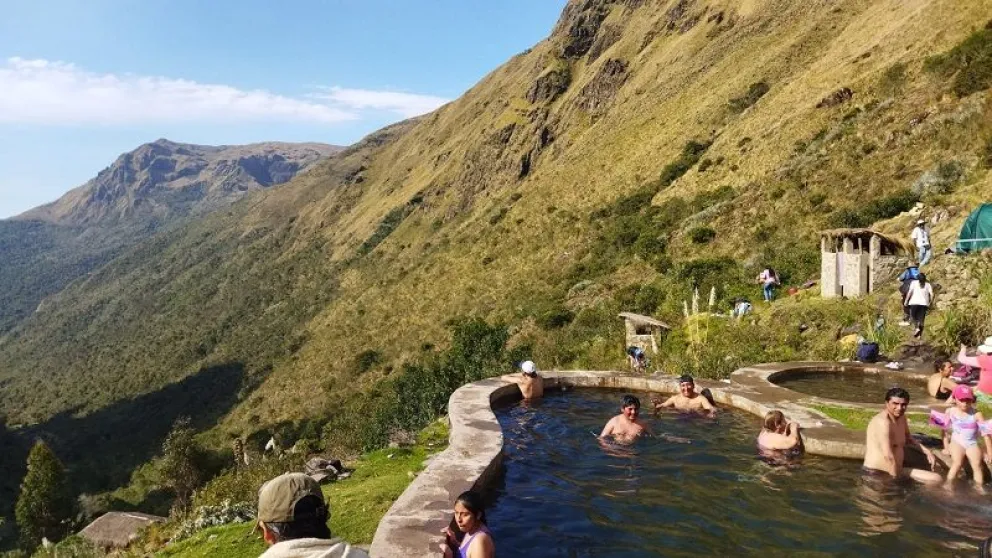
One of the latest trips launched by Red Polinizar was to the Aguas Calientes community in Quime. Tourists enjoyed hiking, landscapes, hot springs, and local food. Pets were allowed on the trip, which included visits to the town of Quime and the Huayñacota Lagoon. The cost was 150 bolivianos per person.
That covered transportation, guide, first-aid kit, pool entry, and a refreshment or coffee. Travelers could bring their own food, or buy a special meal for 35 bolivianos.
The round-trip was completed in a day and was suitable for all ages. Though a 45-minute walk was planned, the pace was relaxed. Children under five didn’t pay.
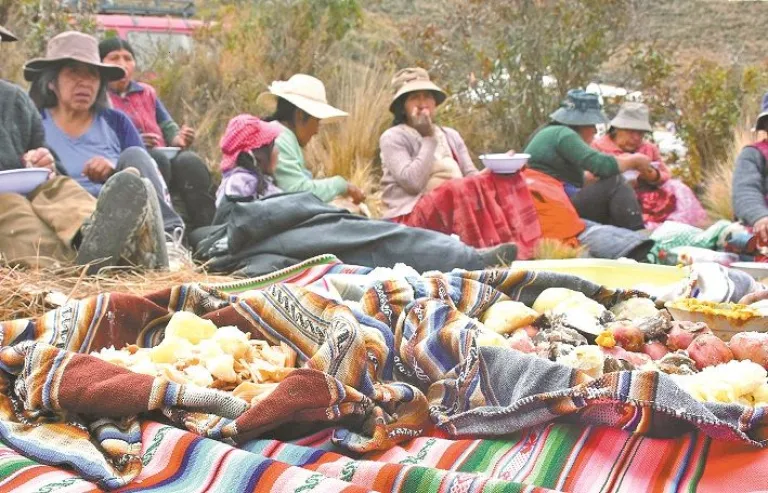
“Each destination is an incredible story, one that communities and families have built. Sometimes we move forward quickly, sometimes we step back. But the network has been woven together through effort. The goal is for consumers in La Paz—our agrotourists—to visit the countryside, remember forgotten foods, and realize we’re losing culinary heritage, both in consumption and production. Farmers are trying new things, and many nutritious traditional foods are being lost,” Fernández noted.
For the last weekend of July, the network offered a trip to San Isidro, in Teoponte. This one cost 210 bolivianos because it was farther away and included two days and one night.
The price included a tropical-style breakfast, departure from La Paz on Friday night to arrive early Saturday morning, a guide, first-aid kit, and natural drinks.
“We make open calls, but there are also organized groups: students, thesis researchers—even religious delegations—that request trips,” said Fernández.
Agrotourists can bring their tents or book lodging space, as the community offers rooms for overnight stays. One of the activities in this trip included making chocolate from cacao.
One important rule for all trips: travelers must bring their own utensils—cups, plates, and cutlery. Disposable items are not allowed, and no trash should be left behind.
Cañahua, raw cacao, honey, aromatic and medicinal herbs, purple corn, and native potatoes are just some examples of the food heritage offered to visitors by hosting producers.
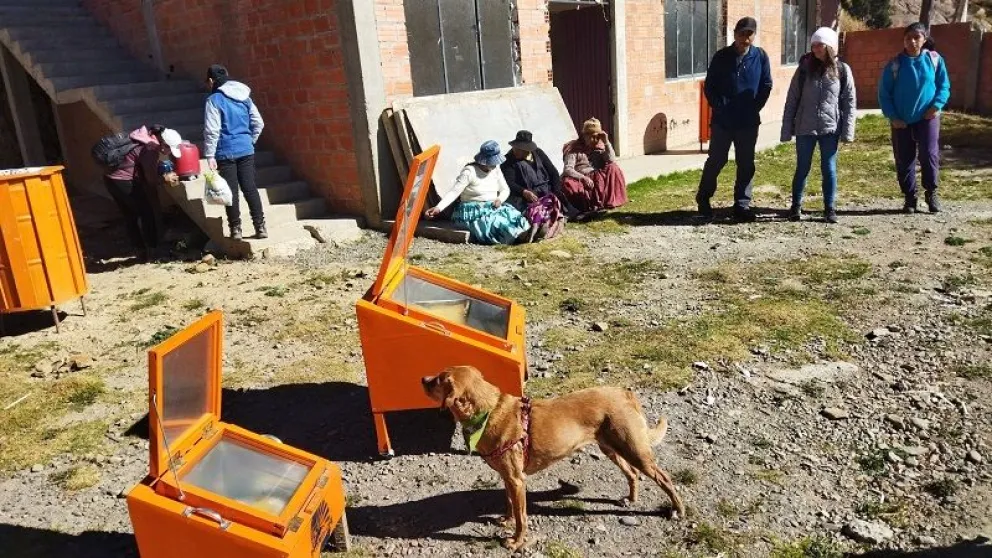
Trips cover a range of locations: Yungas communities to experience coffee, honey, or cacao; Altiplano villages; islands on Lake Titicaca; lessons in using solar cookers; and communal aphtapis or watías (traditional earth oven meals).
To join an agro-trip, call 72525914 or find Red Polinizar on social media.
Por Mirna Echave Mallea, Visión 360:
Paseos con actividades variadas
El turismo, de la mano de agricultores, permite nuevas experiencias a los viajeros y mejores ingresos a quienes procuran los alimentos para la ciudad de La Paz.
Las paradas en el viaje hacia el Illimani permiten ver al gigante desde diferentes sitios. Foto: Katherine Fernández
“En vez de hacer los pedidos en la ciudad, empezamos a llevar gente al campo; en vez de contratar un aula, contratamos un bus y nos fuimos a cosechar, a ver los invernaderos, a ver toda la dinámica productiva…”.
Hoy, decenas de pequeños productores forman parte de los destinos “agroturísticos” que les permiten captar algunos ingresos y, a cambio, enseñan sobre alimentación saludable y el cuidado medioambiental de regiones diversas de La Paz.
Lo cuenta Katherine Fernández, fundadora y promotora de la Red Polinizar, a la que hoy se han sumado más de 100 pequeños productores de alimentos y sus familias, con apoyo de sus autoridades o comunidades. Lo hacen a través de viajes a los que llaman agroturísticos, porque combinan el beneficio de un paseo con charlas y actividades educativas relacionadas con la producción local, como el cosechar, preparar alimentos, hacer chocolate, extraer miel o tejer totora, por ejemplo.
Los sitios que se visitan pueden ser muy cercanos y tal vez necesiten de solo un día para la ida y retorno, desde la ciudad de La Paz, o pueden requerir el quedarse varias noches. Todo depende de la época, el tiempo necesario para las actividades y de la cantidad de “visitantes” animados a hacer la travesía.
En esos lugares, la gente puede consumir alimentos de los anfitriones, pagar hospedaje o el espacio para acampar y muchos se animan a comprar los productos directamente de los proveedores.
10 años
Fernández cuenta que el proyecto nació hace una década, aunque con una perspectiva diferente. Fue planteado ante el Posgrado en Ciencias del Desarrollo (Cides), de la Universidad Mayor de San Andrés (UMSA), y propuso promover espacios o ferias locales para productoras de áreas periurbanas.
“Además de gestionar los espacios, que fue muy duro hacerlo con la alcaldía, transformamos el método de comercialización porque era muy difícil usar las calles; a veces se nos oponían vecinos, aunque otros ayudaban porque querían una feria y, en fin, fue una travesía larga, deben ser más o menos 10 años de esto”, contó Fernández.
El trabajo buscaba sensibilizar a la gente sobre la alimentación, sobre acercar al productor con el consumidor y sobre el tema de la crisis climática.
El cambio se dio en 2014, después de una iniciativa de parte de una productora. Doña María Villanueva, de la comunidad Chinchaya, del macrodistrito paceño Hampaturi, organizó un grupo de mujeres con las que participó de un proyecto sobre invernaderos, “fue un momento clave, histórico para nosotras”. Así empezaron los agroviajes y, con los años, dijo, quienes apostaron por el emprendimiento vieron que el agroturismo tenía buenos resultados; incluso la gente se encariñaba con las productoras y compraban sus productos. Entonces se creó una red de viajeros.
“Como promocionábamos los viajes de agroturismo, se acercaron otras familias de otras comunidades, inclusive dirigentes, a plantearnos que querían hacer algo similar en sus zonas, zonas completamente diferentes a la agricultura periurbana, que van desde el lago Titicaca hasta la Amazonia; entonces se fue conformando una red de familias que empezaron a organizar turismo”, sostuvo Fernández.
Planificación
Antes de cada nuevo destino, los responsables visitan el lugar y planifican la recepción a los visitantes, el tiempo que se necesita para su estadía, alimentos, alojamientos y actividades que complementarán el paseo.
La familia anfitriona o la comunidad ven qué tipo de actividades pueden brindar; por ejemplo, sembrar, cosechar o ayudar en otras tareas que tengan que ver con la agricultura. De la misma manera, deben ofrecer una comida que refleje la agricultura local, con sus productos.
“Se fue trabajando detalle por detalle todo el espíritu de un agroturismo que sea consecuente y así llegó el año 2021, después de la pandemia, que estábamos todavía con algunas medidas de bioseguridad, y retomamos. Ya era una red departamental, entonces le pusimos este nombre de Red Polinizar, y se basa fundamentalmente en que cada destino es una flor y todos los agroturistas que van participando se van uniendo. Siempre hay gente nueva, son los agentes polinizadores, son los bichitos que van de comunidad en comunidad y queremos que se reproduzca este pensamiento del consumo climáticamente responsable”, dijo.
“Siempre estamos tratando de buscar formas de innovar la promoción para que más gente se adscriba y puedan seguir viajando con este objetivo, y ayudar en el campo a todas las tares”, dijo Katherine Fernández de Red Polinizar.
Aunque admite que consolidar cada destino a veces es un poco complejo, ahora ya cuentan con 28 dentro del departamento de La Paz, con más de un centenar de familias productoras que participan de todo el proceso, hacen de guías, cocineros, oradores, alquilan carpas, colchones, venden sus productos y más.
Los destinos
Uno de los últimos viajes que estrenó la Red Polinizar fue a la comunidad Aguas Calientes, de Quime, donde los turistas disfrutaron de caminata, paisajes, aguas termales y alimentación local. El paseo, en el que se admitió la participación de mascotas, contó con la visita a la población de Quime y a la laguna Huayñacota tuvo un costo de 150 bolivianos por persona.
El pago cubre transporte, guía, botiquín, ingreso a la piscina, refresco y café. El visitante puede llevarse comida, pero si desea probar el plato especial, esta cuesta 35 bolivianos.
Este viaje, de ida y vuelta en el mismo día, estaba recomendado para personas de toda edad, ya que, aunque se calculaba una caminata de 45 minutos, no demandaba mucho esfuerzo y se realizó al ritmo de quienes participaron. Y algo más, los menores de cinco años no pagaron el pasaje.
“Cada destino es una historia increíble, una historia que las comunidades, las familias han ido forjando; a veces se avanza rápido, a veces se retrocede, en fin, pero es un trabajo que ha tejido esta Red y la idea es que los consumidores de La Paz, nuestros agroturistas, vayan al campo, se convenzan y recuerden alimentos, porque muchos son olvidados y estamos perdiendo patrimonio alimentario, tanto en el consumo como en la misma producción. Los agricultores también están innovando cosas y se olvidan muchos alimentos que los abuelos consumían, que tienen alto valor nutricional”, comenta Fernández.
Este último fin de semana de julio, la Red habilitó un viaje a San Isidro, en Teoponte. En este caso, el costo es de 210 bolivianos debido a que es más lejano y requiere de dos días y una noche para concretarlo.
El costo cubre el desayuno “estilo tropical”, la salida desde La Paz la noche del viernes, para llegar la madrugada del sábado a esta localidad. Se incluye la guía, el botiquín y jugo o refresco natural para todo el viaje.
“Se hacen convocatorias abiertas, también hay delegaciones solicitantes, estudiantiles, grupos de tesista; en fin, que solicitan, incluso religiosos que solicitan viajes, y van en delegaciones también”, dijo Fernández.
Los agroturistas pueden llevar sus carpas para acampar o reservar un espacio para la estadía, porque la comunidad habilita habitaciones para el alojamiento. Entre las actividades de esta visita, está la preparación de chocolate a partir del cacao.
Un aspecto importante para este y para todos los viajes, es que los administradores piden a los viajeros que lleven sus propios implementos, sus vasos, platos y cubiertos, nada desechable y se recomienda que no se deje ninguna basura en el campo.
Cañahua, cacao en su estado natural, miel, hierbas aromáticas y medicinales, maíz morado y papas de diferentes especies, son solo ejemplos de la amplia gestión alimentaria de la Red, la que se ve en las mesas de los productores anfitriones, como parte de la oferta para los visitantes.
Los viajes son a diferentes comunidades de los Yungas, para ver y extraer café, miel o cacao. Se viaja a comunidades del Altiplano, islas del lago Titicaca, se enseña el uso de cocinas solares y hasta se comparten aphtapis o watías.
Para sumarse a los agroviajes pueden llamar al 72525914 o buscar a la Red en redes sociales.

 Bolivian Thoughts | Pensamientos Bolivianos (Bilingual/Bilingüe)