
By Fernando Chávez, Vision 360:
Sernap, ABT, and the Ministry of Environment and Water filed appeals against a resolution by the Agro-Environmental Court that protects this species.
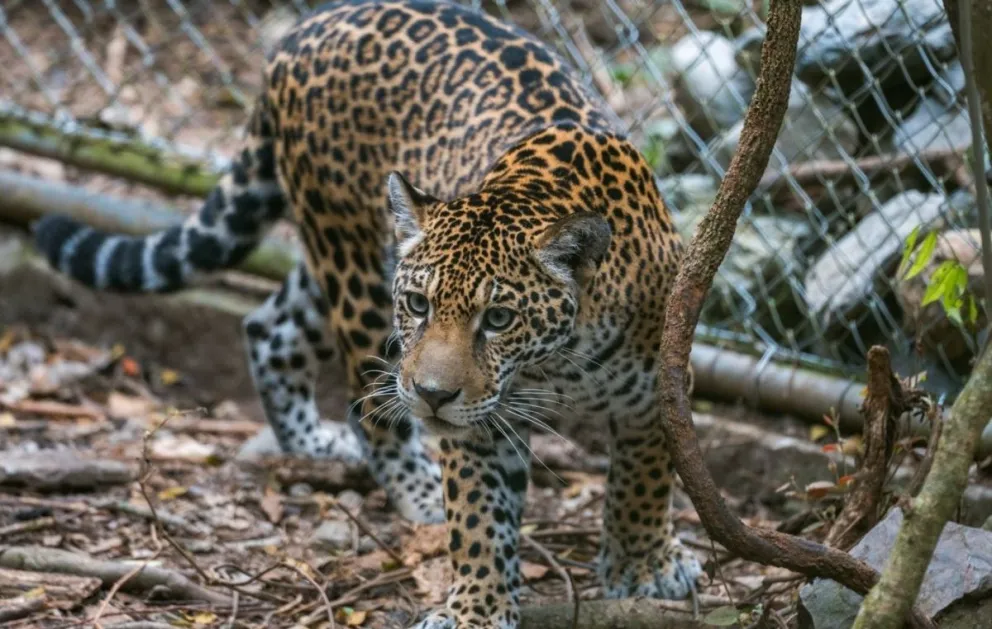
A jaguar in an archive image. Photo: Senda Verde
Last April, a ruling by the Agro-Environmental Court established the protection of the jaguar’s habitat. However, three months later, the Forest and Land Authority (ABT), the National Service of Protected Areas (Sernap), and the Ministry of Environment and Water (MMAA) filed legal motions to overturn this decision, according to a denouncement by Vivian Molina, president of the College of Forestry Engineers of Santa Cruz.
“What surprises me the most is Sernap, because protected areas fall under its jurisdiction. The consequences are disastrous, like what happened last year with the fires. This is a legal setback and a blow to environmental protection and the right of all Bolivians to a healthy environment,” Molina told Bolivisión.
The forestry engineer also denounced that these actions coincide with the season when land-clearing fires begin. “Why weren’t these actions taken when the agrarian court issued its resolution? It raises doubts,” she questioned.
The College of Environmental Engineers of Santa Cruz, the College of Biologists, the environmental collectives Alas Chiquitanas, the Movement in Defense of the Tucabaca Valley, and the Ñandé Foundation have joined the denouncements.
“We call on citizens, Indigenous communities, universities, scientists, media outlets, and international organizations to remain alert and raise their voices in defense of this resolution and our rights,” they stated in a public declaration.
According to the report, the entities in question filed three appeals for annulment (cassation), one from the Ministry of Environment, another from the ABT, and a third from Sernap.
From Sernap’s offices in Santa Cruz, it was indicated that these actions are handled by the legal department at the central offices in La Paz, and no further details were given. In La Paz, a staff member from the legal department said they “need authorization” from the director of the entity to answer journalists’ inquiries, and after a second call, there was no response.
The College of Forestry Engineers denounced that the three named entities have requested the annulment of a resolution issued by the Agro-Environmental Court, which granted precautionary measures for the jaguar and its habitat.
“This is a serious setback in environmental rights and violates the principle of non-regression that is internationally recognized,” said the professional association.
On April 24, in a 12-point resolution, the Agro-Environmental Court ordered an ecological pause on burning and land-clearing fires and the suspension of fire authorizations and anthropic activities (mining, hydrocarbon extraction, and others).
It also held the first public hearing on preventive precautionary measures in defense of this species and its surroundings.
“An ecological pause is ordered for extractive anthropic activities within national, departmental, municipal, and Indigenous protected areas, impacting the biological corridor of the jaguar and its conservation units,” stated point 10 of the ruling.
Por Fernando Chávez Virreira, Visión 360:
El Sernap, la ABT y el Ministerio de Medio Ambiente y Agua interpusieron recursos contra una resolución del Tribunal Agroambiental que protege a esa especie.
Un jaguar en una imagen de archivo. Foto: Senda Verde
En abril pasado, un fallo del Tribunal Agroambiental estableció la protección del hábitat del jaguar, sin embargo, tres meses después, la Autoridad de Bosques y Tierra (ABT), el Servicio Nacional de Áreas Protegidas (Sernap) y el Ministerio de Medio Ambiente y agua (MMAA) presentaron recursos judiciales para anular esta decisión, según denunció Vivian Molina, presidenta del Colegio de Ingenieros Forestales de Santa Cruz.
“Me sorprende más que todo el Sernap, porque las áreas protegidas están bajo su jurisdicción, las consecuencias son nefastas, como lo que ocurrió el año pasado con los incendios; es un retroceso legal y a todo lo que es la protección del medio ambiente y a lo que tenemos derecho todos los bolivianos, que es un ambiente sano”, expresó Molina en declaraciones a Bolivisión.
La ingeniera forestal denunció que, además, estas acciones se presentan coincidiendo con la época del año en la que comienzan los chaqueos. “Por qué no se iniciaron esas acciones cuando el tribunal agrario emitió su resolución, nos hace dudar”, cuestionó.
A las denuncias se han unido el Colegio de Ingenieros Ambientales Santa Cruz, Colegio de Biólogos, los colectivos ambientales Alas Chiquitanas, el Movimiento en defensa del Valle de Tucabaca y la Fundación Ñandé.
“Hacemos un llamado a la ciudadanía, comunidades indígenas, universidades, científicos, medios de comunicación y organizaciones internacionales a mantenerse alerta y alzar su voz en defensa de dicha resolución y de nuestros derechos”, dijeron en un pronunciamiento.
Según reporta ese medio, las entidades señaladas interpusieron tres recursos de casación, el primero por parte del Ministerio de Medio Ambiente, un segundo por la ABT y otro por parte del Sernap.
Desde las oficinas del Sernap en Santa Cruz indicaron que esas acciones dependen del departamento jurídico en las oficinas centrales en La Paz y no dieron más detalles. En La Paz, un funcionario de esa dirección jurídica indicó que “necesita autorización” del director de la entidad para responder a las consultas de los periodistas y ante una segunda llamada, no respondieron.
El Colegio de Ingenieros Forestales denunció que las tres entidades señaladas han pedido la anulación de una resolución emitida por el Tribunal Agroambiental, que brindaba medidas cautelares para el jaguar y su hábitat.
“Es un grave retroceso en los derechos ambientales y atenta contra el principio de no regresión que está reconocido internacionalmente”, dijeron desde ese colegiado.
El 24 de abril, en una resolución de 12 puntos, el Tribunal Agroambiental dispuso la pausa ecológica por quemas y chaqueos y la suspensión de autorizaciones de incendios, actividades antrópicas (minería, explotación de hidrocarburos y otras).
Además, realizó la primera audiencia pública sobre medidas cautelares preventivas en defensa de esta especie y su entorno.
“Se dispone pausa ecológica para actividades antrópicas extractivas dentro de áreas protegidas nacionales, departamentales, municipales e indígenas, con incidencia en el corredor biológico del jaguar y sus unidades de conservación”, establecía el punto 10 de ese fallo.

 Bolivian Thoughts | Pensamientos Bolivianos (Bilingual/Bilingüe)