
By El Diario:
- The fixed exchange rate of the dollar has been surpassed by the parallel market, as it reflects a devaluation of the boliviano by more than 80%.
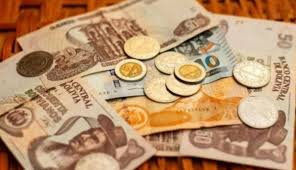
The dollar crisis has driven up the prices of all products. Inflation nearly reached double digits in 2024, and the purchasing power of the boliviano has been losing its value. The most affected are the most vulnerable families, but also retirees, who do not receive annual wage increases.
Inflation in 2024 reached 9.97%, according to data from the National Institute of Statistics (INE); however, economists indicate that the figure was actually higher, possibly exceeding 12%.
The Government projected an inflation rate of 7.5% for the current year, but by March the accumulated figure had already reached 5%, around 63% of what national authorities had estimated. Economists such as Gabriel Espinoza and Mauricio Ríos have warned that the percentage could surpass 20%.
Analysis
“Saving in dollars with my AFP, that’s what I would’ve liked,” is the headline of an opinion article by hydrocarbons sector analyst Mauricio Medinaceli Morroy, as he evaluates the devaluation of his savings due to the situation of the U.S. dollar. Despite the official exchange rate remaining fixed, the parallel market continues to gain ground.
“The reason is very simple. Imagine that in the year 2020 you check your AFP account statement and happily see Bs 100,000. You do the math (with an exchange rate of Bs 6.96 per $1) and find that you have a little over 14,000 U.S. dollars,” he writes. He adds, “now, in the year 2025, you check your account statement and you have Bs 120,000. You do the math (with an exchange rate of Bs 13.5 per $1) and find that you have a little over 8,800 U.S. dollars.”
His retirement savings have fallen (using the parallel market dollar rate) by nearly 40%, he stated. The story would have been different if one had the chance to tell the AFP: “Ms. AFP, please convert all my contributions to dollars and manage my retirement fund in USD, even with a very low return.”
He reflects by saying that (…) the whole country was hypnotized by an extravagant concept called “bolivianization.” Now we are living with its consequences.
Devaluation
The president of the Honor Tribunal of the National Confederation of Retirees of Bolivia, Moisés Plaza, states that retirees’ pensions have been reduced due to the increase in the prices of basic goods. This hits the sector hard, as they do not receive salary increases, and most feel the devaluation of their pensions since it is not enough to cover their expenses.
He reported that next Tuesday the 22nd, his sector will hold a national assembly attended by representatives from across the country.
In a previous interview, pension analyst Alberto Bonadona lamented that retirees see their pensions shrink due to the devaluation of the bolivian currency. For that reason, he suggested that a way should be found to preserve the value of pensions, such as using the Housing Promotion Unit (UFV) as a reference to avoid loss of value.
Options
Given this outlook, Medinaceli comments: “in conversations/discussions with friends (and not-so-friends) about why the State forces us to save through an AFP or any other institution,” he asks: “Wouldn’t it be more sensible for each person to save as they wish? And in whatever form they wish? That is, in dollars, euros, houses, etc.”
He explains that arguments in favor of State intervention usually go along these lines: “if we don’t force people to save, they won’t save”; “the old system was better, the problem is individual capitalization”; “retirement is a right that we must not give up.”
Meanwhile, those who oppose it argue: “people know better how to save, rather than a State bureaucrat”; “it restricts my freedom to do what I want with my money”; “when I manage my retirement fund, I do it better.”
In this regard, he points out that many Latin Americans see retirement contributions as just another tax, and that’s why they decide to save in “bricks,” that is, in real estate: one property to live in and another to rent out.
“Retirement fund stories around the world are generally horror stories. Governments mismanaging them, private companies stealing them, bad investment decisions by fund managers, loss of value, a declining asset/liability ratio (because there are more and more retirees receiving money and fewer young people contributing), etc.,” he said.
The truth is that, for now, the purchasing power of Bolivians who have savings in AFPs has dropped by 40%… and counting; so start thinking about those ‘bricks’ I mentioned earlier, he concludes.
Wage Increase
Meanwhile, the formal labor sector is calling for a wage increase, based on the inflation registered in 2024. But what about the official figure? They are demanding a 15% increase to the national minimum wage and 20% for the base salary.
In 2023, accumulated inflation was 2.12%, and the increase to the national minimum wage was 5.8%, raising it to 2,500 bolivianos, while the base salary increase was only 3%. Economists said the percentage corresponds to the reality of inflation and not the official statistical data.
Por El Diario:
- El tipo de cambio fijo del dólar fue superado por el mercado paralelo, ya que registra una devaluación del boliviano de más del 80%.
La crisis del dólar movió todos los precios de los productos. La inflación casi llegó a dos dígitos en 2024 y el poder adquisitivo del boliviano fue perdiendo su valor, los más afectados son las familias más vulnerables, pero también los jubilados, que no reciben aumento salarial cada año.
La inflación en 2024 alcanzó a 9,97%, de acuerdo con el dato del Instituto Nacional de Estadística (INE); sin embargo, los economistas señalan que la cifra fue más, inclusive podría haber llegado a más de 12%.
El Gobierno proyectó para la presente gestión 7,5% de inflación, pero a marzo la cifra acumulada llegó a 5%, alrededor del 63% de lo estimado por las autoridades nacionales. Economistas como Gabriel Espinoza y Mauricio Ríos anunciaron que el porcentaje podría pasar el 20%.
Análisis
“Ahorrar en dólares con mi AFP, eso me hubiera gustado”, titula el artículo de opinión del analista del sector hidrocarburos, Mauricio Medinaceli Morroy, cuando evalúa la devaluación que registraron sus ahorros por la situación de la divisa estadounidense, que a pesar de que se mantiene un tipo de cambio fijo, el paralelo va ganando terreno.
“La razón es muy sencilla. Imagine que el año 2020 usted revisa el estado de su cuenta en la AFP y observa, feliz, Bs 100,000. Hace los cálculos (con un cambio de Bs 6.96 x 1 $us) y resulta que tiene algo más de 14,000 dólares americanos”, señala y agrega que “ahora, el año 2025, revisa su estado de cuenta y tiene Bs 120,000, hace los cálculos (con un cambio de Bs 13.5 x 1 $us) y resulta que tiene un poco más de 8,800 dólares americanos”.
Sus ahorros para la jubilación cayeron (utilizando el dólar del mercado paralelo) en casi 40%, sostuvo. La historia hubiera sido otra si uno tenía la oportunidad de decirle a la AFP: “Sra. AFP, todos mis aportes, por favor, conviértalos a dólares y administre mi fondo de jubilación en $us. Aún con un rendimiento muy bajo”.
Reflexiona al indicar que (…) todo el país estaba hipnotizado con un concepto extravagante llamado: “bolivianización”. Ahora vivimos sus consecuencias.
Devaluación
El presidente del Tribunal de Honor de la Confederación Nacional de Jubilados de Bolivia, Moisés Plaza, sostiene que la renta de los jubilados se ha reducido por el incremento de precios de los productos de la canasta familiar, golpea al sector duramente debido a que no cuentan con aumentos salariales y la mayoría siente la devaluación de sus pensiones, ya que no alcanza para las compras.
Informó que el próximo martes 22 su sector realizará un ampliado, al cual asistirán todos los representantes de todo el país.
En una entrevista anterior, el analista del sector de pensiones Alberto Bonadona lamentó que los jubilados vean reducir sus rentas por la devaluación de la moneda boliviana, por ello indicó que se debería buscar la forma para mantener el valor, como tener de referencia a la Unidad de Fomento a la Vivienda (UFV) para evitar la pérdida del valor de la renta.
Opciones
Ante ese panorama, Medinaceli observa al indicar que “en conversaciones/discusiones, con amigos (y no tan amigos) sobre el porqué el Estado nos obliga a ahorrar con una AFP o cualquier otra institución. Se pregunta: ¿No sería más sensato que cada uno ahorre lo que quiera? y ¿en la forma que uno quiera? es decir, en dólares, euros, casas, etc.”.
Detalla que los argumentos a favor de la intervención del Estado usualmente van con las siguientes frases: “si no obligamos a la gente a ahorrar, la gente no ahorra”; “el antiguo sistema era mejor, el problema es la capitalización individual”; “la jubilación es un derecho, al que no debemos renunciar”.
Entretanto, los que van en contra señalan: “las personas saben mejor cómo ahorrar, en lugar que un burócrata del Estado”; “corta mi libertad de hacer con mi dinero lo que me dé la gana”; “cuando yo administro mi fondo de jubilación, lo hago mejor”.
En este sentido, señala que muchos latinoamericanos consideran que el aporte a la jubilación es un impuesto más, por ello deciden ahorrar con “ladrillos”, es decir con propiedades: una para vivir y la otra para alquilar.
“Las historias de los fondos de jubilación en el mundo, en general, son de terror. Gobiernos administrándolos mal, robos de empresas privadas, malas inversiones de sus administradores, pérdida de valor de dichos fondos, relación activos/pasivos en constante caída (porque cada vez somos más viejos los que recibimos dinero y menos jóvenes los que aportan), etc.”, aseguró.
Lo cierto es que, por ahora, el poder adquisitivo de los bolivianos que tenemos ahorros en las AFP cayó en 40% y contando; así que comience a pensar en esos “ladrillos” que mencioné previamente, concluye.
Aumento salarial
Entretanto, el sector laboral formal va por un aumento salarial, cuya base es la inflación registrada el 2024, pero qué pasa con el dato oficial, pues piden un 15% para el salario mínimo nacional y 20% para el básico.
En 2023, la inflación acumulada registró 2,12% y el aumento al mínimo nacional fue de 5,8%, es decir subió a 2.500 bolivianos, mientras que el básico sólo fue de 3%. Los economistas indicaron que el porcentaje obedece a la realidad de la inflación y no al dato estadístico oficial.

 Bolivian Thoughts | Pensamientos Bolivianos (Bilingual/Bilingüe)