
By Jorge Soruco, Vision 360:
Some recipes were lost due to cost
Representing the 12 apostles who accompanied Jesus at the Last Supper, the traditional dishes of the holiday boast Bolivian flavor.
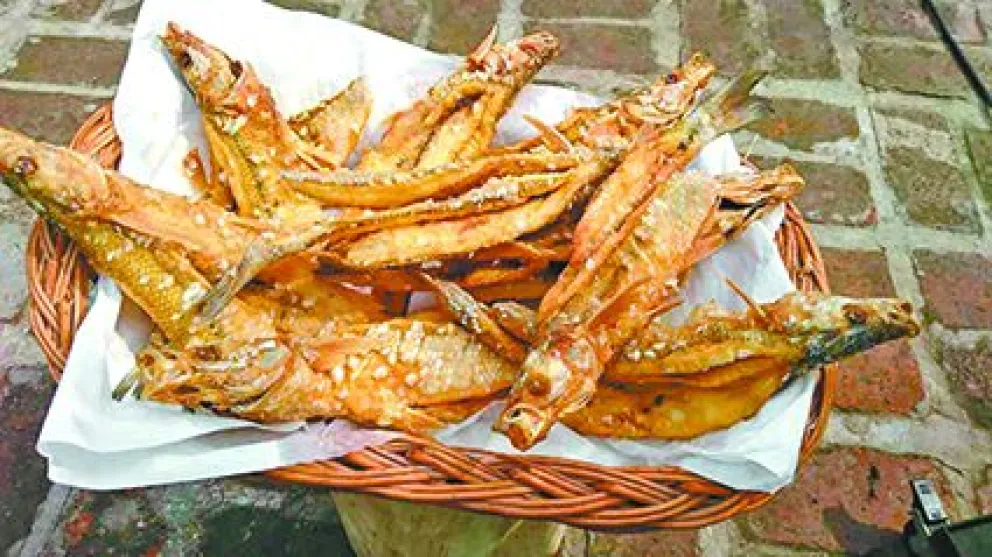
Fish is one of the main ingredients of the occasion. PHOTO: YouTube
Holy Week arrives, and both believers and non-believers start planning a special menu for Good Friday. According to tradition, not only is red meat discouraged, but one can also prepare up to 12 traditional dishes.
There are many versions of when this custom began and the reasons behind it. According to the Catholic.net portal, debates about meat consumption were already taking place in the 4th century AD.
Meanwhile, a research project by the La Paz City Government, La Gastronomía Paceña en el Ciclo Festivo y Cotidiano(La Paz Cuisine in the Festive and Daily Cycle), estimates that the tradition of the 12 dishes in the seat of government arose in the mid-19th century.
According to historical studies, the Catholic Church’s prohibition on eating meat stemmed from the need to practice austerity, in keeping with the most important celebration on the religious calendar. This was to avoid “falling into the deadly sin of gluttony,” according to the municipal study.
There’s some truth to it, since for a long time, meat was an expensive food, a sign of prosperity.
On the other hand, while the ban focused on meat, the Church also opposed the preparation of lavish meals, regardless of the ingredients, to emulate Jesus’ austerity.
The tradition of the 12 dishes is also part of the Christian belief system. It is said that a meal with this number of preparations evokes the Last Supper Jesus shared with his apostles. Each dish is said to represent one of the disciples.
It is also a family and collective tradition. Friends, neighbors, and relatives were usually invited after the Holy Thursday and Good Friday fasts. Ideally, the meal would be shared with the same number of guests.
Recipes vary from city to city. Over time, and due to the ups and downs of the national economy, changes have occurred. In fact, even the Church lifted the meat ban due to the nutritional needs of its followers.
In La Paz, for example, the number of dishes has been reduced to between eight and six. One reason is the disappearance of dishes like Caldo de Bacalao and Camaroncillo, both due to the rising cost and limited availability of their ingredients.
Still, desserts are almost mandatory, and if possible, families continue enjoying some recipes that have been around for two centuries.
1. To start, nothing like ají or sajta de papalisa, depending on the region
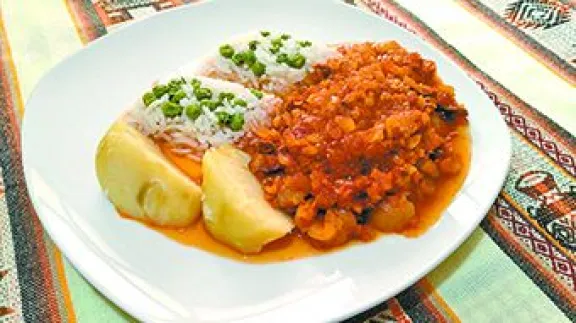
Ají de papalisa is available in various versions, with or without meat. Of course, essential is the papalisa itself, also known as olluco or melloco in other South American countries.
This tuber is accompanied by an ají or sauce made from various ingredients. It is usually served with white rice and boiled potatoes.
2. Squash carbonara, a Bolivian tradition with an Italian twist
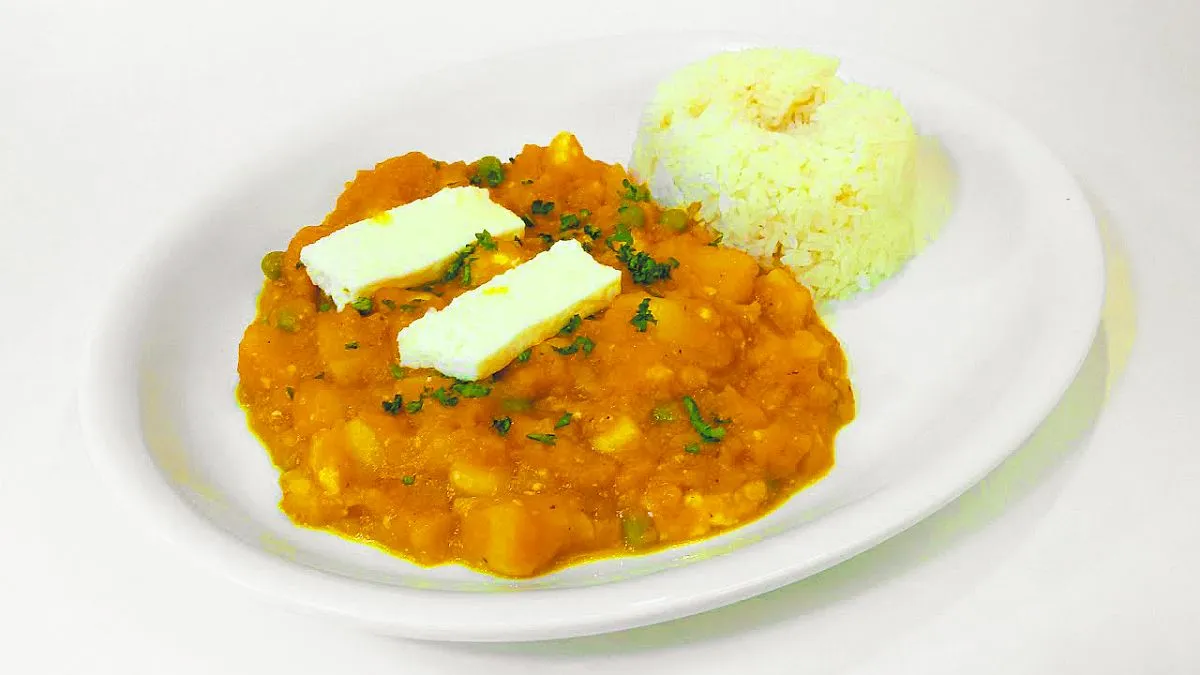
Also known as carbonara boliviana, this dish is a squash purée served with sautéed vegetables, corn slices, yellow chili stew, tomato, and onion. It may be topped with grated cheese and chopped parsley.
Some cooks prepare it inside the squash itself, for a special touch. Depending on the region, it may be spicier.
3. Nearly disappeared, ají de cochayuyo is a heritage dish of La Paz and the lake
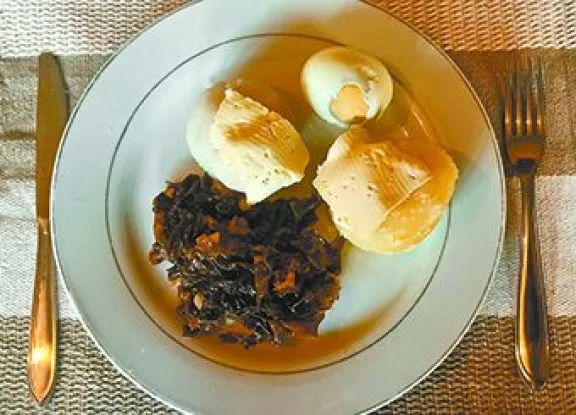
Ají de cochayuyo or simply cochayuyo is made with algae harvested from Lake Titicaca, and served with tunta(dehydrated potato), cheese, and hard-boiled egg. The algae are sautéed with chopped onion and yellow chili, though red chili can also be used. It typically doesn’t include meat, but in some regions, fish or seafood is added when affordable.
4. Queso Humacha, a dish that gained international recognition
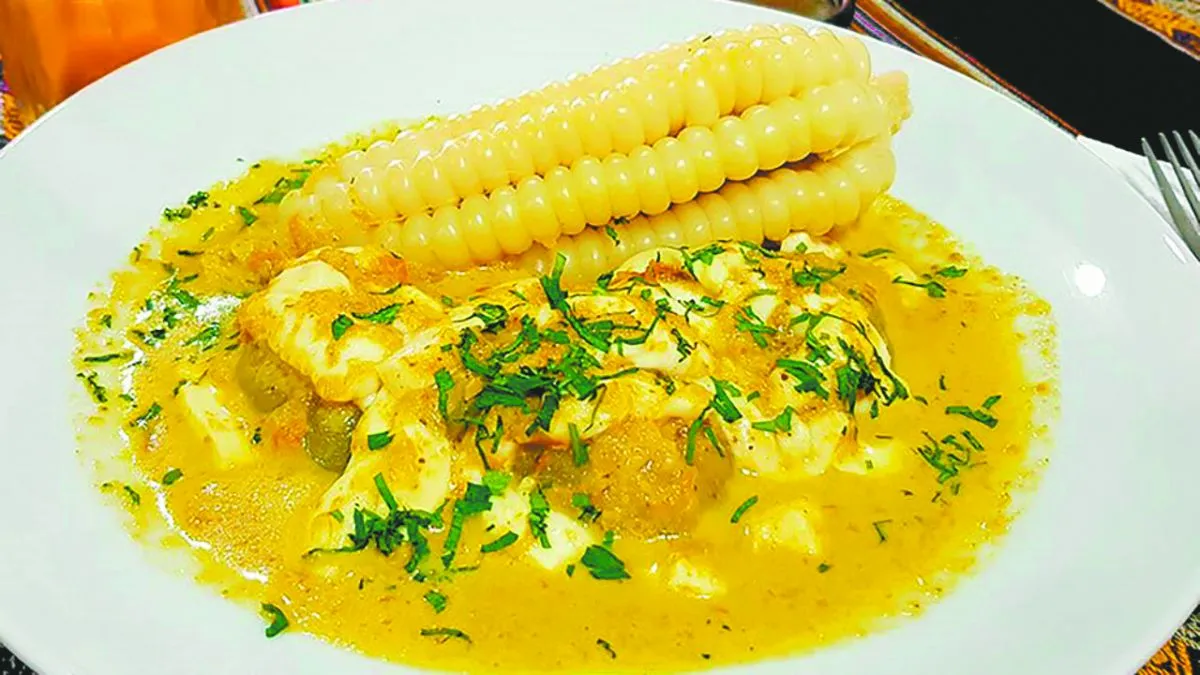
Queso humacha is deeply rooted in Bolivia’s history and culture.
According to various researchers, the dish dates back to colonial times and is linked to the Spanish troops who fought Túpac Amaru II’s rebellion.
It’s made with melted cheese in yellow chili, cooked corn, chopped hard-boiled eggs, fava beans, and white potatoes.
5. Ají de arveja, made with one of the Andes’ staple foods
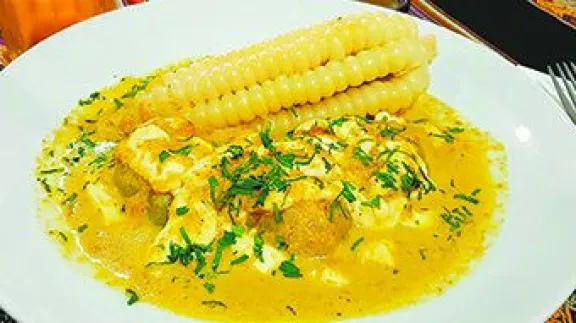
This dish goes beyond Holy Week, as it’s also traditional during the All Saints holiday, especially in La Paz households.
It combines peas with herbs and chili. The chili adds a spicy note that perfectly blends with the softness of the peas. It also includes potatoes.
6. Papas a la Huancaína, a delight combining peanuts with fresh vegetables
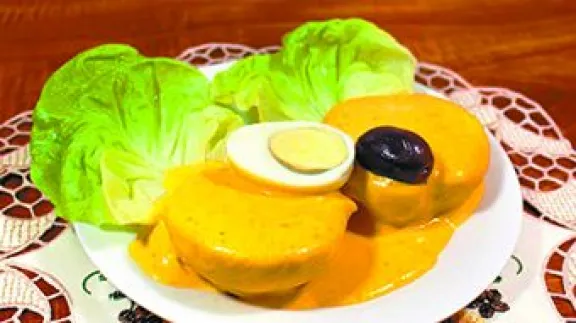
Originally from Peru, papas a la huancaína has become a favorite in Bolivia.
In Bolivia, the sauce is creamier and spicier than elsewhere, made with local roasted peanuts and yellow chili.
It can be served as a main dish or appetizer, depending on the size of the potatoes used.
7. The lake’s little fish: Fried ispi with mote and chuño
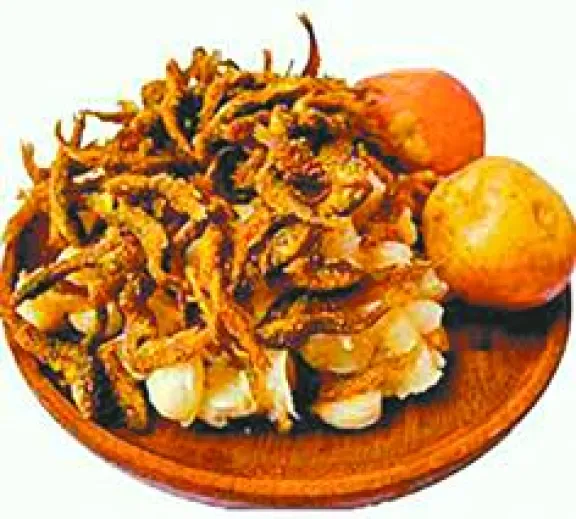
Ispi is a small species of killifish found only in the Titicaca basin. The largest ones barely reach nine centimeters.
They’re cleaned, seasoned with yellow flour, salt, and pepper, then fried whole and served with potato, mote, chuño, and llajua (spicy sauce).
8. The queen of Lake Titicaca and La Paz’s aquatic cuisine: trout
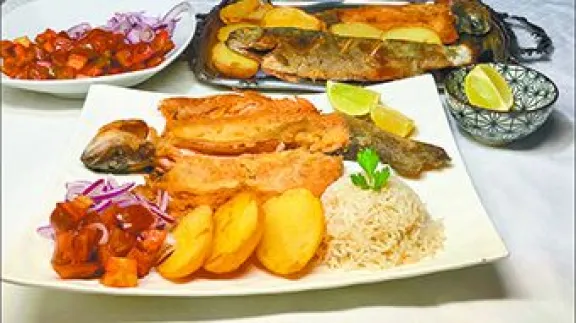
Fried trout, a classic delicacy of La Paz. This species is mainly farmed in Lake Titicaca and special pools in Pongo and is a traditional dish on the Bolivian table, especially during Holy Week.
Its preparation requires careful seasoning and perfect golden frying. It is served with rice and fried or boiled potatoes, along with yellow chili or llajua.
9. The country’s most traditional fish soup: wallake
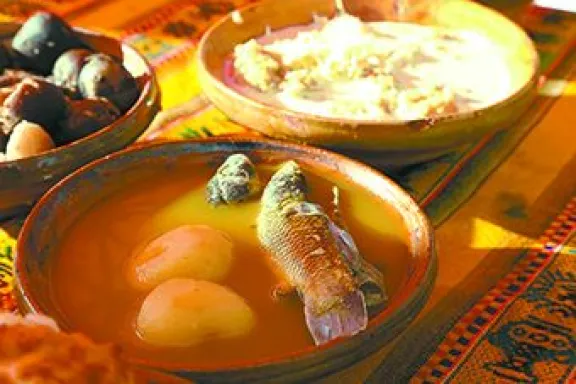
Wallake, also known as caldo de karachi, timpu de carachi, wallaqi or whallaque, features karachi, a lake fish measuring 10 to 15 centimeters. It has a pleasant flavor.
It also includes a key herb that gives it its flavor and benefits: koa, a highland shrub whose leaves are mainly used.
10. The traditional sweet dish: arroz con leche (rice pudding)
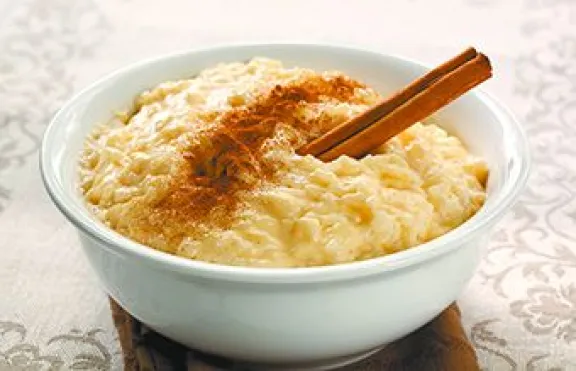
Though recipes vary by region, arroz con leche is the quintessential Holy Week dessert. It involves slow-cooking rice, milk, cinnamon, and sugar.
Some add condensed milk and evaporated milk for extra creaminess. It can be served hot, warm, or cold, topped with cinnamon.
Por Jorge Soruco, Vision 360:
Algunas de las recetas se fueron perdiendo por el costo
Representando a los 12 apóstoles que acompañaron a Jesús en la última cena, los platillos tradicionales de la fiesta presumen del sabor boliviano.
El pescado es uno de los ingredientes principales de la fecha. FOTO: YouTube
Llega Semana Santa y tanto creyentes como no creyentes comienzan a planificar un menú especial para el Viernes Santo. Y es que, según manda la tradición, no solo se aconseja no comer carne roja, sino que se puede tener una lista de hasta 12 platillos tradicionales.
Hay muchas versiones sobre desde cuándo rige esta costumbre y las razones para ella. Según el portal Catholic.net, ya habían discusiones sobre el tema del consumo de carne en el siglo IV de nuestra era.
Por su parte, el trabajo de investigación de la Alcaldía de La Paz, La Gastronomía Paceña en el Ciclo Festivo y Cotidiano, estima que la tradición de los 12 platos en la sede de gobierno surgió a mediados del siglo XIX.
Según los estudios históricos, la prohibición de consumir carne, al menos por la Iglesia Católica, respondía a la necesidad de ser austeros, como corresponde a la principal festividad del calendario religioso. Esto, a fin de evitar “caer en el pecado capital de la gula”, de acuerdo con el estudio municipal.
Tiene un cierto nivel de realidad, ya que, durante mucho tiempo, la carne fue un alimento muy caro, una forma de mostrar prosperidad.
Por otro lado, si bien la prohibición se enfocaba en la carne, la Iglesia también estaba en contra de la preparación de platos suntuosos, sea con los ingredientes que sean, para emular la austeridad de Jesús.
La tradición de los 12 platos también forma parte de la creencia cristiana. Se supone que una comida, con esta cantidad de preparados, evoca la última cena que Jesús tuvo con sus apóstoles. Cada uno de los manjares se supone representan a los discípulos.
Esta, además, es una costumbre familiar y colectiva. Se solía invitar a los amigos, vecinos y parientes tras el ayuno de Jueves y Viernes Santos. Idealmente se comparten con el mismo número de comensales.
Las recetas varían de ciudad en ciudad. Asimismo, se han dado cambios con el paso del tiempo y los vaivenes de la economía nacional. De hecho, incluso la Iglesia levantó la prohibición de la carne debido a las necesidades nutricionales de los feligreses.
En La Paz, por ejemplo, se observó que la cantidad se redujo a entre ocho y seis platos. Una de las causas es la pérdida de platos como el Caldo de Bacalao y el Camaroncillo, tanto por el incremento de precio de los ingredientes como por su accesibilidad.
Eso sí, los postres son casi obligatorios y, de poderse, las familias continúan disfrutando de algunos platos con dos siglos de vigencia.
1. Para comenzar, no hay como el ají o sajta de papalisa, según el lugar
El ají de papalisa está disponible en varias variaciones, incluso con carne o sin ella. Por supuesto, indispensable: la papalisa, que también se conoce como olluco, olluco o melloco en otros países de Sudamérica.
Este tubérculo es acompañado de un ají o ahogado de varios ingredientes. Usualmente se acompaña con arroz blanco y papas cocidas.
2. Carbonara de zapallo, tradición boliviana, con un toque de Italia
También conocido como carbonara boliviana, se trata de un plato de puré de zapallo, acompañado de verduras retostadas, rodajas de choclo, jigote de ají amarillo, tomate y cebolla. Puede ser servido con queso rallado y perejil picado.
Algunos cocineros lo preparan dentro del mismo zapallo, para darle un toque especial. Dependiendo de la región puede ser más picante.
3. Casi desaparecido, el ají de cochayuyo es patrimonio de La Paz y del lago
El ají de cochayuyo o cochayuyo a secas es un plato que se prepara con algas que son extraídas del lago Titicaca, y que viene acompañado de tunta, queso y huevo duro. Las algas son salteadas junto a la cebolla picada y el ají amarillo, aunque también se puede utilizar el rojo. No suele tener carne, en algunas regiones se le añade diferentes pescados o, si hay dinero, mariscos.
4. Queso Humacha, un plato que fue reconocido a nivel internacional
El queso humacha es un platillo que se arraiga profundamente en la historia y la cultura de Bolivia.
Según varios investigadores, este platillo tiene su origen en la época colonial; concretamente se lo vincula a las tropas españolas que combatieron la rebelión de Túpac Amaru II.
Se prepara con un queso derretido en ají amarillo, choclo cocido, huevos duros picados, haba y papa blanca.
5. Ají de arveja, utilizando uno de los alimentos clave de los andes
Este es un plato que va más allá de Semana Santa, ya que también es tradicional prepararlo durante la festividad de Todos Santos, especialmente en los hogares paceños.
Combina las arvejas con ingredientes como hierbas y ají. El ají aporta un toque picante y que se mezcla a la perfección con la suavidad de la arveja. También lleva papa.
6. Papas a la Huancaina, una delicia que une el maní con las verduras frescas
Originario de Perú, el plato de las papas a la huancaina se convirtió en uno de los favoritos de los bolivianos.
En el país se caracteriza por que la salsa es más cremosa y picante que en otras regiones, ya que está hecha con maní tostado local y ají amarillo.
Puede ser tanto un plato de fondo, como un aperitivo, dependiendo del tamaño de las papas elegidas para la comida.
7. El pequeño del Lago: Ispi frito con mote y chuño
El ispi es una especie de pez de la familia de los ciprinodóntidos en el orden de los ciprinodontiformes. De tamaño pequeño, los ejemplares más grandes apenas llegan a los nueve centímetros, viven exclusivamente en la cuenca del Titicaca.
Se los limpia antes de condimentarlos con harina amarilla, sal y pimienta.
Posteriormente se los fríe enteros y se sirven con papa, mote, chuño y llajua.
8. La reina del lago Titicaca y de la comida acuática de La Paz: la trucha
La trucha frita, un manjar típico de La Paz. La especie se cría principalmente en el lago Titicaca y en las piscinas especiales de Pongo y es parte un plato tradicional en la mesa boliviana, especialmente en Semana Santa.
Su preparación requiere cuidado en la selección de condimentos y el dorado perfecto al freír. Se sirve con arroz y papas fritas o hervidas, además de ají amarillo o llajua.
9. La sopa de pescado más tradicional del país: el wallake
El wallake, también conocido como caldo de karachi, timpu de carachi, wallaqi o whallaque, contiene como ingrediente principal al karachi, pez que vive en el lago y mide aproximadamente de 10 a 15 centímetros de largo. Tiene un sabor muy agradable.
Asimismo, lleva una planta fundamental que le otorga el sabor y otros beneficios: la koa, que es un arbusto altiplánico del que se utilizan sobre todo las hojas.
10. El plato dulce tradicional: el arroz con leche
Aunque la receta varía de región en región, el arroz con leche es el postre por excelencia de Semana Santa. Consiste en cocinar a fuego lento el arroz, la leche, la canela y el azúcar.
Hay quienes también agregan leche condensada y leche evaporada para mayor cremosidad. Se puede servir caliente, tibio o frío, decorado con canela en polvo, con pasas o incluso con canela en tallo.
https://www.vision360.bo/noticias/2025/04/16/23427-10-platos-para-semana-santa-con-sabor-a-tradicion

 Bolivian Thoughts | Pensamientos Bolivianos (Bilingual/Bilingüe)