
By Los Tiempos:
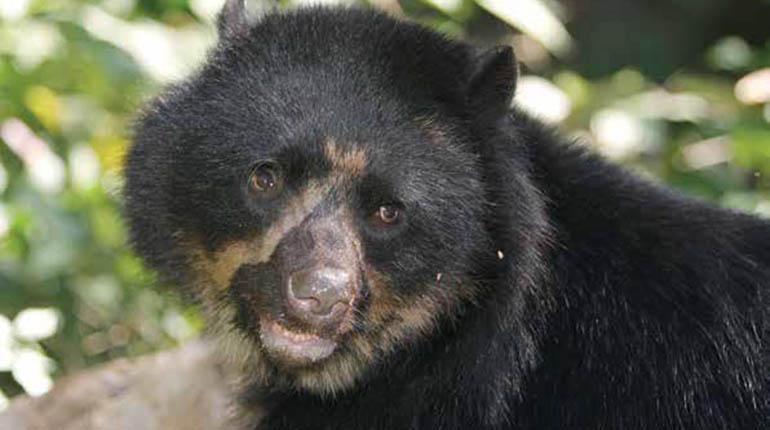
In the Amboró National Park and Integrated Management Natural Area (PN-ANMI), priority quadrants have been identified for monitoring the Jucumari bear [spectacled bear] in the areas of Comarapa, Santa Rosa, and Samaipata in the department of Santa Cruz.
These consist of three priority quadrants, each covering 16 square kilometers (km²) and further divided into 1 km² sub-quadrants. Defining these areas allows for assessing and monitoring the species’ occupancy, facilitating conservation efforts in strategic zones.
Currently, the protection team is conducting monitoring through the identification of presence indicators such as hair, feces, scratches, footprints, and feeding sites in various habitats within PN-ANMI Amboró.
This work is supported by WCS Bolivia and carried out within the framework of the Jucumari Program, implemented by the National Museum of Natural History.
As a priority conservation target in Amboró, according to the Management Plan, the Jucumari bear requires critical protection due to habitat loss and population decline.
The Jucumari Program is fully aligned with the objectives of PN-ANMI Amboró’s creation and the conservation goals established in the Protected Area’s Management Plan.
Protecting this species not only ensures the ecological balance of the region but also fosters environmental sustainability and promotes local community involvement.
The Jucumari bear (Tremarctos ornatus) is an iconic species and the only bear native to South America. Its range includes Bolivia, Venezuela, Colombia, Ecuador, and Peru, making it the largest mammal in its ecosystems. Its presence is a key indicator of environmental quality in natural areas.
Also known as the Andean bear, spectacled bear, or jucumari, it is distinguished by white or brown markings on its face, forming unique patterns around its eyes. These solitary animals find refuge in trees or natural caves, and their diet primarily consists of plant matter from families such as Bromeliaceae, Ericaceae, Rosaceae, and Symplocaceae.
Por Los Tiempos:
En el Parque Nacional y Área Natural de Manejo Integrado (PN-ANMI) Amboró se identificaron cuadrantes prioritarios destinados al monitoreo del Oso Jucumari en las zonas de Comarapa, Santa Rosa y Samaipata del departamento de Santa Cruz.
Se trata de tres cuadrantes prioritarios de 16 kilómetros cuadrados (km²) cada uno, que a su vez se dividen en subcuadrantes de 1 km². La delimitación de estas áreas permite evaluar y monitorear la ocupación de la especie, facilitando la focalización de los esfuerzos de conservación en zonas estratégicas.
En la actualidad, el cuerpo de protección está llevando a cabo el monitoreo mediante la identificación de señales de presencia, como pelos, heces, arañazos, huellas y comederos, en diversos hábitats del PN-ANMI Amboró.
Este trabajo es resultado del apoyo de WCS Bolivia y en el marco del Programa Jucumari, implementado por el Museo Nacional de Historia Natural.
El Oso Jucumari, al ser un objeto de conservación prioritario del Amboró, según el Plan de Manejo, requiere una protección crucial debido a la pérdida de hábitat y la disminución de sus poblaciones.
El Programa Jucumari está alineado plenamente con los objetivos de creación del PN-ANMI Amboró y con los objetivos de conservación establecidos en el Plan de Manejo del Área Protegida.
La protección de esta especie no solo garantiza el equilibrio ecológico de la región, sino que también fomenta la sostenibilidad ambiental y promueve la participación de las comunidades locales.
El Oso Jucumari (Tremarctos ornatus) es una especie emblemática y el único oso de Sudamérica. Su distribución abarca Bolivia, Venezuela, Colombia, Ecuador y Perú, y es el mamífero más grande en los ecosistemas que habita. Su presencia es un indicador clave de la calidad ambiental en las áreas naturales.
Conocidos también como osos andinos, osos de anteojo o jucumaris, se distinguen por las manchas blancas o pardas en su rostro, que forman patrones únicos alrededor de sus ojos. Son animales solitarios que encuentran refugio en los árboles o en cuevas naturales, y su dieta se basa principalmente en materia vegetal de familias como Bromeliaceae, Ericaceae, Rosaceae y Symplocaceae.

 Bolivian Thoughts | Pensamientos Bolivianos (Bilingual/Bilingüe)