
By History and Legend of the Imperial City of Potosí:
“The Imperial City of Potosí was known as the ‘American Babylon’ during the colonial era and was the first metropolis in the history of the continent, many years before the growth of New York and other American metropolises. Potosí had a larger population than the biggest European cities, making the variety of languages spoken in the Imperial City astonishing for its time.”
“Potosí was called the ‘American Babylon’ due to the vast number of languages spoken in the city. It became the first metropolis in the history of America, as the Spanish, through the Mita labor system, brought thousands of indigenous people from various nations and cultures across the Viceroyalty of Peru and the Viceroyalty of the Río de la Plata to Potosí. Quechuas, Aymaras, Puquinas, and Urus arrived from all corners of Potosí, Oruro, La Paz, Chuquisaca, and Cochabamba, as well as from multiple indigenous nations of Peru. At least four entirely different indigenous languages were spoken in the Imperial City.
Additionally, Potosí was home to Europeans from various nations who spoke at least three languages, such as Spanish, Basque, and Catalan. Large numbers of Portuguese, Dutch, Italians, and Germans resided in the city, contributing to at least four European languages being spoken daily. Furthermore, African slaves arrived from three specific regions, mainly Senegal, Congo, and Guinea. These enslaved people communicated in distinct languages, adding at least three more African languages to the linguistic diversity of Potosí.
With the colossal silver boom, foreigners such as the English, Chinese, Prussians, and Arabs began arriving, primarily for trade, art, and commerce. Their stays were temporary and focused on business transactions. In total, around ten languages were spoken regularly in Potosí, with more than fifteen languages present when including merchants and travelers from around the world.
The Imperial City of Potosí was renowned across the globe, and its vast, coveted silver resources made it one of the most populous, important, and wealthy cities on the planet. It is historically recognized as the city whose immense wealth kickstarted globalization worldwide.”
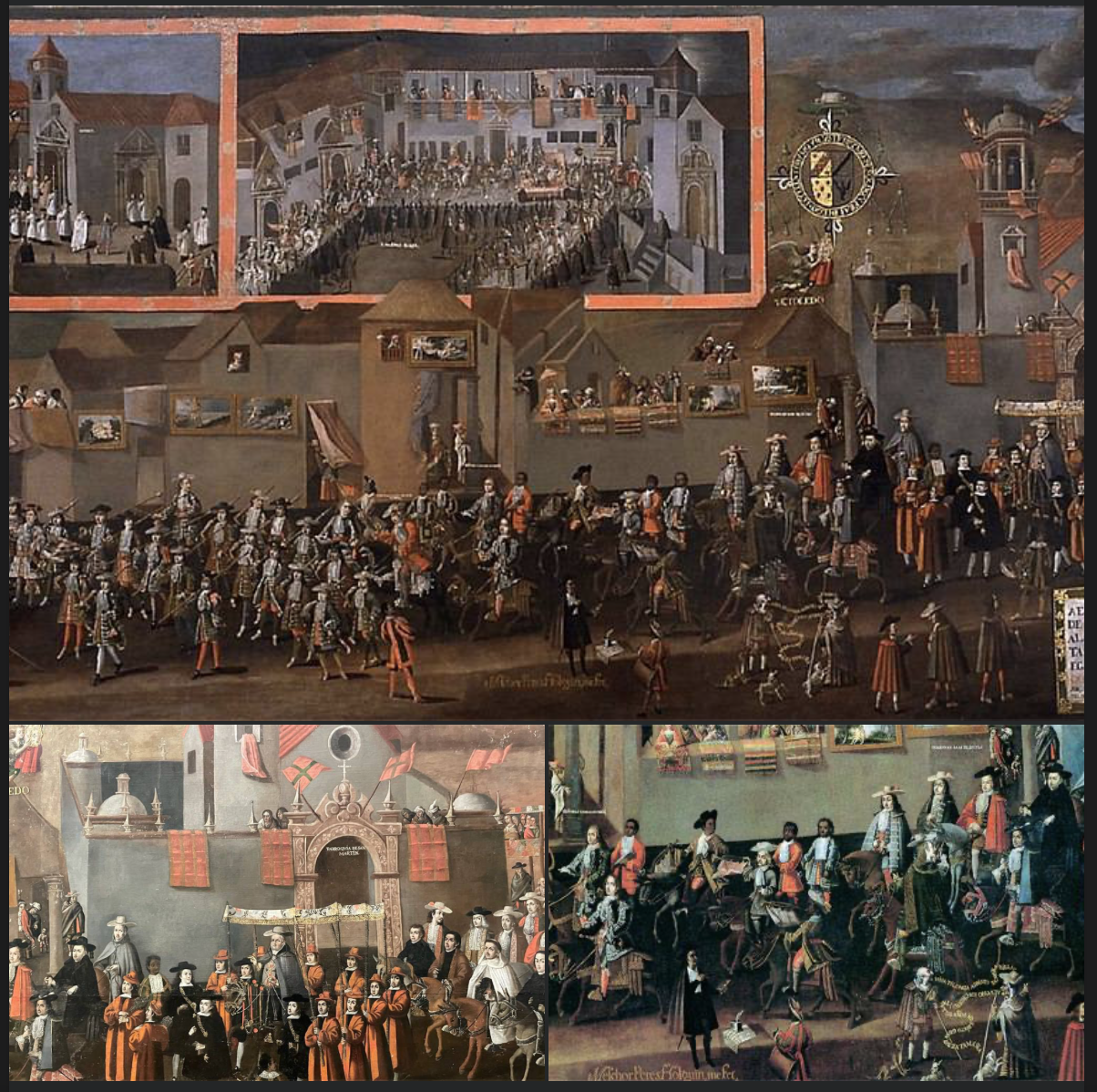
PAINTING: Entrance of Archbishop Viceroy Morcillo in Potosí, a work by Potosí-born painter Melchor Pérez de Holguín.
Por Historia y Leyenda de la Villa Imperial de Potosi:
“LA VILLA IMPERIAL DE POTOSÍ ERA CONOCIDA COMO LA “BABILONIA AMERICANA” EN ÉPOCA COLONIAL Y FUE LA PRIMERA METRÓPOLI DE LA HISTORIA DEL CONTINENTE, MUCHOS AÑOS ANTES DEL CRECIMIENTO DE NUEVA YORK Y OTRAS METRÓPOLIS AMERICANAS POTOSÍ LLEGÓ A TENER UNA MAYOR CANTIDAD DE HABITANTES QUE LAS MÁS GRANDES CIUDADES EUROPEAS, POR LO QUE LA CANTIDAD DE IDIOMAS QUE SE ESCUCHABAN EN LA VILLA IMPERIAL ERA IMPRESIONANTE PARA LA ÉPOCA”
“La Villa Imperial de Potosí era conocida como la “Babilonia Americana” debido a la gran cantidad de idiomas que se escuchaban en la ciudad, convirtiéndose en la primera metrópoli de la historia de América, debido al trabajo de la Mita los españoles traían a Potosí miles de indígenas de varias naciones y culturas de todo el Virreinato del Perú y del Virreinato del Rio de la Plata, llegaban quechuas, aymaras, puquinas, urus de todos los rincones de Potosí, Oruro, La Paz, Chuquisaca, Cochabamba y tambien de varias naciones indígenas del Perú, por lo menos cuatro idiomas totalmente distintos eran hablados por los indígenas que llegaban a la Villa Imperial, por otro lado en Potosi habitaban europeos de varias naciones quienes hablaban hasta tres idiomas como el español, euskera y catalan, se tenía gran cantidad de portugueses, holandeses, italianos y alemanes, residentes en la ciudad, por lo menos cuatro idiomas europeos eran escuchados diariamente en la Villa Imperial, por otro lado también llegaron esclavos africanos de tres regiones específicas en su mayoría de Senegal, Congo y de Guinea, los esclavos se comunicaban mediante lenguas distintas a los demás por lo que al menos tres idiomas africanos también eran habituales en Potosí, por medio del colosal auge de la plata comenzaron a llegar forasteros ingleses, chinos, prusianos y árabes, específicamente para el intercambio, el arte y el comercio por lo que su estadía era esporádica y solo para negociar sus productos, por lo tanto, estamos hablando de aproximadamente 10 idiomas que se hablaban constantemente y más de 15 idiomas tomando en cuenta a los comerciantes y viajeros que llegaban de todo el mundo, la Villa Imperial de Potosí era conocida en todas las latitudes del planeta y su manantial ambicionado e incalculable de plata la habia convertido en una de la ciudades mas pobladas, importantes y ricas de todo el orbe, siendo considerada para la historia como la ciudad que inicio con su riqueza la globalización en el mundo entero.”
PINTURA: Entrada del Arzopispo Virrey Morcillo en Potosí obra del pintor potosino Melchor Peres de Holguin.

 Bolivian Thoughts | Pensamientos Bolivianos (Bilingual/Bilingüe)