
By Jorge Soruco, Vision 360:
Carnival Tradition
This year, the vendors prepared packages in advance for the traditional offerings. Customers mainly request rituals to attract health and fortune.
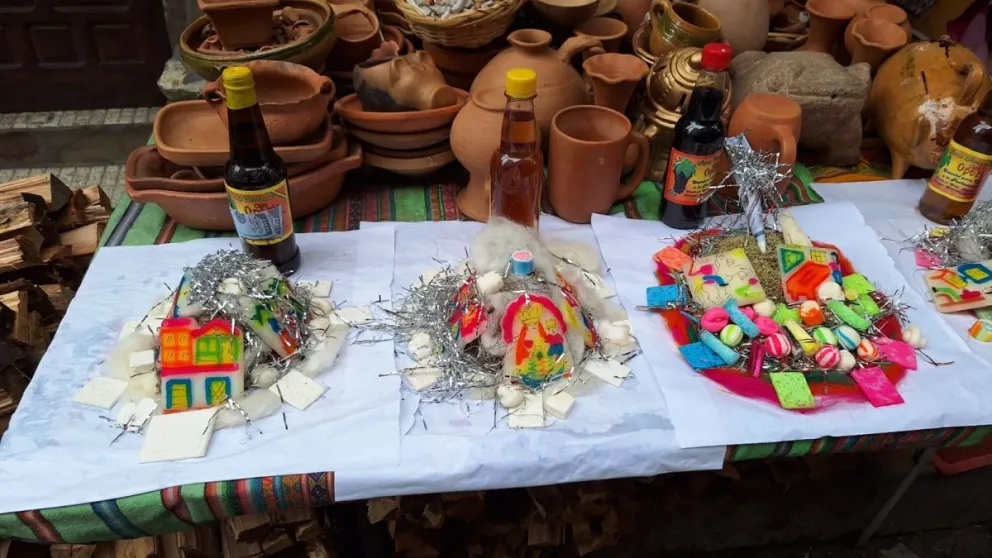
The ritual tables to ask for health, money, work, or a house. PHOTO: Jorge Soruco / Visión 360
Two days before the traditional Tuesday of Ch’alla, the chifleras display tables prepared at the entrances of their stalls, organized by objectives. Thus, on the tables, there are sweet pills with images related to work, health, love, family, and other topics.
In the stores, there are also sealed bags containing the necessary items. “The idea is to make things easier for the clients. They come with their request, and we guide them on what suits them, which table is already prepared with the items they need. But we can also spend more time talking in-depth about what they want and need,” said Roberto, another supplier.
These conversations are held face-to-face inside the store. Some “witches” read coca to help make a better decision.
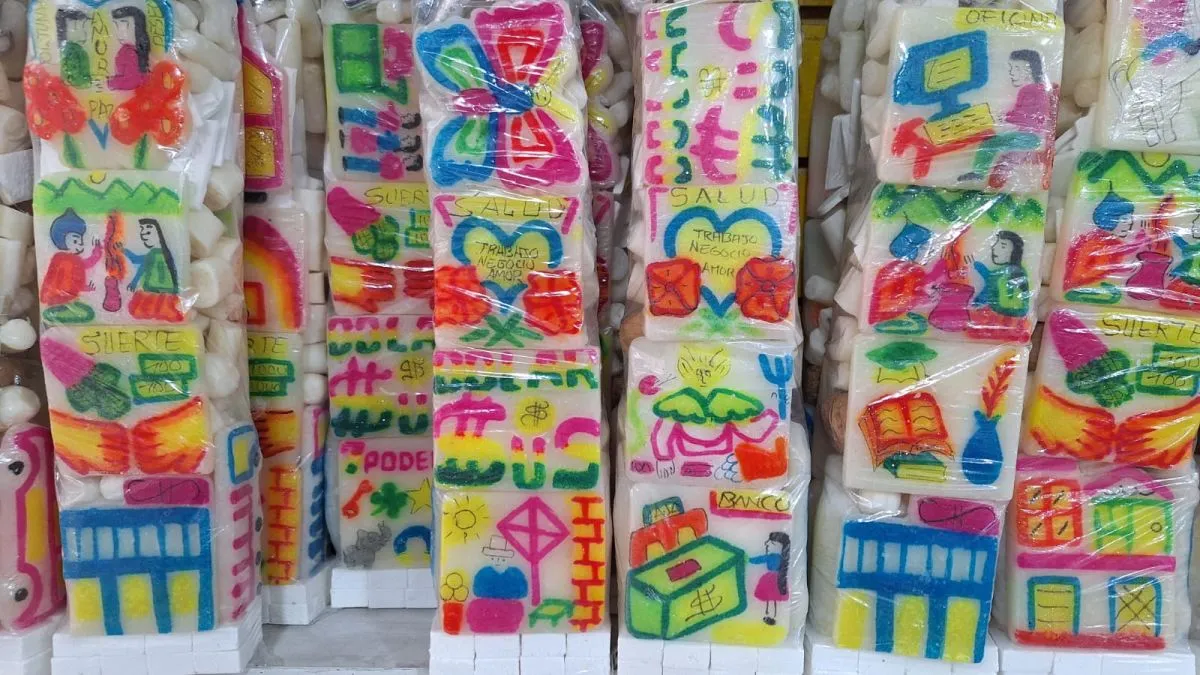
Although few customers arrived on Saturday morning and afternoon, the vendors were not discouraged. “It’s always like this. Most people are at the Corso or at a barbecue. Later, more will come if they haven’t bought before,” commented another worker.
However, not everything is positive. In most stores, it was acknowledged that costs have risen. Previously, for January 1st, tables could be found starting at 30 bolivianos, but now, the base price is 50. “It’s the sweets that make it more expensive, my dear,” said Doña Helena, settled in Sagárnaga, to Visión 360. The cost of wine, a necessary part of the ritual, has also increased.
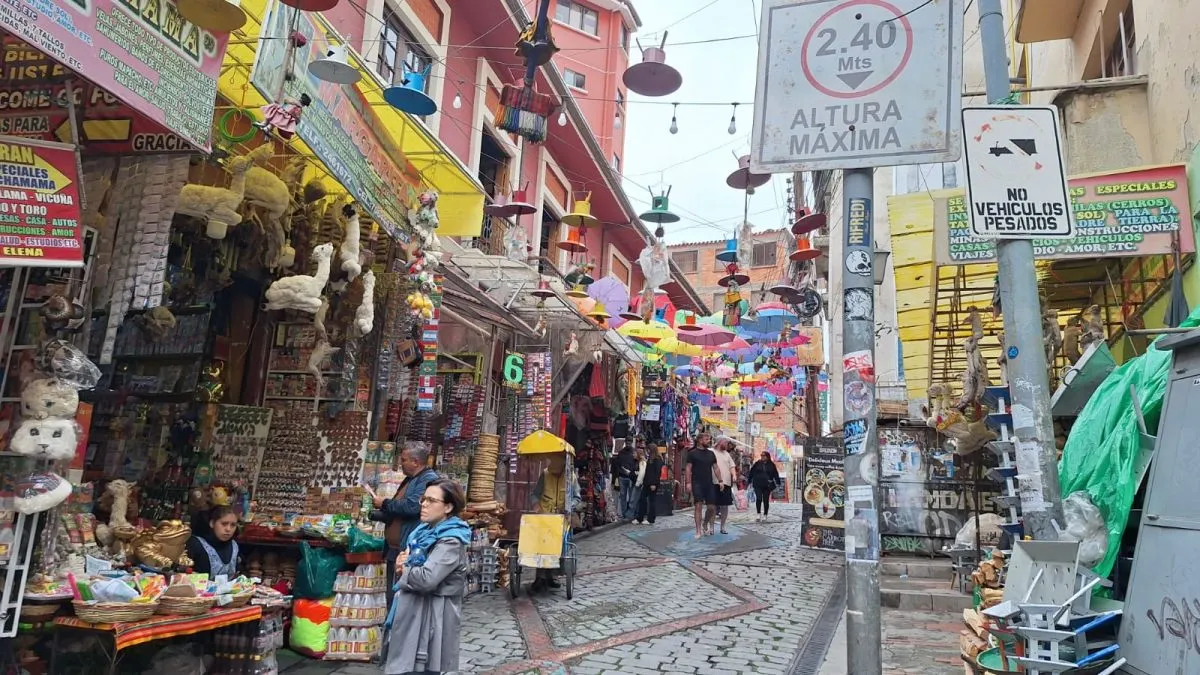
The most expensive tables usually cost 300 bolivianos, although some, with larger sullus (llama fetuses), may have a higher price.
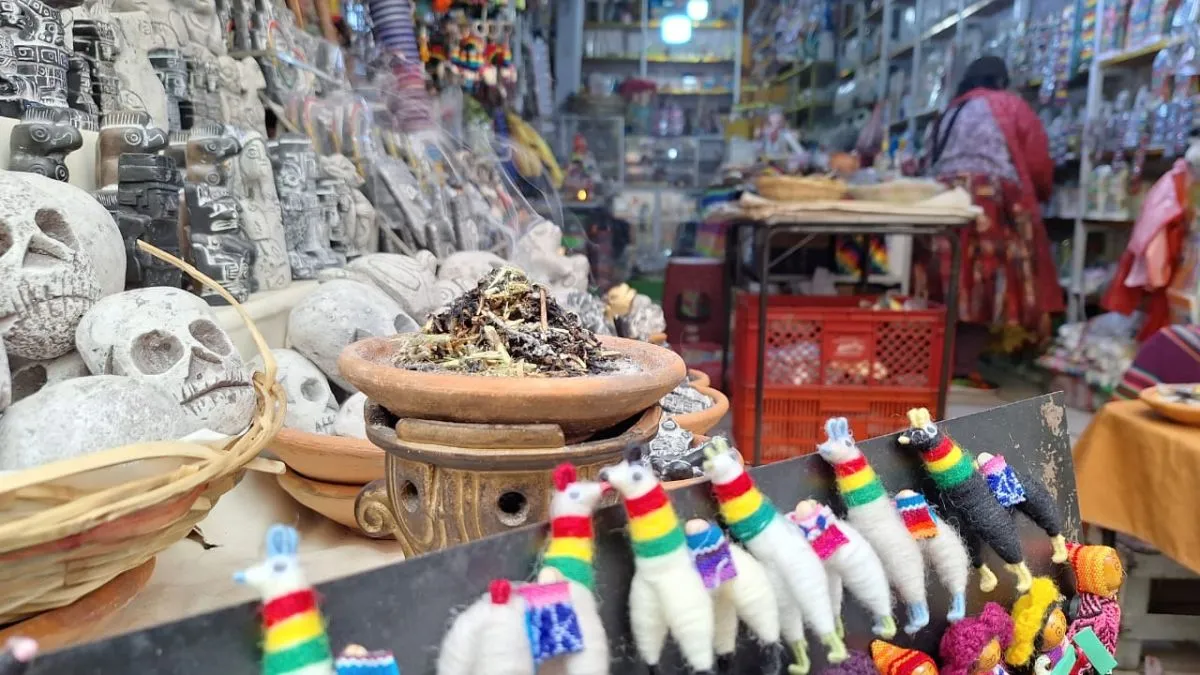
Once the items are gathered, they are arranged in a portable fire pit that is lit on Tuesday, ideally at dawn, noon, or dusk. This type of ceremony often turns into a celebration involving the entire family and even neighbors. In many cases, it takes place on newly purchased land or in buildings under construction.
Por Jorge Soruco, Vision 360:
Tradición de carnaval
Este año, las vendedoras prepararon con anticipación paquetes para las tradiciones ofrendas. Los clientes solicitan, principalmente, rituales para atraer salud y fortuna.
Las mesas rituales para pedir salud, dinero, trabajo o una casa. FOTO: Jorge Soruco / Visión 360
A dos días del tradicional Martes ch’alla, las chifleras exhiben mesas preparadas en las entradas de sus puestos, organizadas por objetivos. Así, en las fuentes se encuentran pastillas dulces con imágenes alusivas al trabajo, la salud, el amor, la familia y otros temas.
En las tiendas también se encuentran bolsas cerradas, que contienen los elementos necesarios. “La idea es hacer las cosas más fáciles para los clientes. Ellos vienen con su pedido y nosotros les indicamos que les conviene, que mesa ya está lista con los elementos que requieren. Pero, también podemos pasar más tiempo hablando en profundidad de lo que quieren y necesitan”, comentó Roberto, otro de los proveedores.
Estas charlas se hacen frente a frente, dentro de la tienda. Algunas “brujas” leen coca para ayudar a tener una mejor decisión.
Si bien la mañana y tarde del sábado llegaban pocos clientes, los vendedores no estaban desalentados. “Siempre es así. La mayoría de la gente está en el Corso o en parrillada. Más tarde van a venir más, si no han comprado antes”, comentó otra trabajadora.
Pero, no todo es positivo. En la mayor parte de las tiendas se reconoció que los costos han subido. Antes, para el 1 de enero, se podía encontrar mesas a partir de 30 bolivianos, pero ahora, el precio base es 50. “Son los dulces los que encarecen, caserito”, dijo a Visión 360 doña Helena, asentada en la Sagárnaga. El costo del vino, parte necesaria del ritual, también incrementó.
Las mesas más caras suelen costar 300 bolivanos, aunque algunas, con sullus (fetos de llama) más grandes, pueden tener un precio mayor.
Una vez conseguidos los elementos, estos se acomodan en un brasero que se encienden el martes, idealmente al amanecer, al mediodía o al anochecer. Este tipo de ceremonia suele convertirse en una fiesta que involucra a toda la familia e incluso a los vecinos. En muchos casos, se realizan en terrenos recién comprados o construcciones en proceso.

 Bolivian Thoughts | Pensamientos Bolivianos (Bilingual/Bilingüe)