By Iván Ramos – Periodismo que Cuenta, Erbol:
THEY PROPOSE TO MOVE HIS REMAINS
Simeón Roncal, the father of Bolivian cueca, is still waiting to return to Sucre
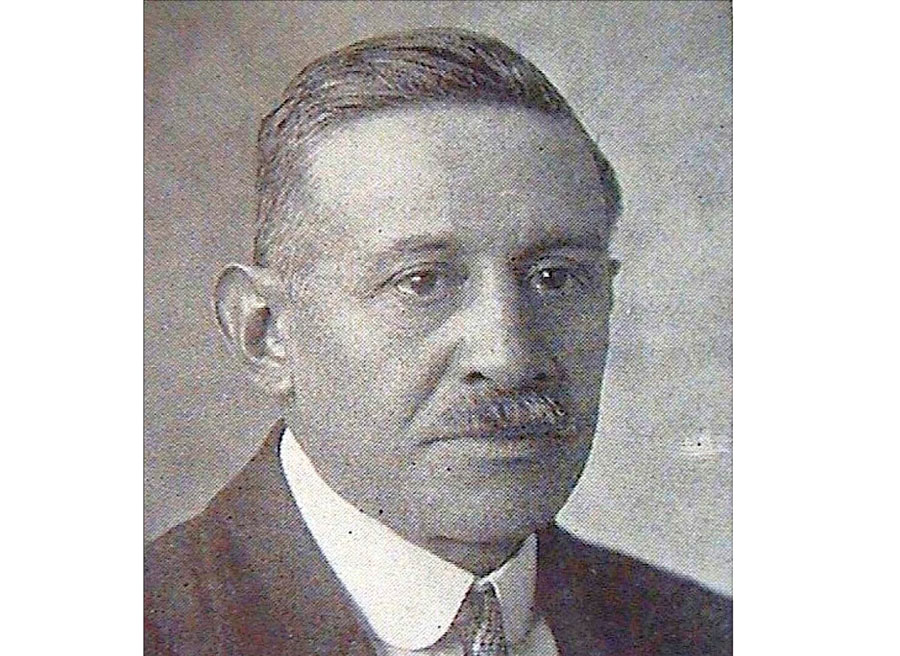
Roncal was born in Sucre in 1870.
HIS LAST CUECA, THE LONGING TO RETURN HOME
In the early years of his life, Simeón Tadeo Roncal Gallardo spent his mornings at the piano in his home on Ravelo Street in Sucre. Sunlight filtered through the cracks, a silent witness to his melodies. Across the street, Miguel Ángel Valda, an inquisitive and restless boy, absorbed each note with the devotion of an apprentice. With a pencil, he captured the music in his notebook and, unnoticed, slipped the sheet among the maestro’s papers.
Hours later, after mass at the Cathedral where he played the piano, Roncal reviewed his papers and found the unfamiliar piece. “I didn’t write this,” he murmured, confused. He asked a friend to play it. And then he understood—it was his music, but he had not written it down. “It must be the work of a goblin,” he mused, marveling at this twist of fate. Thus, another cueca was added to Bolivia’s musical memory.
ROLANDO ENCINAS: THE SEARCH FOR RONCAL’S LEGACY
In La Paz, miles away, Rolando Encinas Calderón, director of the orchestra “Música de Maestros,” recalls how Roncal’s music shaped his life. “In 1986, a friend, Yolanda, took me to the national music repository. Among countless scores, one cueca captivated me: ‘El Olvido.’ Then others appeared: ‘La Ausencia,’ ‘La Brisa,’ ‘Julia,’ ‘Noche Tempestuosa,’ ‘Rosa,’ ‘La Huérfana Virginia.’ True gems.”
From that moment, his research began. Over time, he discovered more than 20 cuecas and, to his surprise, an unexpected connection: “I came across the famous cueca ‘La Nerviosita’ by Miguel Ángel Valda. A true meeting of master and disciple. What a fortune!”
Encinas, deeply connected to Roncal’s work, warns that performing it remains a challenge. “His compositions have a unique cadence,” he says with admiration.
RONCAL: THE GENIUS OF COMPLEXITY
Roncal’s music is a puzzle of emotions and technique. Antonio Arandia, director of Mensaje de Bolivianidad at Radio La Plata, insists that interpreting his cuecas requires an intuition beyond the score. The harmony of his powerful left hand on the piano is a challenge, a complex flow that only virtuosos can master.
Roncal gave Bolivian cueca the form and rhythm it has today. “Without a doubt, the chichería is the palace of the cueca,” they say with reverence. It was there that Miguel Ángel Valda transcribed over 1,500 compositions, some well-known, others yet to be discovered.
In his home on Ravelo Street, Roncal created his legacy. He absorbed influences from the Chilean zamacueca and the Peruvian marinera, but transformed them into something uniquely Bolivian. Thanks to Valda, his compositions were printed and spread beyond Bolivia’s borders.
THE NAMELESS CEMETERY
In La Paz, Roncal lay in near anonymity. Encinas wandered the cemetery again and again, hoping to find his grave. “Not a single sign that one of our greats rested here,” he lamented. Among the illustrious marble tombs, his name was a lost echo.
But Encinas refused to give up. “To speak of Sucre is to speak of him,” he said, his voice breaking. “And without him, Bolivian cueca would not be what it is today.” His name continued to resonate, beyond forgotten graves, in every vibrant note.
THE BICENTENNIAL AND THE RETURN HOME
The proposal to transfer his remains to Sucre gained momentum with the support of Encinas and Antonio Arandia. “Roncal deserves to rest in his homeland,” Arandia stated. “In Sucre, his remains will receive more care and recognition.”
It was not a new idea. In 2000, Guillermo Calvo Ayaviri and Willy Rentería Mendizábal succeeded in having the Municipal House of Culture named after him. But now, as the Bicentennial approaches, the transfer is seen as an act of justice. “It would be a milestone, a declaration that Bolivia honors its music,” says Arandia.
THE RESURGENCE OF CUECA
From Cochabamba, Willy Claure recalls why he fought to have the first Sunday of October designated as Bolivian Cueca Day. “Cueca is our history turned into music. And if anyone took it to its highest splendor, it was Roncal.”
Matilde Casazola Mendoza, a living emblem of Bolivian cueca and recipient of the 2016 National Culture Award, celebrates the possibility of Roncal’s return to Sucre. “It’s something truly beautiful. Many of us don’t know where great artists rest, but now, knowing that Roncal will be here, we feel joy.”
This return is more than just a symbolic act. It is a tribute that reaffirms the respect and recognition finally given to a man who contributed so much to Bolivia’s music.
The maestro, that “goblin” of the Cathedral, never truly left. His music still echoes in every chord, in every dance. And soon, if history does what it must, he will return to Sucre—the place where his art began, where his music has always waited for his return.
Por Iván Ramos – Periodismo que Cuenta, Erbol:
PROPONEN TRASLADAR SUS RESTOS
Simeón Roncal, el padre de la cueca boliviana, aún espera volver a Sucre
Roncal nació en Sucre en 1870.
SU ÚLTIMA CUECA, EL ANHELO DE VOLVER A CASA
Simeón Tadeo Roncal Gallardo en los primeros años de su vida, desde niño, pasaba las mañanas al piano en su casa de la calle Ravelo, en Sucre. La luz del sol se filtraba por las rendijas, espía sigiloso de sus melodías. En la vereda de enfrente, Miguel Ángel Valda, un chico inquieto y curioso, absorbía cada nota con la devoción de un iniciado. En su cuaderno, con lápiz, atrapó aquella música al vuelo y, sin que nadie lo notara, deslizó la partitura entre los papeles del maestro.
Horas después, tras la misa en la Catedral, donde tocaba el piano, Roncal revisó sus papeles y encontró la pieza extraña. “Yo no he escrito esto”, murmuró, confundido. Pidió a un amigo que la interpretara. Y entonces lo comprendió: aquella música era suya, pero no la había escrito él. “Debe ser obra de un duende”, musitó, maravillado por ese juego del destino. Así quedó una cueca más en la memoria de Bolivia.
ROLANDO ENCINAS: LA BÚSQUEDA DEL LEGADO DE RONCAL
En La Paz, a kilómetros de distancia, Rolando Encinas Calderón, director de la Orquesta “Música de Maestros”, recuerda cómo la música de Roncal marcó su vida. “En 1986, una amiga, Yolanda, me llevó al repositorio nacional de música. Entre tantas partituras, fue una cueca la que me atrapó: ‘El Olvido’. Luego aparecieron otras: ‘La Ausencia’, ‘La Brisa’, ‘Julia’, ‘Noche Tempestuosa’, ‘Rosa’, ‘La Huérfana Virginia’. Verdaderas joyas”.
Desde ese momento comenzó su investigación. Con el tiempo, encontró más de 20 cuecas y, para su sorpresa, una conexión inesperada: “Me topé con la famosa cueca ‘La Nerviosita’ de Miguel Ángel Valda. Un verdadero encuentro entre maestro y discípulo. ¡Qué fortuna!”.
Encinas, profundamente conectado con la obra de Roncal, advierte que interpretarla sigue siendo un reto. “Sus composiciones tienen una cadencia única”, dice con admiración.
RONCAL: EL GENIO DE LA COMPLEJIDAD
La música de Roncal es un rompecabezas de emociones y técnica. Antonio Arandia, director de Mensaje de Bolivianidad de Radio La Plata, asegura que sus cuecas requieren una intuición que va más allá del pentagrama. La armonía de su enorme mano izquierda en el piano es un desafío, un fluir complejo que solo los virtuosos logran dominar.
Roncal le dio a la cueca boliviana la forma y el ritmo que hoy conocemos. “Sin duda, la chichería es el palacio de la cueca”, se dice con reverencia. Fue allí donde Miguel Ángel Valda transcribió más de 1.500 partituras, algunas conocidas, otras aún por descubrir.
En su casa de la calle Ravelo, Roncal creó su legado. Absorbió las influencias de la zamacueca chilena y la marinera peruana, pero las transformó en algo propio. Gracias a Valda, sus partituras fueron impresas y difundidas más allá de nuestras fronteras.
EL CEMENTERIO SIN NOMBRE
En La Paz, Roncal dormía un sueño casi anónimo. Encinas recorrió el cementerio una y otra vez, con la esperanza de encontrar su tumba. “Ni una señal de que allí descansara uno de nuestros grandes”, lamentaba. Entre los mármoles ilustres, su nombre era un eco perdido.
Pero Encinas no podía rendirse. “Hablar de Sucre es hablar de él”, decía, con voz quebrada. “Y sin él, la cueca boliviana no sería lo que es”. Su nombre seguía resonando, más allá de las tumbas olvidadas, en cada nota vibrante.
EL BICENTENARIO Y EL REGRESO A CASA
La propuesta de trasladar sus restos a Sucre tomó fuerza con el impulso de Encinas y Antonio Arandia. “Roncal merece reposar en su tierra”, afirmó Arandia. “En Sucre, sus restos serán más atendidos y valorados”.
No era una idea nueva. En el año 2000, Guillermo Calvo Ayaviri y Willy Rentería Mendizábal lograron que la Casa Municipal de Cultura llevara su nombre. Pero ahora, en el marco del Bicentenario, el traslado se perfila como un acto de justicia. “Sería un hito, una declaración de que Bolivia honra su música”, dice Arandia.
EL RESURGIR DE LA CUECA
Desde Cochabamba, Willy Claure recuerda por qué luchó para que el primer domingo de octubre fuera el Día de la Cueca Boliviana. “La cueca es nuestra historia hecha música. Y si alguien la llevó a su máximo esplendor, fue Roncal”.
Matilde Casazola Mendoza, emblema vivo de la cueca boliviana y Premio Nacional de Cultura 2016, celebra la posibilidad del regreso de Roncal a Sucre. “Es algo muy hermoso. Muchos ignoramos dónde descansan grandes artistas, pero ahora, al saber que Roncal reposará aquí, nos sentimos felices”.
Este retorno no es solo un acto simbólico. Es un homenaje que reafirma el respeto y reconocimiento que, finalmente, se le da a quien tanto ha aportado a la música de Bolivia.
El maestro, ese “duende” de la Catedral, nunca se ha ido. Su música sigue resonando en cada acorde, en cada danza. Y pronto, si la historia hace lo que debe, volverá a Sucre, donde su arte comenzó, donde su música siempre ha esperado su regreso.
https://erbol.com.bo/gente/simeón-roncal-el-padre-de-la-cueca-boliviana-aún-espera-volver-sucre


Leave a Reply