
ByANF, Eju.tv:
He also emphasized the importance of providing legal security to both national and foreign private investment
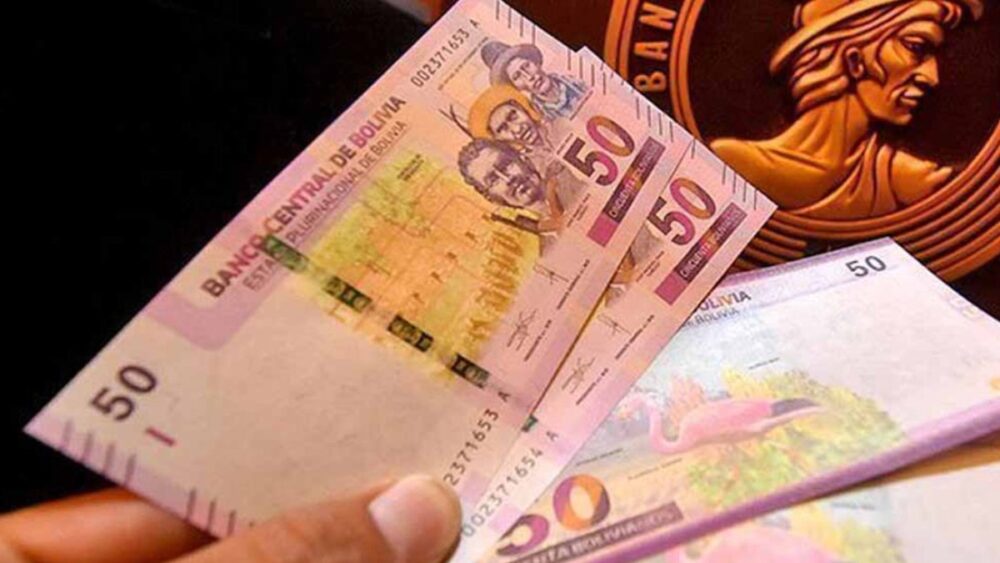
January’s inflation rate, as recorded by the National Institute of Statistics (INE), reached 1.95%. Based on this figure, economist Jaime Dunn predicts that inflation will hit double digits by mid-year.
“Clearly, inflation this year will reach double digits by mid-year. Inflation is essentially a monetary issue, and we have key contributing factors: imported cost inflation, with products arriving at much higher prices—over 40% in some cases. Bolivia imports nearly 70% of its inputs, including for manufacturing, which ultimately translates into higher costs,” he stated in an interview with ANF.
Bolivia ended 2024 with an accumulated inflation rate of 9.97%, the highest since 2008, when inflation reached 11.8%.
The government’s projected annual inflation rate for 2024 in the General State Budget (PGE) was 3.6%, while the International Monetary Fund (IMF) forecasted 4.8%. However, by December, inflation had almost reached 10%, far exceeding projections.
The latest IMF report, published on January 17, 2025, forecasts economic growth in Latin America and the Caribbean at 2.5% for 2025 and 2.7% for 2026. For Bolivia, the IMF projects 2.2% economic growth and 4.2% inflation for 2025.
According to Dunn, inflation, public spending, and other factors are worsening the country’s economic crisis.
“The economic crisis is deepening because the government continues to spend more than it has, pushing the fiscal deficit to an extreme and financing itself primarily through the Central Bank of Bolivia (BCB), which will have economic consequences,” he warned. Among these consequences is a more severe loss of the boliviano’s purchasing power.
To reverse the situation, he argued that the government must adopt austerity measures and cut public spending significantly.
“The government must be more austere, dramatically reducing public spending to stop borrowing from the Central Bank, lowering public debt, and restructuring finances to avoid inflationary pressures,” he added.
Additionally, he stressed the need to provide legal security for both domestic and foreign investment.
“Private investment is fundamental for a country. Legal security must be guaranteed for both national and foreign investment. However, in Bolivia, the opposite seems to be happening. This will lead to a deeper crisis, higher inflation, a weakened productive sector, and rising prices due to the loss of purchasing power of the currency,” he concluded.
/ERA
Por ANF, Eju.tv:
Además destacó que es importante dar seguridad jurídica a la inversión privada nacional y extranjera
La inflación del mes de enero de este año, registrada por el Instituto Nacional de Estadísticas (INE) alcanzó a 1,95%. Tomando en cuenta esta cifra, hasta mediados de año, llegará a los dos dígitos previó el analista económico, Jaime Dunn.
“Claramente la inflación este año va ser de dos dígitos a mitad de año. La inflación es esencialmente un tema monetario, entonces tenemos factores importantes, hay inflación por costos de importación, los productos vienen con precios mucho más caros, más del 40% en algunos casos. Bolivia importa casi el 70% de sus insumos, la industria manufacturera también, y esto se traduce en costos al final”, afirmó en entrevista con la ANF.
Bolivia cerró el 2024 con una inflación acumulada de 9.97%, la más alta desde 2008, cuando el país registro una inflación del 11.8%.
La meta anual de inflación prevista por el gobierno para el 2024 en el Presupuesto General del Estado (PGE) fue del 3,6% y según las previsiones del Fondo Monetario Internacional (FMI) alcanzaría al 4,8%; sin embargo, a diciembre de la anterior gestión llegó casi al 10%, superando las previsiones ampliamente.
Según el último informe del Fondo Monetario Internacional (FMI) del 17 de enero de 2025, determina que Latinoamérica y el Caribe tendrá un crecimiento económico para este 2025 del 2,5% y del 2,7% para el 2026. Para Bolivia proyectó un crecimiento económico del 2,2% y una inflación del 4,2% para este 2025.
Según el analista, la inflación, el gasto público, entre otros factores ahondan la crisis económica por la que atraviesa actualmente el país.
“La crisis económica se está ahondando, se está profundizando, porque el gobierno sigue gastando más de lo que tiene, está empujando a un déficit fiscal extremo, y se está financiando con el Banco Central de Bolivia (BCB) principalmente, que va generar consecuencias económicas”, indicó. Entre estas consecuencias se encuentra la pérdida más “fuerte” del valor adquisitivo de la moneda boliviana.
Por lo que sostuvo que para revertir esta situación, el gobierno debe ser mas austero y reducir el gasto público.
“El gobierno lo que tiene que hacer, es tener un gobierno más austero, reduciendo dramáticamente el gasto público para tener que dejar de prestarse dinero del Banco Central, bajar la deuda pública, cambiar las finanzas, para poder evitar justamente las presiones inflacionarias”, añadió.
Además, por otro lado dijo que se debe dar seguridad jurídica a las inversiones tanto nacionales como extranjeras.
“La inversión privada en un país es fundamental, tiene que darse seguridad jurídica tanto para la inversión privada nacional y extranjera, al parecer en Bolivia se hace lo contrario, esto nos va llevar a una crisis más profunda, a una inflación más alta y a una reducción del aparato productivo, de la capacidad productiva del país; y a un incremento de precios por la pérdida del poder adquisitivo de la moneda”, concluyó.
/ERA

 Bolivian Thoughts | Pensamientos Bolivianos (Bilingual/Bilingüe)