

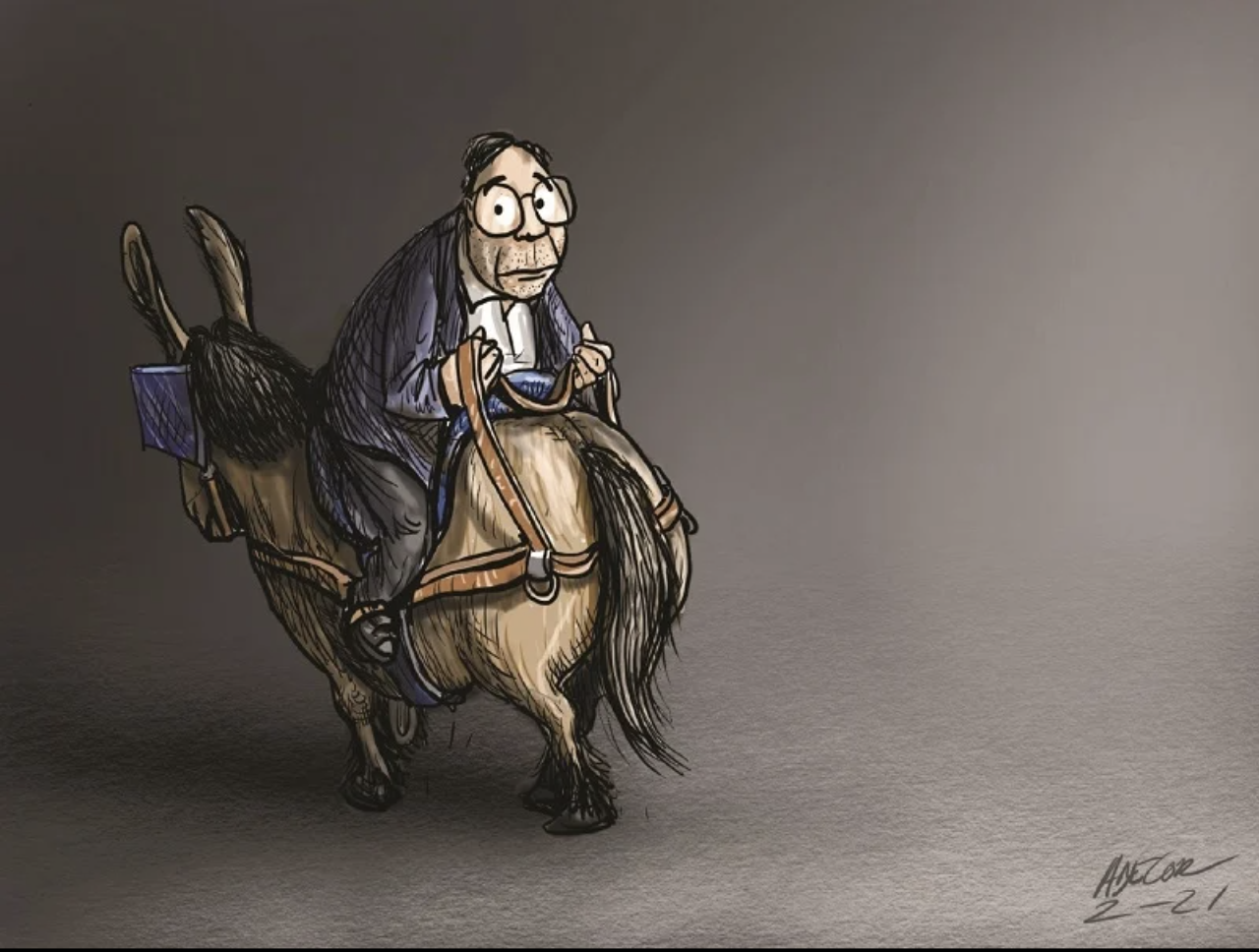
Editorial, El Deber:
“I am the State,” is the phrase attributed to Louis XIV, the absolutist king of France, when he imposed his power with a heavy hand against any rebellion attempt. Four hundred years later, another politician acts under the same logic: Evo Morales, who claims that marching to impose his own candidacy is marching for the interests of the country. The mobilization begins today and aims to reach the seat of government in a few days. It also has the objective of shaking up the power structure. Luis Arce knows this and confronts it. Both are publicly butting heads, without concern for the collateral damage of this all-out war.
Simultaneously, and perhaps not by coincidence, campesinos in La Paz are blocking roads on the altiplano. Their leaders declare themselves independent, but their goals resemble Morales’s. Both movements create uncertainty among the public, who are used to waiting for October in a state of alert, as something always happens and Bolivia always teeters on the edge of the precipice.
What is happening within the Movement Toward Socialism (MAS) is a power struggle, and saying so is no news to anyone. This party and its two leaders want to maintain control of the country but offer nothing in return. They have an exhausted economic model that no longer responds to current realities. They are clientelistic in the vast bureaucracy they created, and they continue to build the notion that there is no state without them. To achieve this, they have destroyed the institutional framework built during years of democracy, squandered the resources Bolivia obtained from gas revenues, and now they don’t know how to address the growing needs, especially those of the poorest.
Opposition leaders looking in from the outside say that the two MAS leaders are Bolivia’s real problem. The ongoing back-and-forth, which has intensified, becomes a distraction from addressing the country’s core issues, most of which are economic. What’s worse is that these critical problems are deepening, while the governing party does little to reverse the situation.
Bolivia is no longer the country admired by other governments. It has become a laggard in solving its problems. Two decades ago, our nation could boast of being slightly better off than Paraguay. Now, however, our neighbor has become a magnet for investments and a good place to live. Just a few years ago, we watched Argentina struggle through an unprecedented economic crisis. Now, we see how its government is taking steps to eliminate its fiscal deficit, reduce inflation, and improve its citizens’ reality. Even Peru, with its many social issues and corruption scandals involving its leaders, has not seen its economy deteriorate because that pillar has been preserved despite everything.
What does all this mean for us? It means that in the short term, Bolivia may become the country with the worst living conditions in the region: with rising inflation, no opportunities for national or foreign investments, and an increasing exodus of citizens.
Therefore, it is unforgivable that under the belief that the state is either Evo or Lucho, the country is being driven toward the abyss. The opposition politicians are not exempt from this conclusion either, as they also fail to present a solid and sustainable alternative for Bolivians, who are increasingly losing hope.
Editorial, El Deber:
El Estado soy yo, es la frase que se atribuía a Luis XIV, rey absolutista de Francia, cuando imponía su poder con mano dura frente a cualquier intento de rebelión. Cuatrocientos años después hay otro político que actúa en la misma lógica: Evo Morales que asegura que marchar para imponer su propia candidatura es marchar por los intereses del país. La movilización comienza hoy y pretende llegar en unos días a la sede de Gobierno. También tiene el objetivo de mover el tablero del poder. Luis Arce lo sabe y lo confronta. Ambos se dan cornadas públicas, sin importar los daños colaterales de esta guerra sin cuartel.
En simultáneo, y quizás no por casualidad, hay campesinos de La Paz que están bloqueando en las rutas del altiplano. Sus dirigentes se declaran independientes, pero los fines se parecen a los de Morales. Ambas movilizaciones generan incertidumbre en la ciudadanía, acostumbrada a esperar el mes de octubre en alerta, porque siempre pasa algo, siempre hay conflictividad y Bolivia llega al borde del precipicio.
Lo que está ocurriendo en el Movimiento Al Socialismo es una pelea por el poder y decirlo no es novedad para nadie. Este partido y sus dos mandamases quieren mantener el control del país, pero no le ofrecen nada a cambio. Tienen un modelo económico agotado, que ya no responde a la realidad actual, son clientelistas en la enorme burocracia que crearon y van construyendo el imaginario de que no hay Estado sin ellos. Para esto han destrozado la institucionalidad construida durante los años de democracia, han despilfarrado los recursos que Bolivia obtuvo de la renta del gas y ahora no saben cómo responder a las crecientes necesidades, especialmente de los más pobres.
La mirada desde afuera que hacen los opositores habla de que los dos líderes del MAS son el verdadero problema de Bolivia. El ida y vuelta, que se ha ido calentando, termina siendo una distracción para no encarar los temas de fondo del país, que son mayoritariamente económicos. Lo malo es que estas dificultades medulares se van profundizando, mientras desde el partido gobernante se hace muy poco para revertir la situación.
Bolivia ya dejó de ser el país admirado por otros gobiernos, se ha convertido en el país rezagado en la solución de sus problemas. Hace dos décadas, nuestra nación podía jactarse de estar un poco mejor que Paraguay y ahora resulta que el vecino se ha convertido en imán para inversiones y para vivir bien. Hace un par de años, veíamos a Argentina debatirse en una crisis económica sin precedentes y ahora observamos cómo el Gobierno da pasos destinados a eliminar el déficit fiscal, disminuir la inflación y mejorar la realidad de sus ciudadanos. Ni siquiera Perú, que tiene tantos problemas sociales y denuncias de corrupción de sus gobernantes, ha visto deteriorarse su economía porque es un pilar que se supo conservar a pesar de todo.
A qué nos lleva todo esto. Pues a que Bolivia en el corto plazo sea el país con peores condiciones de vida de la región: con inflación creciente, sin oportunidades para las inversiones nacionales y extranjeras, con un éxodo de ciudadanos que va en aumento.
Entonces, es imperdonable que, bajo la creencia de que el Estado es Evo o Lucho, se pretenda seguir conduciendo al país al abismo. No se salvan de esta conclusión los políticos de la oposición, que tampoco se muestran como una alternativa sólida y sostenible para los bolivianos, cada vez más desesperanzados.
https://eldeber.com.bo/edicion-impresa/el-estado-no-es-ni-evo-ni-lucho_385017

 Bolivian Thoughts | Pensamientos Bolivianos (Bilingual/Bilingüe)