
By Omar Pereyra, Eju.tv, from El Deber:
There are 53 communities affected by the fires in the country. Santa Cruz recorded the highest peak with 46 emergencies. The smoke forced the suspension of flights and in-person classes
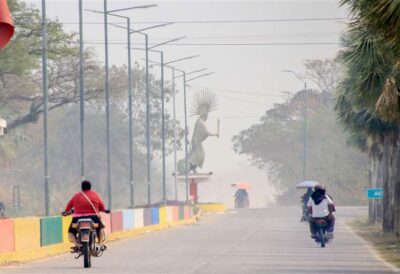
Source: eldeber.com.bo
The fires are hitting the country harder than ever. The flames are affecting 53 communities across three departments, severely impacting air quality. Six cities are suffering from heavy smoke pollution, forcing the evacuation of people and the suspension of flights and in-person classes in some areas.
According to the Vice Ministry of Civil Defense, the smoke from the fires is affecting the cities of La Paz, Cochabamba, Santa Cruz de la Sierra, Trinidad, Riberalta, and Cobija, where air quality ranges from fair to very poor. In the community of Santa Ana, in San Javier, breathing has become difficult, leading to the evacuation of children. Meanwhile, in Riberalta and Urubichá, in-person classes have been suspended. In Cobija, Trinidad, and the Chiquitania and Vallegrande regions of Santa Cruz, air operations have been suspended due to low visibility.
In Cobija, visibility is minimal, and reports from the municipal government show an Air Quality Index (AQI) of 382, indicating that the air is extremely poor. Authorities warn that the smoke is harmful to the population’s health, recommending avoiding outdoor activities.
In Santa Cruz de la Sierra, with a shift in winds, air quality improved from very poor to fair on Wednesday, but it is still not normal, as the AQI remains at 72. The effects are felt by sensitive groups, such as the elderly, children, pregnant women, and people with underlying health issues.
According to reports from Civil Defense, the fires are ravaging Santa Cruz, Beni, and Pando, affecting 18 municipalities and 53 communities or localities, as reported by the Vice Minister of Civil Defense, Juan Carlos Calvimontes.
Santa Cruz is the hardest hit, with active fires in 43 towns across the municipalities of Concepción, Urubichá, San Ignacio de Velasco, San Rafael, San José de Chiquitos, San Matías, San Miguel, Roboré, Puerto Quijarro, Ascensión de Guarayos, San Javier, and El Puente.
On Wednesday, the Santa Cruz government recorded a peak of 46 active fires in the department, the highest number so far this year.
In Beni, there are fires in nine localities within the municipalities of Guayamerín, Puerto Siles, Baures, San Joaquín, Huacaraje, and Magdalena, while in Pando, fires are affecting Filadelfia.
The Joint Command for Adverse Events Response (Ccrea) deployed 300 firefighters to assist with mitigation efforts in the three departments, according to the vice minister.
Children evacuated
The Paiconeka Indigenous Central reported that they were forced to evacuate children from the indigenous community of Santa Ana to the urban area of San Javier due to air pollution.
“The situation in District 5 has become critical. The thick smoke covering the area has forced the evacuation of children from the Santa Ana indigenous community, who are at serious risk due to air pollution,” stated the Paiconeka Indigenous Central report.
Lorena Coimbra Durán, a resident of La Esperanza, two hours by car from San Javier, explains that it is not possible to evacuate all the children from the communities because they prefer to stay with their parents, who are in the area trying to protect their few belongings, according to the Erbol agency.
“Yesterday, I came to San Javier with my children. At the same time, the Paiconeka Indigenous Central evacuated some children from the Santa Ana community to be treated at the hospital. In recent days, government brigades have arrived, providing us with medications for respiratory conditions and eye drops,” Coimbra said.
In San Javier, the communities of La Esperanza, Santa Ana, Tajibo, Santa María, and 3 de Septiembre are at risk.
“My children, myself, the father, and the grandparents are all sick with colds. It’s hard for me to breathe, my back and chest hurt. How must it be for the children? We’ve only given them a little pain relief. They wake up with eye discharge. I had to come to San Javier because it’s too much to expose them to. The smoke is thick; you can’t see from one house to another,” described Coimbra, secretary of records for La Esperanza.
Classes suspended
Riberalta District Education Director, Adán Rivero, confirmed that in-person classes are suspended until Thursday. School principals and teachers are required to coordinate with parents to send homework to avoid disrupting progress.
“The teacher receives the homework, and the parent takes it and brings it back for the teachers to review. It’s a semi-presential mode,” Rivero explained.
Meanwhile, Riberalta’s mayor, Ciriaco Rodríguez, announced that they are considering declaring a disaster due to the damage caused by the wildfires.
The same decision was made by the municipality of Urubichá in Santa Cruz. “The situation has become unsustainable, and we are prioritizing the health of the students,” emphasized Urubichá District Education Director Edwin Sandoval, indicating that the suspension will last until air quality in the area improves.
Por Omar Pereyra, Eju.tv, de El Deber:
Hay 53 comunidades afectadas por los incendios en el país. Santa Cruz registró el pico más alto con 46 emergencias. La humareda obligó a suspender vuelos y clases presenciales
Fuente: eldeber.com.bo
Los incendios golpean como nunca al país. El fuego afecta a 53 comunidades de tres departamentos y pasa factura a la calidad del aire. Seis ciudades sufren la contaminación por la densa humareda, lo que también obliga a la evacuación de personas y a la suspensión de vuelos y clases presenciales en algunas zonas.
Según el Viceministerio de Defensa Civil, la humareda de los incendios afecta a las ciudades de La Paz, Cochabamba, Santa Cruz de la Sierra, Trinidad, Riberalta y Cobija que tienen aire entre regular y muy malo. Además, en la comunidad de Santa Ana, en San Javier, se hace difícil respirar, lo que obligó a la evacuación de niños; mientras que en Riberalta y Urubichá suspendieron las clases presenciales. En Cobija, Trinidad y las zonas de la Chiquitania y Vallegrande en Santa Cruz se suspendieron las operaciones áreas por la baja visibilidad.
En Cobija la visibilidad es mínima y los reportes de la Alcaldía muestran un Índice de Contaminación del Aire (ICA) de 382, lo que significa que el aire es extremadamente malo. Advierten que el humo es dañino para la salud de la población, por lo que recomiendan evitar las actividades al aire libre.
En Santa Cruz de la Sierra, con el cambio de los vientos, este miércoles la calidad del aire pasó de muy mala a regular, pero aún no llega a ser normal, porque el ICA se mantiene en 72. Los efectos lo sienten las personas sensibles, como los adultos mayores, niños, embarazadas y personas con problemas de base.
De acuerdo con los reportes de Defensa Civil, los incendios azotan a Santa Cruz, Beni y Pando, y se localizan en 18 municipios y en 53 localidades o comunidades, informó el viceministro de Defensa Civil, Juan Carlos Calvimontes.
Santa Cruz es el más afectado, porque registra fuego activo en 43 poblaciones de los municipios de Concepción, Urubichá, San Ignacio de Velasco, San Rafael, San José de Chiquitos, San Matías, San Miguel, Roboré, Puerto Quijarro, Ascensión de Guarayos, San Javier y El Puente.
La Gobernación cruceña registró este miércoles un pico de 46 incendios activos en el departamento, que es la cifra más alta en lo que va del año.
En el caso de Beni hay incendios en nueve localidades de los municipios de Guayamerín, Puerto Siles, Baures, San Joaquín, Huacaraje y Magdalena; mientras que, en Pando, en Filadelfia.
El Comando Conjunto de Respuesta Ante Eventos Adversos (Ccrea) desplegó 300 bomberos para que ayuden en la tarea de mitigación en los tres departamentos, de acuerdo con el viceministro.
Evacúan a niños
Desde la Central Indígena Paiconeka informaron que se vieron obligados a evacuar a los niños de la comunidad indígena Santa Ana al área urbana del municipio de San Javier, porque fueron afectados por la contaminación del aire.
“La situación en el Distrito 5 se ha vuelto crítica. El humo espeso que cubre la zona ha obligado a la evacuación de los niños de la comunidad indígena Santa Ana, quienes se encuentran en grave riesgo por la contaminación del aire”, dice el informe de la Central Indígena Paiconeka.
Lorena Coimbra Durán, comunaria de La Esperanza, a dos horas de viaje en carro desde San Javier, explica que no es posible sacar a todos los niños y niñas de las comunidades porque prefieren quedarse al lado de sus padres, quienes están en la zona tratando de resguardar sus pocos bienes y pertenencias, según la agencia Erbol.
“Yo ayer me vine con mis niños a San Javier. Al mismo tiempo, la Central Indígena Paiconeka ha evacuado a algunos niños de la comunidad Santa Ana para que sean atendidos en el hospital. En estos días han llegado las brigadas (del Gobierno), nos han dado medicamentos para las afecciones respiratorias y gotitas para los ojos”, dijo Coimbra.
En San Javier están en riesgo las comunidades La Esperanza, Santa Ana, Tajibo, Santa María y 3 de Septiembre.
“Mis niños, yo, el papá y los abuelos, todingos estamos resfriados. Me cuesta respirar, la espalda y el pecho me duelen, cómo serán los niños, solo les hemos dado calmadolcito. Amanecen con lagañitas en los ojos, me tuve que venir a San Javier porque es demasiado exponerlos. El humo es bastante, no se ve de aquí a otra casa”, describió Coimbra, secretaria de actas de La Esperanza.
Clases suspendidas
Por su lado, el director distrital de Educación de Riberalta, Adán Rivero, confirmó que la modalidad presencial de clases se suspendió hasta este jueves. Los directores y profesores de cada unidad educativa deben coordinar con los padres de familia el envío de tarea para no perjudicar el avance.
“El profesor recibe la tarea, el padre las lleva y las trae para que revisen los maestros. Es modalidad semipresencial”, explicó Rivero.
Por su parte, el alcalde riberalteño, Ciriaco Rodríguez, adelantó que se está analizando con otras instancias más la declaratoria de desastre, debido a los daños generados por los incendios forestales.
La misma determinación asumió el municipio de Urubichá, en Santa Cruz. “La situación se tornó insostenible y estamos velando por la salud de los escolares”, recalcó el director distrital de Educación, Edwin Sandoval, al indicar que la determinación es hasta que mejore la calidad del aire en esta zona.

 Bolivian Thoughts | Pensamientos Bolivianos (Bilingual/Bilingüe)