
El Deber:
Sectors Corner the Government and Tension Rises on the Highways
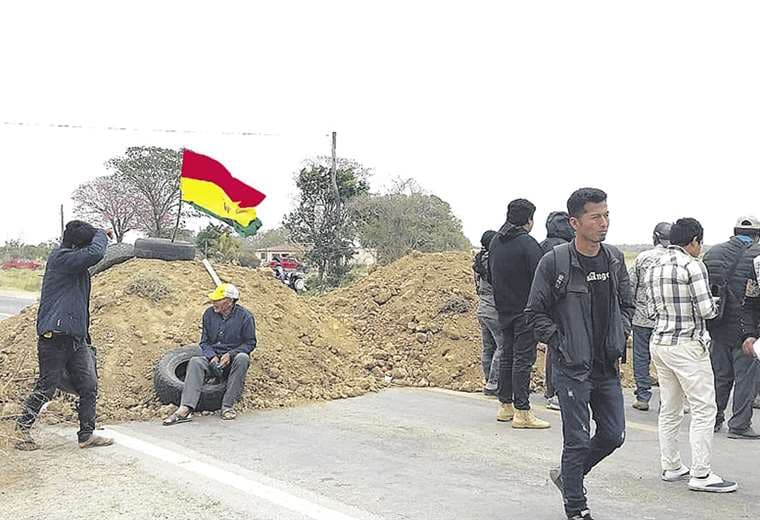
Since Monday, the intercultural groups in San Julián have maintained a blockade demanding access to biotechnology. Transport workers and drivers are preparing similar protests this week.
Different sectors began protest measures against the government on Monday, and the tension has spread to the country’s main highways. Early on July 29, a sector aligned with the Movement for Socialism (MAS), the intercultural groups, started the blockade on the highway connecting Santa Cruz with Beni, demanding the use of biotechnology to address the severe drought affecting soy, sorghum, wheat, and corn crops primarily.
Meanwhile, unionized drivers announced a 24-hour strike with road blockades for next Thursday, August 1, due to diesel shortages and the lack of dollar regulation, which is causing an increase in the cost of spare parts.
In turn, the heavy transport sector, grouped under the Bolivian Chamber of Heavy Transport, announced that today, Tuesday, they will hold their national assembly in the city of Sucre, where they will determine the measures to be taken in response to the diesel shortage, which has paralyzed a large part of the sector.
The National Confederation of Trade Workers of Bolivia also announced their assembly for next week, where they will determine actions against the government, demanding the repeal of at least three regulations related to tax collection, sanctions, and the dollar shortage.
Producers in emergency
“We are tired of so many meetings without results. The bases have decided it is time to push for biotechnology to improve our seeds and increase production,” said Félix Carrasco, executive of the Federation of Intercultural Groups North of the San Julián municipality in Santa Cruz.
The government, through the National Biosafety Committee, sent a delegation to San Julián on Sunday to explain that the release of transgenic soybean and maize (HB4) seeds cannot be possible without one more trial, which will be in the next summer campaign. The response did not satisfy the intercultural groups, who continued the blockade.
Regarding this, the Minister of Rural Development and Land, Santos Condori, described the blockade in San Julián as political.
Milk producers in Santa Cruz are also in an emergency and are asking for a new price band, as the price per liter of milk they deliver to industries has been frozen for 15 years.
Mauricio Serrate, director of the Departmental Federation of Milk Producers of Santa Cruz (Fedeple), said that the average price industries pay producers, Bs 3.15, has not moved for 15 years, while production costs have increased between 100% to 500%. He asked for an increase from Bs 3.15 to at least Bs 4.5 per liter delivered to industries like PIL Andina, the country’s largest processor.
However, the Interinstitutional Committee on Food Security and the company PIL ruled out price modifications at the meeting held on Monday in La Paz.
“We have established that the price of milk will not change; it will remain stable as it has been,” reported the Vice Minister of Internal Trade and Logistics, Grover Lacoa.
Meanwhile, the Minister of Public Works, Édgar Montaño, reported that today, Tuesday, he will meet with the heavy transport leadership, headed by Lucio Gómez, to explain the initiatives to guarantee diesel and avoid the 24-hour blockade they have defined.
“After a pleasant conversation with comrade Lucio, he accepted a meeting this Tuesday at nine in the morning. We will be accompanied by those in charge of the hydrocarbons issue, because that is their main request,” he announced.
The president of YPFB, Armin Dorgathen, assured on Monday that diesel supply would gradually normalize and that the country is currently 75% supplied. He said that the fuel could not be unloaded at the port of Arica due to the intense waves on the coast.
LOSSES
AGRO
Due to the drought and, to a lesser extent, the shortage of diesel and dollars, Anapo reported that the sector has suffered losses of more than $600 million.
DRIVERS
Unionized drivers report that trucks and buses load only Bs 1,000 of diesel and have to wait 24 to 48 hours at the gas stations.
Trade Workers
The members of the National Confederation of Trade Workers report that sales have fallen by 30% due to the increased cost of imported products in dollars.
El Deber:
Sectores acorralan al Gobierno y sube la tensión en las carreteras
Desde el lunes, los interculturales de San Julián mantienen un bloqueo en demanda por acceso a biotecnología. Los transportistas y choferes alistan protestas similares durante esta semana
Distintos sectores iniciaron medidas de protesta contra el Gobierno, el lunes, y la tensión se traslada a las principales carreteras del país. A primeras horas del 29 de julio, un sector afín al Movimiento al Socialismo (MAS), los interculturales, iniciaron el bloqueo en la carretera que une Santa Cruz con Beni, en demanda por el uso de biotecnología para afrontar la aguda sequía que afecta los cultivos de soya, sorgo, trigo y maíz, principalmente.
Mientras tanto, los choferes sindicalizados anunciaron un paro de 24 horas con bloqueo de carreteras, para el próximo jueves 1 de agosto, debido al desabastecimiento de diésel y la falta de regularización del dólar, que provoca el encarecimiento de los repuestos.
Por su parte el transporte pesado agrupado en la Cámara Boliviana del Transporte Pesado, anunciaron que hoy martes realizarán su ampliado nacional, en la ciudad de Sucre, donde determinarán las medidas a seguir ante la escasez de diésel, que mantiene a gran parte del sector, paralizado.
La Confederación Nacional de Trabajadores Gremiales de Bolivia, también anunció su ampliado para la próxima semana, donde determinarán acciones en contra del Gobierno, al que exigen la abrogación de por lo menos tres normas relacionadas con el cobro de impuestos, sanciones y la escasez de dólares.
Productores en emergencia
“Nos cansamos de tantas reuniones sin resultados. Las bases han decidido que es hora de impulsar la biotecnología para mejorar nuestras semillas y aumentar la producción”, afirmó Félix Carrasco, ejecutivo de la Federación de Interculturales Norte del municipio de San Julián, en Santa Cruz.
El Gobierno, a través del Comité Nacional de Bioseguridad, envió el domingo a San Julián una delegación para explicar que la liberación de las semillas transgénicas de soya y de maíz (HB4) no puede ser posible sin una prueba más, que será en la próxima campaña de verano. La respuesta no dejó satisfecho a los interculturales, que continuaron el bloqueo.
Al respecto, El ministro de Desarrollo Rural y Tierra, Santos Condori, calificó como político el bloqueo en San Julián.
Los productores de leche de Santa Cruz también se encuentran en emergencia y piden nivelar o una nueva banda de precios que mantiene congelada, desde hace 15 años, el precio por litro de leche que entregan a las industrias.
El director de la Federación Departamental de Productores de Leche de Santa Cruz (Fedeple), Mauricio Serrate, dijo que el precio promedio que las industrias pagan a los productores, de Bs 3,15, no se ha movido durante 15 años y, sin embargo, el incremento de los costos de producción ha subido entre un 100 hasta un 500%. Pidió el incremento del promedio de Bs 3,15 a por lo menos Bs 4,5 por litro entregado a industrias como PIL Andina, que es la mayor procesadora del país.
Sin embargo, el Comité Interinstitucional de Seguridad Alimentaria y la empresa PIL descartaron modificaciones al precio de la leche, en la reunión que sostuvieron este lunes en la ciudad de La Paz.
“Hemos podido establecer de que el precio de la leche no se va a modificar, va a continuar estable como lo ha estado”, informó el viceministro de Comercio y Logística Interna, Grover Lacoa.
Mientras tanto, el ministro de Obras Públicas, Édgar Montaño, informó que este martes (hoy) se reunirá con la dirigencia del transporte pesado dirigido por Lucio Gómez, para explicar las iniciativas destinadas a garantizar diésel y evitar el bloqueo de 24 horas que definieron.
“Después de una charla amena con el compañero Lucio, este martes me aceptó la reunión a las nueve (de la mañana) , estaremos acompañados con los encargados del tema de Hidrocarburos, porque ese es el punto principal que ellos estarían solicitando”, adelantó.
El presidente de YPFB, Armin Dorgathen, aseguró el lunes que el abastecimiento de diésel poco a poco “se irá normalizando” y que actualmente el país está abastecido al 75%. El ejecutivo sostiene que el combustible no se podía descargar en el puerto de Arica, debido al intenso oleaje en la costa.
PÉRDIDAS
AGRO
Debido a la sequía y, en menor medida, a la escasez de diésel y dólares, Anapo aseguró que el sector ha sufrido pérdidas por más de $us 600 millones.
CHOFERES
Los choferes sindicalizados aseguran que los camiones y flotas cargan solo Bs 1.000 de diésel y deben esperar 24 a 48 horas en los surtidores.
Gremiales
Los afiliados a La Confederación Nacional de Trabajadores Gremiales aseguran que las ventas han caído un 30% debido al encarecimiento de los productos importados en dólares.

 Bolivian Thoughts | Pensamientos Bolivianos (Bilingual/Bilingüe)