
Por Marco Antonio Belmonte, Vision 360:
Bolivians send more money from abroad
In Bolivia, remittances surpass foreign direct investment
Last year, net foreign investment reached $294 million, while remittances in 2023 totaled $1.4364 billion. By March of this year, remittances amounted to $334.9 million.
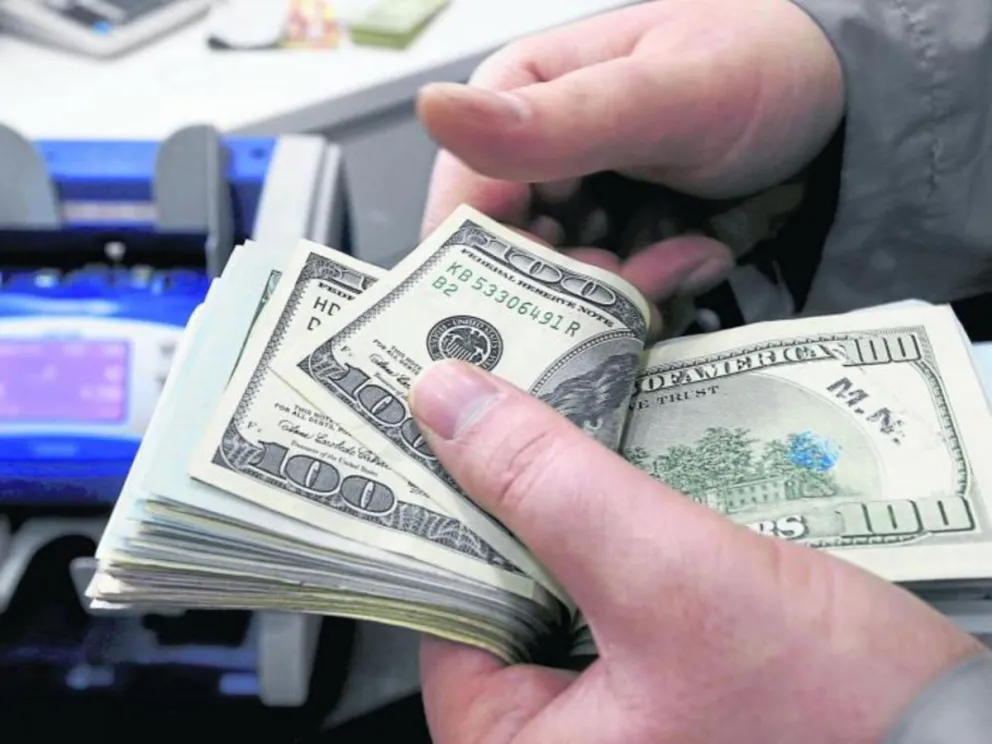
Bolivians abroad send more remittances to Bolivia. Photo: ABI.
In recent years, remittances sent by Bolivians who had to migrate to other nations in search of better job opportunities have surpassed the flows of Net Foreign Direct Investment (FDI) in the country.
In fact, last year the value of net FDI reached $294 million, while remittances totaled $1,436.4 million.
Last year’s remittances were slightly lower than those of 2022, totaling $1,437 million, according to data from the Central Bank of Bolivia (BCB).
Furthermore, by the first quarter of 2024, they already amount to $334.9 million (BCB data), meaning this figure has already surpassed the FDI for the entire previous year.
In January, the Minister of Development Planning, Sergio Cusicanqui, highlighted that during 2023, remittances from Bolivian workers abroad experienced an increase, marking another historic record that had not been seen in more than 10 years. These resources not only contribute to the reconstruction of the national economy but also positively impact family incomes.
BCB figures reveal that last year, $441.6 million came from Spain, a figure lower than the $451.4 million received in 2022.
From Chile, $312.9 million were sent, from the United States (USA) $301.3 million, from Brazil $92.8 million, from Argentina $69.3 million, among the main countries hosting Bolivian migrants.
Foreign Investment
External investment capital was concentrated in sectors such as hydrocarbons, manufacturing, and commerce. In mining, the inflow of capital was zero or negative, according to data from the Central Bank of Bolivia (BCB).
“Net Foreign Direct Investment received registered positive flows for the third consecutive year, which was $294 million for 2023, higher than the $287 million in 2022, explained by reinvested profits, mainly from the hydrocarbons and manufacturing industries, and by a smaller disinvestment,” states the BCB in its 2023 Balance of Payments report.
Gross investment in 2022 had reached $990 million, and in 2023, foreign companies operating in the country reduced their resources to $700 million.
In particular, in the hydrocarbons sector, the net external resources that entered the country were $128 million; in the manufacturing industry, $47 million; in commerce, $38 million; and in transport, storage, and communications, also $38 million, according to the central bank.
In mining, gross investment was negative by $2 million, and net flow fell to minus $20 million.
“Disinvestment was 58.7% lower compared to the previous year, mainly explained by the amortization of intrafirm credits. Consequently, a positive net investment flow was recorded in a context of slowing economic growth in the region, according to the World Bank’s outlook reports,” highlighted the Central Bank in its report.
On June 7th, the President of Bolivia, Luis Arce, during the plenary session of the International Economic Forum in Saint Petersburg, stated that Bolivia is open to international investments but guarantees maintaining control over its natural resources, which it considers strategic. “When it comes to natural resources, strategic for the country, the State must have 50 percent plus one of the participation in these businesses,” he affirmed.
Net FDI
Financial analyst Jaime Dunn explained that net FDI means the inflow and outflow of investment, and if this flow is negative, it implies that investors have withdrawn more money than they have injected into the country.
He recalled that foreign investment in Bolivia was significant during the capitalization of public companies (1993-1997) and in the recent period, from 2009 to 2014. “It was interesting in amount while there were hydrocarbons in Bolivia, from 2009 to 2014 when net FDI was very positive. What happened is that the gas ran out, and the oil companies are the ones who have taken most of their money to other countries,” he pointed out.
That is why at the end of 2022, there was a negative flow of $26 million, due to disinvestment.
To attract FDI, the expert pointed out that the most important thing is to have a transparent country, without corruption, and above all with legal security. “In Bolivia, with nationalizations, with the abuse of the law and the Constitution, it is impossible to achieve net foreign investment. Moreover, this investment must be of quality, not from pirates. The entry of corrosive capital is very high; there are Russian, Chinese companies, and companies that can come with different names, but they are not always of quality,” he noted.
Dunn believes that Bolivia is still an attractive country with potential in sectors such as hydrocarbons because there are still reserves, and the gas has not run out, but exploration must be encouraged. Mining also has a good outlook, but the problem is that the tax regime is one of the least attractive in the world.
Economist Germán Molina explained that FDI is reduced in Bolivia because the Political Constitution of the State (CPE) approved in 2009 discourages the attraction of capital, as one of the articles emphasizes that the State is the main actor in the economy through strategic companies.
“This is read by investors abroad, and it is not attractive to them, and they cannot bring their money for it to be managed by a government that, they fear, may not be able to do so efficiently. To attract investment again, the CPE or a law that can generate incentives must be modified; but now, globally, there is lower growth, and investors will always prefer to take their money to safe countries in the European Union, the United States; and in Latin America, to Chile, Brazil, Mexico, Paraguay. But in Bolivia, if they see blockades, it is a disincentive,” he emphasized.
Regarding remittances, Molina observed that flows have increased because many people do not see a future in Bolivia, there is unemployment, and families go to other countries, which is why more money is sent from abroad.
“This will continue because there is no prospect that the country can grow sustainably over time, and this means that new generations entering the labor market have no future; there is a lot of political clientelism to access jobs. Currently, the largest employer is the public sector, but it requires party affiliation more than professional training,” he stated.
Declining Investment
According to a study and a draft law titled “Law for the Promotion, Protection, and Legal Stability of Private Investment,” prepared by economists Jaime Dunn, Antonio Pérez Velasco, and edited by Henry Oporto with the Milenio Foundation, until 2004 Bolivia maintained higher net FDI percentages than many other countries in the region. However, from 2005 onwards, net FDI experienced a declining trajectory, representing only half of the investment rate in the region, significantly reducing its contribution to growth as public investment increased.
Private investment fell from 13% of GDP in 2000 to a meager 6% in 2021, while public investment grew from 5% in 2000 to 14% in 2015, and then fell to 11% of GDP in 2021.
According to the study, after the period of high commodity prices that boosted Bolivian exports and generated a massive increase in public investment, the new economic scenario is marked by the difficulty in financing the public investment budget.
“In summary, the decreasing trend of public investment, along with the low level of private investment, determined that Gross Capital Formation decreased from 22% of GDP in 2012 to 17% in 2022. The consequence is the low growth rate of the national economy in recent years and the stagnation trend warned by several studies,” the analysis specifies.
Until 2005, net FDI experienced a considerable increase, with a peak in 1998. However, from 2005 onwards, with the change in economic policy, disinvestment and negative net FDI values were recorded. In fact, in 2019, gross investment reached $560 million, but disinvestment was $720 million, with a negative balance of $160 million, according to the study.
A similar situation occurred in 2020 due to the impact of the pandemic. According to ECLAC, in 2022 Bolivia recorded negative FDI inflows of -$26 million, dragged by disinvestments in hydrocarbons of $307 million.
The Milenio study notes that FDI accelerated when commodity prices reached unprecedented levels. The data shows that most of the FDI in Bolivia comes from reinvested profits, to a lesser extent from intercompany loans, while capital contributions are minimal.
It argues that Bolivia is a marginal country in attracting foreign investment in Latin America; public investment, which from 2005-2019 represented 66% of total investment, has lost strength as a growth lever due to lack of financing; and private investment, which in 2000 represented 13% of GDP, fell to just 6% in 2021.
Bolivia with Potential
Despite everything, the Milenio study argues that Bolivia has the potential to attract external investments. It can produce food, minerals, energy, digital services, and more.
According to FAO projections, the world needs to increase food supply by at least 60% by 2050 to meet the needs of the global population. A good portion of the supply is expected to come from Latin America, which includes Bolivia due to its natural resources and favorable climatic conditions for agricultural production.
It is estimated that the current production of 20 million metric tons of food can be expanded to 30 million by 2030, nearly quadrupling Bolivia’s export capacity (currently three million metric tons annually); the value of agro-food exports would reach about $4 billion annually, only in soybeans and derivatives, by the end of this decade.
The national territory has attractive geological potential in both traditional and non-traditional minerals such as lithium, cobalt, nickel, rare earths, and many others with growing demand in the technological and digital industries and for the energy transition.
In the case of hydrocarbons, the only thing that can save the industry is a massive influx of investments in exploration and development of new fields, and an urgent change in sectoral policy is needed to make foreign capital attraction viable.
FDI in electric vehicles presents unprecedented opportunities due to the world’s shift towards electric mobility.
Bolivia can also have nearshoring opportunities, which is the business strategy of outsourcing activities or services to suppliers in nearby countries.
To attract investment to the country, the draft law proposes a series of incentives; for example, investors could benefit from a 50% reduction in the Corporate Income Tax rate and a 100% exemption from the Transaction Tax rate, established by the special tax law, if they prove minimum, net, effective, and constant capital investments equivalent to five million dollars, as established in the investment contract.
Companies legally registered in a national private investment registry would be exempt from paying 50% of the rate of any tax established on the remittance of national source profits to foreign accounts.
It also details that they would be exempt from customs duties, on the one hand, import and replenishment duties on raw materials, machinery, equipment, and work tools for the start and maintenance of operations, as established in the respective investment contract.
Bolivian in Argentina: “We propose creating a virtual wallet”
“Here, everything related to remittances is handled with two exchange rates, the official dollar and the blue (illegal) dollar with which speculation occurs. Remittances are handled with the blue dollar; in that sense, everything that can be sent to Bolivia must be quoted with the illegal dollar because that is how companies like Western Union operate. We have proposed to the authorities to create a virtual wallet, a virtual banking entity so that we can make the transaction directly with the official exchange rate, but there is no response. Everything changed with Mauricio Macri, until 2015 we had the best salary in Latin America, $400 as the minimum wage. Then it fell to $150, and it remains so, making it impossible to send remittances,” said Iván León, a Bolivian in Argentina.
By Marco Antonio Belmonte, Vision 360:
Bolivianos envían más dinero del exterior
En Bolivia, las remesas superan a la inversión extranjera directa
La inversión extranjera neta, el año pasado, alcanzó 294 millones de dólares; las remesas en 2023 sumaron 1.436,4 millones de dólares y a marzo de este año, 334,9 millones.
Los bolivianos en el exterior envían más remesas hacía Bolivia. Foto. ABI.
En los últimos años, las remesas enviadas por los bolivianos que tuvieron que migrar a otras naciones en busca de mejores oportunidades laborales han superado los flujos de la Inversión Extranjera Directa Neta (IED) en el país.
De hecho, el año pasado se alcanzó un valor de 294 millones de dólares de IED neta, mientras que las remesas sumaron 1.436,4 millones.
El envío de las remesas del año pasado fue levemente inferior al de 2022, sumaron 1.437 millones de dólares, de acuerdo con datos del Banco Central de Bolivia (BCB).
Además, al primer trimestre de 2024, ya suman 334, 9 millones de dólares (datos del BCB), es decir que esta cifra ya superó la IED de toda la gestión pasada.
En enero, el ministro de Planificación del Desarrollo, Sergio Cusicanqui, destacó que, durante 2023, las remesas de trabajadores bolivianos en el exterior experimentaron un incremento, lo que marcó de esa forma otro récord histórico que no se tenía desde hace más de 10 años. Estos recursos no solo contribuyen a la reconstrucción de la economía nacional, sino que también impactan positivamente en los ingresos familiares.
Las cifras del BCB revelan que el año pasado, desde España llegaron 441,6 millones de dólares, cifra menor a los 451,4 millones que llegaron en 2022.
De Chile se enviaron 312,9 millones de dólares, de Estados Unidos (EEUU) 301,3 millones de dólares, de Brasil 92,8 millones, de Argentina 69,3, entre los principales países donde se acoge a migrantes bolivianos.
Inversión extranjera
El capital externo de inversión se concentró en sectores como hidrocarburos, manufacturas y comercio. En minería, la llegada de capitales fue nula o negativa, según datos del Banco Central de Bolivia (BCB).
“La Inversión Directa Neta recibida registró flujos positivos, por tercera gestión consecutiva, la cual fue de 294 millones de dólares para 2023, superior a los 287 millones de dólares de 2022, explicada por las utilidades reinvertidas, en mayor medida, de los sectores hidrocarburos e industria manufacturera, y por una menor desinversión”, precisa el BCB, en su reporte de Balanza de Pagos de 2023.
La inversión bruta en 2022 había llegado a 990 millones de dólares y, en 2023, las empresas extranjeras que operan en el país disminuyeron los recursos a 700 millones de dólares.
En particular, en el sector de hidrocarburos, los recursos externos netos que ingresaron al país fueron de 128 millones de dólares; en la industria manufacturera, 47 millones de dólares; en comercio, de 38 millones de dólares; y en transporte, almacenamiento y comunicaciones, también de 38 millones de dólares, señala el ente emisor.
En minería la inversión bruta fue negativa en dos millones de dólares y el flujo neto cayó a menos 20 millones de dólares.
“La desinversión fue menor en 58,7% respecto a la gestión previa, siendo explicada principalmente por amortizaciones de créditos intrafirma. En consecuencia, se registró un flujo positivo de inversión neta recibida, en un contexto de ralentización del crecimiento económico de la región, de acuerdo a los reportes de perspectivas del Banco Mundial”, destacó el Banco Central en su reporte.
El pasado 7 de junio el presidente del Estado, Luis Arce, durante la sesión plenaria del Foro Económico Internacional en San Petersburgo, dijo que Bolivia está abierta a las inversiones internacionales, pero garantiza mantener el control de sus recursos naturales, que considera estratégicos. “Cuando se trata de recursos naturales, estratégicos para el país, el Estado tiene que tener el 50 por ciento más uno de la participación de estos negocios”, afirmó.
IED neta
El analista financiero Jaime Dunn explicó que la IED neta significa ingreso y salida de inversión y si este flujo es negativo implica que los inversionistas han sacado más dinero del que han inyectado en el país.
Recordó que la inversión extranjera en Bolivia fue importante durante la época de la capitalización de empresas públicas (1993- 1997) y en el último período, 2009 hasta 2014. “Fue interesante en monto mientras en Bolivia había hidrocarburos, el año 2009 hasta 2014 donde la IED neta era muy positiva. Lo que pasa es que se acabó el gas y las empresas petroleras son las que más se han llevado su plata a otros países”, apuntó.
Es por eso que a finales de 2022 se tuvo, dijo, un flujo negativo de 26 millones de dólares, producto de la desinversión.
Para captar IED, el experto señaló que lo más importante es tener un país transparente, sin corrupción y sobre todo con seguridad jurídica. “En Bolivia, con las nacionalizaciones, con el abuso que hay de la ley y la Constitución, es imposible conseguir inversión extranjera neta. Además, esta inversión debe ser de calidad, no de piratas. El ingreso de capital corrosivo es muy alto; hay empresas rusas, chinas y empresas que pueden venir con diferentes nombres, pero no siempre son de calidad”, anotó.
Dunn considera que Bolivia aún es un país atractivo y con potencial en sectores como hidrocarburos, porque aún hay reservas y no se acabó el gas, pero se debe impulsar la exploración. La minería tiene igual una buena perspectiva, pero el problema es que el régimen impositivo es uno de los menos atractivos del mundo.
El economista Germán Molina explicó que la IED es reducida en Bolivia porque con la Constitución Política del Estado (CPE) aprobada en 2009, se desincentiva la atracción de capitales, porque uno de los artículos subraya que el Estado es el principal actor de la economía a través de empresas estratégicas.
“Esto en el exterior es leído por los inversionistas y no les resulta atractivo y no pueden traer su dinero para que lo administre un gobierno que, se teme, no lo pueda hacer en términos eficientes. Para volver a atraer inversión se debe modificar la CPE o una ley que pueda generar incentivos; pero ahora a nivel mundial hay menor crecimiento y los inversionistas siempre preferirán llevar su dinero a países seguros en la Unión Europea, Estados Unidos; y en América Latina, hacia Chile, Brasil, México, Paraguay. Pero en Bolivia, si ven bloqueos, es un desincentivo”, subrayó.
En el caso de las remesas, Molina observó que los flujos han aumentado porque mucha gente no ve futuro en Bolivia, hay desempleo y las familias salen a otros países y por eso se envía más dinero desde el exterior.
“Esto va a continuar porque no hay perspectiva de que el país pueda crecer de manera sostenible en el tiempo, y esto hace que las nuevas generaciones que se insertan al mercado laboral no tengan futuro; hay mucho clientelismo político para acceder a puestos de trabajo. Actualmente, el mayor empleador es el sector público, pero ahí se necesita filiación partidaria más que formación profesional”, aseveró.
Inversión a la baja
Según un estudio y un anteproyecto de ley denominado “Ley para el Fomento, Protección y Estabilidad Jurídica de la Inversión Privada”, elaborado por los economistas Jaime Dunn, Antonio Pérez Velasco y editado por Henry Oporto con la Fundación Milenio, hasta 2004 Bolivia mantuvo porcentajes de IED Neta más altos que muchos otros países de la región. Sin embargo, a partir de 2005, la IED Neta experimentó una trayectoria declinante, que representa solo la mitad de la tasa de inversión en la región, de manera que su contribución al crecimiento bajó significativamente, a tiempo que la inversión pública aumentaba.
La inversión privada cayó del 13% del PIB en el año 2000 a un exiguo 6% en 2021; entretanto, la inversión pública creció de 5% en 2000 al 14% en 2015, para descender a 11% del PIB en 2021.
De acuerdo con el estudio, transcurrido el período de altos precios de las materias primas que impulsaron las exportaciones bolivianas y generaron un enorme aumento de la inversión pública, el nuevo escenario económico viene marcado por la dificultad de financiar el presupuesto de inversión pública.
“En suma, la tendencia decreciente de la inversión pública, junto con el bajo nivel de inversión privada, determinan que la Formación Bruta de Capital hubiese disminuido de 22% del PIB en 2012 a 17% en 2022. La consecuencia de ello es la baja tasa de crecimiento de la economía nacional de los últimos años y la tendencia de estancamiento que advierten varios estudios”, precisa el análisis.
Hasta 2005, la IED neta experimentó un aumento considerable, con un nivel máximo en 1998. Sin embargo, a partir de 2005, con el cambio en la política económica se registra desinversión y un valor negativo de la IED neta. En efecto, en 2019 la inversión bruta llegó a 560 millones de dólares, pero la desinversión fue de 720 millones, con un saldo negativo de 160 millones, dice el estudio.
Situación similar se presentó en 2020 debido al impacto de la pandemia. Según la Cepal, en 2022 Bolivia registró entradas de IED negativas de -26 millones de dólares, arrastradas por desinversiones en hidrocarburos de 307 millones de dólares.
El estudio de Milenio da cuenta que la IED se aceleró cuando los precios de commodities llegaron a niveles nunca vistos. Los datos muestran que la mayor parte de la IED en Bolivia proviene de reinversión de utilidades, en menor medida, de préstamos entre empresas, mientras que los aportes de capital son lo mínimo.
Sostiene que Bolivia es un país marginal en la entrada de inversión extranjera en América Latina; la inversión pública, que en el período 2005-2019 representó el 66% de la inversión total, ha perdido vigor como palanca de crecimiento, debido a la carencia de financiamiento; y la inversión privada, que en 2000 representó el 13% del PIB, para 2021 se redujo a solo 6%.
Bolivia con potencial
Pese a todo, el estudio de Milenio sostiene que Bolivia cuenta con potencial para atraer inversiones externas. Se pueden producir alimentos, minerales, energía, servicios digitales y otros.
Según las proyecciones de la FAO, el mundo requiere incrementar la oferta de alimentos en por lo menos 60% hacia el año 2050 para satisfacer las necesidades de la población mundial. Se espera que una buena parte de la oferta proceda de América Latina, lo que incluye a Bolivia por su dotación de recursos naturales y condiciones climáticas favorables para la producción agropecuaria.
Se estima que la producción actual de 20 millones de TM de alimentos bien puede expandirse hasta 30 millones en 2030, casi cuadruplicando la capacidad exportadora de Bolivia (actualmente de tres millones de TM anuales); el valor de las exportaciones agroalimentarias llegaría a unos cuatro mil millones de dólares anuales, únicamente en soya y derivados, para finales de la presente década.
El territorio nacional posee un atractivo potencial geológico en minerales tradicionales y no tradicionales como litio, cobalto, níquel, tierras raras y muchos otros con demanda creciente en la industria tecnológica y digital, y para la transición energética.
En el caso de hidrocarburos, lo único que puede salvar a la industria es una corriente masiva de inversiones en exploración y desarrollo de nuevos campos, y es urgente el cambio de la política sectorial que haga viable la atracción de capital extranjero.
La IED en automóviles eléctricos presenta oportunidades inéditas por el avance del mundo hacia la movilidad eléctrica.
También Bolivia puede tener oportunidades de nearshoring, que es la estrategia empresarial de subcontratación de actividades o servicios a proveedores en países cercanos.
Para atraer inversión al país, el anteproyecto plantea una serie de incentivos; por ejemplo, los inversionistas podrán beneficiarse con una reducción del 50% de la alícuota IUE y una exención 100% de la alícuota del Impuesto a las Transacciones, establecidas por la ley tributaria especial, en caso de acreditar inversiones mínimas, netas, efectivas y constantes de capital, equivalentes a cinco millones de dólares, establecidas según el contrato de inversión.
Las empresas legalmente inscritas en un registro nacional de inversión privada quedarán exentas del pago del 50% de la alícuota de cualquier impuesto establecido a la remesa de utilidades de fuente nacional, hasta cuentas en el extranjero.
También detalla que quedarán exentas de tributos aduaneros, por un lado, los derechos de importación y reposición de materias primas, maquinaria, equipos y medios de trabajo para el inicio y mantenimiento de operaciones, y conforme a lo establecido en el respectivo contrato de inversión.
Boliviano en Argentina: “Planteamos crear una billetera virtual”
“Acá, todo lo que tiene que ver con remesas se maneja con dos tipos de cambio, el dólar oficial y el dólar blue (ilegal) con el que se especula. Las remesas se manejan con dólar blue; en ese sentido, todo lo que se pueda enviar a Bolivia se debe cotizar con el dólar ilegal, porque así se manejan las empresas como Western Union. Hemos planteado a las autoridades que se pueda crear una billetera virtual, entidad bancaria virtual para que podamos hacer la transacción de forma directa con el tipo de cambio oficial, pero no hay respuesta. Todo cambió con Mauricio Macri, hasta 2015 teníamos el mejor sueldo de América Latina 400 dólares como sueldo mínimo. Luego cayó a 150 dólares y así se mantiene, y eso imposibilita el envío de remesas”, señaló Iván León, boliviano en Argentina.

 Bolivian Thoughts | Pensamientos Bolivianos (Bilingual/Bilingüe)