
Rides, Adventure Motorcycle:
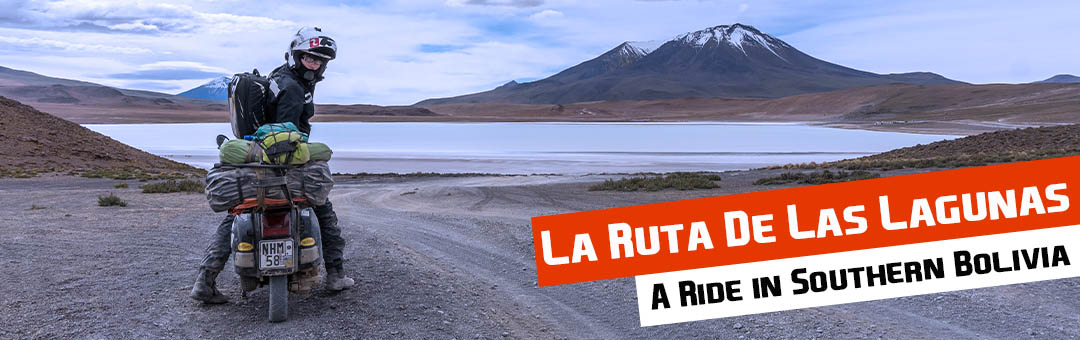
La Ruta De Las Lagunas: A Ride in Southern Bolivia
Written by Alexandra Fefopoulou and Stergios Gogos. Posted in Rides
It was late June when we arrived at San Pedro de Atacama in northern Chile. Our first encounter with the Andes and the high altitude had already given us an idea of how our scooter behaved under such conditions. We had replaced the carburetor jet with a smaller one more adequate for the thin air and, for many miles, had been traveling with the air filter completely removed. And, in some cases, to climb the steeper slopes, one of us had to push the scooter and walk.
The road from Argentina to Chile up to San Pedro de Atacama is paved; riding with no air filter made things relatively easy, although even that would soon change.
After three days of traveling apart, we promised to come back and do the same route again, but the next time two-up!
A while ago, while preparing for our trip across South America, we read about the “Ruta de las Lagunas”—the lakes route through one of the most spectacular places on Earth. The entire area lies in the southwest part of Bolivia, at over 14,000 ft. on the Bolivian altiplano. From the first photos we saw, we decided to explore this area together on our Vespa.
However, after serious consideration, we decided we’d need to cross this area separately to avoid damaging our machine. It seemed unlikely we could make it two-up on the overloaded scooter. Between San Pedro de Atacama (Chile) and Uyuni (Bolivia), this route covers about 340 miles off-road, crossing through the largely uninhabited high plateau.
It’s a vast rocky terrain, full of volcanoes, geysers, hot springs, and above all, volcanic lakes with boiling water and striking colors.
Superb! Even the flora and fauna in this area have adjusted to this harsh environment that seems like another planet. At the end of the route, you’re on the edges of the Salar de Uyuni, the world’s largest salt flat—3,900 square miles of pure white salt!
In San Pedro de Atacama, travel agencies offer organized 4×4 tours to Uyuni, so the first thing we did was book one for me. The plan was to travel separately through the Ruta de las Lagunas and meet again in Uyuni. Since there is no cellphone coverage up there, we set the place and time of our reunion after three days at Uyuni main square.
We talked with some travelers who tried to discourage us from attempting to roll our 10-inch wheels through the sandy and corrugated tracks of the Ruta de las Lagunas. They even said it would be impossible to find fuel or water and food supplies there, but we decided to ignore them. It wasn’t the first time we heard exaggerated stories, and if we believed all of them, we’d never have gotten out of our apartment in Athens.
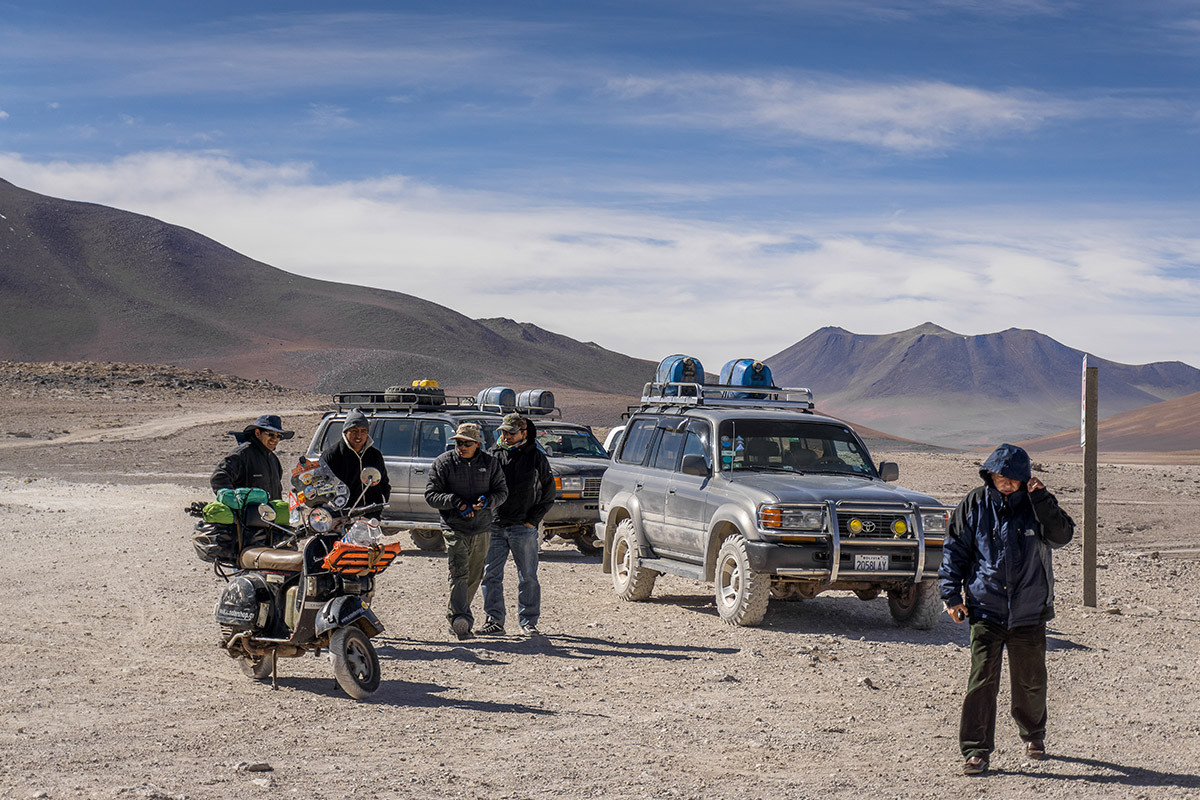
The day of our departure came; I left early taking almost all the luggage. It was the first time we traveled separately; I was a bit anxious, but Stergios was excited since riding under such conditions is always a challenge. The next few days of my version of the trip seemed like a canned adventure: ready meals cooked by our guide, dinner and sleep in organized shelters, scheduled times, and itineraries. And if that were not enough, the rest of the crew were 20-year-old students from the U.S., Canada, and the U.K. obviously in the mood for partying.
Stergios took only the necessary equipment in order to lighten the scooter as much as possible: camping equipment, warm clothes, 1.3 gallons of water, some food, and a 2.6-gallon jerrycan of gas. He arrived at the border around 9:00 a.m. and stood in line to have his passport stamped and do the Vespa’s paperwork.
The immigration office was a small building with a huge Bolivian flag fluttering in the cold wind. The customs officer laughed sarcastically when he saw the scooter and warned Stergios that it would be impossible to cross the area “on that thing.” Eventually, Stergios entered the “Eduardo Abaroa Andean Fauna National Reserve.”
July is one of the coldest months of the year, but winter in the Bolivian altiplano has an advantage: the climate is completely dry.
He had to cope with the high altitude, the wind, and the low temperatures, but at least it wouldn’t rain.
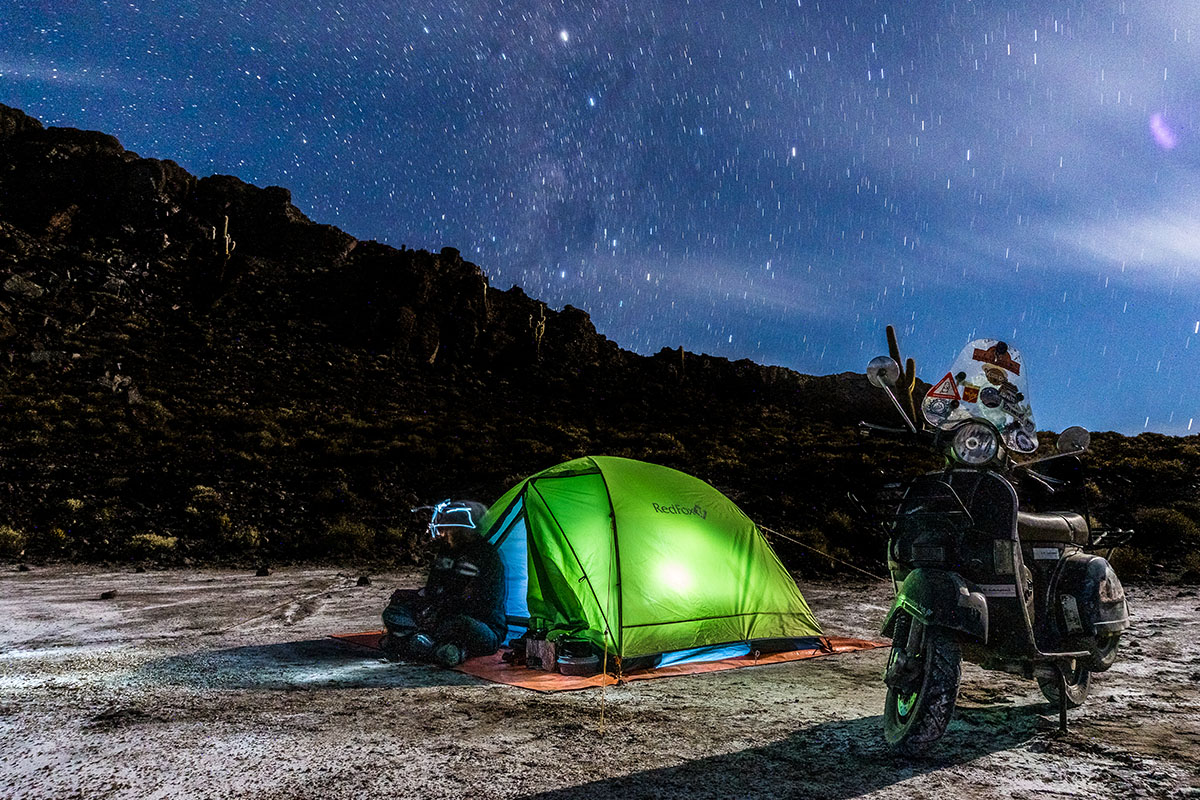 There wasn’t a single cloud in the starry night sky, and the only noise that could break the absolute silence was that of the scooter’s engine.
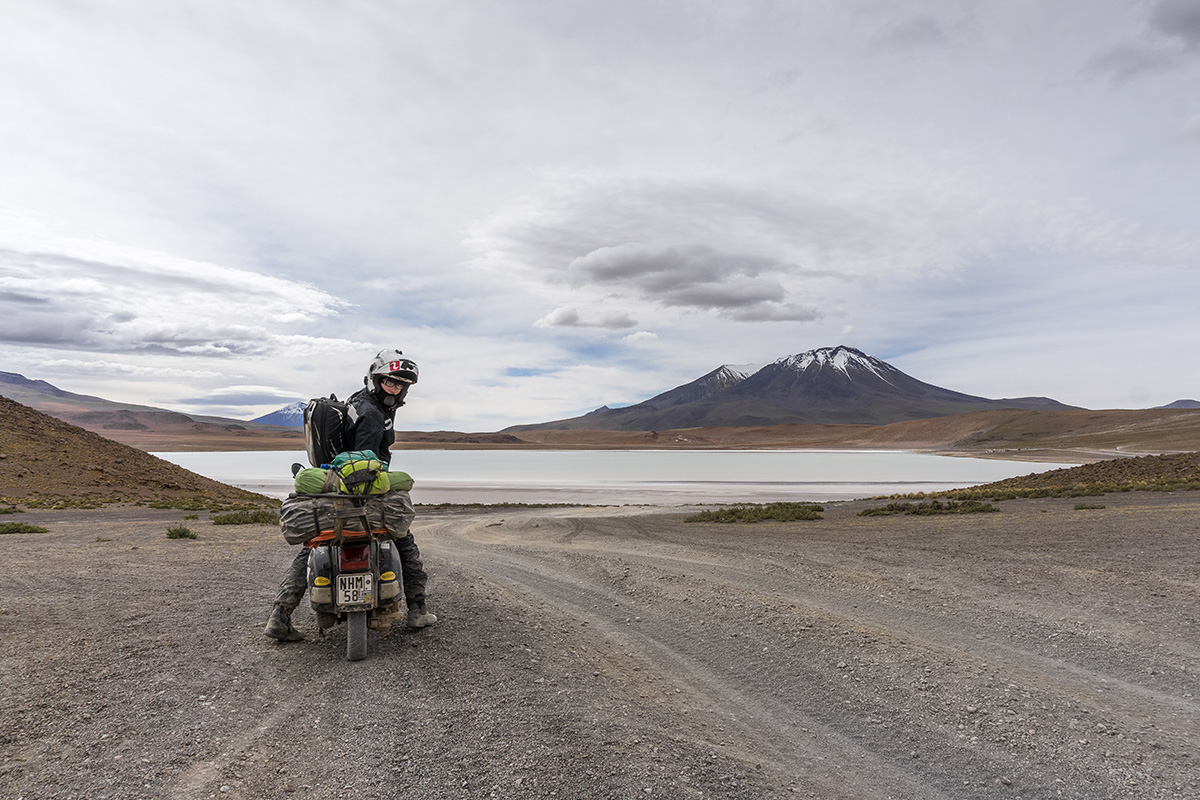
He used the GPS to help navigate the tracks and only a few miles into the reserve saw the first two volcanic lakes: the Laguna Verde and the Laguna Blanca—the Green and the White lagoons. Their many different colors are a result of high mineral content, and they’re visually impressive. In the background stands the Licancabur volcano. The symmetrical cone at 2,000 ft. is only one of the many ancient volcanoes in the area. Off-roading from there was difficult, but in no case impassable.
A few kilometers north, he stopped near the Chalviri salt flat, where waters from Polques hot springs gather to form a small spa often used by tourists. He stopped next to the big trucks and caught many curious looks from passersby. The destination for that day was the Laguna Colorada—the Red Lagoon—and was completely amazed by its otherworldly scenery.
 Some guy I bumped into mentioned seeing a bearded rider going toward the Black Lagoon on a ridiculously small bike. What a relief! At least I knew Stergios was okay.
The Laguna Colorada is a salty lake loaded with minerals and algae, giving its water a rusty red color. There are also islands of borax whose white color contrasts with the reddish pigmentation with dozens of flamingos dancing about, making it a highly photogenic spot.
With the aid of the GPS, Stergios located the “refugio”—the shelter, where he’d spend the night. He was the first to get there and, as he told me later, was expecting to meet me. The first trucks from the various travel agencies arrived, but apparently I wasn’t among them. He eventually discovered there were various places to sleep around Laguna Colorada. Unfortunately, it was getting dark, so he couldn’t check.
After a good night’s sleep, he continued north where the corrugated road rattled his teeth, a telltale sign that sooner or later, something would come loose on the poor scooter.
After an almost sleepless night surrounded by partying students, I woke up in the freezing cold to gaze at the sunrise until the rest of the crew was ready. I was disappointed at not having met Stergios. At least, the hangover made my fellow travelers quiet and easier to get along with. Some guy from another agency we bumped into mentioned seeing a bearded rider on a ridiculously small bike. What a relief! At least I knew Stergios was okay.
The route was astonishingly beautiful, and I was enjoying the silence in the truck when suddenly I spotted Stergios! I hung from the window, screaming and waving trying to draw his attention. But the noise of the scooter’s motor was so loud he couldn’t hear me. I was anxious to find out if he needed anything, but later found out he was doing just fine. He’d purchased gas from a truck driver and was ready for the next section towards the Honda and Hedionda lakes.
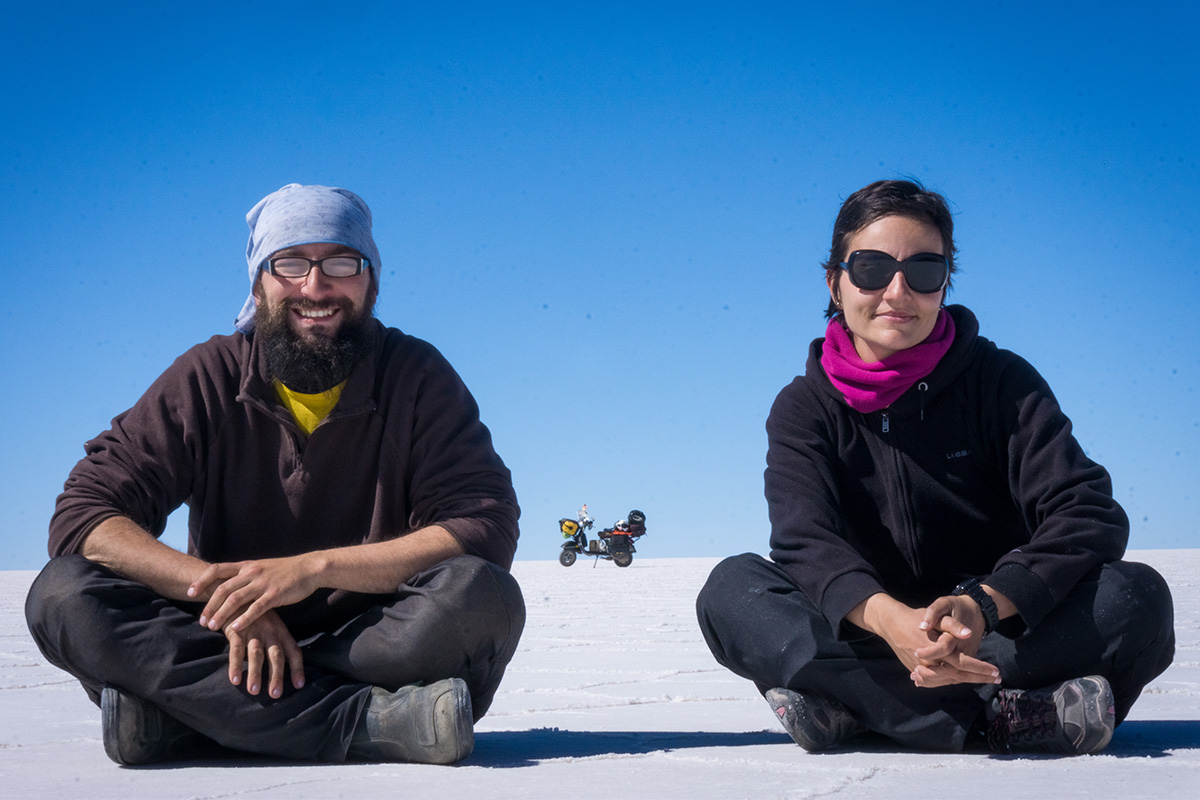 Riding on the infinite flat whiteness is a surreal experience, but it is also great fun!
After that brief moment of joy, our paths diverged again. The route he chose was more beautiful but also more difficult. However, now that he had some idea of what to expect and was sure the scooter was strong enough, he was determined to give it a go. But the freezing wind had converted his coffee into a chunk of ice and his hands were so cold that it was difficult to pitch the tent. Additionally, the thin air made even the tiniest movement a huge effort.
His only companion, after the tourist trucks left, was a small fox who carefully observed him struggling in the frigid gusts.
That night was even colder. He slept wearing all the clothes he had, but the spectacular sunrise the next morning was a great reward. According to what we’d read, the most difficult part was now behind us. Only 25 miles remained until the main road to Uyuni. This was an easy dirt road with some sneaky parts of soft sand, but Stergios didn’t care. He was flying over it in third gear! He was on his way to meet me in Uyuni and then head directly to the massive salt flat, the Salar.
The second night of my canned adventure had no alcohol or drunken students. We slept in a hotel made of salt. After a great dinner, I spoke with our guide, a young Bolivian trying to have a better life than his father who died from cancer working in the mines of Potosi.
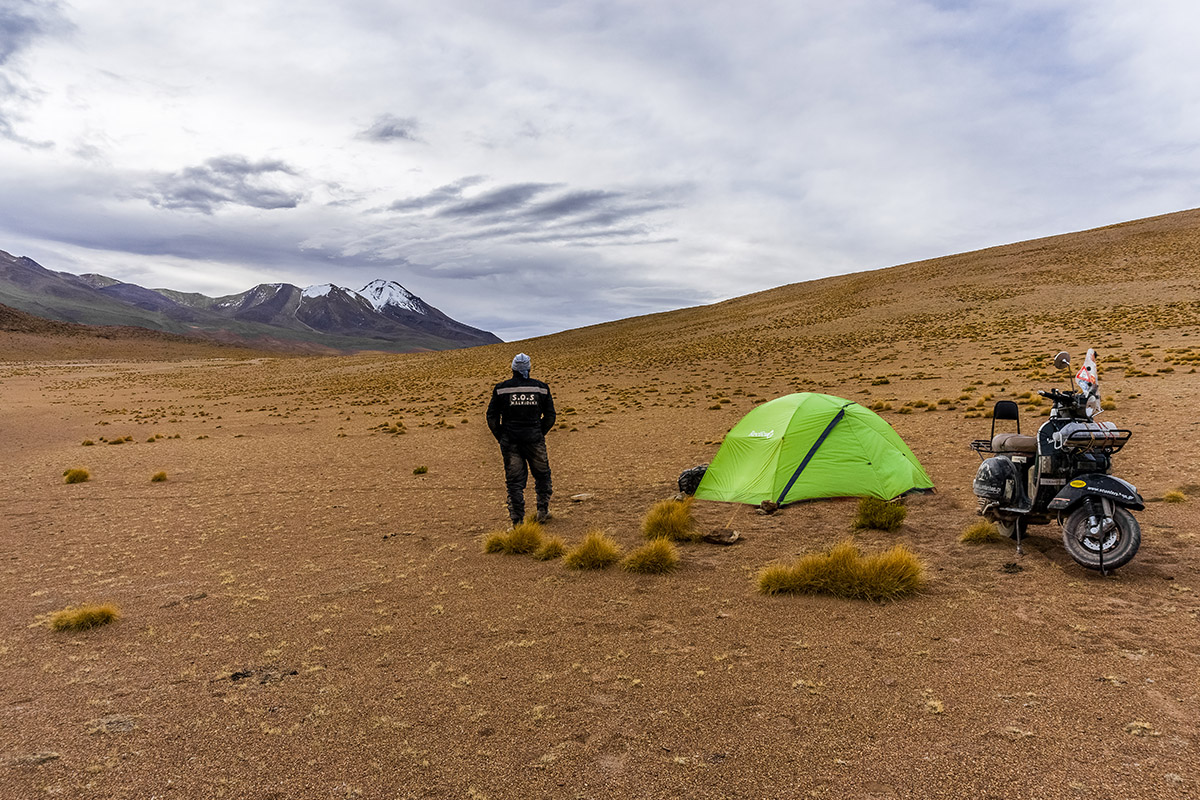 His hands were so cold that it was difficult to pitch the tent, and the thin air made even the tiniest movement a huge effort.
The following morning, the experience of driving across the massive salt surface while watching the sunrise was an amazing experience indeed. But I couldn’t stop thinking about how the view would be from our scooter’s seat. Luckily, Stergios and I arrived at the main square of the small town of Uyuni at exactly the same time, where we immediately left for the Salar—at last, just the two of us!
From the moment we entered the infinitely blinding white surface, we realized its uniqueness. The ultimate blue of the sky plays games on your mind with the endless whiteness, making it impossible for us to navigate without a GPS. We couldn’t miss such a ride as we were both so happy to be back on our scooter. It didn’t take long to decide to spend the night wild camping next to the Isla del Pescado—Island of the Fish.
There wasn’t a single cloud in the starry night sky and the only noise that broke the absolute silence was that of the scooter’s engine.
Early in the morning, we were awoken by birds flying over the cacti—the only type of vegetation on the island. Over breakfast and seated on the thick salty crust enjoying the view, we promised ourselves one thing: We would return one day but would ride the entire way two-up!
https://adventuremotorcycle.com/rides/la-ruta-de-las-lagunas-a-ride-in-southern-bolivia
La Ruta De Las Lagunas: Un viaje por el sur de Bolivia
Escrito por Alexandra Fefopoulou y Stergios Gogos. Publicado en Rides
Era finales de junio cuando llegamos a San Pedro de Atacama en el norte de Chile. Nuestro primer encuentro con los Andes y la gran altitud ya nos había dado una idea de cómo se comportaba nuestra moto bajo tales condiciones. Habíamos reemplazado el chorro del carburador por uno más pequeño más adecuado para el aire delgado y, durante muchos kilómetros, habíamos viajado con el filtro de aire completamente retirado. Y, en algunos casos, para subir las pendientes más empinadas, uno de nosotros tenía que empujar la moto y caminar.
El camino desde Argentina hasta Chile hasta San Pedro de Atacama está pavimentado; viajar sin filtro de aire hizo las cosas relativamente fáciles, aunque eso cambiaría pronto.
Después de tres días de viaje separados, prometimos volver y hacer la misma ruta nuevamente, ¡pero la próxima vez juntos!
Hace un tiempo, mientras nos preparábamos para nuestro viaje por Sudamérica, leímos sobre la “Ruta de las Lagunas”, la ruta de los lagos a través de uno de los lugares más espectaculares de la Tierra. Toda el área se encuentra en la parte suroeste de Bolivia, a más de 14,000 pies sobre el altiplano boliviano. Desde las primeras fotos que vimos, decidimos explorar esta área juntos en nuestra Vespa.
Sin embargo, después de una seria consideración, decidimos que necesitaríamos cruzar esta área por separado para evitar dañar nuestra máquina. Parecía poco probable que pudiéramos hacerlo juntos en la moto sobrecargada. Entre San Pedro de Atacama (Chile) y Uyuni (Bolivia), esta ruta cubre aproximadamente 340 millas fuera de la carretera, cruzando por el altiplano mayormente inhabitado.
Es un vasto terreno rocoso, lleno de volcanes, géiseres, aguas termales y, sobre todo, lagunas volcánicas con agua hirviendo y colores sorprendentes.
¡Excelente! Incluso la flora y la fauna de esta área se han adaptado a este duro ambiente que parece otro planeta. Al final de la ruta, estás en los bordes del Salar de Uyuni, el salar más grande del mundo, ¡3,900 millas cuadradas de sal pura y blanca!
En San Pedro de Atacama, las agencias de viajes ofrecen tours organizados en 4×4 a Uyuni, así que lo primero que hicimos fue reservar uno para mí. El plan era viajar por separado a través de la Ruta de las Lagunas y encontrarnos de nuevo en Uyuni. Como no hay cobertura de celular allí arriba, establecimos el lugar y la hora de nuestro reencuentro después de tres días en la plaza principal de Uyuni.
Hablamos con algunos viajeros que intentaron desanimarnos de intentar rodar con nuestras ruedas de 10 pulgadas por los caminos arenosos y corrugados de la Ruta de las Lagunas. Incluso dijeron que sería imposible encontrar combustible, agua y suministros de alimentos allí, pero decidimos ignorarlos. No era la primera vez que escuchábamos historias exageradas, y si creyéramos todas, nunca habríamos salido de nuestro apartamento en Atenas.
Llegó el día de nuestra partida; salí temprano llevando casi todo el equipaje. Era la primera vez que viajábamos por separado; estaba un poco ansiosa, pero Stergios estaba emocionado, ya que viajar en tales condiciones siempre es un desafío. Los siguientes días de mi versión del viaje parecían una aventura enlatada: comidas listas cocinadas por nuestro guía, cena y dormir en refugios organizados, horarios y itinerarios programados. Y si eso no fuera suficiente, el resto del grupo eran estudiantes de 20 años de Estados Unidos, Canadá y el Reino Unido, claramente con ganas de fiesta.
Stergios llevó solo el equipo necesario para aligerar la moto lo máximo posible: equipo de camping, ropa abrigada, 5 litros de agua, algo de comida y un bidón de gasolina de 10 litros. Llegó a la frontera alrededor de las 9:00 a.m. y esperó en la fila para que sellaran su pasaporte y hiciera los trámites de la Vespa.
La oficina de inmigración era un edificio pequeño con una enorme bandera boliviana ondeando en el frío viento. El oficial de aduanas se rió sarcásticamente cuando vio la moto y advirtió a Stergios que sería imposible cruzar la zona “en esa cosa”. Eventualmente, Stergios entró en la “Reserva Nacional de Fauna Andina Eduardo Abaroa”.
Julio es uno de los meses más fríos del año, pero el invierno en el altiplano boliviano tiene una ventaja: el clima es completamente seco.
Tuvo que lidiar con la gran altitud, el viento y las bajas temperaturas, pero al menos no llovería.
No había una sola nube en el cielo estrellado de la noche, y el único ruido que podía romper el silencio absoluto era el del motor de la moto.
Usó el GPS para ayudar a navegar por los caminos y a pocas millas de la reserva vio las primeras dos lagunas volcánicas: la Laguna Verde y la Laguna Blanca. Sus diferentes colores son el resultado del alto contenido mineral, y son visualmente impresionantes. En el fondo se encuentra el volcán Licancabur. El cono simétrico a 2,000 pies es solo uno de los muchos antiguos volcanes en la zona. El camino de terracería desde allí era difícil, pero en ningún caso imposible.
Unos kilómetros al norte, se detuvo cerca del salar de Chalviri, donde las aguas de las termas de Polques se juntan para formar un pequeño spa utilizado a menudo por los turistas. Se detuvo junto a los camiones grandes y atrajo muchas miradas curiosas de los transeúntes. El destino para ese día era la Laguna Colorada y quedó completamente asombrado por su paisaje de otro mundo.
Alguien con quien me topé mencionó haber visto a un motociclista barbudo dirigiéndose hacia la Laguna Negra en una moto ridículamente pequeña. ¡Qué alivio! Al menos supe que Stergios estaba bien.
La Laguna Colorada es un lago salado cargado de minerales y algas, lo que le da un color rojo oxidado a su agua. También hay islas de bórax cuyo color blanco contrasta con la pigmentación rojiza con decenas de flamencos danzando, lo que lo convierte en un lugar altamente fotogénico.
Con la ayuda del GPS, Stergios localizó el “refugio”, donde pasaría la noche. Fue el primero en llegar allí y, como me contó más tarde, esperaba encontrarse conmigo. Llegaron los primeros camiones de las diversas agencias de viajes, pero aparentemente yo no estaba entre ellos. Finalmente descubrió que había varios lugares para dormir alrededor de la Laguna Colorada. Desafortunadamente, estaba oscureciendo, así que no pudo revisarlos.
Después de una buena noche de sueño, continuó hacia el norte donde el camino corrugado le sacudió los dientes, una señal de que tarde o temprano, algo se soltaría en la pobre moto.
Después de una noche casi sin dormir rodeado de estudiantes festejando, me desperté congelada para contemplar el amanecer hasta que el resto del grupo estuvo listo. Estaba decepcionada de no haber visto a Stergios. Al menos, la resaca hizo que mis compañeros de viaje estuvieran callados y más fáciles de llevar. Alguien de otra agencia con la que nos encontramos mencionó haber visto a un motociclista barbudo en una moto ridículamente pequeña. ¡Qué alivio! Al menos supe que Stergios estaba bien.
La ruta era sorprendentemente hermosa y disfrutaba del silencio en el camión cuando de repente ¡vi a Stergios! Me colgué de la ventana, gritando y agitando tratando de llamar su atención. Pero el ruido del motor de la moto era tan fuerte que no me escuchaba. Estaba ansiosa por saber si necesitaba algo, pero luego me enteré de que estaba bien. Había comprado gasolina a un conductor de camión y estaba listo para la siguiente sección hacia las lagunas Honda y Hedionda.
¡Montar sobre la infinita blancura plana es una experiencia surrealista, pero también es muy divertido!
Después de ese breve momento de alegría, nuestros caminos volvieron a divergir. La ruta que eligió Stergios era más hermosa pero también más difícil. Sin embargo, ahora que tenía alguna idea de qué esperar y estaba seguro de que la moto era lo suficientemente fuerte, estaba decidido a intentarlo. Pero el viento helado había convertido su café en un bloque de hielo y sus manos estaban tan frías que era difícil montar la tienda de campaña. Además, el aire delgado hacía que incluso el más mínimo movimiento fuera un gran esfuerzo.
Su único compañero, después de que los camiones turísticos se fueran, era un pequeño zorro que lo observaba cuidadosamente luchando en las ráfagas gélidas.
Esa noche fue aún más fría. Durmió con toda la ropa que tenía, pero el espectacular amanecer de la mañana siguiente fue una gran recompensa. Según lo que habíamos leído, lo más difícil ya había pasado. Solo quedaban 25 millas hasta la carretera principal a Uyuni. Este era un camino de tierra fácil con algunas partes astutas de arena suave, pero a Stergios no le importaba. ¡Estaba volando sobre él en caja tercera! Estaba camino a encontrarse conmigo en Uyuni y luego ir directamente al inmenso salar, el Salar.
La segunda noche de mi aventura enlatada no tuvo alcohol ni estudiantes borrachos. Dormimos en un hotel hecho de sal. Después de una gran cena, hablé con nuestro guía, un joven boliviano que intentaba tener una vida mejor que su padre, que murió de cáncer trabajando en las minas de Potosi.
Tenía las manos tan frías que era difícil montar la tienda, y el aire enrarecido hacía que incluso el más mínimo movimiento supusiera un gran esfuerzo.
Por la mañana siguiente, la experiencia de conducir sobre la inmensa superficie salina mientras veía el amanecer fue una experiencia increíble de verdad. Pero no podía dejar de pensar cómo sería la vista desde el asiento de nuestra moto. Afortunadamente, Stergios y yo llegamos a la plaza principal del pequeño pueblo de Uyuni exactamente al mismo tiempo, ¡donde inmediatamente partimos hacia el Salar! ¡Al fin, solo los dos!
Desde el momento en que entramos en la superficie infinitamente blanca y deslumbrante, nos dimos cuenta de su singularidad. El azul último del cielo juega con tu mente con la blancura interminable, haciéndolo imposible para nosotros navegar sin un GPS. No podíamos perdernos tal paseo, ya que ambos estábamos tan felices de estar de nuevo en nuestra moto. No tardamos en decidir acampar salvajemente esa noche junto a la Isla del Pescado.
No había una sola nube en el cielo estrellado de la noche y el único ruido que rompía el silencio absoluto era el del motor de la moto.
Temprano en la mañana, fuimos despertados por pájaros volando sobre los cactus, el único tipo de vegetación en la isla. Durante el desayuno y sentados sobre la gruesa corteza salada disfrutando de la vista, nos prometimos una cosa: ¡Volveríamos un día pero haríamos todo el camino juntos!


 Bolivian Thoughts | Pensamientos Bolivianos (Bilingual/Bilingüe)