
Yolanda Mamani Cayo, El Deber:
They see 6 weaknesses that make Bolivia “fertile territory” for a crisis like that of Ecuador
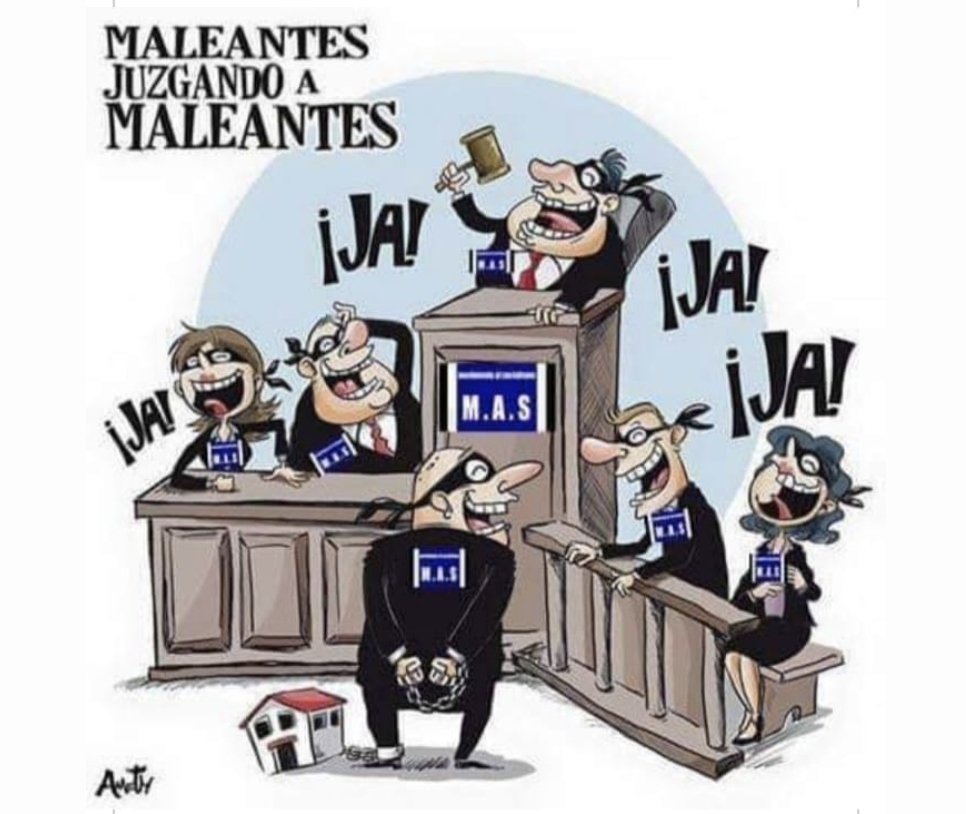
Drug trafficking activity is identified as the main point and around which other crimes are unleashed and have penetrated the spheres of power, according to the analysis of experts. The Government denies it, but is prepared to face this scenario
The internal crisis that Ecuador is going through raises alarm bells in Bolivia. Experts, legislators and former authorities identify at least six weaknesses that make the country a “fertile territory” for an implosion like the one that hits that country.
Among them are the growing activity of drug trafficking, organized crime, unpunished land seizures, the crisis of the judicial system, uncontrolled borders, an obsolete prison system and the absence of a specialized anti-crime force.
They ask the Government for structural changes. However, the Ministers of Defense and Government reject that a crisis of these proportions is generated in Bolivia and, rather, offer Ecuador specialized help with uniformed personnel from an “elite unit.”
Lawyer and retired colonel Jorge Santistevan pointed out that irregular groups that operate in neighboring countries are migrating and identifying regions with easily accessible borders. The country has several unauthorized crossings.
“One of the most fertile territories for the activity of these criminal groups is Bolivia because we have three great weaknesses: There are no maximum security prisons and our prisons do not offer guarantees; “The incompetence of the Prosecutor’s Office and the judicial authorities does not provide the guarantee for the State to protect the investigations and the third weakness is that Bolivia does not have an elite special force, prepared to surpass the material that a criminal organization has,” Santistevan told EL DEBER.
“What is happening in Ecuador is a structural crisis of the State and the effect in Bolivia is imminent because criminal organizations seek to entrench themselves in places where there is less control. We are very vulnerable,” the former minister, Carlos Romero, explained to EL DEBER.
The former authority identified drug trafficking as the activity that has uncontrolled the crime rate in Ecuador, which not only has its origin in Mexican and Colombian cartels, but also Asian and European ones that have been present since the Covid pandemic, due to the withdrawal of the Police towards urban centers, causing organized crime to settle in strategic regions to operate.
“In the case of Bolivia, control over drug trafficking, border control, has been lost many years ago, it has penetrated the political, police, and judicial structures; drug trafficking even has the ability to manipulate some media devices. The aggravating factor in the case of Bolivia is that there is complicity of the State with drug trafficking,” said Romero.
Government
However, the Minister of Defense, Edmundo Novillo, said that the Government does not see these extremes, but that in any case the Executive is on alert.
“I do not believe in that possibility because we have demonstrated as a Government that in the event of the slightest outbreak of criminal action, our Police and if necessary also, our Armed Forces, will establish order and will not allow these criminal actions to create anxiety,” Novillo noted.
What’s more, the Minister of Government, Eduardo Del Castillo, said that President Luis Arce “has committed to assisting the Noboa government in whatever way is necessary.” “Therefore, if police support from an elite unit is required by Bolivia, we have enough police contingent. If they require it, we will send to that country that is suffering a great wave of crime,” he remarked.
For lawyer and journalist Andrés Gómez Vela, the scenario in Bolivia is more complex. He points out that due to the same complaints that come from the MAS leader himself, Evo Morales, that there is a close link between irregular groups and some spheres of the Government, it makes it possible, for example, for some regions to be impenetrable, such as “Mexico Chico” which It is in Chapare. He also mentions the armed groups in the land seizures that in 2023 sentenced a businessman from Santa Cruz to death.
“It has to do with some authorities or members of these groups who infiltrate these institutions, be it the Police or the justice system, and begin to control the Government, through economic resources or pressure. Former President Morales himself has accused the government of covering up drug trafficking,” says Gómez.
The head of the Comunidad Ciudadana caucus in Deputies, Enrique Urquidi, added that the crisis in Ecuador is a consequence of the fact that for many years the governments of that country gave “free rein” to criminal groups and Mexican and Colombian cartels, without structural changes. Similar scenario seen in the country.
“In Bolivia, it is clear that with the permissiveness of the MAS Government, our scenario is very complicated. The Arce Government must change its policy of fighting drug trafficking, it must stop being permissive and tolerant with Chapare and it must dismantle those criminal organizations installed in Bolivia to prevent us from experiencing a scenario similar to that of Ecuador,” Urquidi told EL DEBER.
Those consulted with this newspaper agree that it is urgent for the Government to change its policy to combat drug trafficking and against the entire chain of illicit acts related to each other such as smuggling and human trafficking, as well as a structural change to the system. of prison regime.
Ven 6 debilidades que hacen de Bolivia “territorio fértil” para una crisis como la de Ecuador
La actividad del narcotráfico es identificada como el punto principal y en torno al cual se desencadenan otros ilícitos y que han penetrado las esferas de poder, según el análisis de expertos. El Gobierno lo niega, pero se pone en apronte ante este escenario
La crisis interna que atraviesa Ecuador prende las alarmas en Bolivia. Expertos, legisladores y exautoridades identifican al menos seis debilidades que hacen del país un “territorio fértil” para que se genere una implosión como la que golpea a ese país.
Entre ellas están la creciente actividad del narcotráfico, el crimen organizado, la toma impune de tierras, la crisis del sistema judicial, las fronteras sin control, un sistema penitenciario obsoleto y la ausencia de una fuerza especializada anticrimen.
Piden al Gobierno cambios estructurales. No obstante, los ministros de Defensa y Gobierno rechazan que en Bolivia se genere una crisis de esas proporciones y más bien, ofrecen a Ecuador ayuda especializada con uniformados de una “unidad de élite”.
El abogado y coronel en retiro Jorge Santistevan señaló que los grupos irregulares que operan en los países vecinos van migrando e identifican regiones con fronteras de fácil acceso. El país tiene varios pasos no autorizados.
“Uno de los territorios más fértiles para la actividad de estos grupos criminales, es Bolivia porque tenemos tres grandes debilidades: No hay cárceles de máxima seguridad y nuestras cárceles no ofrecen garantías; la incompetencia de la Fiscalía y de las autoridades judiciales no da la garantía para que el Estados proteja las investigaciones y la tercera debilidad es que Bolivia no cuenta con una fuerza especial de élite, preparada que supere con el material que cuenta una organización criminal”, dijo Santistevan a EL DEBER.
“Lo que está sucediendo en Ecuador es una crisis estructural de Estado y el efecto en Bolivia es inminente porque las organizaciones criminales buscan atrincherarse en los lugares donde hay menos control. Somos muy vulnerables”, explicó a EL DEBER el exministro, Carlos Romero.
La exautoridad identificó el narcotráfico como la actividad que ha descontrolado la tasa de criminalidad en Ecuador que no solo tiene su origen en cárteles mexicanos y colombianos, sino asiáticos y europeos que se hicieron presentes desde la pandemia del Covid, por el repliegue de la Policía hacia los centros urbanos haciendo que el crimen organizado se haya instalado en regiones estratégicas para operar.
“En el caso de Bolivia, hace muchos años que se ha perdido el control sobre el narcotráfico, el control fronterizo, ha penetrado las estructuras políticas, policiales, judiciales, incluso, el narcotráfico tiene la capacidad de manipular a algunos dispositivos mediáticos. La agravante en el caso de Bolivia es que hay complicidad del Estado con el narcotráfico”, aseguró Romero.
Gobierno
No obstante, el ministro de Defensa, Edmundo Novillo, dijo que el Gobierno no ve esos extremos, pero que de todas maneras el Ejecutivo está en estado de alerta.
“No creo en esa posibilidad porque hemos demostrado como Gobierno que ante el más mínimo brote de acción criminal, nuestra Policía y si es necesario también, nuestras Fuerzas Armadas, pondrán orden y no permitirán que estas actuaciones criminales pongan zozobra”, apuntó Novillo.
Es más, el ministro de Gobierno, Eduardo Del Castillo, dijo que el presidente Luis Arce “se ha comprometido a coadyuvar en todo lo que sea necesario”, al gobierno de Noboa. “Por lo tanto, si requiere de un apoyo policial de una unidad de élite por parte de Bolivia, tenemos suficiente contingente policial. Si así lo requieren vamos a enviar a ese país que está sufriendo una gran ola de la delincuencia”, remarcó.
Para el abogado y periodista Andrés Gómez Vela, el escenario en Bolivia es más complejo. Señala que por las mismas denuncias que provienen del propio líder del MAS, Evo Morales, de que hay un estrecho vínculo entre grupos irregulares y algunas esferas del Gobierno, hace posible, por ejemplo, que algunas regiones sean impenetrables, como “México chico” que está en el Chapare. Tambien menciona a los grupos armados en las tomas de tierras que en 2023 condenaron a muerte a un empresario cruceño.
“Tiene que ver con algunas autoridades o miembros de estos grupos que se infiltran a estas instituciones ya sea la Policía o la justicia y empiezan a controlar al Gobierno, a través de recursos económicos o presiones. El propio expresidente Morales ha acusado al gobierno de encubrir el narcotráfico”, afirma Gómez.
El jefe de bancada de Comunidad Ciudadana en Diputados, Enrique Urquidi, agregó que la crisis en Ecuador es consecuencia de que por muchos años los gobiernos de ese país dieron “carta libre” a grupos criminales y carteles mexicanos y colombianos, sin cambios estructurales. Similar escenario ve en el país.
“En Bolivia, está claro que con la permisividad del Gobierno del MAS, nuestro escenario es muy complicado. El Gobierno de Arce debe cambiar su política de lucha contra el narcotráfico, tiene que dejar de ser permisivo y tolerante con el Chapare y debe desbaratar esas organizaciones criminales instaladas en Bolivia para evitar que vivamos un escenario similar al de Ecuador”, puntualizó Urquidi a EL DEBER.
Los consultados con este medio coinciden en que es urgente que el Gobierno cambie su política de lucha contra el narcotráfico y contra toda la cadena de hechos ilícitos relacionados entre sí como el contrabando y la trata y tráfico de personas, así como un cambio estructural al sistema de régimen penitenciario.


 Bolivian Thoughts | Pensamientos Bolivianos (Bilingual/Bilingüe)