
Rosa Muñoz, Deutsche Welle:
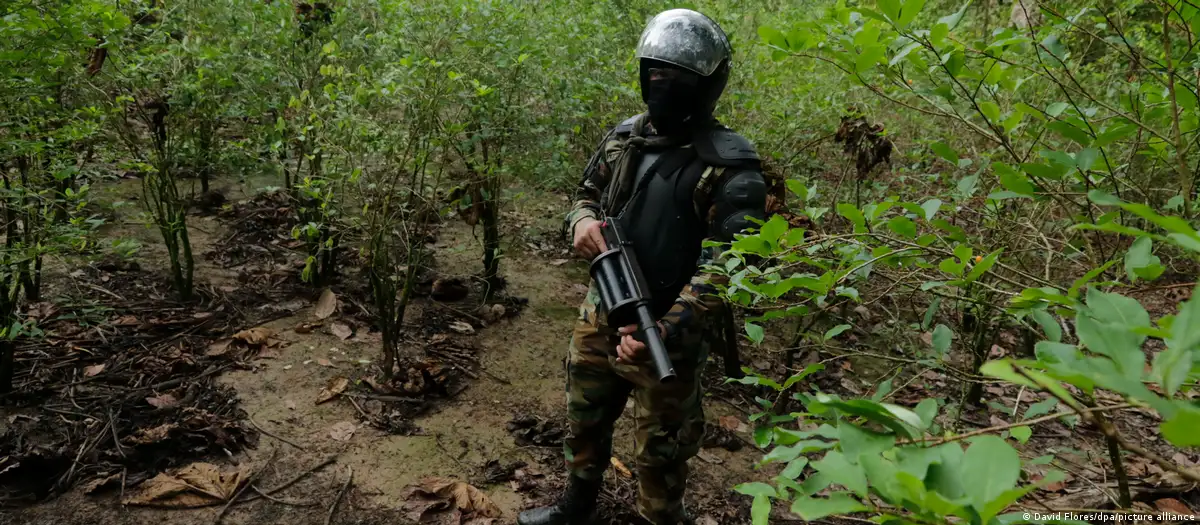
Un policía vigila la destrucción de plantaciones de coca en la región de Cochabamba.Imagen: David Flores/dpa/picture alliance
The political dispute between the president of Bolivia, Luis Arce, and former president Evo Morales reveals more and more public complaints about drug trafficking networks and corruption. “Where there’s smoke, there’s fire”
The fight between former president Evo Morales (2006-2019) and his former heir apparent and current president of Bolivia, Luis Arce – still co-religionists of the ruling Movement towards Socialism (MAS) – was again splashed this week with accusations of “corruption” and “protection to drug trafficking.”
The questions that remain in the air again are clear: How far do the tentacles of drug trafficking really reach in Bolivia today? What are their links with political power structures?
Coca leaf and cocaine producer
Bolivia is one of the main coca leaf producers in the world. Its cultivation, sale and individual consumption are legal in the country. However, according to data from InSight Crime, up to 40 percent is sold outside the law, as raw material for the production of cocaine.
“Bolivia was a cheap seller of cocaine base paste, which was then processed in Brazil, Peru or Colombia. But this has changed,” Bolivian political scientist Ana Soliz, a researcher at the University of the German Armed Forces in Hamburg, told DW.
The country “has become a producer of cocaine hydrochloride” (or cocaine powder), confirms criminologist Gabriela Reyes, former director of the Bolivian Observatory for Citizen Security and Fight Against Drugs. And she refers to the evidence: the number of laboratories that have been found, especially in National Parks.
According to the latest data from the United States Office of National Drug Control Policy (ONDCP), Colombia, Peru and Bolivia are, in that order, the main producers of cocaine worldwide, and They totaled an estimated production of 2,074 tons of this drug in 2021.
Country of origin and transit of criminal operations
Bolivia is also “a very attractive country for drug trafficking” due to its geographical location, explains criminologist Reyes. It borders Brazil, “one of the main cocaine consumers in Latin America”; with Peru, which produces “coca leaves much cheaper”; and with Paraguay, “an important hub”, which InSight Crime additionally points out as the first marijuana producer in South America.
Added to this list is the equally neighboring Argentina, with another of the largest internal drug markets in the region, according to InSight Crime. So Bolivia remains “a key corridor”, with “increasing importance as a country of origin and transit” of cocaine destined for European markets, in addition to the US and even Asia.
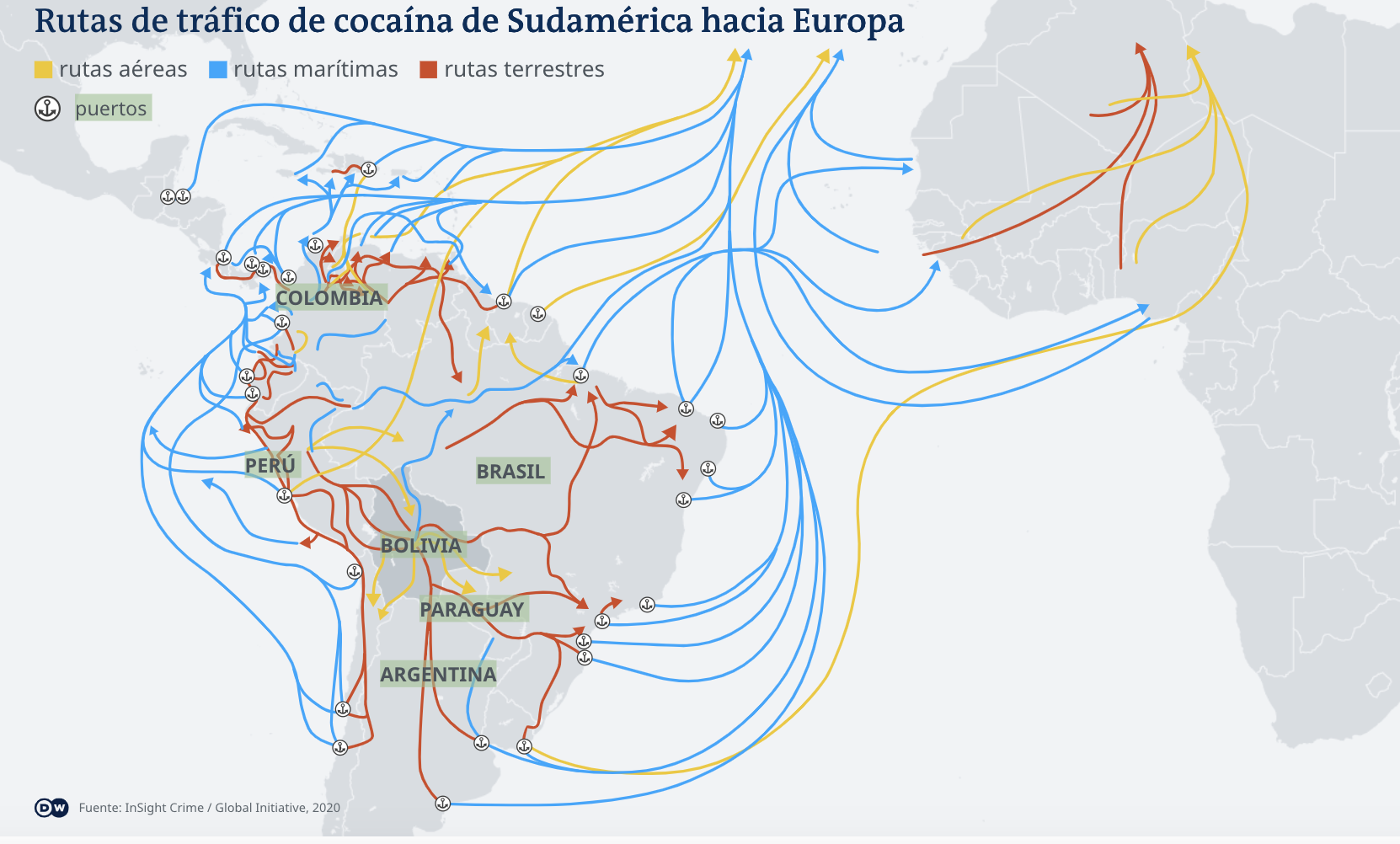
The country has consequently become a base of operations for foreign criminal organizations such as the Brazilian Comando Primeiro da Capital (PCC) and Comando Vermelho (CV), as well as other Colombian and Mexican structures, InSight Crime reports list.
“Evistas” against “arcistas”
But, beyond drug trafficking, the illegal trade in coca leaves “has a great political connotation” in the country, warns criminologist Reyes.
She refers, for example, to the frequent stigmatization as a “coca leader and, therefore, drug trafficker” of the still influential and media-friendly former president Evo Morales, one of the leaders of the coca federations of the Tropic of Cochabamba. Or the “notorious” increase in operatives of the Special Force to Fight Drug Trafficking (FELCN) precisely in that region, an “evista” bastion, in the midst of the dispute between “evistas” and “arcistas.”
“Corruption and drug trafficking are two inseparable factors in Bolivia,” says political scientist Soliz. And she remembers that, “in Bolivia, drug trafficking was always possible thanks to networks between drug exporters and public officials.” But the political dispute between Arce and Morales generates more and more public denunciations of these drug trafficking and corruption networks.
Weak security and justice forces
Where does the arrest of Maximiliano Dávila, who was national director of Intelligence and of the Special Force to Fight Drug Trafficking (FELCN) under the command of Evo Morales, as well as Police Commander in Cochabamba with Arce, point to? Or that of Omar Rojas, major of the Bolivian Police until 2014, today nicknamed “the Bolivian Pablo Escobar”?
Or the “narco flight” with 478 kg of cocaine that landed in Spain in February? Or the touted “operation in the fight against drug trafficking in the history of Bolivia,” which dismantled 27 drug factories and destroyed seven cocaine laboratories worth almost two million dollars in May?

For Reyes, former director of the Bolivian Observatory to Fight Drugs, in 2021 Dávila was arrested “as a sign of the Government’s will to fight drug trafficking.” But, since 2022, no criminal organization has been dismantled, nor has any “big fish” linked to cocaine trafficking been arrested. Instead, the increase in seizures is celebrated, which “is not a measure of police efficiency,” but rather a greater circulation of cocaine in the market.
Neither the scandal of the so-called “narcoaudios”, nor a triple murder of uniformed men, nor the drugs landed by Bolivian pilots and aircraft in Paraguay or Spain, nor the discovery of cocaine factories and laboratories, nor more than 20 reckonings at the border They have ended in much more than raids and impunity: there is only one person from the anti-narcotics police (FELCN) imprisoned for the “drug flight” to Spain, the criminologist illustrates.
All of this demonstrates “important levels of protection” for drug trafficking networks by “weak justice,” warns Reyes. In the hands of that justice and law enforcement forces “corroded by corruption,” without the presence of other international cooperation agencies, the fight against drug trafficking in Bolivia has been left, after the US DEA was expelled by Morales in 2008. Soliz adds.
A State “co-opted by drug trafficking…”
“Bolivia has become a narco-state,” says the Bolivian political scientist, and refers to “a transformation that began during the mandates of Evo Morales, and that has now become evident under the Government of Luis Arce.”
Criminologist Gabriela Reyes, for her part, describes an ongoing process: “Bolivia is very close to becoming a narco-state.” A State “is co-opted by drug trafficking when drug trafficking can act with impunity at all levels, and that is something that is beginning to be seen in Bolivia in a very evident way,” she acknowledges: “Drug trafficking is having power in justice, in politics, is influencing how certain decisions are made, in maintaining impunity.”
(ers)
La disputa política entre el presidente de Bolivia, Luis Arce, y el expresidente Evo Morales revela cada vez más denuncias públicas sobre redes de narcotráfico y corrupción. Suena el río, ¿porque piedras trae?
El pulso entre el expresidente Evo Morales (2006-2019) y su antiguo delfín y actual presidente de Bolivia, Luis Arce –aún correligionarios del oficialista Movimiento al Socialismo (MAS)- volvió a salpicarse esta semana con acusaciones de “corrupción” y “protección al narcotráfico”.
Las preguntas que vuelven a quedar en el aire son claras: ¿Hasta dónde llegan realmente los tentáculos del narcotráfico en Bolivia hoy? ¿Cuáles son sus vínculos con las estructuras de poder político?
Productor de hoja de coca y cocaína
Bolivia es uno de los principales productores de hoja de coca del mundo. Su cultivo, venta y consumo individual son legales en el país. Sin embargo, según datos de InSight Crime, hasta el 40 por ciento se comercializa al margen de la ley, como materia prima para la producción de cocaína.
“Bolivia era un vendedor barato de la pasta base de cocaína, que después era procesada en Brasil, Perú o Colombia. Pero esto ha cambiado”, precisa a DW la politóloga boliviana Ana Soliz, investigadora de la Universidad de las Fuerzas Armadas alemanas en Hamburgo.
El país “se ha vuelto productor de clorhidrato de cocaína” (o cocaína en polvo), confirma la criminóloga Gabriela Reyes, exdirectora del Observatorio Boliviano de Seguridad Ciudadana y Lucha Contra las Drogas. Y remite a la evidencia: la cantidad de laboratorios que se han ido encontrando, sobre todo, en Parques Nacionales.
Según los últimos datos de la Oficina de la Política Nacional para el Control de Drogas de Estados Unidos (ONDCP, por sus siglas en inglés), Colombia, Perú y Bolivia son, en ese orden, los principales productores de cocaína a nivel mundial, y totalizaron una producción estimada de 2.074 toneladas de esta droga en 2021.
País de origen y tránsito de operaciones criminales
Bolivia es también “un país muy atractivo para el narcotráfico” por su situación geográfica, explica la criminóloga Reyes. Limita con Brasil, “uno de los principales consumidores de cocaína de América Latina”; con Perú, que produce “hoja de coca mucho más barata”; y con Paraguay, “un importante hub”, que InSight Crime señala adicionalmente como primer productor de marihuana en Sudamérica.
A esta lista se agrega la igualmente limítrofe Argentina, con otro de los mercados internos de drogas más grandes de la región, según InSight Crime. De modo que Bolivia queda como “un corredor clave”, con “creciente importancia como país de origen y tránsito” de la cocaína dirigida a los mercados europeos, además de a EE. UU. y hasta a Asia.
El país se ha convertido, consecuentemente, en base de operaciones de organizaciones criminales extranjeras como los brasileños Comando Primeiro da Capital (PCC) y Comando Vermelho (CV), así como otras estructuras colombianas y mexicanas, enumeran los informes de InSight Crime.
“Evistas” contra “arcistas”
Pero, más allá del narcotráfico, el comercio ilegal de la hoja de coca “tiene una gran connotación política” en el país, advierte la criminóloga Reyes.
Se refiere, por ejemplo, a la frecuente estigmatización como “líder cocalero y, por lo tanto, narcotraficante” del aún influyente y mediático expresidente Evo Morales, uno de los líderes de las federaciones cocaleras del Trópico de Cochabamba. O al “notorio” aumento de operativos de la Fuerza Especial de Lucha Contra el Narcotráfico (FELCN) justamente en esa región, un bastión “evista”, en medio de la disputa entre “evistas” y “arcistas”.
“Corrupción y narcotráfico son dos factores inseparables en Bolivia”, señala la politóloga Soliz. Y recuerda que, “en Bolivia, el narcotráfico siempre fue posible gracias a redes entre exportadores de droga y funcionarios públicos”. Pero la disputa política entre Arce y Morales genera cada vez más denuncias públicas de estas redes de narcotráfico y corrupción.
Fuerzas de seguridad y justicia débiles
¿A dónde apunta entonces la detención de Maximiliano Dávila, quien fue director nacional de Inteligencia y de la Fuerza Especial de Lucha Contra el Narcotráfico (FELCN) bajo el mando de Evo Morales, así como comandante de Policía en Cochabamba con Arce? ¿O la de Omar Rojas, mayor de la Policía Boliviana hasta 2014, hoy apodado “el Pablo Escobar boliviano”?
¿O el “narcovuelo” con 478 kg de cocaína aterrizado en febrero en España? ¿O el promocionado “operativo en la lucha contra el narcotráfico más grande de la historia de Bolivia”, que desarticuló 27 fábricas de droga y destruyó siete laboratorios de cocaína por valor de casi dos millones de dólares en mayo?
Para Reyes, exdirectora del Observatorio Boliviano de Lucha Contra las Drogas, en 2021 se detuvo a Dávila “como una muestra de la voluntad del Gobierno de luchar contra el narcotráfico”. Pero, desde 2022, no se ha desarticulado ninguna organización criminal, ni se ha detenido a ningún “pez gordo” vinculado al tráfico de cocaína. En cambio, se celebra el aumento de las incautaciones, lo que “no es una medida de eficiencia policial”, sino de una mayor circulación de cocaína en el mercado.
Ni el escándalo de los llamados “narcoaudios”, ni un triple asesinato de uniformados, ni la droga aterrizada por pilotos y aeronaves bolivianas en Paraguay o España, ni el hallazgo de fábricas y laboratorios de cocaína, ni más de 20 ajustes de cuentas en frontera han terminado en mucho más que allanamientos e impunidad: solo hay una persona de la policía antinarcóticos (FELCN) encarcelada por el “narcovuelo” a España, ilustra la criminóloga.
Todo esto demuestra “niveles de protección importantes” a las redes de narcotráfico por parte de una “justicia débil”, advierte Reyes. En manos de esa justicia y de fuerzas del orden “corroídas por la corrupción”, sin la presencia de otras agencias internacionales de cooperación, ha quedado la lucha contra el narcotráfico en Bolivia, luego de que la DEA estadounidense fuese expulsada por Morales en 2008, agrega Soliz.
Un Estado “cooptado por el narcotráfico…”
“Bolivia se ha convertido en un narcoestado”, asegura la politóloga boliviana, y se refiere a “una transformación que se inició durante los mandatos de Evo Morales, y que ahora se ha hecho evidente bajo el Gobierno de Luis Arce”.
La criminóloga Gabriela Reyes, por su parte, describe un proceso en curso: “Bolivia está muy cercana a convertirse en un narcoestado”. Un Estado “es cooptado por el narcotráfico cuando el narcotráfico puede actuar impunemente a todo nivel, y eso es algo que se está empezando a ver en Bolivia de manera muy evidente”, reconoce: “El narcotráfico está teniendo poder en la justicia, en la política, está influyendo en cómo se toman ciertas decisiones, en que se mantenga la impunidad”.
(ers)
https://www.dw.com/es/se-ha-convertido-bolivia-en-un-narcoestado/a-65894960

 Bolivian Thoughts | Pensamientos Bolivianos (Bilingual/Bilingüe)