
Editorial, Los Tiempos:
The detriment of the MAS annoyances
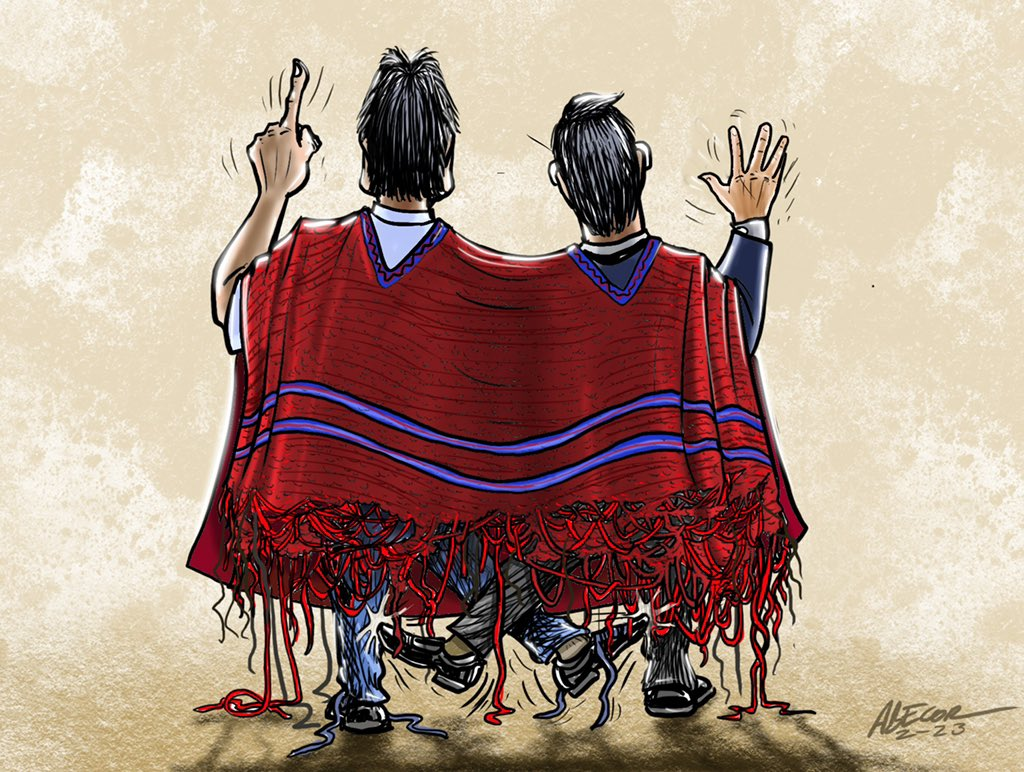
The confrontation between the rival factions of the party in government function intensifies and expands to new scenarios, in an escalation of hostilities whose end is uncertain, as are the consequences of this upward spiral of the conflict in the management of the State.
The open struggle between the two factions of the MAS —evistas, radicals and arcistas, renovators, the two sides that aim to position, each one their leader, as a presidential candidate for 2025— has been going on for nearly 19 months during which episodes have followed one another. of resurgence and others, less numerous, of a kind of temporary reconciliation, for specific reasons.
Until four months ago, this conflict was confined to the scenarios of the Plurinational Legislative Assembly, the courts of justice and the media.
Since the beginning of July, the impact and divisive effect of the mess has extended to the largest social organizations that make up the Movimiento Al Socialismo (MAS).
The first manifestation of this was the support for Arce and his government and the warning to the visible sector of the MAS that they will not allow “any attempt at destabilization” proclaimed by the Unity Pact and the Bolivian Workers Union (COB).
Last Monday, the Justice Department fueled intra-party hostilities even more by announcing a criminal trial against Morales for personal reasons. “Everything broke here,” declared the vice president of the MAS in response.
The rupture was more evident in recent days in the Trade Union Confederation of Original Intercultural Communities of Bolivia —one of the pillars of the Unity Pact— which now has leaders: an arcista elected in Sucre, and another evista, appointed in the Chapare.
And in El Alto, the XXIV congress of the Single Union Confederation of Peasant Workers of Bolivia (Csutcb) —another fundamental organization of masismo— fails to hold its sessions due to fights between both sides.
It could be thought that the end of these struggles will come at the MAS national congress convened for the first days of October, but that is uncertain, since the Supreme Electoral Tribunal (TSE) has not yet approved their implementation.
The conflict in the MAS grows. The problems of government management as well, examples of this are: the lack of resources in the state coffers will worsen in 2024 when Argentina stops buying gas from us, the drop for six years in the resources for the Dignity bonus payment, drug trafficking that seems out of control as evidenced by the three weeks of unsuccessful search for a Uruguayan wanted by the courts of several countries who mocks the Bolivian Police…
El perjuicio de los líos del MAS
El enfrentamiento entre los bandos rivales del partido en función de gobierno se intensifica y amplía a nuevos escenarios, en una escalada de hostilidades cuyo final es incierto, lo mismo que las consecuencias de esa espiral ascendente del conflicto en la gestión del Estado.
La abierta pugna entre las dos facciones del MAS —evistas, radicales y arcistas, renovadores, los dos bandos que apuntan a posicionar, cada uno a su líder, como candidato presidencial para 2025— lleva ya cerca de 19 meses durante los cuales se suceden episodios de recrudecimiento y otros, menos numerosos, de una especie de reconciliación pasajera, por motivos puntuales.
Hasta hace cuatro meses, ese conflicto estaba circunscrito a los escenarios de la Asamblea Legislativa Plurinacional, los tribunales de justicia y los medios de comunicación.
Desde principios de julio, el impacto y efecto divisor del lío se extiende a las mayores organizaciones sociales que conforman el Movimiento Al Socialismo (MAS).
La primera manifestación de ello fue el apoyo a Arce y su gobierno y la advertencia al sector evista del MAS de que no permitirán “cualquier intento de desestabilización” proclamados por del Pacto de Unidad y la Central Obrera Boliviana (COB).
El lunes último, el de Justicia atizó aún más las hostilidades intrapartidarias anunciando un juicio penal contra Morales por razones personales. “Aquí se rompió todo”, declaró como respuesta el vicepresidente del MAS.
La ruptura fue más evidente los últimos días en la Confederación Sindical de Comunidades Interculturales Originarias de Bolivia —uno de los pilares del Pacto de Unidad— que ahora tiene dirigencias: una arcista elegida en Sucre, y otra evista, designada en el Chapare.
Y en El Alto, el XXIV congreso de la Confederación Sindical Única de Trabajadores Campesinos de Bolivia (Csutcb) —otra organización fundamental del masismo— no consigue instalar sus sesiones por peleas entre ambos bandos.
Podría pensarse que el fin de esas pugnas llegue en el congreso nacional del MAS convocado para los primeros días de octubre, pero eso es incierto, pues el Tribunal Supremo Electoral (TSE) aún no aprobó su realización.
El conflicto en el MAS crece. Los problemas de la gestión gubernamental también, ejemplos de esto son: la falta de recursos en las arcas del Estado va a agravarse en 2024 cuando Argentina deje de comprarnos gas, la caída desde hace seis años de los recursos para para el pago de la Renta Dignidad, el narcotráfico que parece fuera de control como lo evidencian las tres semanas de búsqueda infructuosa de un uruguayo requerido por la justicia de varios países que se burla de la Policía Boliviana…
h

 Bolivian Thoughts | Pensamientos Bolivianos (Bilingual/Bilingüe)