
ABI, El Deber:
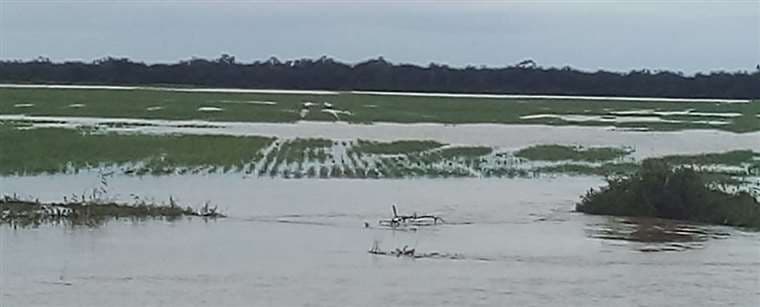
Water puts producers in Cuatro Cañadas in trouble
The national government promises support for the economic reactivation of the victims
The floods in Santa Cruz and the frosts in Chuquisaca, Cochabamba and Tarija have so far affected 24,500 hectares of different agricultural crops. The Government promised to support the reactivation of the economy of producers hit by weather events.
The Minister of Rural Development and Land, Remmy Gonzáles, reported the damage and explained that in Santa Cruz the floods inundated approximately 18,000 hectares of crops: sorghum, sunflower, wheat and sugarcane.
“Unfortunately, the climate crisis that is taking place on our planet earth has us in suspense, both the authorities and those who are dedicated to agricultural production. We have gone through 2022 from drought to frost, and we were recovering with the support of an emergency plan; but now, again in winter, unexpectedly, we are getting heavy rainfall,” he lamented, quoted in an institutional bulletin.
According to the Ministry’s Early Warning assessments, the frosts reported in the departments of Chuquisaca, Cochabamba, Tarija and in the Valles Santa Cruz area affected 6,500 hectares.
“As a government, we will support reactivating the economy of producers for the next campaign, because we are practically in the middle of winter and it would be very risky to plant again,” Gonzáles said.
The Government is preparing a plan to save the wheat production of the municipalities of: Cuatro Cañadas, Okinawa, San Julián and El Puente de Santa Cruz, for which work is being done on the quantification with the technical personnel posted to the area.
El Gobierno nacional promete apoyo para la reactivación económica de los damnificados
Las inundaciones en Santa Cruz y las heladas en Chuquisaca, Cochabamba y Tarija afectaron, hasta el momento, 24.500 hectáreas de diferentes cultivos agrícolas. El Gobierno se comprometió en apoyar a reactivar la economía de los productores golpeados por lo fenómenos climatológicos.
El ministro de Desarrollo Rural y Tierras, Remmy Gonzáles, informó de los daños y explicó que en Santa Cruz las inundaciones anegaron aproximadamente 18.000 hectáreas de cultivos de: sorgo, girasol, trigo y caña.
“Lamentablemente, la crisis climatológica que está aconteciendo en nuestro planeta tierra nos tiene en vilo, tanto a las autoridades, como a quienes se dedican a la producción agropecuaria. Hemos pasado el 2022 de sequías a heladas, y nos estábamos recuperando con el apoyo de un plan de emergencia; pero ahora, nuevamente en invierno, de manera inesperada, nos llegan fuertes precipitaciones”, lamentó, citado en un boletín institucional.
De acuerdo con las evaluaciones de Alerta Temprana del ministerio, las heladas reportadas en los departamentos de Chuquisaca, Cochabamba, Tarija y en la zona de los Valles cruceños afectaron 6.500 hectáreas.
“Como Gobierno apoyaremos a reactivar la economía de los productores para la próxima campaña, porque ya estamos, prácticamente, a medio de invierno y sería muy riesgoso volver a sembrar”, consideró Gonzáles.
En el Gobierno se alista un plan para salvar la producción de trigo de los municipios de: Cuatro Cañadas, Okinawa, San Julián y El Puente de Santa Cruz, para lo cual se trabaja en la cuantificación con el personal técnico desplazado a la zona.

 Bolivian Thoughts | Pensamientos Bolivianos (Bilingual/Bilingüe)