By Ronald MacLean Abaroa, El Dia:
We would always like to say the word “welcome” to our visitors. But now, after 71 years, when we have invited a head of state of the highest rank, promising him our greatest honors and hospitality, we find ourselves unprepared to deliver what we promised: a new relationship.
A new relationship, a new bond, a fresh start. The hope of having gained a friend after a period of distance and mistrust; of having overcome and left the past behind in pursuit of something new; of proposing a New Foreign Policy. Instead, all this has amounted to little more than a “laundry list” of our pending administrative matters.
Our guest arrives at the worst possible moment. He arrives amid the doubt and mistrust imposed on us by our accursed fate: our condition as a country captured by organized crime, exporting drugs through “someone else’s house,” in violation of both their laws and ours.
But this time, it would be the last straw. More than a thousand tons of Bolivian timber contaminated, according to a Chilean customs prosecutor, with as much as 8 to 10% drugs, amounting to more than 100 tons of drugs whose market value at destination could exceed $8 billion. In a single shipment!
“It cannot be true; it is impossible,” the exporters protested. A vice minister from our Foreign Ministry accompanied his wife, a representative of the export agency responsible for the “contaminated” timber, to the port of Arica. Both claimed that the timber belonging to her agency, for which the customs agency had processed the export paperwork, was not contaminated! How do they know? They assume it was not.
The highest-ranking Bolivian authorities make the same assumption, including former presidents and, ultimately, most of the public.
Months and months have passed, and neither Chile nor Bolivia has managed to bring this dispute before an impartial and reliable technical and legal arbitration process to resolve it. This should have happened even if only because the Chilean president’s state visit, at the highest level, was approaching.
Both countries dug in their heels, maintaining opposing positions because, at its core, the prosecutor who made the allegation is the same official who sees thousands of tons of chemical precursors, as well as mercury, traveling daily “upward” toward Bolivia, only to return as contraband in the form of cocaine and other illegal drugs. This happens in full view of, and with the apparent acquiescence of, Bolivian customs authorities permanently stationed and authorized on-site at the port of Arica under the 1904 Treaty. Yet they never see anything “either on the way in or on the way back” that would arouse even the slightest suspicion regarding the very responsibilities of their official positions.
Quite simply, if we set aside the assumption that the entire quantity of drugs was contained in one single, enormous timber shipment, and instead consider the phenomenon over time, it is entirely possible that much of the timber and several other products exported from Bolivia, including stones, may be contaminated, primarily with cocaine and other illegal drugs that go undetected at Chilean ports, particularly in Arica.
The market value at destination of those illegal exports could easily equal or exceed the amount attributed to that single export shipment currently being held in Arica: more than $8 billion in estimated annual revenue for fraudulent “exporters” who somehow manage to conceal drugs in legitimate products!
Who are the exporters of Bolivian drugs arriving through multiple destination ports, in quantities and at values consistently reported and confirmed by customs authorities in consumer and receiving countries around the world?
To what extent have government institutions in these countries been captured to facilitate this macabre activity?
Returning to the “state visit” that the Bolivian government offered Chile’s president, there could hardly be a worse time for it to take place.
The arrival of President José Antonio Kast merely highlights a painful reality for Bolivia and Chile, one that has not been overcome through the diplomatic construction of a major project for Chilean-Bolivian integration and complementarity.
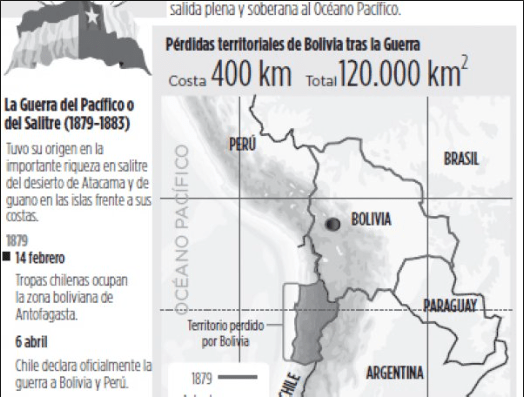
A “new relationship” is needed, expressed through ambitious shared goals and projects that can overcome the consequences of a war in a different, practical way. The losses of that war cannot be reversed, but they can be compensated for through actions that benefit both countries in the future. One example would be a railway connection linking Mejillones/Antofagasta on the Pacific Ocean with the Brazilian port of São Paulo/Santos on the Atlantic Ocean.
Such a railway would cross Bolivia and break the monumental isolation suffered by our country, which is surrounded and bypassed by neighboring countries through their transcontinental and transoceanic communications and physical integration projects, leaving us isolated like a terrestrial black hole.
Overcoming this pariah status should be a top priority for Bolivian diplomacy. Clearly, however, it is not.
As for protocol, the state visit has been downgraded to a single day of activities in La Paz, with a somewhat prosaic agenda consisting of various complaints on our part, mostly administrative matters, many of which do not necessarily require presidential attention.
The visit includes no delegation of major business leaders or subnational authorities, such as those from northern Chile. Nor are there any meetings between politicians and artists. All of this makes it difficult to qualify the event as a state visit.
Finally, as far as formalities are concerned, there is no state banquet, as protocol would dictate; no traditional declaration of “Distinguished Guest” by the Municipal Government of La Paz; and no planned tribute to the figure and symbol of Don Eduardo Abaroa Hidalgo.
“Perhaps another time,” as the song goes, when we can truly welcome, receive, and make feel at home a guest of such high standing as Kast, accompanied by his distinguished wife, regional and political authorities, and a major delegation of business leaders and potential investors, in a Bolivia free from drug trafficking and full of long-postponed opportunities.
The author is a university professor and former mayor of La Paz, Minister of Foreign Affairs of the Republic, and minister of four other government portfolios.
Por Ronald MacLean Abaroa, El Dia:
Quisiéramos decir siempre la palabra “bienvenido” a nuestros visitantes, pero ahora que hemos invitado, después de 71 años, a un mandatario con el rango de la más alta categoría, prometiéndole nuestros máximos honores y atenciones, nos encontramos con que no estábamos preparados para rendirle lo ofrecido: un nuevo trato.
Un nuevo trato, una nueva relación, un nuevo empezar. La ilusión de haber ganado un amigo de la otrora relación de distancia y desconfianza; de haber superado y vencido el pasado, en procura de algo nuevo…de proponerle una Nueva Política Exterior, ahora no pasa de ser un “laundry list” (listado de lavandería) de nuestros asuntos administrativos pendientes.
Nuestro invitado llega, pero en el peor momento. Llega en medio de la duda y la desconfianza que nos impone el maldito destino: nuestra condición de país capturado por el crimen organizado, exportador de droga por “casa ajena”, violando la ley, la suya y la nuestra.
Pero esta vez sería el colmo. Más de mil toneladas de madera boliviana contaminada, dice el fiscal de la aduana chilena, con hasta 8 a 10% de droga, más de 100 toneladas de droga cuyo valor de mercado en destino pudiera superar los 8.000 millones de dólares. ¡En un solo embarque!
“No puede ser, es imposible”, reclamaron los exportadores. Un viceministro de nuestra Cancillería acompañó a su esposa, representante de la agencia exportadora de la madera ‘contaminada’, al puerto de Arica, aduciendo ambos, que la ‘suya’, para la que esa agencia aduanera tramitó los papeles de exportación, ¡no estaba contaminada! ¿Cómo se sabe? Se supone.
Suponen lo mismo, las autoridades bolivianas del más alto nivel, incluidos expresidentes y, finalmente, la mayoría de la opinión pública.
Han pasado meses y meses y ni Chile ni Bolivia han podido llevar este contencioso a un arbitraje técnico y jurídico, imparcial y confiable, para resolver este diferendo. Aunque solo fuese porque estaba en vista la visita presidencial chilena en la máxima categoría “de Estado”.
Ambos países clavaron sus talones sosteniendo posiciones contrarias porque, en el fondo, el fiscal que hizo la denuncia es el mismo que ve a diario “subir” hacia Bolivia miles de toneladas de precursores, además de mercurio, para retornar convertidos en contrabando de cocaína y otras drogas ilegales, a vista y paciencia de las autoridades aduaneras bolivianas alojadas y habilitadas permanentemente in situ por el Tratado de 1904 en el mismísimo puerto de Arica, y que nunca ven nada “ni de subida ni de retorno” que les llame la mínima atención, sobre la esencia de sus responsabilidades oficiales.
Porque, sencillamente, si se descarta la presunción de que ese contenido de droga estaba, en su totalidad, en un solo e inmenso cargamento de exportación de madera y más bien extendemos el fenómeno, a través del tiempo, es absolutamente posible que mucha de la madera y varios otros productos exportados desde Bolivia, incluso piedras, estén contaminados principalmente con cocaína y otras drogas ilegales no detectadas en los puertos chilenos, principalmente en Arica.
El valor de mercado en destino de aquellas exportaciones ilegales sería fácilmente equivalente o superior al atribuido a aquel único lote de exportación actualmente retenido en Arica: ¡Más de 8.000 millones de dólares anuales de rédito estimado para los falsos ‘exportadores’, que de alguna manera logran camuflar la droga en productos legítimos!
¿Quiénes son los exportadores de la droga boliviana que llega, vía múltiples puertos de destino, en cantidades y valores que han sido constantemente reportados y confirmados por las autoridades aduaneras de países consumidores/receptores en todo el mundo?
¿Cuán capturadas están las instituciones gubernamentales, en los países, para facilitar esta macabra actividad?
Volviendo al hecho de la “visita de Estado” ofrecida por el gobierno de Bolivia al presidente de Chile, no se puede estar en peor momento para que esta se efectúe.
La llegada del presidente José Antonio Kast no hace sino poner en evidencia una realidad lacerante para Bolivia y Chile, que no ha podido ser superada, mediante la construcción diplomática de un gran proyecto de integración y complementación chileno-boliviano.
Se necesita un “nuevo trato”, expresado en grandes propósitos y proyectos comunes que superen, de forma distinta y práctica, los efectos de una guerra que no pueden ser reivindicados, pero sí compensados mediante acciones de beneficio futuro mutuo. Por ejemplo, la integración ferroviaria de Mejillones/Antofagasta, en el océano Pacífico, con el puerto brasileño de Sao Paulo/Santos, en el océano Atlántico.
Cruzando Bolivia y rompiendo el monumental aislamiento que sufre nuestro país, circunvalado y esquivado por nuestros países vecinos mediante sus proyectos de comunicación e integración física transcontinental y transoceánica, que nos dejan aislados cual hoyo negro terrenal.
La superación de esa condición de paria debiera ser tarea prioritaria de la diplomacia boliviana. Y aun, claramente, no lo es.
En lo protocolar, la visita de Estado ha sido degradada a un solo día de actividades en La Paz, con una agenda algo prosaica de diversas quejas nuestras, mayormente administrativas, muchas que no requieren necesariamente atención presidencial.
Una visita sin acompañamiento de grandes empresarios ni de autoridades subregionales, como las del norte de Chile; tampoco ningún encuentro entre políticos y artistas. Todo ello difícilmente califica como visita de Estado.
Y, finalmente, en lo formal, ninguna cena de gala, como corresponde; nada de la tradicional declaratoria de “Huésped Ilustre” por el Gobierno Municipal de La Paz ni del pensado homenaje a la figura y símbolo de Don Eduardo Abaroa Hidalgo.
“Otra vez será” –como dice la canción– cuando podamos de verdad bien traer, bien recibir y bien venir a un huésped de tan alta investidura como Kast, acompañado de su digna esposa, autoridades regionales y políticas, y una importante delegación de empresarios y posibles inversionistas en una Bolivia libre de narcotráfico y llena de oportunidades postergadas.
*Es catedrático; fue alcalde de La Paz, Canciller de la República y ministro de otras cuatro carteras de Estado.
https://eldia.com.bo/2026-10-17/opinion/puente-del-topater/mal-tratado.html


Leave a Reply