By Francesco Zaratti:
On September 18, 2026, the Bolivian government decided to deal the coup de grâce to a silent mugger of public finances: the ringleader of a dangerous criminal gang called “Subsidies,” identified as the “Diesel Oil Subsidy.”
According to official data, this outlaw alone had recently been making off with more than 200 million dollars a month, in exchange for keeping citizens anesthetized through artificially low prices for that fuel.
One week after that true-crime event, it is necessary to perform an autopsy to understand how this tragic yet happy outcome came to be. Externally, the examined body presents several recent wounds, which forensic experts identified by decree numbers and dates, starting with the election of a new “sheriff” in November of the previous year.
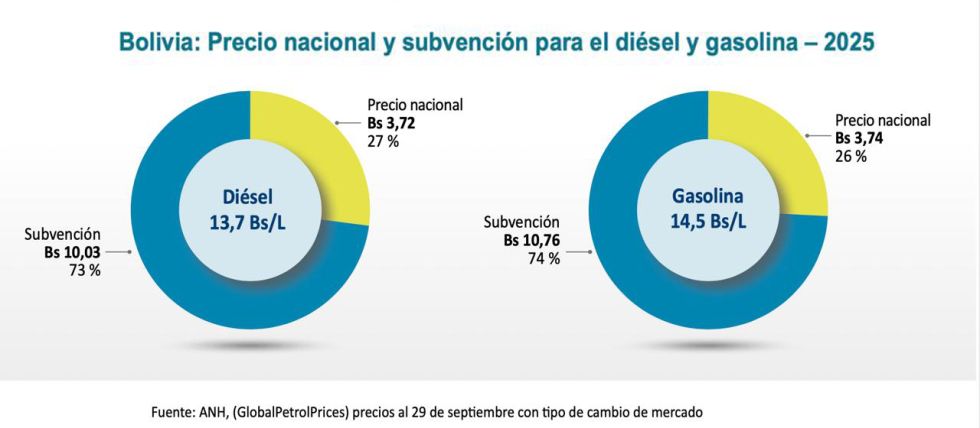
After a failed capture attempt in December 2025, Supreme Decree (SD) 5516 left the criminal gravely wounded by raising the price per liter from 3.74 to 9.80 bolivianos. However, the wound remained open for only a short time due to a war unleashed in the Middle East that suddenly increased the price of oil by 50%. That same decree set a deadline to definitively “neutralize” the gang: January 2027.
Faced with the worsening situation, on July 9 of this year, via SD 5652, the “sheriff” chose to allocate an extra amount to acquire crude oil, providing relief against the Subsidy.
The following month, via SD 5676, the sheriff decided to corner the diesel subsidy by restricting its operations to a specific territory: that of small consumers and transporters. Paradoxically, these groups ended up being the best allies of another gang associated with the subsidies: the smugglers. For all other sectors, the Subsidy ceased to operate as its price was brought in line with international standards. Because of this discrimination, the measure was resisted and criticized by friend and foe alike.
Thus, a few days later, SD 5683, issued on August 27, had to double the extra fund to maintain the price of diesel—to the delight of both gangs. As the amount proved insufficient, it was doubled again shortly thereafter, this time with the purpose of repairing the collateral damage caused by the allied gangs.
Finally, SD 5716 of September 18 put an end to the diesel subsidy’s misdeeds by aligning the domestic price with the real cost, including certain taxes for the benefit of the public treasury. The sheriff’s strategy rests on four pillars: unifying the price by pegging it to the international market; establishing a calculation system to periodically adjust it according to import costs; praying that international conflicts come to an end; and trusting in the availability of dollars—whether self-generated, borrowed, or from private importing companies—to guarantee supply.
Yet, one question remains: what will the citizenry do, accustomed as they are to sympathizing with the subsidy gang? Will they rise up, even seeking to replace the sheriff with one more lenient toward the gang?
The response put forward by those in power is clear: expand the state of emergency to presumably contain social protest; grant compensation for the hardships caused by the new regime; and rely on a loan from a powerful international financial organization to secure the foreign exchange needed to ensure domestic supply.
Will they succeed, considering that, other formidable members of that same subsidy gang—such as gasoline, LPG, natural gas, and CNG—have yet to be neutralized?
Their future autopsies will tell.
Por Francesco Zaratti:
El 18 de septiembre de 2026, el Gobierno boliviano decidió asestar el golpe de gracia a un asaltante silencioso de las finanzas públicas: el cabecilla de una peligrosa banda criminal llamada «Subsidios», identificado como el «Subsidio del diésel oil».
Según datos oficiales, solo este forajido se llevaba últimamente más de 200 millones de dólares mensuales, a cambio de mantener anestesiados a los ciudadanos mediante precios artificialmente bajos de ese combustible.
A una semana de aquel acontecimiento de crónica negra, es necesario realizar una autopsia para comprender cómo se llegó a ese trágico y, al mismo tiempo, feliz desenlace. Exteriormente, el cuerpo examinado presenta algunas heridas recientes que los forenses identificaron mediante números de armas y fechas, a partir de la elección de un nuevo “sheriff” en noviembre del año anterior.
Después de un fallido intento de captura en diciembre de 2025, el Decreto Supremo (DS) 5516 dejó gravemente herido al criminal al elevar el precio del litro de 3,74 a 9,80 bolivianos. Sin embargo, la herida se mantuvo abierta por poco tiempo debido a una guerra desatada en Medio Oriente que incrementó de golpe en un 50 % el precio del petróleo. Ese mismo decreto fijó una fecha límite para «neutralizar» definitivamente a la banda: enero de 2027.
Ante el empeoramiento de la situación, el 9 de julio del presente año, mediante el DS 5652, el sheriff optó por asignar un monto extra para adquirir petróleo crudo, un alivio contra el Subsidio.
Al mes siguiente, mediante el DS 5676, el sheriff decidió cercar el subsidio al diésel restringiendo su accionar a un territorio específico: el de los pequeños consumidores y transportistas. Estos, paradójicamente, terminaron siendo los mejores aliados de otra banda asociada con la de los subsidios, la de los contrabandistas. Para el resto de los sectores, Subsidio dejó de operar al nivelarse el precio con el estándar internacional. Debido a esta discriminación, la medida fue resistida y criticada por propios y extraños.
Fue así como, a los pocos días, el DS 5683, emitido el 27 de agosto, debió duplicar el fondo extra para sostener el precio del diésel —para regocijo de ambas bandas—. Como el monto resultó insuficiente, al poco tiempo se lo volvió a duplicar, esta vez con el fin de reparar los daños colaterales ocasionados por las bandas aliadas.
Finalmente, el DS 5716 del 18 de septiembre puso fin a las fechorías del subsidio al diésel al nivelar el precio interno con el costo real, incluyendo algunos impuestos en beneficio del erario público. La estrategia del sheriff se resume en cuatro pilares: unificar el precio atándolo al mercado internacional; fijar un sistema de cálculo para ajustarlo periódicamente según el costo de internación; rogar para que los conflictos internacionales lleguen a su fin; y confiar en la disponibilidad de dólares —propios, prestados o de compañías privadas importadoras— para garantizar el abastecimiento.
Queda, sin embargo, una incógnita: ¿qué hará la ciudadanía, que suele simpatizar con la banda de los subsidios? ¿Se levantará buscando incluso cambiar el sheriff por otro más benévolo con la banda?
La respuesta planteada por el poder es clara: ampliar el estado de excepción para, presuntamente, contener la protesta social; otorgar compensaciones por los perjuicios causados por el nuevo régimen; y confiar en un crédito de un poderoso organismo financiero internacional para garantizar las divisas necesarias que aseguren el suministro interno.
¿Lo logrará, tomando en cuenta que aún falta desactivar a otros temibles miembros de esa misma banda de subsidios, como la gasolina, el GLP, el gas natural y el GNV?
Sus futuras autopsias lo dirán.
https://fzaratti.blog/2026/09/25/autopsia-de-una-subvencion/


Leave a Reply