By ANF, Eju.tv:
Analysts Agree That If the IMF Agreement Is Not Approved or Fails, Bolivia Will Collapse
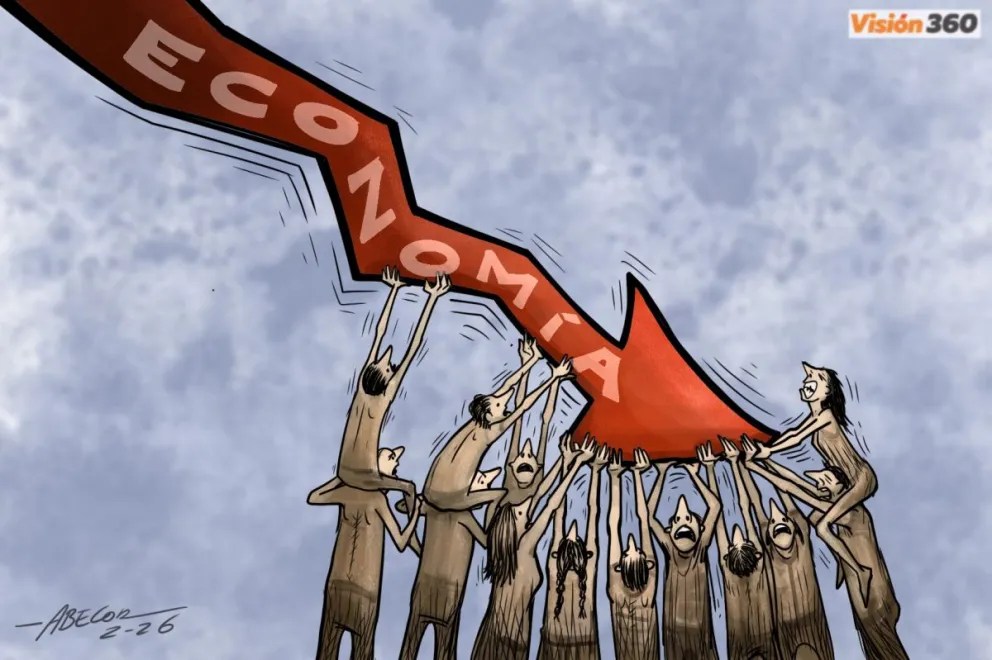
Economists Jaime Coronado and Gonzalo Colque agreed that the country will collapse if the agreement with the International Monetary Fund (IMF) is not approved or if the adjustment plan pending approval in the Plurinational Legislative Assembly fails.

Jaime Coronado in the studio, host Andrés Gómez, and Gonzalo Colque via Zoom. Photo: ANF
Coronado, former Vice Minister of Budget and Fiscal Accounting and a member of the team that negotiated the IMF agreement, argued that Bolivia will “collapse” if the deal with the international organization fails. “We will not be better off in any way. This is an opportunity that must be seized,” he said.
Colque believes the agreement will not be approved by the Legislative Assembly and also questioned the fact that Rodrigo Paz’s government does not have a “Plan B” if legislative approval fails. “There will be no reform, there will be no adjustment, and we will collapse because of the fiscal deficit. The cost remains high under that scenario,” he stated.
Both exchanged views on the program Talking About Bolivia Over a Cup of Coffee on Radio Fides, discussing whether the IMF is Bolivia’s only path out of the economic crisis or whether there are other alternatives, and what those alternatives might be.
“Every day that adjustment measures are postponed, we are being pushed closer to the International Monetary Fund for a rescue,” said researcher and economist Gonzalo Colque. In his view, there was no “counterbalancing negotiation” with the Bolivian government, but rather a series of conditions imposed.
The Paz government and the IMF negotiated a $1.9 billion loan. The memorandum of agreement has already been approved by the IMF; however, for it to take effect, the Legislative Assembly must approve the bill.
Colque stressed that the country has “a rope around its neck, and every time we delay measures, there is very little room left for negotiation,” because too many conditions could make implementation of the agreement unworkable.
For his part, the former vice minister argued that the program is a response to a critical reality marked by a high fiscal deficit, heavy debt, and virtually nonexistent reserves. In that context, he asked, who would be willing to lend to Bolivia?
Regarding fuel subsidies, he stated that it is “impossible” to maintain them and that they should be removed because they pose a threat that could “derail the program and the stabilization process.”
“The gap between international fuel prices and the prices we currently have is draining public finances, and ultimately the population is paying for it,” Coronado added, arguing that the sooner subsidies are phased out, the healthier it will be for the country.
Meanwhile, Colque stated that this is the worst possible year to eliminate fuel subsidies because there is not even a compensation fund in place. “It is unbearable for the population,” he commented.
/nvg/
Por ANF, Eju.tv:
Analistas coinciden en que si no se aprueba el acuerdo con el FMI o fracasa, Bolivia colapsará
Los economistas Jaime Coronado y Gonzalo Colque coincidieron que el país colapsará, si es que no se aprueba el acuerdo con el Fondo Monetario Internacional (FMI) o si fracasa el plan de ajuste que está pendiente de aprobación en la Asamblea Legislativa Plurinacional.
Jaime Coronado en estudios, Andrés Gómez conductor y Gonzalo Colque vía zoom. Foto: ANF
Coronado, exviceministro de Presupuesto y Contabilidad Fiscal e integrante del equipo que negoció el acuerdo con el FMI, sostuvo que Bolivia va a “colapsar” si fracasa el acuerdo con el organismo internacional. “No vamos a estar mejor por ningún lado. Esta es una oportunidad que hay que aprovecharla”, comentó.
Colque cree que el acuerdo no será aprobado en la Asamblea Legislativa, además observó que el gobierno de Rodrigo Paz no tenga un “plan B” si es que fracasa la aprobación en el legislativo. “No va haber reforma, no habrá ajuste y vamos a colapsar por el déficit fiscal. El costo sigue siendo alto en ese escenario”, dijo.
Ambos intercambiaron visiones en el programa Hablar de Bolivia con una taza de café de Radio Fides, en torno a, si ¿El FMI es la única vía de Bolivia para salir de la crisis económica? ¿O hay otras alternativas? ¿Cuáles?
“Cada día que se posterga el ajuste, estamos obligados y nos acerca más al Fondo Monetario Internacional para el rescate”, sostiene el investigador y economista Gonzalo Colque. En su opinión, “no hubo una negociación de contrapeso” con el gobierno boliviano, sino condicionamientos.
El gobierno de Paz y el FMI negociaron un crédito de $us 1.900 millones, el memorando de acuerdo ha sido aprobado por ese organismo, sin embargo, para que se consolide la Asamblea Legislativa debe aprobar el proyecto de ley.
Precisó que el país está con la “soga al cuello, cada vez que postergamos (las medidas). Hay muy poco margen (de negociación)”, porque existen demasiadas condiciones que pueden hacer inviable la aplicación de dicho acuerdo.
Por su parte, el exviceministro sostuvo que el programa es parte de una realidad crítica, producto del alto nivel de déficit fiscal, una deuda alta, reservas inexistentes, en ese contexto ¿quién te va a prestar? planteó.
En relación a la subvención de los combustibles, manifestó que es “imposible” mantener el subsidio y que debería levantarse porque es una amenaza que puede “descarrilar el programa y el proceso de estabilización”.
“El porcentaje de la diferencia que existe entre el precio internacional y los precios que tenemos es un desangramiento de las cuentas fiscales que de algún a manera está pagando la gente”, añadió Coronado, al precisar que mientras se corte la subvención lo antes posible será más saludable para el país.
En tanto que, Colque indicó que es el peor año para eliminar la subvención porque no hay previsión ni siquiera de un fondo de compensación. «Es insoportable para la población”, comentó.
/nvg/


Leave a comment