By Cristina Cotari, Red Uno:
September 14: The Rebellion That Turned Cochabamba into a Land of Heroes
Cochabamba preserves a history marked by two foundations, fertile lands, and a struggle for freedom that made it one of the epicenters of independence. Discover the story behind September 14.
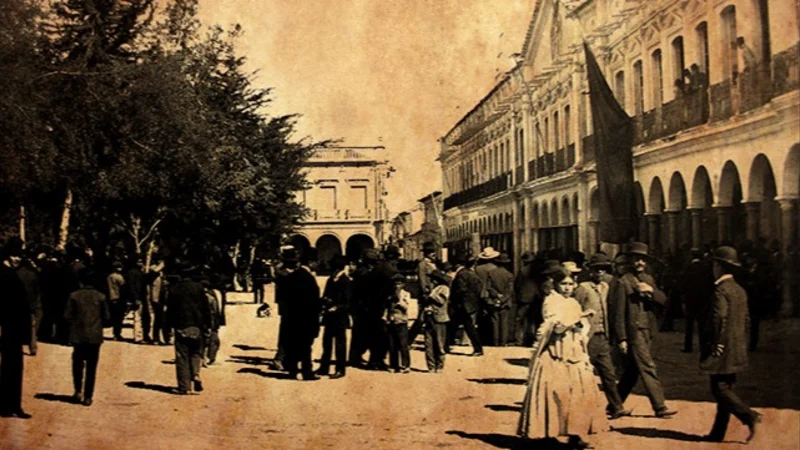
Colonial-era Cochabamba. Photo: Cochabamba Municipal Council
During Cochabamba’s anniversary month, the department’s history recalls its two foundations, its agricultural tradition, and, above all, the bravery of the men and women who led the fight for independence and left a lasting mark on the region’s identity.
Two Foundations Shaped the Birth of Cochabamba
Cochabamba was founded twice during the colonial period. The first foundation took place on August 15, 1571, when Captain Gerónimo de Osorio, under orders from Viceroy Francisco de Toledo, established the Villa de Oropeza, the name by which the city was initially known.
Historian Rosa Elena Novillo highlighted the importance of this first event because it was then that the lands where the town would develop were acquired.
“The first foundation is the most important because it was when the lands where the town would be established were acquired,” she explained.
The second foundation took place on January 1, 1574, led by Captain Sebastián Barba de Padilla, in the area that is now September 14 Square.
“The layout of the main square remained in the collective memory, and from that quadrilateral design the city blocks began to take shape,” Novillo noted.
From its earliest years, Cochabamba was conceived as an important agricultural production center due to the fertility of its lands. The region’s name comes from two Quechua words: “khocha,” meaning lake, and “pampa,” meaning plain or field.
The historian emphasized that the valley became a key area for food production.
“This beautiful fertile valley truly became a very important area for food supply,” she said.
September 14 and the Cry for Freedom
Decades later, Cochabamba played a central role in the independence movement. Following the 1809 uprising in Chuquisaca, ideas of liberty spread throughout the territories of the former Royal Audiencia of Charcas.
On September 14, 1810, Cochabamba rose up against Spanish colonial rule. The movement was led by Francisco del Rivero and Esteban Arze, together with other patriots.
In the early hours of the morning, the insurgents seized the royalist barracks and removed Governor-Intendant José González de Prada from power. An open town council was later convened with public participation.
At dawn, patriots from the valley, led by Esteban Arze, entered the city proclaiming freedom. They were joined by Francisco del Rivero, Melchor Guzmán Quitón, Mariano Antezana, and Father Juan Bautista Oquendo.
Reenactment of the September 14, 1810, cry for freedom. Archive photo: GAMC
Historian Ítala de Mamán highlighted the significance of this uprising in the emancipation process.
“Amid the repression throughout the Audiencia of Charcas, Cochabamba emerged on September 14 as a new center of rebellion, helping give rise, one could say, to the Republic of Bolivia,” she stated.
The struggle for independence continued for years, and Cochabamba became one of the main centers of resistance.
“For 15 years, in Cochabamba’s case, we fought alongside the other provinces,” the historian explained.
Esteban Arze and the Battle of Aroma
One of the main figures in this history was Esteban Arze, regarded as one of the leading heroes of Cochabamba’s independence movement.
Arze participated in the September 14 uprising and later commanded patriot forces at the Battle of Aroma on November 14, 1810.
The victory over royalist forces became a symbol for the patriots and one of the first military triumphs of the independence process in Upper Peru.
Recreation of Esteban Arze’s role in Cochabamba’s history. Archive photo: GAMC
His legacy was later recognized by various institutions. In 1985, he was posthumously awarded the rank of General of the Republic. In 2014, the Cochabamba Departmental Legislative Assembly declared him a Departmental Hero, while a national law recognized him as a National Hero.
In 2019, the Legislative Assembly also considered granting him the posthumous rank of Grand Marshal of Aroma in recognition of his contribution to the fight for independence.
The Heroines of La Coronilla: A Symbol of Courage
Cochabamba’s history is also marked by the leadership of its women. The Heroines of La Coronilla became one of the greatest symbols of courage and sacrifice during the independence struggle.
The historian noted that their example transcended national borders and remains a lasting reference of heroism.
“Internationally, the bravery shown in the struggle and the way women took command during such a painful time stand out,” she emphasized.
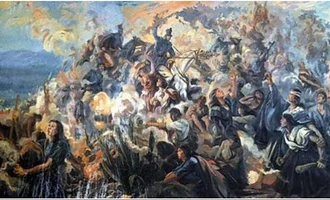
Mural depicting the struggle of Cochabamba’s women in May 1812. Photo: Social Media
For historians, Cochabamba was one of the principal epicenters of the independence revolution. One historian recalled the interpretation of researcher José Luis Roca, who argued that the department was an epicenter of the independence revolution, a legacy that should be remembered every September 14.
An Identity Built Over Centuries
The history of Cochabamba extends beyond its fight for independence. Its identity is also linked to agriculture, culture, art, education, and a renowned culinary tradition.
From its origins as an agricultural valley to its development as one of Bolivia’s leading urban centers, Cochabamba continues to carry the legacy of its founders and of those who fought for freedom.
Por Cristina Cotari, Red Uno:
14 de Septiembre: la rebelión que convirtió a Cochabamba en tierra de héroes
Cochabamba guarda una historia marcada por dos fundaciones, tierras fértiles y una lucha por la libertad que la convirtió en uno de los epicentros de la independencia. Descubre la historia detrás del 14 de septiembre.
Cochabamba en la época colonial. Foto: Concejo de Cochabamba
En el mes aniversario de Cochabamba, la historia del departamento recuerda sus dos fundaciones, su tradición agrícola y, especialmente, la valentía de hombres y mujeres que protagonizaron la lucha por la independencia y dejaron una huella en la identidad de la región.
Dos fundaciones marcaron el nacimiento de Cochabamba
Cochabamba tuvo dos fundaciones durante el periodo colonial. La primera se realizó el 15 de agosto de 1571, cuando el capitán Gerónimo de Osorio, por orden del virrey Francisco de Toledo, fundó la Villa de Oropeza, nombre con el que inicialmente fue conocida la ciudad.
La historiadora Rosa Elena Novillo destacó la importancia de este primer momento porque fue entonces cuando se adquirieron los terrenos donde comenzó a desarrollarse la villa.
“La más importante es la primera, en la que se adquirieron los terrenos donde se iba a emplazar la villa”, explicó.
La segunda fundación tuvo lugar el 1 de enero de 1574, a cargo del capitán Sebastián Barba de Padilla, en el espacio que actualmente corresponde a la Plaza 14 de Septiembre.
“Ha quedado como recuerdo en la memoria colectiva el trazado de la plaza principal y, a partir de ese trazado, de ese cuadrilátero, empezaron a formar los manzanos”, señaló Novillo.
Desde sus primeros años, Cochabamba fue concebida como un importante centro de producción agrícola debido a la fertilidad de sus tierras. El propio nombre de la región está relacionado con dos vocablos quechuas: “khocha”, que significa lago, y “pampa”, que hace referencia a llanura o campo.
La historiadora resaltó que el valle se convirtió en una zona fundamental para la producción de alimentos.
“En el valle fértil más hermoso, realmente se ha constituido una zona muy importante para la alimentación”, afirmó.
El 14 de septiembre y el grito libertario
Décadas después, Cochabamba tuvo un papel central en el proceso independentista. Tras el levantamiento de Chuquisaca de 1809, las ideas de libertad se extendieron por distintos territorios de la entonces Real Audiencia de Charcas.
El 14 de septiembre de 1810, Cochabamba se levantó contra el dominio de la Corona española. El movimiento estuvo encabezado por Francisco del Rivero y Esteban Arze, junto con otros patriotas.
Durante la madrugada, los insurgentes tomaron el cuartel realista y depusieron al gobernador intendente José González de Prada. Posteriormente, se convocó a un cabildo abierto con participación de la población.
Al amanecer, los patriotas del valle, liderados por Esteban Arze, ingresaron a la ciudad con proclamas libertarias. Al movimiento se sumaron Francisco del Rivero, Melchor Guzmán Quitón, Mariano Antezana y el cura Juan Bautista Oquendo.
Escenificación del grito libertario del 14 de Septiembre de 1810. Foto archivo : GAMC
La historiadora Ítala de Mamán destacó la importancia de este levantamiento dentro del proceso emancipador.
“En ese ambiente de represión a nivel de la Audiencia de Charcas, irrumpe Cochabamba el 14 de septiembre como un nuevo foco de rebelión, con la que se dio origen, se puede decir, a la República de Bolivia”, sostuvo.
La lucha por la independencia se prolongó durante años y Cochabamba se convirtió en uno de los principales escenarios de la resistencia.
“Son 15 años, en el caso de Cochabamba, que hemos luchado junto a las otras provincias”, explicó la historiadora.
Esteban Arze y la Batalla de Aroma
Uno de los principales protagonistas de esta historia fue Esteban Arze, considerado una de las figuras centrales de la lucha independentista en Cochabamba.
Arze participó en el levantamiento del 14 de septiembre de 1810 y, posteriormente, lideró a las fuerzas patriotas en la Batalla de Aroma, el 14 de noviembre de ese mismo año.
La victoria frente a las fuerzas realistas se convirtió en un símbolo para los patriotas y en uno de los primeros triunfos militares del proceso independentista en el Alto Perú.
Recreación de la participación de Esteban Arze en la historia de Cochabamba. Foto archivo: GAMC
Su figura fue reconocida posteriormente por distintas instituciones. En 1985 recibió de manera póstuma el grado de General de la República. En 2014, la Asamblea Legislativa Departamental de Cochabamba lo declaró Héroe Departamental, mientras que ese mismo año una ley nacional lo reconoció como Héroe Nacional.
En 2019, además, se trató en la Asamblea Legislativa el ascenso póstumo de Arze al grado de Gran Mariscal de Aroma, como reconocimiento a su participación en la lucha por la independencia.
Las Heroínas de la Coronilla, símbolo de valor
La historia de Cochabamba también está marcada por el protagonismo de sus mujeres. Las Heroínas de la Coronilla se convirtieron en uno de los principales símbolos del valor y sacrificio de la población durante la lucha independentista.
La historiadora destacó que su participación trascendió las fronteras del país y permanece como un referente de heroísmo.
“A nivel internacional, la valentía de cómo se llevó la lucha y cómo las mujeres tomaron el mando en una circunstancia muy dolorosa”, resaltó.
Mural de la lucha de las mujeres cochabambinas en mayo de 1812. Foto: RR.SS.
Para los historiadores, Cochabamba fue uno de los principales epicentros de la revolución por la independencia. La historiadora recordó la interpretación del investigador José Luis Roca, quien planteó que el departamento fue un epicentro de la revolución por la independencia, un legado que, según señaló, debe ser recordado cada 14 de septiembre.
Una identidad construida a lo largo de los siglos
La historia de Cochabamba no se limita a la gesta libertaria. Su identidad también está vinculada con la agricultura, la cultura, el arte, la educación y una reconocida tradición gastronómica.
Desde su origen como un valle agrícola hasta su desarrollo como uno de los principales centros urbanos del país, Cochabamba mantiene en su historia el legado de sus fundadores y de quienes lucharon por la libertad.


Leave a Reply